At the International Manufacturing Technology Show (IMTS) 2026, the robotics landscape underwent a seismic shift. Teradyne Robotics subsidiary Universal Robots (UR), the pioneer of the collaborative robot (cobot) sector, officially pulled back the curtain on its seventh-generation robotics platform: Gen 7.
Representing a top-to-bottom reengineering of the company’s hardware and software stack, Gen 7 is designed to transition artificial intelligence from a theoretical laboratory concept into a robust, industrial-grade reality. As manufacturers grapple with labor shortages, increasing product customization, and the need for greater operational agility, Gen 7 promises to remove the technical barriers that have historically kept advanced AI out of the factory floor.
The Core Transformation: A System Redesigned for AI
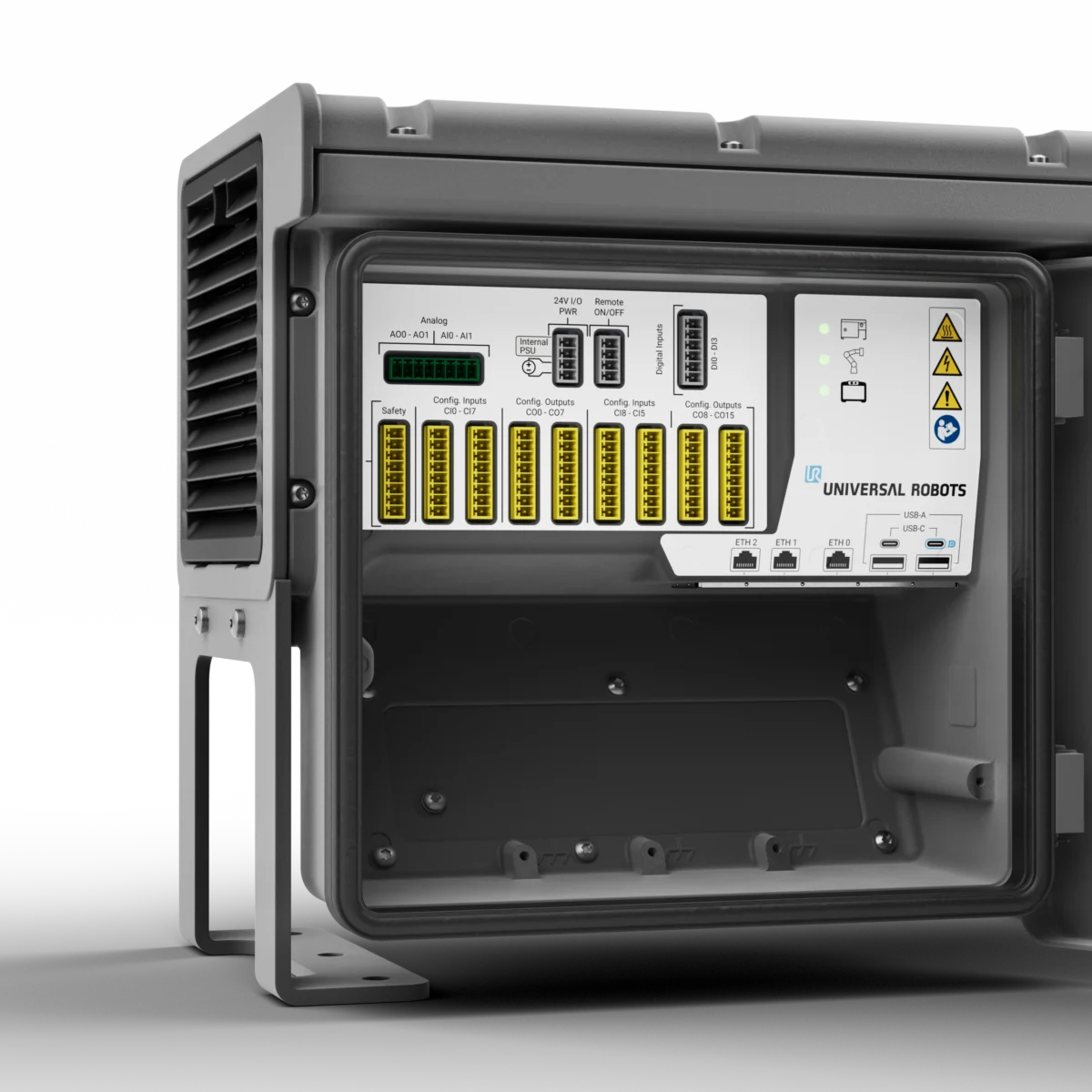
The Gen 7 platform is not merely an incremental update; it is a unified, "AI-ready" architecture. Every component—from the high-performance CB7 control box to the intuitive tool flange—has been redesigned to handle the intensive computational demands of physical AI.
At the heart of this ecosystem is PolyScope X, the next-generation operating system that powers the Gen 7. By integrating intelligent software tools directly into the robot’s controller, UR has enabled a "native" AI experience. This allows manufacturers to run complex vision, sensing, and machine learning algorithms without the need for cumbersome external PCs, secondary servers, or complex wiring—a major pain point in previous automation generations.

Chronology: From Concept to Industrial Maturity
To understand the significance of Gen 7, one must look at the trajectory of Universal Robots over the last two decades.
- 2005–2010: The birth of the cobot. UR introduced the world to the idea that robots could work safely alongside humans without safety cages, democratizing automation for SMEs.
- 2011–2020: The era of expansion. UR refined the software interface, launched the UR+ ecosystem, and crossed the milestone of 50,000 global deployments.
- 2021–2025: The shift toward intelligence. As generative AI and machine vision began to mature, the industry recognized a "friction gap"—the difficulty of integrating high-end AI software with traditional robotic hardware.
- October 2026 (IMTS): The official launch of Gen 7. The platform serves as the culmination of lessons learned from over 100,000 industrial deployments, marking the transition from "automation" to "autonomous physical intelligence."
Technical Deep-Dive: Hardware Specifications
The Gen 7 platform introduces several critical hardware innovations that define its performance.
1. The CB7 Core Controller
The new CB7 controller is the engine of the Gen 7 system. Compared to previous generations, it delivers 40% more compute power while occupying a 30% smaller physical footprint. This increase in processing density is essential for real-time AI inference, allowing the robot to process high-resolution camera feeds and sensor data locally. Furthermore, the controller supports multi-network communication, ensuring seamless integration into existing Industry 4.0 and IIoT (Industrial Internet of Things) architectures.
2. The SP7 Smart Panel Tool Flange
Perhaps the most visible hardware upgrade is the SP7 Smart Panel. This interface is designed to make the "tool-side" of the robot as smart as the "brain-side." Key features include:

- Safety-Compliant Free Drive: Enhanced manual guidance for easier programming.
- Configurable Input Buttons: Three buttons that can trigger specific "Smart Skills" within PolyScope X, allowing operators to command the robot without touching the teach pendant.
- Integrated LED Lighting: Provides real-time visual feedback on the robot’s status, AI processing confidence, and safety states.
Official Responses and Strategic Vision
During the keynote address at IMTS 2026, Jean-Pierre Hathout, President of the Teradyne Robotics Group, emphasized the company’s philosophy regarding the future of the factory.
"The robots of the AI era must be advanced, not complicated," Hathout stated. "Built on what we have learned from over 20 years of cobot innovation, Gen 7 is an end-to-end redesign. It reduces integration friction and dramatically expands application capabilities. It will enable our customers and partners across industries to confidently deploy advanced AI-powered applications in real-world operations."
The sentiment was echoed by industry partners, including Rudy Cohen, CEO of Inbolt. "Universal Robots and Inbolt share the same conviction: automation should be simple to deploy and simple to live with," Cohen noted. "With Gen 7 and PolyScope X, our vision now runs natively on the UR controller. No external vision PC, no extra cabling. Manufacturers can localize parts without jigs or fixtures and reach production in hours, not weeks."
The Physical AI Ecosystem: A Mature Partnership
One of the most compelling aspects of the Gen 7 launch is the depth of the accompanying ecosystem. At IMTS, Universal Robots showcased over 20 partners—including Cognex, Schunk, Magswitch, Smooth Robotics, Psyonic, Robotiq, and Inbolt—all demonstrating hardware or software running directly on the Gen 7 platform.

This "Physical AI Ecosystem" is backed by the UR+ program. By rigorously testing and validating every partner product before it hits the market, UR effectively de-risks the integration process for the end user. This allows a manufacturer to purchase a vision-guided gripping solution from an ecosystem partner with the confidence that it will be "plug-and-play" compatible with the Gen 7 controller.
Implications for Industry
The implications of the Gen 7 platform are profound for the global manufacturing sector.
Bridging the "Integration Gap"
Historically, deploying an AI-powered robot required a "systems integrator" to bridge the gap between the robot manufacturer, the camera provider, and the software developer. By moving these functions onto a single platform, Gen 7 lowers the barrier to entry. This means that mid-sized shops—which previously found AI automation too costly or complex—can now automate high-mix, low-volume tasks that were previously impossible to program.
Increased Operational Resilience
With the integration of physical AI, robots can now adapt to variability. If a part is slightly out of place or if a component varies in shape, an AI-enabled Gen 7 robot can "see" and "think" its way through the task, adjusting its path or grip in real-time. This eliminates the need for expensive, custom-machined jigs and fixtures, drastically reducing the total cost of ownership for robotic cells.

The Future of Human-Robot Collaboration
The focus on "Smart Skills" and intuitive interfaces like the SP7 flange suggests that the role of the human operator is shifting from "robot programmer" to "process orchestrator." As the robot takes on the cognitive load of handling variability, the operator can focus on higher-level production management, maintenance, and strategic process optimization.
Conclusion: A New Standard
Universal Robots has set a new benchmark for the industry. By focusing on a unified architecture that prioritizes compute power, ease of integration, and a deep, validated ecosystem, the company has effectively signaled the end of the "pilot project" era for AI in manufacturing.
Gen 7 is not just a tool; it is a foundational layer upon which the next decade of industrial evolution will be built. As manufacturers move toward an increasingly automated future, the ability to deploy "intelligence" as easily as one deploys a simple pick-and-place robot will define the winners in the competitive landscape of 2030 and beyond.
For those in the metal forming, fabricating, and general manufacturing sectors, the message from IMTS 2026 is clear: the future is here, it is intelligent, and it is ready to work.

For more information on the Gen 7 platform and to explore the UR+ ecosystem, visit universal-robots.com.