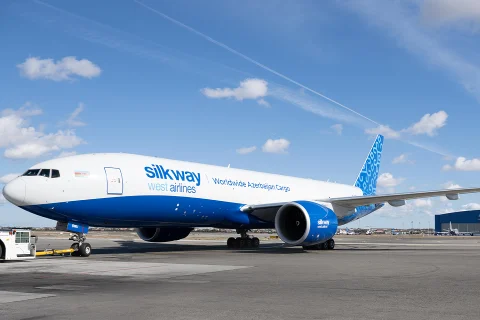
BAKU, AZERBAIJAN / GLOBAL LOGISTICS HUBS – In a significant move set to reshape digital freight distribution across key global trade lanes, Baku-headquartered cargo carrier Silk Way West Airlines has announced a major expansion of its digital service capabilities. The airline has officially integrated its extensive cargo capacity onto CargoAi, a leading digital marketplace and third-party booking portal.
This strategic partnership grants freight forwarders and logistics operators seamless access to Silk Way West’s real-time rates, live capacity updates, and robust eBooking services across vital international markets spanning the United States, Europe, and Asia. By embedding its offerings directly into the CargoAi ecosystem—specifically through the CargoMART marketplace and the CargoCONNECT Transport Management System (TMS) integration—the airline is removing friction from the supply chain, enhancing operational visibility, and cementing its position as a forward-thinking player in the modern air cargo industry.
Beyond its software-driven advancements, the milestone arrives amidst a broader, highly aggressive corporate overhaul by Silk Way West Airlines. The carrier is concurrently executing a multi-billion-dollar fleet renewal program, integrating state-of-the-art widebody freighters into its hub at Heydar Aliyev International Airport. Together, these parallel investments in cutting-edge digital infrastructure and next-generation aircraft underscore the airline’s commitment to meeting the evolving demands of global supply chains with unprecedented efficiency, sustainability, and scale.
Main Facts
The core of this new industry development centers on the technological integration between Silk Way West Airlines and CargoAi, transforming how freight forwarders procure, manage, and execute air cargo bookings.
- Digital Marketplace Expansion: Silk Way West’s flight capacity, dynamic pricing, and booking infrastructure are now fully accessible via CargoAi’s digital platforms.
- Core Portals Utilized:
- CargoMART: A third-party booking portal allowing freight forwarders to browse, compare, and instantly book shipments across key international corridors.
- CargoCONNECT: Direct Application Programming Interface (API) and electronic data interchange (EDI) connections that seamlessly link the airline’s offerings directly into forwarders’ internal Transport Management Systems (TMS).
- Comprehensive Cargo Handling: The integration supports standard general cargo alongside specialized and regulated commodities, including lithium batteries and complex dangerous goods (DG), all manageable through automated digital workflows.
- Geographic Scope: The deployment covers pivotal trade corridors connecting primary economic centers across the United States, Europe, and Asia, operating out of the airline’s central hub in Baku, Azerbaijan.
- Fleet Modernization Backdrop: The digital partnership runs parallel to ongoing physical fleet upgrades, notably the integration of advanced Boeing 777 Freighters and Airbus A350F aircraft to expand physical payload capacity and operational range.
Chronology
To understand how Silk Way West Airlines arrived at this pivotal intersection of digital integration and physical fleet expansion, it is essential to trace the strategic milestones that have defined the carrier’s trajectory over recent years.
Phase 1: Laying the Groundwork for Digitalization
For decades, the air cargo sector relied heavily on manual processes, phone calls, email chains, and legacy booking systems. Recognizing that modern freight forwarders demand instant quotations and transparent visibility akin to consumer e-commerce, Silk Way West initiated a company-wide digital transformation strategy. The objective was clear: make the airline’s capacity easily discoverable and bookable within the diverse digital environments already utilized daily by logistics professionals worldwide.
Phase 2: Fleet Expansion and Structural Growth (2023–2025)
While software development and third-party integrations formed the invisible backbone of the airline’s future, visible changes were sweeping across its tarmac. Silk Way West committed heavily to replacing older aircraft with ultra-efficient, low-emission widebody freighters to reduce its carbon footprint and operational costs per ton-mile.
- Late 2025: Silk Way West finalized a major structural commitment by exercising options for two additional Airbus A350F freighters. This move brought its total firm order for the next-generation European twin-engine freighter to four aircraft, serving as a cornerstone of its long-term fleet renewal roadmap.
Phase 3: The Boeing Deliveries and Digital Launch (Early 2026)
- Early 2026: The carrier marked a major physical milestone when a brand-new Boeing 777 Freighter touched down in Baku, having flown directly from Boeing’s manufacturing facility in Seattle, Washington. This aircraft represented the fourth delivery out of a six-plane firm order for the model.
- Mid-2026: Capitalizing on its growing physical footprint and modernizing infrastructure, Silk Way West officially rolled out its comprehensive digital distribution partnership with CargoAi, bridging its high-capacity widebody network with one of the industry’s fastest-growing digital marketplaces.
Supporting Data
The convergence of Silk Way West’s expansive geographic reach and CargoAi’s agile technological framework creates a powerhouse of operational efficiency. Examining the underlying data and technical parameters reveals the scale of this deployment.
Network and Fleet Metrics
- Geographic Reach: Silk Way West operates scheduled flights connecting over 40 destinations across Europe, the CIS, the Middle East, Central and Eastern Asia, and North America. Its hub at Heydar Aliyev International Airport serves as a vital Eurasian crossroads, bridging Eastern manufacturing hubs with Western consumer markets.
- Boeing 777F Program: The carrier’s ongoing acquisition of six Boeing 777 Freighters provides unmatched payload capabilities (capable of carrying up to 102 metric tons over a range of 9,200 kilometers). With four units already delivered—including the Seattle ferry flight completed earlier this year—and the final two scheduled for delivery next year, the airline boasts one of the youngest and most capable transcontinental freighter fleets in the industry.
- Airbus A350F Commitment: By locking in its four-aircraft order for the A350F, Silk Way West leverages cutting-edge lightweight composite materials and Rolls-Royce Trent XWB engines. This delivers a 25% reduction in fuel burn and CO2 emissions compared to older competitor freighters, directly aligning with global ESG (Environmental, Social, and Governance) targets demanded by modern shippers.
Technological Capabilities via CargoAi
- Real-Time Data Synchronicity: Through the CargoAi partnership, pricing models and slot availability are updated dynamically. This eliminates the traditional lag time associated with requesting static PDF rate sheets or waiting for manual quote approvals from regional sales desks.
- Specialized Commodity Handling: According to system integration parameters, the portal does not merely handle standard general cargo. It features compliant, automated validation protocols for sensitive commodities, such as lithium-ion batteries (critical for consumer electronics and electric vehicles) and hazardous materials requiring strict regulatory oversight under IATA Dangerous Goods Regulations (DGR).
Official Responses
Industry leaders from both organizations have emphasized the strategic necessity and customer-centric focus of the newly minted partnership.
Wolfgang Meier, President of Silk Way West Airlines, commented on the digital evolution:
"Expanding our digital distribution in retail is an important part of how we continue to evolve our customer experience. Through our partnership with CargoAi, freight forwarders now have another way to access our capacity, rates, and services through the digital channels they use every day. By making our offering more visible and easier to book, we are creating a more efficient customer journey while continuing to strengthen the digital capabilities of our global network."
Matthieu Petot, Founder and Chief Executive Officer of CargoAi, highlighted the synergistic nature of the alliance:
"By combining Silk Way West Airlines’ dedicated widebody freighter capacity and global network with CargoAi’s digital ecosystem, we are making capacity and pricing more easily accessible to freight forwarders across multiple booking environments. This expanded integration creates more opportunities for forwarders to connect with Silk Way West Airlines while supporting the airline’s continued digital growth."
Both executives agree that the partnership represents a paradigm shift away from fragmented communication channels toward unified, transparent, and frictionless air cargo booking ecosystems.
Implications
The integration of Silk Way West Airlines’ capacity onto the CargoAi platform—bolstered by concurrent investments in ultra-modern Boeing and Airbus freighters—carries profound implications for the global air cargo sector, freight forwarders, and the competitive landscape of Eurasian logistics.
1. Enhanced Efficiency for Freight Forwarders
For small- to medium-sized freight forwarding enterprises, gaining instant access to a premier widebody freighter network without complex contract negotiations or manual email requests is a game-changer. Forwarders can now check live availability for urgent shipments, compare dynamic rates, and secure bookings within seconds. Furthermore, the inclusion of dangerous goods and lithium battery handling via the digital portal reduces administrative bottlenecks while ensuring strict safety and regulatory compliance.
2. Strengthening the Baku Aviation Hub
Baku is increasingly establishing itself as a premier global logistics nexus, bridging East and West. By coupling physical infrastructure investments—such as modern fleet additions and optimized cargo handling facilities at Heydar Aliyev International Airport—with top-tier digital accessibility, Silk Way West is ensuring that its strategic geographic advantage is matched by technological excellence. This makes the Baku hub an even more attractive transit point for multinational corporations seeking reliable, transparent supply chain solutions.
3. Setting a New Standard for Airline Digital Transformation
The air cargo industry has historically lagged behind passenger aviation and retail e-commerce in terms of retail digitization. By aggressively partnering with third-party marketplaces like CargoAi while simultaneously upgrading internal API connectivity through CargoCONNECT, Silk Way West is setting a high benchmark for regional and global carriers alike. Airlines that fail to provide transparent, multi-channel digital distribution risk losing market share to agile competitors capable of delivering instant gratification to modern shippers.
4. Long-Term Scalability and Sustainability
As environmental regulations tighten globally, efficiency is no longer merely a financial metric; it is an operational license. Silk Way West’s dual-pronged strategy—automating transactions to reduce paper waste and administrative energy, while deploying fuel-efficient next-generation aircraft like the Boeing 777F and Airbus A350F—positions the carrier for long-term viability. The airline is effectively future-proofing its business model against fluctuating fuel costs, environmental levies, and the ever-increasing expectations of digital-first corporate clients.
In summary, Silk Way West Airlines’ latest digital expansion marks a defining chapter in its corporate history. By harmonizing state-of-the-art aircraft acquisitions with advanced marketplace integrations, the carrier is bridging the physical and digital worlds of air logistics, delivering unprecedented value to global supply chains.