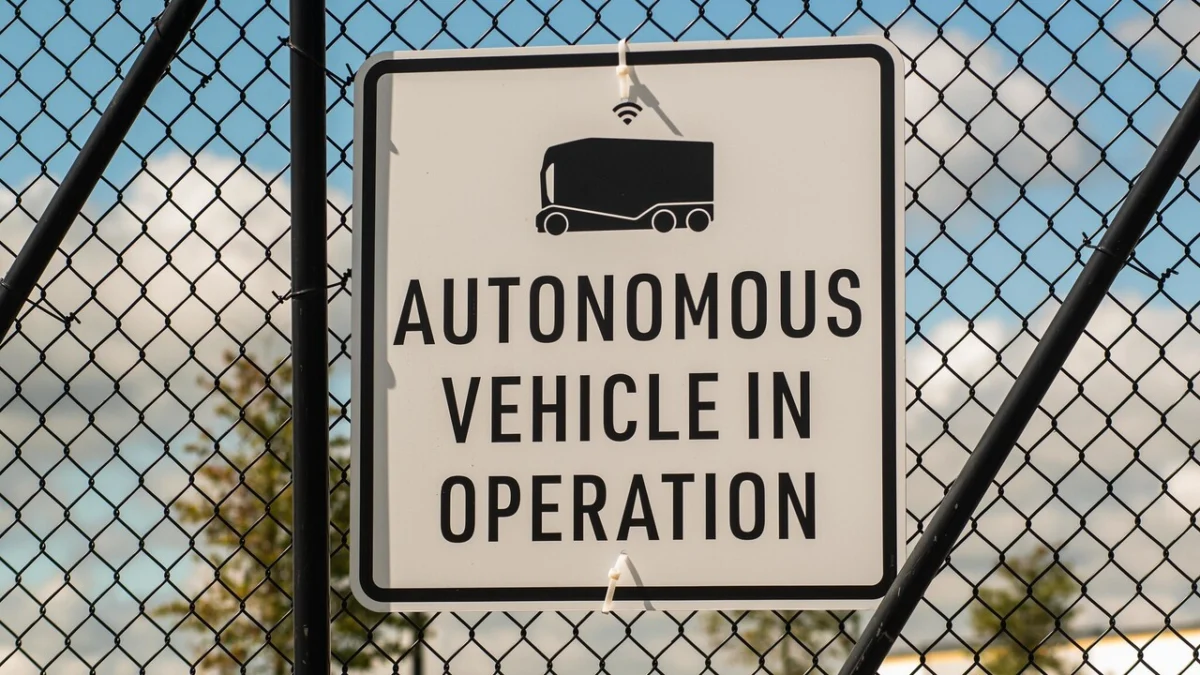
MARYSVILLE, Ohio — In a milestone that bridges the gap between speculative technology and industrial utility, freight tech firm Einride and supply chain solutions provider EASE Logistics have officially launched daily commercial operations utilizing cabless, electric autonomous trucks. Deployed in Marysville, Ohio, the vehicles operate at SAE Level 4 automation—meaning they navigate scheduled routes across private property and local public roads completely driverless, overseen remotely by human operators off-site.
This commercial milestone marks a definitive transition from experimental trials to real-world logistics integration. It highlights how public-private partnerships, evolving automotive supply chains, and pressing labor dynamics are converging to reshape the future of heavy-duty freight movement in the American Midwest.
Main Facts: The Marysville Deployment
The core of the new deployment centers on a closed-loop system connecting two EASE Logistics warehouses in Marysville. Operating daily, the battery-electric, cabless vehicles—which feature no traditional driver’s cab—shuttle freight back and forth to gather vital operational metrics.
- The Technology: SAE Level 4 autonomous capability, meaning the trucks can navigate predefined environments independently without human intervention under specific conditions.
- The Supervision: Each vehicle is actively monitored by an off-site remote operator capable of stepping in if the vehicle encounters unexpected anomalies or routing hurdles.
- The Scope: The route utilizes a mix of private EASE property and designated local public roadways in Marysville.
- The Objective: To collect ongoing data regarding safety records, uptime reliability, energy efficiency, and operational bottlenecks to inform future scaling efforts.
While the current operation relies on humans to physically load and unload cargo at either end of the warehouse loop, the trucks themselves handle the physical transit entirely unassisted. According to project leaders, this operational data will serve as the foundation for broader expansion talks with state transportation agencies and prospective logistics clients.
Chronology: From Concept to Commercial Reality
The path to daily autonomous freight service in Marysville was years in the making, tracing back to regional strategic initiatives designed to position Ohio as a national hub for advanced transportation technology.
2021: Launch of the Truck Automation Corridor
The groundwork for the deployment was laid when the Ohio Department of Transportation (ODOT), DriveOhio (the state’s specialized accelerator for smart mobility), and the Indiana Department of Transportation (INDOT) jointly launched the Truck Automation Corridor Project. This $8.8 million, multi-year initiative was designed to test, study, and safely integrate truck automation technologies across major commercial corridors in Ohio and Indiana.
May 2023: The Proof-of-Concept Announcement
The partnership between Einride, EASE Logistics, DriveOhio, and INDOT was formalized in a public announcement. Peter Coratola Jr., founder, president, and CEO of EASE Logistics, noted at the time that the collaboration was structured to pull autonomous trucking out of controlled, closed-track pilots and into the unpredictable realities of daily freight operations.
Late 2023: Strategic Connections
EASE Logistics leadership first connected with Einride at an Ohio-based mobility conference. Recognizing the rapid pace of technological innovation, EASE sought an active seat at the regulatory table. By partnering early, the logistics provider aimed to ensure that lawmakers and state legislators would not draft autonomous trucking regulations without direct input from operational experts who understand the daily realities of freight shipping.
Late 2024: Go-Live and Data Collection
Following months of regulatory alignment and rigorous route testing, the cabless electric trucks officially entered daily service. The deployment began gathering operational telemetry—including miles driven, loads transported, and mechanical uptime—setting the stage for future expansion phases across the broader regional corridor.
Supporting Data & Economic Context
The deployment in Marysville does not exist in a vacuum; it is anchored in the demanding realities of the American automotive supply chain.
The Automotive Benchmark
EASE Logistics was founded in Dublin, Ohio, in 2014, heavily shaped by the rigorous demands of automotive shippers. In the automotive sector, supply chains operate on a strict "no-fail" doctrine. An assembly plant might rely on 1,400 to 2,000 distinct suppliers delivering components via synchronized sequence trailers. If a single truck carrying essential parts fails to arrive, the entire production line can grind to a halt, costing millions of dollars per hour.
Consequently, supply chain processes must maintain identical service reliability at 3:00 a.m. on a Saturday as they do at 1:00 p.m. on a Tuesday.
Navigating Supply Chain Volatility
Automotive Original Equipment Manufacturers (OEMs) have experienced significant turbulence over the last several years. Following a multi-year consolidation phase centered heavily around electric vehicle (EV) production—during which some automakers slashed their active supplier networks from 2,700 down to roughly 1,200—production strategies have once again shifted. In response to consumer demand, OEMs have adjusted production toward a balanced mix of internal combustion engines, hybrids, and EVs, bringing dormant suppliers back online.
The Economics of Empty Racks
To understand where autonomy delivers the highest early value, industry leaders point to the logistics of transport racks. Automotive components arrive at assembly plants stacked in specialized metal racks, and those empty racks must eventually be returned to origin points.
When suppliers run behind schedule or assembly lines fall out of sync, empty racks quickly accumulate, creating a logistical bottleneck. Conventionally, companies must scramble to dispatch human drivers on short notice to clear the backlog—a process that introduces high spot-market costs and operational friction.
By deploying autonomous trucks on a closed-loop carousel between local warehouses and plants, logistics providers can automate the movement of empty racks without draining precious over-the-road driver capacity. This targeted application keeps trucks off heavily congested interstate highways while smoothing out localized operational spikes.
Official Responses and Industry Perspectives
Leadership from both Einride and EASE Logistics emphasize that the Marysville deployment is as much about strategic positioning as it is about operational efficiency.
-
Henrik Green, Chief Technology Officer at Einride:
"Daily operations in Marysville give us the proof points we need to keep expanding autonomous freight across the corridor and beyond."
-
Peter Coratola Jr., CEO of EASE Logistics:
"It looks like their supply chains are reflected more of what people are buying rather than what they think they’re buying… Rather than holding drivers or continuously having to spot drivers to come get racks, this type of technology would be able to deploy essentially an autonomous supply chain that helps that carousel — racks go back."
-
Operational Integration:
EASE Logistics representatives noted that while human labor remains essential for loading and unloading cargo at warehouses, automating the transit legs solves critical efficiency puzzles. According to company projections, automated carousels can operate around the clock, factoring in traffic flows to minimize disruption.
Implications for the Workforce and the Future of Freight
One of the most sensitive subjects surrounding autonomous trucking is its potential impact on the professional driver workforce. However, logistics leaders and technology developers are framing autonomy not as a wholesale replacement for human labor, but as a strategic reallocation of human talent amid an ongoing demographic crunch.
Addressing the Driver Shortage and Aging Workforce
The commercial trucking industry has long wrestled with an aging demographic profile and chronic driver shortages. EASE Logistics views autonomous technology as a mechanism to extend the careers of experienced drivers rather than displacing them.
By utilizing remote-control technology, companies can transition veteran drivers out of physical cabs and into high-tech control centers. In these roles, experienced operators can oversee fleets of autonomous vehicles, utilizing their deep operational knowledge to manage edge cases and complex routing challenges.
Planned vs. Unplanned Routes
Looking toward the future, industry strategists envision a hybrid logistics model where human drivers and autonomous trucks divide labor based on route predictability:
- Planned Long-Haul and Complex Routes: Reserved for human drivers, maintaining standard over-the-road employment structures for long-distance and intricate multi-stop deliveries.
- Unplanned, Repetitive, and Closed-Loop Routes: Handled by autonomous technologies operating on predictable carousels, such as warehouse-to-warehouse shuttles and empty rack recovery loops.
Regulatory and Regional Expansion
By actively participating in state-sponsored initiatives like the Truck Automation Corridor Project alongside DriveOhio and INDOT, companies like EASE Logistics and Einride are helping to write the playbook for safe, scalable automation.
As the Marysville deployment continues to generate empirical data on safety, uptime, and efficiency, the findings will serve as the empirical backbone for subsequent discussions with state legislators, transportation departments, and national enterprise shippers. The transition from controlled pilot programs to daily, cabless freight operations is no longer a theoretical exercise—it is actively unfolding on the roads of Ohio, signaling a profound structural evolution in American supply chain management.