DUBAI / MEMPHIS — In a milestone development for global pharmaceutical logistics, FedEx has announced that its regional hub for the Middle East, Indian Subcontinent, and Africa (MEISA), located at Dubai World Central (DWC) in the United Arab Emirates, has been officially granted the International Air Transport Association (IATA) Center of Excellence for Independent Validators (CEIV) Pharma certification.
This vital accreditation underscores the facility’s rigorous operational standards, advanced temperature-controlled infrastructure, and unwavering regulatory compliance. With this latest addition, FedEx now boasts a formidable network of 30 CEIV Pharma-certified air hubs and cargo handling facilities strategically positioned across the globe.
The achievement arrives at a time of immense operational transformation for the express logistics giant. Alongside its continuous infrastructure upgrades in key emerging markets, FedEx has been navigating a sweeping series of corporate realignments, multi-billion-dollar acquisitions, and strategic fleet revamps designed to fortify its position as an undisputed leader in international air cargo and supply chain management.
Main Facts: The Dubai World Central Milestone
The newly certified MEISA hub at Dubai World Central represents a cornerstone of FedEx’s regional and international operational strategy. Designed from the ground up to support the stringent demands of the modern healthcare and pharmaceutical industries, the facility spans an impressive total footprint of 57,000 square meters.
Within this expansive complex lies a specialized 170-square-meter temperature-controlled storage environment engineered specifically to safeguard sensitive healthcare shipments, vaccines, biologics, and clinical trial materials.
The IATA CEIV Pharma validation process is notoriously rigorous. It requires independent, exhaustive audits of a facility’s operational processes, specialized equipment, storage capabilities, staff training programs, quality management systems, and local regulatory adherence. By passing these exhaustive evaluations, the DWC hub has proven its capability to maintain the strict thermal integrity required for sensitive medical cargo, thereby mitigating the risk of product degradation throughout the transit lifecycle.
This certification is more than just a badge of honor; it is an operational necessity in a post-pandemic global market where the demand for rapid, flawless movement of life-saving therapeutics has reached unprecedented heights. By integrating the DWC hub into its global web of CEIV-certified locations, FedEx provides pharmaceutical manufacturers and healthcare providers with an unbroken, highly compliant cold-chain corridor connecting the Middle East to Europe, Asia, Africa, and the Americas.
Chronology: A Busy Season of Expansion and Transformation
The attainment of the IATA CEIV Pharma certification in Dubai is the latest chapter in a remarkably dynamic period for FedEx, characterized by strategic divestments, aggressive regional infrastructure expansion, and fleet recoveries.
July – October 2026: The CMA CGM Group Acquisition
The wheels of corporate restructuring began turning earlier this year when the Marseille, France-headquartered CMA CGM Group announced its intention to acquire FedEx Supply Chain. Following regulatory reviews, the high-profile transaction reached a successful closing at an enterprise value of $1.4 billion.
Upon completion of the acquisition, the CMA CGM Group and FedEx executed multi-year commercial agreements spanning both air and ocean freight. This partnership is engineered to unlock sweeping global collaboration, highlighted by a dedicated air cargo capacity agreement covering critical strategic trade corridors, most notably the high-demand Asia-Europe lanes.
August 2026: Capitalizing on the Indian Subcontinent
Demonstrating its long-term commitment to high-growth emerging economies, FedEx announced ambitious plans in August to develop a fully automated air cargo hub at GMR Cargo City, situated within Indira Gandhi International Airport in Delhi, India. This state-of-the-art facility is intended to supercharge processing speeds, enhance throughput capabilities, and streamline customs handling for shipments flowing in and out of the Indian Subcontinent—a region experiencing exponential growth in manufacturing, technology, and healthcare exports.
September 2026: Fleet Operations and MD-11F Resurgence
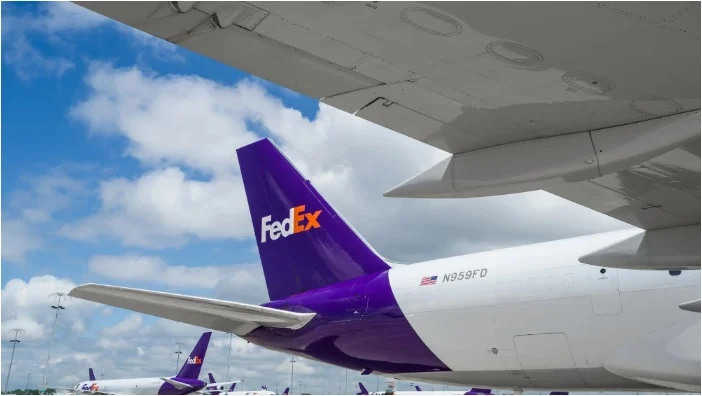
On the operational and aviation front, late summer brought significant relief and revitalization to the carrier’s airlift capacity. Industry analysts noted that FedEx has successfully brought the vast majority of its heavy-duty MD-11F freighter fleet back into active service. This operational return follows a period of temporary groundings from the previous year, injecting vital cargo capacity back into the carrier’s transcontinental network and easing constraints on heavy and oversized freight movements.
October 2026: The DWC CEIV Pharma Validation
Capping off this eventful period, the official announcement of the IATA CEIV Pharma certification for the Dubai World Central hub solidifies FedEx’s physical and compliance capabilities in the vital MEISA corridor, perfectly timing its readiness for the upcoming winter peak shipping season.
Supporting Data: Infrastructure, Technology, and Network Reach
The complexity of modern pharmaceutical logistics demands a synthesis of physical infrastructure and cutting-edge digital oversight. FedEx has backed its physical investments in Dubai and beyond with proprietary technology designed to offer end-to-end visibility.
- 30 CEIV Pharma Facilities: With the DWC inclusion, FedEx now manages thirty IATA-certified locations worldwide, establishing a standardized baseline of quality that reduces handling risks across borders.
- 57,000 sqm DWC Footprint: The total area of the Dubai World Central facility, providing massive consolidation, sorting, and storage capacities.
- 170 sqm Thermal Zone: A dedicated, highly monitored temperature-controlled zone within the DWC hub explicitly designed for sensitive healthcare items.
- $1.4bn Enterprise Value: The valuation of the FedEx Supply Chain acquisition by the CMA CGM Group, highlighting the immense capital scale reshaping the logistics sector.
- AI-Powered Surveillance: The integration of the FedEx Surround monitoring and intervention platform with FedEx SenseAware sensor technology.
This technological pairing is critical for high-value pharmaceutical cargo. FedEx SenseAware devices travel with individual shipments, transmitting near real-time telemetry regarding exact geographical location, barometric pressure, exposure to light, and precise internal and external temperature readings. Meanwhile, the AI-driven FedEx Surround platform analyzes this incoming data against predictive weather patterns, traffic snarls, and flight schedules, allowing human intervention teams to proactively reroute or service packages before a thermal excursion or delay can compromise the cargo.
Official Responses: Leadership Perspectives on the MEISA Hub
Company leadership has been quick to emphasize the strategic weight of the DWC certification, framing it as a vital pillar in the company’s broader mission to support increasingly intricate global supply chains.
Taarek Hinedi, Vice President of Operations and Planning & Engineering at FedEx Middle East, Indian Subcontinent and Africa, spoke candidly about the significance of the milestone.
"Achieving the CEIV Pharma certification reflects our continued commitment to delivering healthcare logistics services that meet the highest international standards," Hinedi stated.
"As supply chains become increasingly complex, healthcare customers need logistics providers that can safeguard product integrity while ensuring speed, compliance, and reliability.
Our hub at DWC is a critical gateway connecting businesses across the region to our global network, combining specialized cold-chain expertise, advanced technology, and visibility to help move critical shipments with precision and care."
Industry analysts note that Hinedi’s emphasis on supply chain complexity is particularly poignant. As biologics, personalized immunotherapies, and temperature-sensitive clinical trial supplies make up an increasingly large percentage of global pharmaceutical pipelines, the margin for error has shrunk to zero. Regional hubs like Dubai act as indispensable pressure valves and distribution nodes, ensuring that shipments moving between Western manufacturing centers and Eastern consumer markets do not encounter thermal compromises in high-ambient-temperature environments like the Middle East.
Implications: Reshaping Global Healthcare and Cargo Logistics
The validation of the Dubai World Central hub and FedEx’s broader slate of corporate developments carry profound implications for the global air cargo and healthcare logistics landscapes.
1. Elevated Standards in Emerging Markets
The introduction of an IATA CEIV Pharma-certified facility of this scale in the UAE raises the competitive bar for all logistics providers operating within the MEISA region. Regional competitors will now face heightened pressure to upgrade their own infrastructure, secure international certifications, and implement advanced digital monitoring tools to retain pharmaceutical enterprise clients.
2. Streamlined Asia-Europe and MEISA Corridors
Through the combination of the newly optimized DWC hub, the upcoming automated cargo facility in Delhi, and the newly solidified commercial air and ocean freight agreements with the CMA CGM Group, cargo routing between Asia, Europe, and the Middle East is poised to become significantly more efficient. Shippers will benefit from enhanced intermodal synergies, broader route options, and shared capacity agreements on high-density trade lanes.
3. Future-Proofing Against Supply Chain Disruptions
The integration of AI-driven analytics via FedEx Surround alongside physical cold-chain compliance demonstrates a proactive shift in the logistics industry. Rather than merely reacting to transit failures, the modern freight operator must anticipate and neutralize risks dynamically. By embedding these capabilities into its certified hubs, FedEx is setting a new benchmark for resilience, ensuring that essential medicines, vaccines, and advanced medical devices reach patients safely, swiftly, and without compromise.