BIRMINGHAM, Mich. — When Scout Motors pulled back the curtain on its ambitious plans to construct a state-of-the-art electric vehicle (EV) manufacturing facility in South Carolina, industry analysts understood that the project would be a monumental win for the region. However, the true magnitude of the announcement is only now coming into sharp focus.
Beyond the towering assembly plant, the massive workforce additions, and the high-tech production lines slated for the future, the economic ripples are fundamentally transforming the American Southeast. A tidal wave of Tier-1 and Tier-2 automotive suppliers is rushing to establish roots in the region, creating a cascading economic boom that local development officials compare to the historic arrival of BMW decades ago.
At the heart of this transformation is a complex web of international investment, strategic site selection, aggressive workforce development initiatives, and a manufacturing ecosystem that is quickly evolving to dominate the future of American electric mobility.
Main Facts: The Scope of the Scout Motors Project
To understand the supplier rush, one must first examine the anchor project driving the activity. Scout Motors—backed by Volkswagen Group—is investing heavily in a massive, dedicated production campus designed to revive the iconic American SUV and truck brand as an all-electric powerhouse.
- Job Creation: The primary OEM facility is slated to generate 4,000 direct jobs, ranging from high-tech assembly and engineering roles to logistics and administrative positions.
- Production Timeline: Initial vehicle assembly is scheduled to kick off in 2027, creating a hard deadline for infrastructure development, supply chain integration, and workforce training.
- Geographic Impact: While the assembly plant anchors the development, the surrounding counties—particularly Orangeburg County and the broader Central South Carolina region—are experiencing an unprecedented influx of industrial real estate demand.
- Supply Chain Influx: International joint ventures, such as SODECIA AAPICO, are laying down roots nearby to supply critical structural components, such as custom ladder frames specifically engineered for Scout’s next-generation electric platforms.
According to Annie Caggiano, Senior Vice President of Business Recruitment for the Central South Carolina Alliance (CSCA), the phone started ringing almost immediately after the initial ink dried on the Scout Motors announcement.
"When an OEM of this scale enters a market, the impact extends far beyond the four walls of the assembly plant," Caggiano explains. For suppliers specializing in everything from heavy stamping and battery components to wiring harnesses and interior modules, proximity to the assembly line is not merely a convenience—it is an economic imperative.
Chronology: From Concept to Supply Chain Mobilization
The trajectory of South Carolina’s latest automotive boom follows a deliberate, multi-year chronology of strategic planning, international scouting, and rigorous site evaluation.
Phase 1: The Anchor Announcement (Pre-2023 to Early 2024)
Before suppliers could commit, the groundwork had to be laid by state and regional economic development groups. Scout Motors evaluated numerous states across the U.S. before selecting South Carolina for its favorable business climate, robust logistics corridors, and strong manufacturing heritage. Once the site was locked in, the signal was broadcast globally to the automotive supply chain.
Phase 2: International Discovery and Market Evaluation (2023–2024)
Almost immediately, global automotive suppliers began assessing their footprints. Caggiano recalls fielding inquiries from corners of the globe that previously had little to no operational presence in the American Southeast.
"We were contacted by a Portuguese company not operating in the Southeast," Caggiano notes, referring to SODECIA AAPICO—a prominent joint venture between a Portuguese enterprise and a Thai corporation. "They were interested in learning more about the market."
What followed was a meticulous, year-long evaluation process. The international joint venture did not rush into the region; instead, executives spent twelve months analyzing workforce availability, freight logistics, highway and rail connectivity, and local real estate inventories.
Phase 3: Site Selection and Infrastructure Integration (2024–2025)
Following their comprehensive due diligence, SODECIA AAPICO selected Orangeburg County as the home for its new manufacturing operation. The facility will be dedicated to producing heavy-duty ladder frames designed for Scout’s electric vehicles. This phase has triggered a domino effect, as secondary and tertiary suppliers scramble for remaining industrial tracts close to the major transit arteries connecting Charleston ports to the industrial interior.
Phase 4: Training and Pre-Production Mobilization (2025–2027)
With physical structures rising and machinery being specified, the focus has shifted entirely to human capital. Through localized training programs, future workers are currently stepping into classrooms and simulation labs to prepare for the 2027 production launch.
Supporting Data: Workforce Development and the "Secret Sauce"
While tax incentives, real estate availability, and logistics hubs are critical components of any multi-million-dollar industrial investment, site selection data reveals a singular overriding priority for incoming manufacturers.

"Typically, outside of real estate, workforce is the number one reason why a company selects a community or a site," Caggiano emphasizes.
In South Carolina, winning the workforce battle requires more than just high unemployment numbers or competitive wages; it requires a proactive, institutional pipeline capable of turning raw talent into specialized advanced manufacturing professionals. The state’s technical college system serves as the backbone of this strategy. Through the state-funded ReadySC program, qualifying companies receive fully customized, pre-employment training at zero cost.
- No-Cost Training: Companies creating qualifying jobs can tap into state resources to design training curricula that precisely match their equipment, software, and safety protocols.
- Early Engagement: The program is already actively training future Scout Motors employees years ahead of the official 2027 assembly line launch, ensuring zero lag time between factory completion and full-scale production.
- Institutional Synergy: South Carolina’s network of technical colleges continuously updates its curriculum to reflect the pivot toward electrification, automation, and advanced robotics.
Caggiano proudly refers to this pipeline model as the state’s "secret sauce." Without it, convincing an international joint venture to invest heavily in Orangeburg County would be an uphill battle. With it, the state offers a de-risked environment where manufacturing productivity can scale rapidly from day one.
Official Responses and Perspectives
Economic development officials and industry stakeholders view the Scout Motors project not as an isolated success, but as validation of a decades-long strategy to turn South Carolina into an undisputed automotive juggernaut.
"If they’re not looking here, they’re missing a massive opportunity," Caggiano asserts, pointing out that South Carolina is already uniquely positioned within a dense, highly efficient automotive cluster.
The state is home to massive, established manufacturing operations for industry heavyweights, including:
- BMW (Spartanburg County)
- Mercedes-Benz Vans (Charleston County)
- Volvo Cars (Berkeley County)
- Hyundai and Kia (with extensive supplier footprints overlapping state lines)
According to Caggiano, suppliers who cluster in South Carolina gain a strategic geographic advantage that allows them to service multiple major OEMs simultaneously, reducing transit costs, mitigating supply chain vulnerabilities, and tapping into a mature automotive labor pool.
Implications: A Transformative Economic Ecosystem
The arrival of Scout Motors and its expanding network of suppliers signals far-reaching implications for the American manufacturing landscape, local communities, and the broader EV transition.
1. The "BMW Effect" Multiplied
When BMW chose South Carolina’s Upstate region for its first major U.S. manufacturing plant in the 1990s, critics questioned whether the region could support such a massive industrial footprint. Decades later, the Upstate is recognized globally as one of the most successful automotive clusters in the world, generating billions in economic output and tens of thousands of jobs.
Caggiano and regional planners firmly believe that Scout Motors will replicate—and potentially accelerate—this phenomenon in the central part of the state. "An OEM can really grow a community beyond your wildest dreams," she notes. Small towns in Orangeburg and surrounding counties are seeing increased demand for housing, retail development, municipal infrastructure, and localized educational funding.
2. De-Risking the EV Supply Chain
The automotive industry’s rapid pivot toward electric vehicles has exposed fragile global supply chains, long shipping delays, and geopolitical vulnerabilities. By attracting international suppliers—such as SODECIA AAPICO—directly to the American Southeast, the Scout ecosystem represents a localized, resilient model of production. Building heavy structural components like ladder frames locally reduces ocean freight dependencies and carbon footprints alike.
3. Setting a New Standard for State-Led Industrial Policy
South Carolina’s collaborative approach—melding aggressive business recruitment, localized technical college training, and streamlined permitting—serves as a blueprint for other states vying for high-tech manufacturing investments. As the United States continues its push toward domestic manufacturing reshoring and vehicle electrification, the playbook being written in the Midlands and Lowcountry will be closely studied by economic developers nationwide.
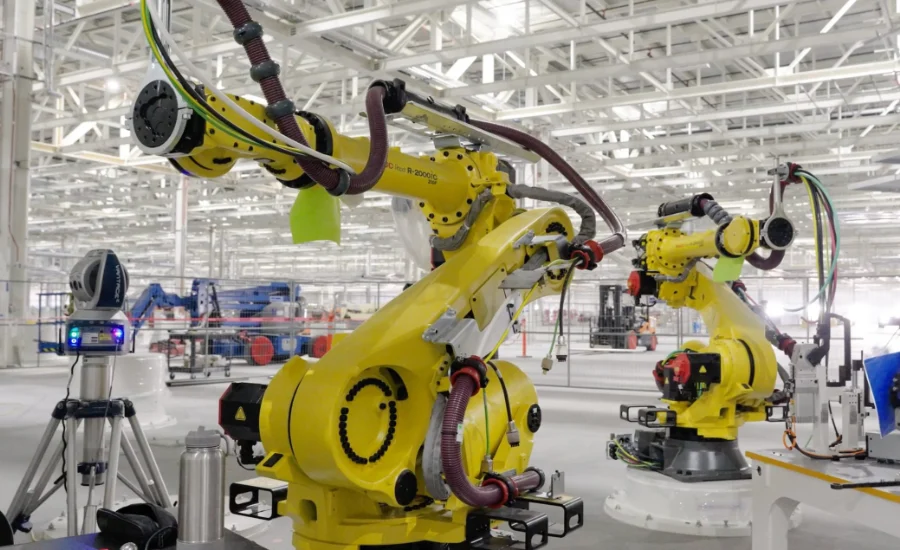
Ultimately, the Scout Motors project demonstrates that a single automotive assembly plant is much more than a collection of robots, steel beams, and conveyor belts. It is the beating heart of an entire ecosystem—one capable of transforming local economies, reshaping international business partnerships, and cementing South Carolina’s status as a titan of modern manufacturing.