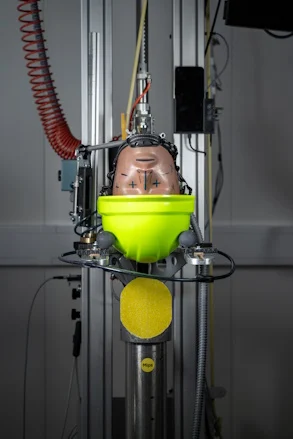
FOREST HILL, Md. — In an aggressive push to curb preventable workplace fatalities and traumatic brain injuries (TBIs) within the American building trades, the Job-Site Safety Institute (JSI) has announced a high-stakes, collaborative pilot initiative. Partnering alongside North Carolina State University (NCSU) and Maryland-based heavy construction firm Comer Construction, JSI is spearheading a multi-year study examining the real-world efficacy of transitioning from traditional hard hats to advanced Type II safety helmets.
The initiative, supported by a newly funded research grant, arrives at a critical juncture for the construction industry. While technological advancements in personal protective equipment (PPE) have accelerated in recent years, widespread adoption on active, dynamic job sites remains uneven. By bridging the gap between academic research and field-level implementation, this tri-party partnership aims to draft a definitive blueprint for how contractors nationwide can successfully modernize their head protection standards.
Main Facts: The Shift from Traditional Hard Hats to Type II Helmets
At the core of the initiative is a fundamental reassessment of what constitutes adequate head protection on a modern construction site. Traditional hard hats—ubiquitous across American infrastructure projects for decades—are primarily engineered to protect workers from falling objects striking the top of the head (Type I protection). However, dynamic construction environments present multi-directional hazards, including slips, trips, falls, and lateral impacts ("struck-by" or "struck-against" incidents).
Type II safety helmets are specifically engineered to mitigate these multifaceted risks. Unlike their predecessors, Type II helmets provide engineered protection against impacts directed not only to the top of the head but also to the sides and lateral regions. Furthermore, modern Type II iterations—such as the Delta Plus Americana Climbing-style helmet equipped with the Mips® Elevate Core system utilized in the initiative—incorporate advanced safety features like secure chinstraps for enhanced retention, multi-impact liners, and ergonomic designs that improve wearer comfort during grueling shifts.
The pilot program brings together three distinct entities:
- The Job-Site Safety Institute (JSI): A 501(c)(3) nonprofit organization founded by Builders Mutual Insurance Company in 2014, dedicated to safety research, education, and reducing job-site injuries.
- North Carolina State University (NCSU): A premier research institution tasked with conducting the empirical evaluation of the helmets’ mechanical and safety benefits.
- Comer Construction: A certified women-owned site development and heavy construction contractor based in Forest Hill, Maryland, serving as the real-world testing ground for the pilot.
Chronology: From Foundation to Field Testing
The genesis and execution of this safety initiative follow a deliberate trajectory designed to align rigorous scientific inquiry with practical, operational feasibility.
- 2014 (The Foundation of JSI): Established to address persistent safety challenges in the building sector, JSI begins its mission of awarding targeted research and education grants. To date, the institute has invested $1.13 million into initiatives designed to eliminate job-site injuries and fatalities.
- September 1, 2026 (Research Grant Funding): A critical milestone is officially reached as a research grant is funded with NCSU. The academic study is designed to rigorously evaluate the safety parameters of Type II helmets, measuring enhanced protection during falls, side-impact collisions, and overall improvements in physiological comfort, retention, and ergonomic fit.
- Late 2026 (Selection of Comer Construction): Following the initiation of the academic study, Comer Construction is selected as the primary industry partner for a live pilot program. The contractor is tasked with introducing the Type II helmets across its active job sites to evaluate practical considerations, field effectiveness, and crew acceptance.
- Ongoing through 2027 (Evaluation and Strategy Development): The pilot program is structured to run continuously through 2027. Researchers and industry leaders will gather ongoing qualitative and quantitative data to formulate practical deployment strategies that contractors of all sizes can utilize when upgrading their safety protocols.
Supporting Data: The Stark Reality of Construction Head Injuries
The urgency behind the JSI-NCSU-Comer Construction initiative is underscored by sobering statistical data regarding occupational hazards in the United States.
Construction remains one of the most perilous industries in the American economy. According to federal labor and safety statistics, the sector records approximately 1,000 fatal workplace injuries and an estimated 150,000 nonfatal injuries and illnesses each year. Within these sobering figures, traumatic brain injuries (TBIs) stand out as a uniquely catastrophic threat to workers’ lives and livelihoods.
- Over 200 Annual TBI Fatalities: In the U.S. construction industry alone, more than 200 workers lose their lives annually as a direct result of traumatic brain injuries.
- The Preventable Margin: Safety experts emphasize that a significant percentage of these fatalities and severe nonfatal neurological injuries are entirely preventable. Upgrading protective gear and enforcing modern safety practices represent the most direct lines of defense.
- The Role of Education: Recognizing that equipment is only as effective as the worker utilizing it, JSI leverages participant-centered training and accessible educational resources to reach tens of thousands of construction workers and employers annually. These programs are designed to cultivate a proactive safety culture, lower incident rates, and ensure workers return home unharmed at the end of every shift.
Official Responses: Voices from Leadership
The collaborative nature of the pilot program has drawn praise from executive leadership across the participating organizations, highlighting a shared commitment to worker welfare and operational excellence.
Susie Comer, President and Treasurer of Comer Construction, underscored the company’s internal dedication to proactive safety management:
"We’re always looking for ways to strengthen safety for our employees. This partnership allows us to put new safety research into practice and help identify what a successful transition to Type II helmets can look like in the field."
For Comer Construction, participating in the pilot is not merely about compliance, but about identifying and resolving the everyday operational friction points—such as worker comfort, thermal regulation, and gear compatibility—that often accompany significant changes in PPE standards.
Erik Anderson, Chairman of the Board of Directors of the Job-Site Safety Institute, emphasized the institute’s core philosophy of bridging academia and industry:
"Meaningful advances in construction safety happen when research is put into practice. This pilot program gives us an opportunity to better understand the benefits of Type II helmets while identifying practical ways contractors can make the transition on active job sites across the country."
Anderson noted that while laboratory data regarding Type II helmets and rotational impact mitigation systems (such as Mips) is compelling, true industry-wide adoption requires understanding the human element—how real workers interact with the gear during physically demanding labor under diverse weather conditions.
Implications: Shaping the Future of American Construction Safety
The implications of the JSI, NCSU, and Comer Construction pilot initiative extend far beyond the borders of Maryland or the classrooms of North Carolina. If successful, the framework developed through this multi-year study could catalyze a paradigm shift across the entire North American construction landscape.
1. Accelerating Industry-Wide Standards
For decades, standard Type I hard hats have satisfied baseline regulatory requirements set by agencies like the Occupational Safety and Health Administration (OSHA). However, as construction methodologies evolve—with more workers operating at heights, on complex multi-level scaffolding, and within congested urban footprints—the limitations of traditional hard hats have become increasingly glaring. By providing empirical data on the performance advantages of Type II helmets, this pilot could serve as foundational evidence for future regulatory updates or voluntary consensus standards (such as ANSI/ISEA Z89.1).
2. Overcoming Implementation Barriers
One of the primary hurdles in upgrading PPE is cultural and financial resistance. Traditional hard hats are inexpensive and deeply ingrained in construction culture. Transitioning a workforce to a climbing-style or full-brim Type II helmet involves capital outlay, sizing assessments, and overcoming initial worker skepticism regarding comfort or appearance. By documenting Comer Construction’s journey—including cost-benefit analyses, feedback loops, and deployment logistics—the pilot will provide a practical roadmap for small- and medium-sized contractors hesitant to make the leap.
3. Elevating Worker Well-Being and Retention
In an era marked by labor shortages and a critical need to attract younger generations to the skilled trades, visible commitments to advanced safety demonstrate a corporate culture that prioritizes human life above all else. Providing cutting-edge head protection that actively mitigates catastrophic brain trauma signals to workers that their health and safety are valued commodities.
Looking Ahead to 2027 and Beyond
As the pilot initiative progresses through 2027, the eyes of the safety community will be fixed on the data emerging from NCSU and the field reports from Comer Construction. The findings are expected to be published and distributed widely through JSI’s extensive educational network, empowering contractors nationwide to make informed, data-driven decisions about their safety programs.
Through the convergence of rigorous academic research, strategic nonprofit funding, and forward-thinking contractor execution, the construction industry moves one step closer to a future where traumatic brain injuries on the job site are a relic of the past.