In a significant evolution of its service architecture, San Francisco-based logistics powerhouse Flexport has officially expanded its operational reach, announcing the launch of its inaugural international fulfillment centers in Mississauga, Canada, and Manchester, England. This move marks a pivotal transition for the company, which has historically focused on freight forwarding and customs brokerage, signaling a strategic shift toward a fully integrated, end-to-end global supply chain ecosystem.
By embedding fulfillment capabilities directly into these high-demand international markets, Flexport aims to solve a long-standing "last-mile" inefficiency for its shipper base. For years, many of the brands utilizing Flexport’s freight services were forced to rely on fragmented logistics networks, often fulfilling orders for Canadian and British consumers from warehouses located in foreign countries—a process that inflated costs, extended delivery windows, and complicated customs compliance.
The Strategic Rationale: Closing the Fulfillment Gap
For Flexport, the decision to open facilities in Mississauga and Manchester was not speculative; it was a response to the explicit, data-driven needs of its existing client base. Ryan Petersen, Founder and CEO of Flexport, emphasizes that the company’s expansion is designed to mirror the actual flow of global commerce.
"Our customers built demand in Canada and the UK long before they had a good way to serve it," Petersen noted in a recent interview. "Brands using Flexport for freight and customs into these regions were already selling heavily into those markets, but were forced to route fulfillment through a warehouse in another country. That added time and cost to what should be a simple domestic delivery."
By consolidating the freight journey and the fulfillment process under a single platform and account relationship, Flexport is effectively "closing the gap." Shippers can now move goods from a manufacturing facility in Asia or elsewhere directly into a local fulfillment hub, enabling faster, domestic-style delivery speeds for the end consumer.
Chronology of Expansion: From Freight to Fulfillment
The transition from a pure-play freight forwarder to a comprehensive fulfillment provider has been a calculated, multi-year process for the company.
- Pre-2026: Flexport established its market presence in Canada and the UK primarily through freight forwarding and customs brokerage. While successful, these services were limited to the "middle mile," leaving the "last mile" to be managed by the customers themselves.
- July 2026: The Mississauga facility, strategically positioned near Toronto Pearson International Airport—a critical nexus for North American air freight—commenced inbound operations. This facility was specifically designed to handle sensitive goods, securing Health Canada certification for medical products, supplements, and consumer goods.
- September 2026: Full-scale customer shipments were initiated out of the Mississauga hub, marking the official commercial debut of the Canadian fulfillment service.
- Late 2026/Early 2027: The Manchester operations were brought online, utilizing advanced robotics to support high-velocity distribution across the United Kingdom.
- Looking Ahead to 2027: Flexport has already identified continental Europe as its next frontier, with plans to expand its fulfillment network to mirror its existing international freight lanes by the end of the year.
Facility-Level Differentiation: Precision and Automation
Flexport’s new facilities are not merely storage warehouses; they are technology-driven environments designed to optimize throughput and compliance. The company has taken two distinct approaches to its Canadian and British hubs, tailoring the technology to the local market’s regulatory and commercial needs.
The Mississauga Advantage: Regulatory Compliance
The Mississauga facility is optimized for industries with stringent quality control requirements. By securing Health Canada certification, Flexport has unlocked the ability to serve pharmaceutical, nutraceutical, and consumer health brands. This is a critical differentiator in a market where compliance delays can result in significant financial loss and brand reputation damage. Being near Toronto Pearson also ensures that goods coming off long-haul flights can be cross-docked or inducted into the fulfillment system with minimal dwell time.
The Manchester Advantage: Robotics and Throughput
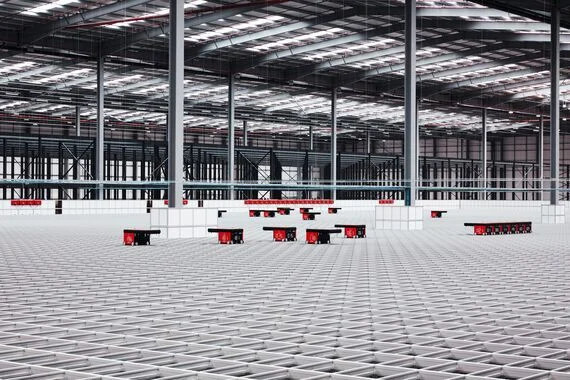
In the United Kingdom, Flexport has partnered with existing facility infrastructure that utilizes AutoStore automated storage and retrieval systems (ASRS). This represents a leap forward in warehouse density and efficiency.
Unlike traditional warehouses, where labor costs and human error are significant variables, the ASRS utilizes robots to retrieve inventory and bring it to a human picker at a station. This "goods-to-person" model allows for the storage of the same volume of goods in approximately 25% of the floor space required by a conventional facility. This high-density footprint allows Flexport to maximize capacity within the UK market while reducing the overhead costs typically associated with large-scale industrial real estate.

Supporting Data and Industry Implications
The economics of this expansion are rooted in the reduction of "cross-border friction." When a brand ships from a warehouse in the U.S. to a customer in Toronto, they are effectively managing an international shipment for every individual order. This involves multiple customs checks, potential duties, and the inherent volatility of cross-border courier services.
By shifting inventory into Canada and the UK, Flexport allows its clients to:
- Reduce Transit Times: Shifting from international shipping to domestic shipping can cut delivery times from 5–7 days to 1–2 days.
- Lower Logistics Costs: Bulk shipping inventory via freight (LCL or FCL) to a local fulfillment center is significantly more cost-effective than shipping individual parcels across borders.
- Enhance CX (Customer Experience): Modern consumers expect rapid, predictable delivery. Local fulfillment removes the "surprise" of customs fees and lengthy delays, which are often the primary drivers of cart abandonment.
The CEO’s Perspective: A Global Network Vision
Ryan Petersen views this rollout as the "natural next step" in building an end-to-end logistics network. "Flexport customers using freight through fulfillment in the U.S. have seen tangible efficiencies and cost savings," Petersen stated. "We are happy to offer that to more customers in new markets."
For Flexport, the competitive advantage is not just in the hardware (the ASRS or the certifications), but in the software—the ability for a customer to log into the Flexport platform and see their goods move from a factory floor, through customs, into a local fulfillment center, and finally to the customer’s doorstep, all within a single interface.
This transparency is the "holy grail" of modern logistics. By owning the data across every touchpoint, Flexport can provide predictive analytics, enabling its clients to better manage inventory levels and anticipate demand spikes in specific international regions.
Future Outlook: The Path to 2027 and Beyond
As Flexport looks toward the remainder of 2027, the focus shifts to continental Europe. The company’s roadmap is clear: the fulfillment network must mirror the existing international freight lanes that the company has spent years cultivating.
The industry is currently in a state of consolidation, where shippers are increasingly moving away from "vendor sprawl"—the practice of using dozens of different logistics partners—in favor of integrated providers who can handle the entire journey. By expanding its fulfillment footprint, Flexport is positioning itself as the primary infrastructure layer for mid-market and enterprise brands looking to scale globally without the complexity of managing a fragmented logistics chain.
The success of the Mississauga and Manchester hubs will serve as the blueprint for future expansions. If the efficiencies observed in the U.S. and the initial performance metrics from Canada and the UK hold, Flexport is well-positioned to disrupt the traditional 3PL (third-party logistics) model, forcing competitors to accelerate their own integration timelines or risk obsolescence in an increasingly fast-paced global economy.
In conclusion, Flexport’s entry into international fulfillment is a clear signal that the company has moved beyond the constraints of being a "freight forwarder." It is evolving into a full-scale logistics orchestrator, one that is increasingly essential to the brands that drive global trade. For the shippers, the message is clear: the friction of international commerce is being systematically dismantled, one fulfillment center at a time.