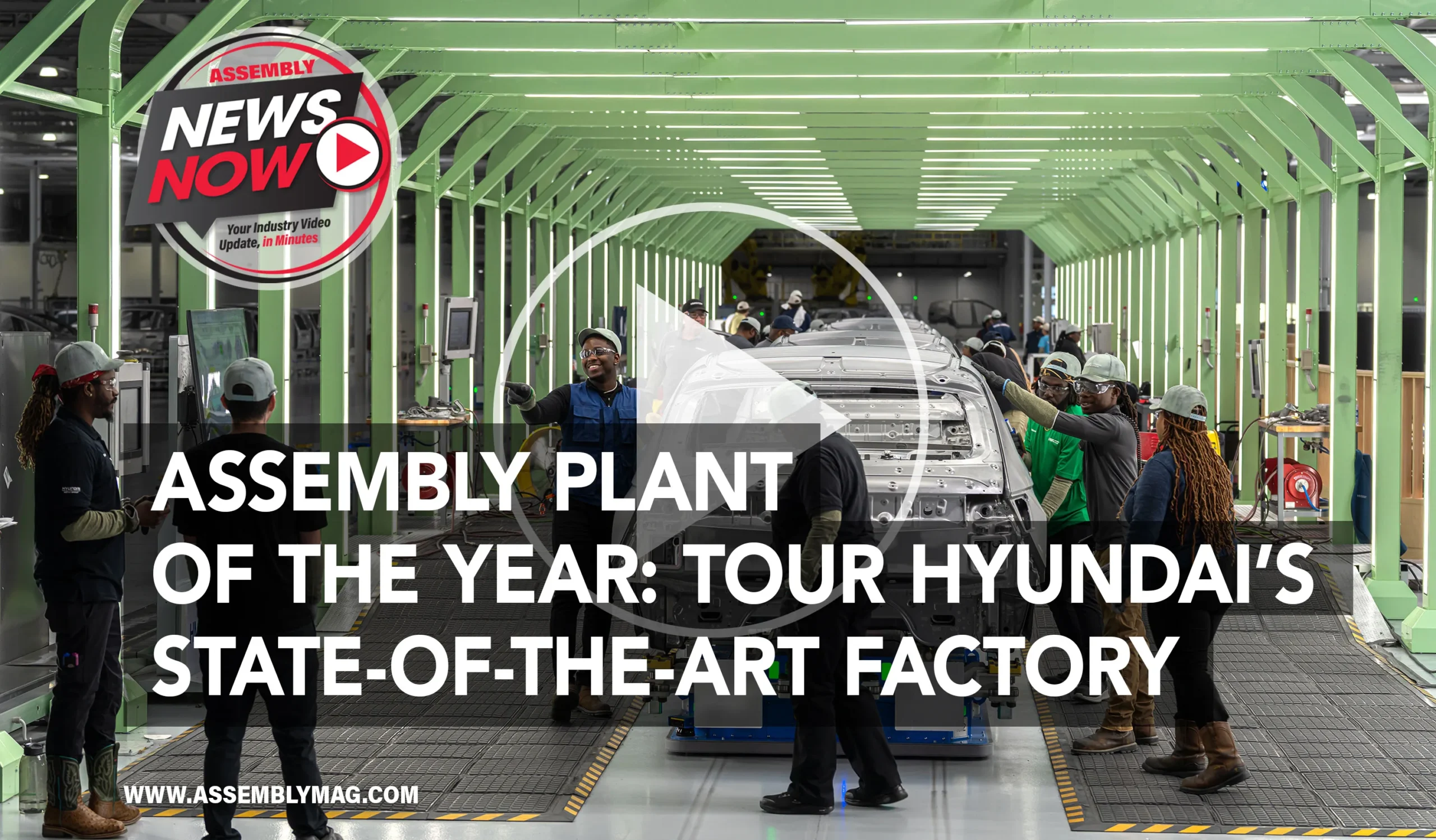
ATLANTA — In the rolling landscape of Bryan County, Georgia, a massive 7-million-square-foot industrial marvel is redefining the boundaries of automotive production. The Hyundai Motor Group Metaplant America (HMGMA) has officially been named ASSEMBLY magazine’s 2026 Plant of the Year. Representing a monumental shift in how vehicles are conceptualized, built, and delivered, this state-of-the-art facility merges more than 1,000 autonomous robots with cutting-edge artificial intelligence, all within a human-centric manufacturing ecosystem designed to harmonize advanced automation with skilled labor.
As the global automotive industry accelerates its transition toward electrification and software-defined vehicles, HMGMA stands out not merely for its scale, but for its intelligence. This comprehensive report explores the main facts, chronological development, supporting technological data, official stakeholder responses, and broader industry implications of the world’s newest benchmark in smart manufacturing.
1. Main Facts: The Anatomy of a Megafactory
Spanning an astonishing 7 million square feet, the Hyundai Metaplant America is designed to be a flexible, high-volume production powerhouse. Capable of building hundreds of thousands of electric vehicles (EVs) annually, the facility integrates several groundbreaking technological pillars that separate it from traditional legacy assembly plants.
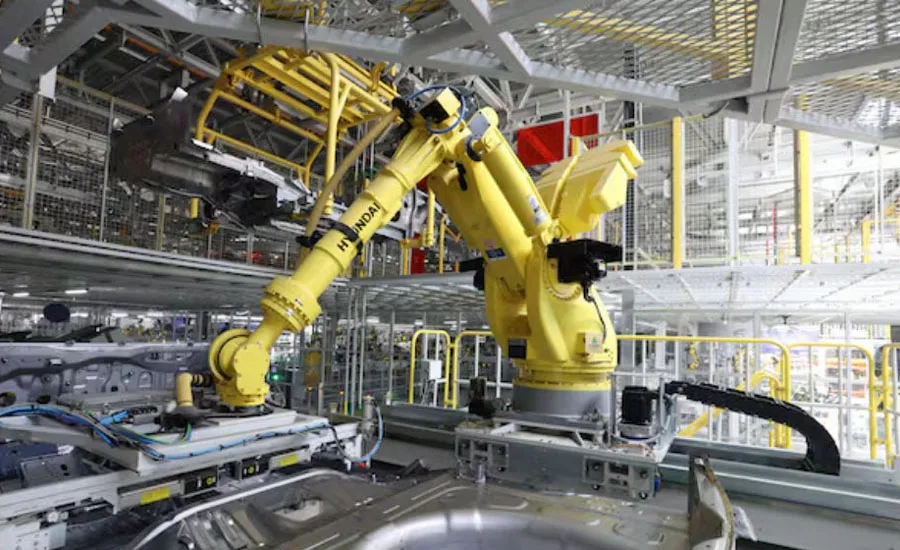
- Robotic Density and Automation: The facility deploys a fleet exceeding 1,000 robots. These machines handle some of the most physically demanding and high-precision tasks on the floor, including complex body framing, heavy materials handling, and precision sealing.
- AI-Powered Production Technology: Unlike traditional automation that follows rigid, pre-programmed paths, HMGMA utilizes artificial intelligence and machine learning algorithms to optimize production flow in real time. AI systems monitor part quality, predict mechanical maintenance needs before failures occur, and dynamically adjust assembly sequences.
- Human-Centric Engineering: Despite the heavy presence of automation, HMGMA was intentionally designed around the people working inside it. Ergonomic workstations, wearable assistive technologies, and collaborative robots (cobots) reduce physical strain on operators, allowing human workers to focus on quality control, process oversight, and complex problem-solving.
- Advanced Processes on Display: Inside the plant, visitors witness automated marvels such as robotic door assembly, AI-guided front-end module installation, and automated optical and laser inspection systems that scan every millimeter of a vehicle before it rolls off the line.
2. Chronology: The Road to the 2026 Plant of the Year
The realization of the Hyundai Metaplant America is a masterclass in rapid, strategic industrial development.
- May 2022: Hyundai Motor Group formally announces plans to construct its first dedicated electric vehicle and battery manufacturing facility in the United States, selecting a sprawling site in Bryan County, Georgia. The initial investment is slated at over $5.5 billion.
- October 2022: Groundbreaking ceremonies take place, marking the official start of construction. State and local officials hail the project as the single largest economic development project in Georgia’s history.
- Late 2023 to 2024: Structural construction progresses at a breakneck pace. Concurrently, Hyundai begins installing advanced digital twin software—a virtual replica of the physical plant—to simulate workflows, test robotic logic, and train engineers before physical equipment installation even finishes.
- Late 2024 / Early 2025: Trial production runs commence. Engineers fine-tune the synchronization between the plant’s AI architecture and its physical machinery. The facility begins validating its localized supply chain, including a joint-venture battery cell plant situated nearby.
- 2025 – 2026: Commercial production scales up aggressively. The plant achieves full operational capacity, producing multiple EV models across different brands within the Hyundai umbrella.
- Mid-2026: Following rigorous evaluation by manufacturing experts and editors, ASSEMBLY magazine names HMGMA its prestigious 2026 Plant of the Year, recognizing it as one of the most technologically advanced automotive production facilities on earth.
3. Supporting Data: Metrics of Modern Manufacturing
To understand the sheer magnitude of HMGMA, one must examine the metrics that define its operation. Industry analysts and manufacturing engineers point to several key performance indicators (KPIs) that highlight the plant’s efficiency and technological sophistication.
+----------------------------------------+-----------------------------------+
| Metric Category                        | HMGMA Operational Data            |
+----------------------------------------+-----------------------------------+
| Total Facility Footprint               | 7 Million Square Feet             |
| Active Industrial Robots               | 1,000+ Units                      |
| Primary Manufacturing Focus            | Electric Vehicles & Batteries     |
| Core Technological Integration         | AI-Powered Production & IoT       |
| Inspection Methodology                 | Automated Optical / AI-Guided     |
| Target Workforce (Full Ramp-Up)        | 8,500+ Direct Jobs                |
+----------------------------------------+-----------------------------------+
Digital Twins and Predictive Maintenance
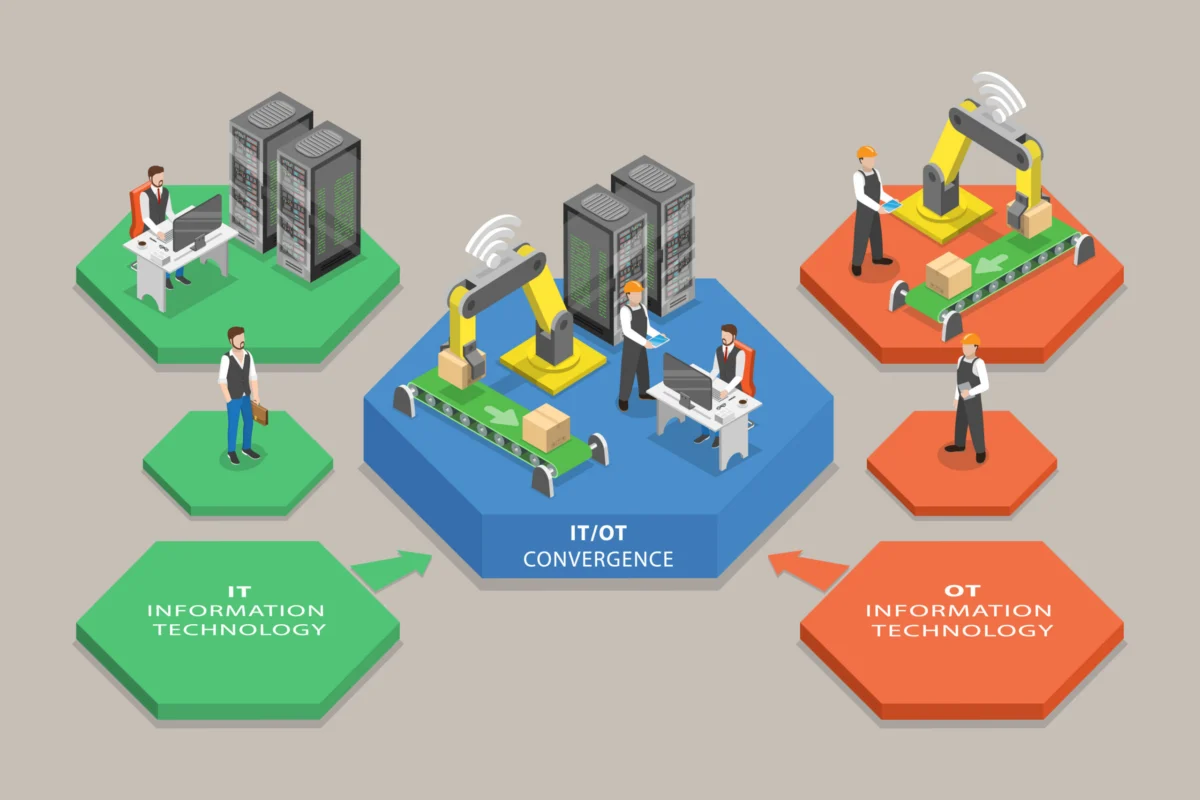
At HMGMA, data is treated as a core raw material. The factory floor is embedded with thousands of Internet of Things (IoT) sensors that feed data into a centralized cloud platform. By utilizing digital twin technology, plant managers can run simulations to test engineering changes without disrupting live assembly lines. Furthermore, machine learning models analyze acoustic, thermal, and vibration signatures from critical motors and presses, executing predictive maintenance to virtually eliminate unplanned downtime.
Precision Quality Control
Traditional automotive plants rely heavily on manual end-of-line inspections, which can miss microscopic defects. HMGMA utilizes automated optical inspection (AOI) gates equipped with high-resolution cameras and neural networks. These systems inspect paint finishes, gap tolerances, and electrical harnesses at speeds impossible for the human eye, ensuring near-zero defect rates before vehicles reach final shipping yards.
4. Official Responses: Leadership Perspectives
The recognition of HMGMA as ASSEMBLY’s 2026 Plant of the Year has drawn high praise from corporate leadership, labor advocates, and state officials alike.
Statement from Hyundai Manufacturing Leadership:

"Winning the 2026 Plant of the Year award from ASSEMBLY is a testament to the vision, dedication, and ingenuity of our entire team," said a senior HMGMA operations executive. "When we set out to build the Metaplant America, our goal was not simply to assemble electric vehicles. We set out to redefine the art of manufacturing. By fusing artificial intelligence with sophisticated robotics, and by keeping our human workforce at the very center of that ecosystem, we have created a facility that is agile, sustainable, and future-proof."
State and Economic Development Reactions:
Georgia Governor Brian Kemp previously lauded the facility’s alignment with the state’s economic future. State manufacturing liaisons have emphasized that HMGMA serves as an educational magnet, partnering with local technical colleges to train the next generation of mechatronics technicians, software programmers, and robotic engineers.
Industry Analyst Commentary:
Industrial engineering analysts note that HMGMA represents a major leap forward in "Industry 4.0" execution. Unlike older brownfield plants retrofitted with modern tech, HMGMA was designed from day one to be a software-defined factory, enabling rapid model changeovers and unprecedented supply chain agility.
5. Implications: What HMGMA Means for the Future of Global Manufacturing
The success and architecture of the Hyundai Metaplant America carry profound implications for the global manufacturing sector, stretching far beyond the automotive industry.
Setting a New Benchmark for Smart Factories
As consumer demand shifts toward customized products and rapid innovation cycles, traditional mass-production lines struggle to adapt. HMGMA proves that combining high robot density with flexible AI orchestration allows factories to switch between vehicle variants seamlessly. Other automakers—and manufacturers in aerospace, electronics, and heavy equipment—are closely studying HMGMA’s blueprint to replicate its agility.
The Evolution of the Industrial Workforce
A persistent myth of advanced automation is that it entirely eliminates human labor. HMGMA demonstrates the reality of modern manufacturing: human-machine collaboration. While robots handle grueling, repetitive, and hazardous tasks—such as heavy lifting and toxic adhesive applications—human workers are elevated to roles requiring critical thinking, quality assurance, system calibration, and technical oversight. This evolution necessitates a shift in educational curricula, emphasizing mechatronics, data analytics, and robotics maintenance.
Environmental Sustainability and Efficiency
Smart manufacturing is inherently tied to sustainability. HMGMA’s AI-driven energy management systems dynamically power down idle machinery, optimize HVAC usage across its 7-million-square-foot footprint, and minimize material waste during stamping and assembly. By co-locating battery production with vehicle assembly, the plant drastically cuts down on logistics-related carbon emissions, establishing a holistic model for green industrial operations.
Conclusion
The designation of the Hyundai Metaplant America as ASSEMBLY’s 2026 Plant of the Year is more than an organizational milestone; it is a glimpse into the future of industrial production. By successfully marrying over 1,000 advanced robots with adaptive artificial intelligence and a deeply human-centric design philosophy, HMGMA has raised the gold standard for what a modern factory can achieve. As the manufacturing world watches from Bryan County, Georgia, one thing is abundantly clear: the future of assembly has arrived, and it is remarkably intelligent.