By the Tech & Engineering Desk
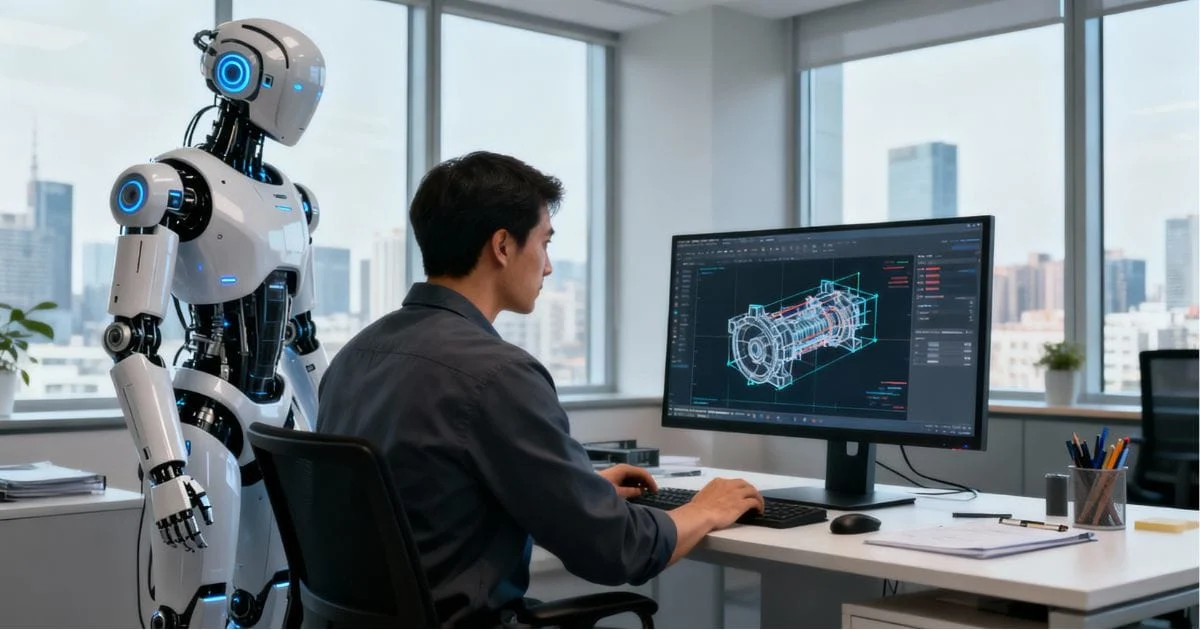
Mechanical engineering workflows are evolving at an unprecedented pace. While artificial intelligence is not replacing foundational design expertise, it is profoundly reshaping the most tedious aspects of every modeling session: geometry cleanup, constraint decisions, and rapid-fire iteration. As AI transitions from a theoretical novelty into an embedded workspace feature, everyday computer-aided design (CAD) practice is undergoing a quiet, structural transformation.
Main Facts: The Reality of AI in Modern CAD
The shift toward AI-integrated mechanical engineering is no longer a distant projection; it is an operational reality occurring inside mainstream software platforms. Industry giants such as Autodesk, Siemens, Dassault Systèmes (SOLIDWORKS), and PTC are rapidly embedding intelligence directly into their modeling environments.
Rather than functioning as generic chatbots floating above the workspace, these AI copilots operate natively. They interpret geometry, apply constraint logic, recognize patterns, and process conversational queries. Their primary value proposition is simple: they do not design products for engineers, but they eliminate the tedious friction that consumes hours of a standard workday.
- The Core Function: AI handles geometry cleanup, feature tree structuring, draft drawing generation, and early-stage constraint mapping.
- The Performance Gap: According to recent industry reports, top-performing engineering organizations are nearly twice as likely to actively deploy AI in concept development compared to lagging peers.
- The Cultural Shift: The benchmark for engineering proficiency is evolving from manual modeling endurance to the precise communication of design intent.
Chronology: Three Years That Changed the Drawing Board
To understand how quickly AI has woven itself into mechanical engineering, it helps to look backward.
- Late 2022: The public launch of foundational large language models sparked widespread curiosity across all software sectors, though CAD environments remained largely siloed, relying on parametric algorithms and traditional rule-based automation.
- 2023–2024: Major CAD vendors began introducing tentative machine-learning helpers. Tools began predicting simple sketch patterns, flagging regeneration errors, and offering basic geometry recognition for imported STEP files.
- 2025: A tipping point emerged. Mainstream platforms transitioned from basic helpers to true contextual copilots. Feature sets like Autodesk’s Sketch Auto-Constrain, automated drawing generation in Fusion 360, and Siemens’ AI-accelerated simulation strategies moved from marketing promises to daily-use tools.
- Present Day: Engineering teams are actively grappling with data security, ethical constraints, and skill-set shifts. Surveys of engineering communities show practitioners experimenting with everything from legacy desktop environments like Autodesk Inventor to cloud-native platforms like Zoo.dev and Onshape.
Supporting Data: Adoption Metrics and Performance Divides
Industry data reveals a stark division in how engineering firms approach artificial intelligence. Research highlighted in SOLIDWORKS’ State of Product Development report underscores both the ambition and the hesitation currently defining the market.
Where Companies See AI Potential
- 72% of organizations point to generative design and early-stage ideation as the highest-value application for AI.
- 55% emphasize machine-learning-driven forecasting.
- Digital twin simulation, natural language processing (NLP) summarization, and computer vision trail closely behind.
The Maturity Gap
- The "Top Performers": 43% of mature, technologically advanced engineering organizations are actively deploying AI in their daily workflows.
- The Majority: Only 22% of less mature firms have achieved similar integration, with 45% reporting they have only just begun experimenting in a structured way.
These figures illustrate that while the tools are universally available, organizational readiness, data hygiene, and internal governance remain critical bottlenecks to widespread adoption.
Official Responses and Industry Perspectives
Major enterprise software developers have been transparent about both the capabilities and the boundaries of their AI implementations, emphasizing trust, reliability, and human-in-the-loop workflows.
Siemens: Structuring Product Development
Siemens views the integration of artificial intelligence not as a tool for acceleration, but as a fundamental restructuring of product development workflows. Across their digital transformation and thought-leadership series, Siemens executives emphasize that AI’s true value lies in amplifying human expertise. In their guides on ethical AI implementation, they stress the delicate balance between innovation and trustworthiness—ensuring that machine-learning models remain reliable, explainable, and fully compliant with corporate safety parameters.
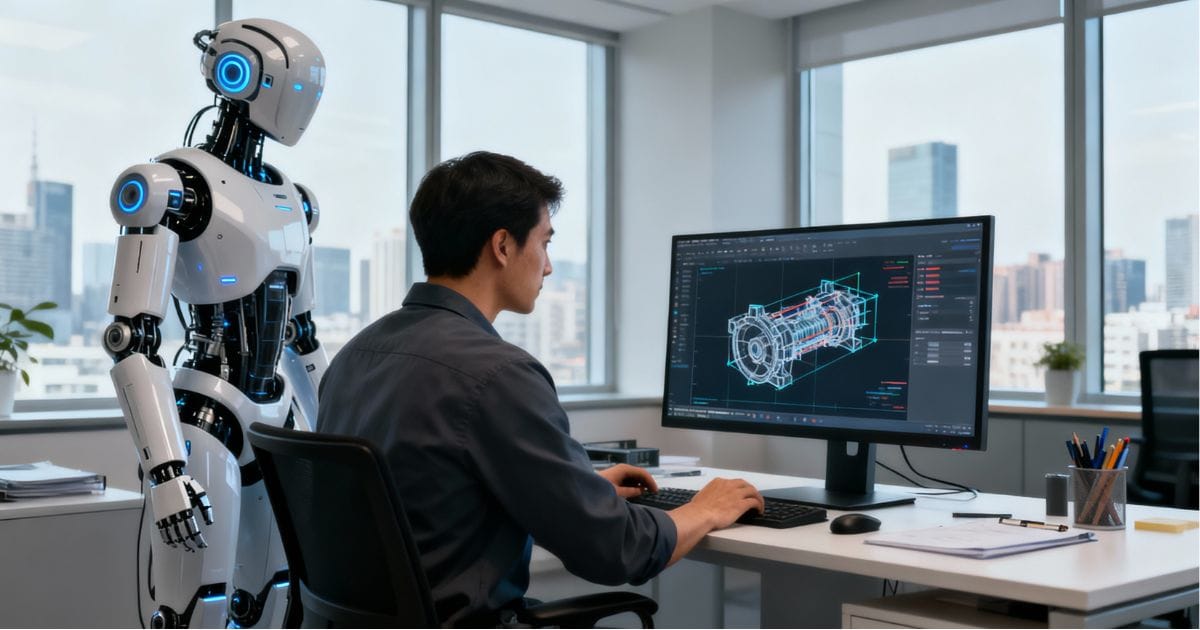
Furthermore, demonstrations by Siemens’ Simcenter team—such as AI-accelerated gear stress analysis—show how learning-based models can compress simulation times from hours down to minutes, offering rapid feedback loops during crucial early design phases.
Autodesk and Dassault Systèmes: Practical Friction Reduction
Autodesk’s engineering divisions consistently frame AI as a mechanism to remove the fumbling that plagues early geometry creation. By deploying features that evaluate rough sketches and apply constraints aligned with mechanical design intent, Autodesk aims to preserve engineering momentum. Their recent rollout of automated drawing generation in Fusion 360 represents an aggressive push to eliminate the blank-sheet syndrome that burdens documentation cycles.
Similarly, Dassault Systèmes utilizes its annual SOLIDWORKS Live sessions to demonstrate how intelligent software can capture sketch intent and automate repetitive detailing. Their focus remains anchored on relieving junior engineers from the soul-crushing tasks of cleaning supplier geometry and untangling recalcitrant sketches.
Implications: The Evolving Role of the Mechanical Engineer
As AI copilots become permanent fixtures in the CAD ecosystem, the daily responsibilities and long-term skills required of mechanical engineers are undergoing a fundamental shift.
1. From Manual Drafting to Intent Communication
The most successful engineers of the near future will not necessarily be those who can manually constrain complex sketches the fastest, but those who can most clearly communicate design intent to their digital assistants. Interacting with an AI copilot closely mirrors mentoring a junior engineer: vague prompts yield unhelpful, hallucinated geometry, whereas precise constraints and clear criteria produce elegant, robust results.
2. Democratization of Early-Stage Exploration
With copilots handling the administrative overhead of modeling—such as fixing broken feature trees, generating baseline drawing packs, and running preliminary mesh strategies—engineers can afford to explore a wider variety of concept variants. Early-stage evaluation of weight, stiffness, and manufacturability becomes frictionless, allowing teams to converge on optimal solutions much earlier in the product lifecycle.
3. Ethical, Security, and Quality Challenges
Despite the clear advantages, caution remains mandatory. Mechanical designs are bound by strict safety regulations, and AI models are still vulnerable to misinterpreting ambiguous intent, hallucinating constraints, or choking on legacy assemblies built over decades. Furthermore, concerns regarding data privacy and proprietary intellectual property mean that engineering firms must carefully vet cloud-based AI tools against rigorous trust and security frameworks, such as those maintained by Autodesk and Siemens.
Conclusion: The Path Forward
The mechanical engineering workspace of today looks fundamentally different than it did just a few years ago. On a quiet Friday afternoon when an AI assistant catches an overlooked fillet inconsistency or proposes a clean geometry propagation, the shift ceases to be a theoretical talking point and becomes a pragmatic reality.
Artificial intelligence will not replace mechanical engineers. Rather, it is fundamentally altering how they allocate their time. By absorbing the tedious, administrative friction of everyday modeling, AI copilots are slowly returning engineers to what they do best: solving complex physical problems and engaging in genuine, creative engineering.