The landscape of maritime conflict is undergoing its most radical transformation since the transition from sail to steam. From the sun-drenched waters of the Black Sea to the high-tech testing grounds of the United States, military organizations are rapidly shifting their strategic focus toward the "unmanned swarm." This shift—characterized by the deployment of Unmanned Surface Vessels (USVs) and Unmanned Underwater Vehicles (UUVs)—is no longer a theoretical exercise in future-warfare planning. It is a present-day reality that is forcing global naval powers to reconsider the viability of multi-billion dollar capital ships in an age of cheap, autonomous, and lethal drones.
The Paradigm Shift: From Human-Centric to Autonomous
For decades, naval supremacy was defined by the size and capability of manned warships—aircraft carriers, cruisers, and destroyers. However, the conflict in Ukraine has provided a stark, real-world case study on the efficacy of distributed, low-cost autonomous systems.
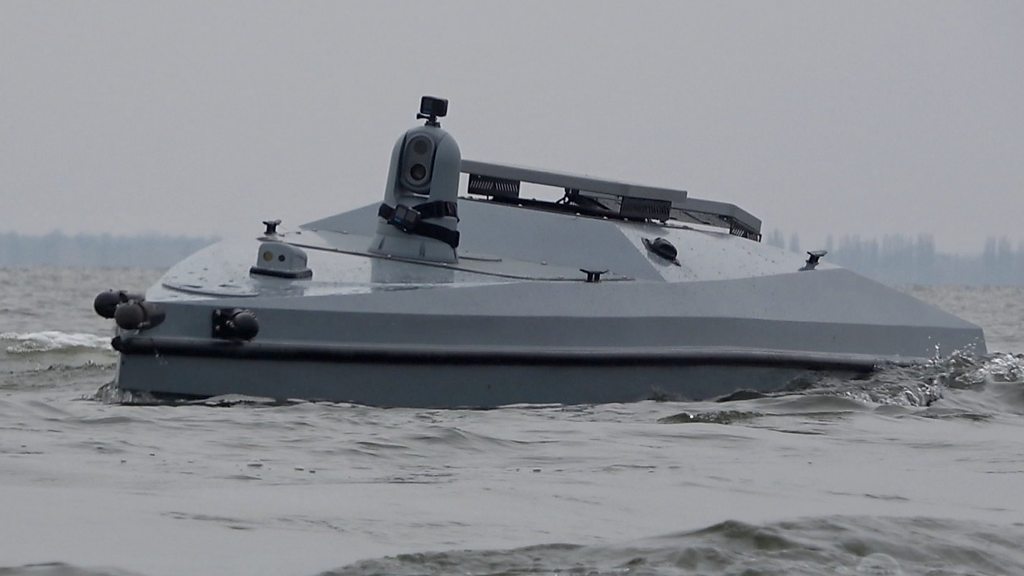
In November 2022, Ukrainian forces signaled the arrival of this new era by utilizing a drone boat to strike the Russian patrol vessel Sergey Kotov. The attack, while only causing damage, had a strategic impact far exceeding its physical cost: it forced the Russian Black Sea fleet into a state of perpetual high vigilance and compelled commanders to restrict their fleet’s movements. This event proved that a relatively inexpensive, remote-operated platform could effectively threaten a major sovereign naval asset. By augmenting these platforms with machine guns and other offensive capabilities, Ukraine has effectively pioneered a new doctrine of asymmetric naval warfare that challenges the traditional "big ship" hegemony.
A Chronology of Maritime Autonomy
The evolution of unmanned systems has moved with startling speed over the last century, transitioning from crude experimental tools to sophisticated, AI-driven platforms.
- The 1970s–1990s (The Experimental Era): Naval organizations experimented with animal-assisted surveillance, such as the U.S. Navy’s Marine Mammal Program, which utilized dolphins to detect underwater mines. While effective, these programs were limited by the biological constraints of the animals.
- Early 2000s (The Rise of ROVs): The development of Remotely Operated Vehicles (ROVs) allowed for safer underwater exploration and mine clearing, though these were tethered and required constant human oversight.
- 2022 (The Black Sea Watershed): The Ukrainian military successfully deployed USVs against Russian naval assets, marking the first time in modern history that an autonomous fleet fundamentally altered the strategic posture of a world-class navy.
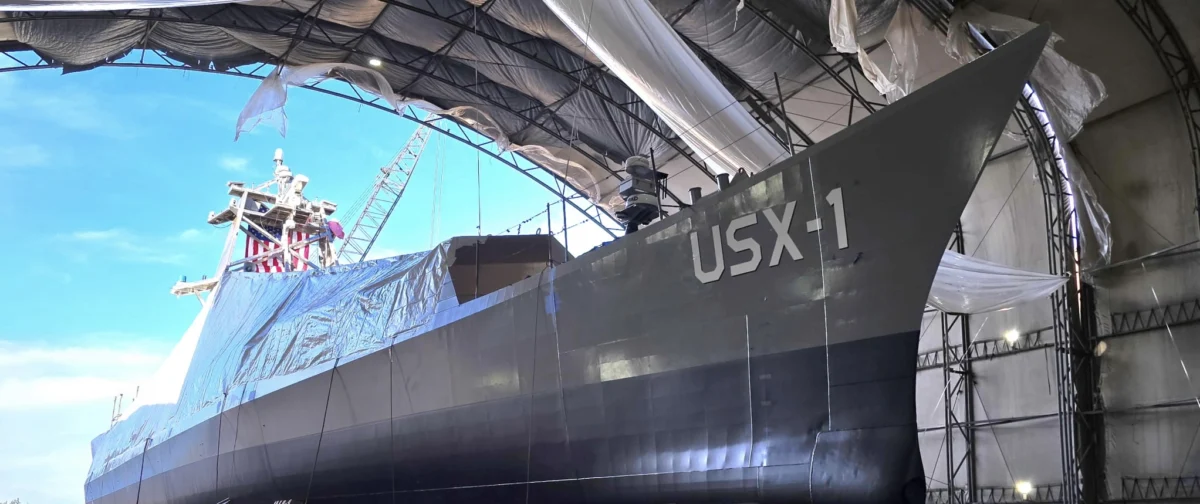
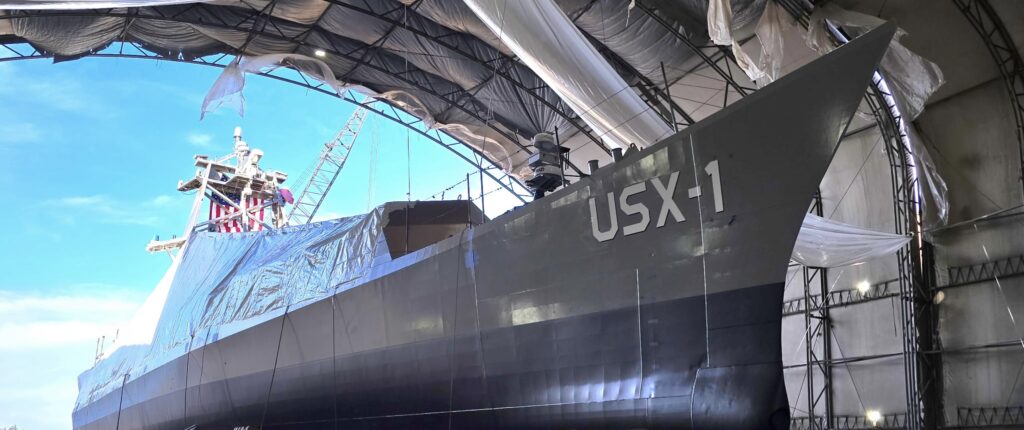
- February 2025 (The NOMARS Milestone): The construction of the USX-1 Defiant under the DARPA NOMARS program was completed, signaling a transition toward ships designed from the keel up to operate for months at a time without a single human crew member.
The Mechanics of Modern UUVs and USVs
To understand the impact of these technologies, one must categorize the functional roles these vessels fill. The versatility of modern autonomous systems is vast, spanning three primary domains:
1. Surveillance and Reconnaissance
UUVs have become the eyes and ears of the modern ocean. Unlike satellites, which can be obscured by weather or orbital timing, underwater drones can loiter indefinitely, measuring water temperature, oxygen levels, and current patterns. These data points are not just scientific; they are tactical, allowing commanders to predict underwater acoustic conditions that influence sonar performance.
2. Mine Countermeasures and Infrastructure Protection
The protection of high-value assets, such as nuclear submarines and aircraft carriers, is increasingly outsourced to autonomous sentinels. UUVs are uniquely suited to locate, identify, and neutralize naval mines, clearing paths for fleets without exposing human sailors to the risk of blast damage.
3. Logistical Support
The burden of transporting essential supplies across contested waters is a significant logistical hurdle. Autonomous surface vessels are now being designed to ferry equipment and fuel, reducing the need for manned supply ships and keeping human personnel away from the most dangerous maritime zones.
DARPA and the NOMARS Program: The "No Manning" Philosophy
Perhaps the most significant development in this field is the Defense Advanced Research Projects Agency (DARPA) "No Manning Required Ship" (NOMARS) program. For years, naval architects designed ships with human needs in mind: galleys, bunks, sewage systems, and climate control. The NOMARS philosophy flips this logic on its head.
The USX-1 Defiant, a 180-foot, 240-metric-ton vessel, represents a radical departure from traditional naval architecture. Because the ship carries no crew, the entire design is optimized for hydrodynamic efficiency, stealth, and long-endurance reliability. By removing the need to sustain human life, designers can maximize space for fuel, sensors, and weapons, or minimize the ship’s profile to make it harder to detect.
Serco Inc., the primary contractor for the program, has developed a maintenance philosophy that keeps the Defiant underway for unprecedented periods. By utilizing advanced diagnostics and modular components, the vessel can remain at sea for months, proving that "autonomous" does not just mean "remotely controlled"—it means "self-sustaining."
The Strategic and Economic Implications
The financial implications of this shift are profound. A modern destroyer costs billions of dollars and requires a massive crew to operate and protect. If a fleet of fifty or one hundred "disposable" drone ships can achieve the same mission—or force an enemy to expend expensive missiles to destroy cheap targets—the economic balance of naval power shifts decisively in favor of the drone-heavy force.
The Human Element
Critics of this transition argue that the removal of humans from the decision-making loop in combat could lead to unintended escalations. However, proponents point out that autonomous systems do not suffer from fatigue, fear, or the desire for vengeance—factors that have historically led to errors in judgment in high-stress maritime environments. As artificial intelligence continues to mature, the focus is shifting toward "human-on-the-loop" systems, where AI handles the navigation and tactical maneuvering, while a human commander retains the authority to authorize lethal force.
Global Research and Non-Military Applications
While military applications dominate the headlines, the civilian potential for autonomous watercraft is equally transformative. AI-driven drones are currently being used to track environmental changes in the deep ocean, providing critical early-warning data for tsunamis and monitoring the impact of climate change on ocean health. These research drones utilize the same sophisticated navigation algorithms as their military counterparts, proving that the technology is a dual-use asset with the potential to improve global safety and scientific knowledge.
Conclusion: The Future of the High Seas
We are witnessing the end of the "Captain Ahab" era of naval warfare, where a commander’s presence on the bridge was the central point of a ship’s operation. The future belongs to the "distributed fleet"—a web of interconnected, autonomous, and semi-autonomous vessels that can operate in the deepest parts of the ocean and the most contested coastal regions.
As the U.S. Navy and other global powers move toward adopting platforms like the Defiant, the lessons learned from the Black Sea will serve as the foundation for a new, more efficient, and perhaps more dangerous era of maritime strategy. The technology is no longer just "coming"—it is already here, patrolling the depths and the waves, waiting for its next instruction. The question is no longer whether we can operate ships without humans, but rather, how we will manage a world where the sea is no longer dominated by men, but by machines.