In the modern landscape of global commerce, the warehouse has evolved from a static storage facility into a high-velocity engine of fulfillment. Organizations across the supply chain are pouring billions into automation—deploying sophisticated robotics, high-speed conveyors, and autonomous mobile robots (AMRs). Yet, for many distribution leaders, the promised land of optimized throughput and peak agility remains frustratingly out of reach.
The culprit is rarely a deficiency in hardware. Instead, it is a pervasive, systemic disconnect known as the "reality gap"—a growing chasm between what digital management systems think is happening and the volatile, fluid reality occurring on the warehouse floor. As supply chains grow in complexity, closing this gap has shifted from a "nice-to-have" optimization to the defining competitive advantage of the next decade.
The Anatomy of the Reality Gap
The reality gap is the misalignment between digital visibility and physical execution. In a typical automated facility, data is generated at an astronomical rate: inventory status, equipment health, labor metrics, and order flows. However, this data is often trapped in isolated silos, processed with latency, or presented without the operational context necessary for intelligent decision-making.
When the digital twin of a warehouse diverges from the physical floor, the result is a reactive operational posture. Managers find themselves "firefighting"—responding to bottlenecks, equipment failures, or inventory discrepancies that have already occurred, rather than managing the flow of goods in real time.
A Chronology of Operational Evolution
To understand the current crisis of execution, one must look at how warehouses have evolved over the last thirty years:
- The Manual Era (1990s–2000s): Operations relied on human observation and paper-based tracking. The "reality gap" was managed through physical checks and tribal knowledge.
- The Digitization Era (2010s): The industry pivoted to Warehouse Management Systems (WMS) and ERP integrations. The focus was on "connectedness"—ensuring every item had a digital record.
- The Automation Era (Early 2020s): Rapid deployment of robotics and AS/RS (Automated Storage and Retrieval Systems). Organizations focused on "automation density," believing that replacing manual labor with machines would solve efficiency issues.
- The Orchestration Era (Present Day): Organizations have realized that automation without synchronized, real-time intelligence leads to "islands of efficiency" rather than a holistic high-performance system. The focus has shifted from what is moving to how the entire system orchestrates that movement.
Supporting Data: The Cost of Disconnection
While companies often report high ROI on specific automation projects, aggregate facility performance frequently plateaus. Industry research suggests that up to 30% of potential warehouse throughput is lost due to "micro-stoppages" and system desynchronization.
In facilities where the reality gap is wide, the following metrics typically suffer:
- System Idle Time: High-cost robotics sit waiting for instructions due to upstream or downstream delays that aren’t visible to the central controller.
- Order Fulfillment Variance: The time between "order placed" and "shipped" fluctuates wildly because the system cannot account for real-time labor or equipment congestion.
- Inventory Inaccuracy: A discrepancy between the WMS "book" inventory and the physical stock on the shelves leads to "ghost inventory," which can derail automated picking routines for hours.
Why Automation Alone is No Longer Enough
For decades, the mantra was "automate to reduce cost." This served the industry well during periods of relative stability. However, today’s supply chain is characterized by extreme volatility—sudden spikes in e-commerce demand, labor shortages, and global logistics disruptions.
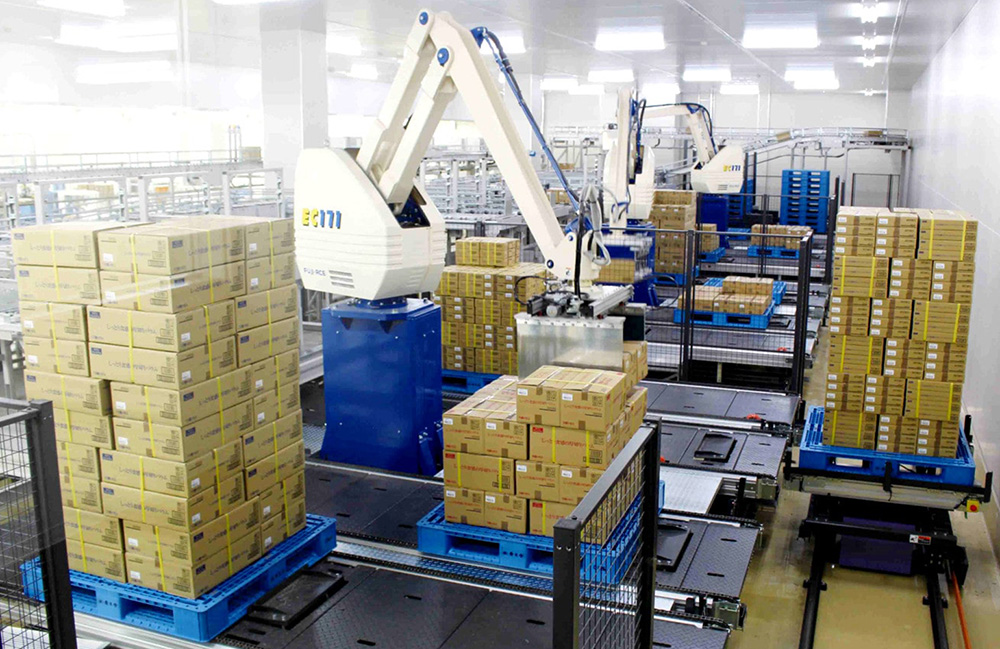
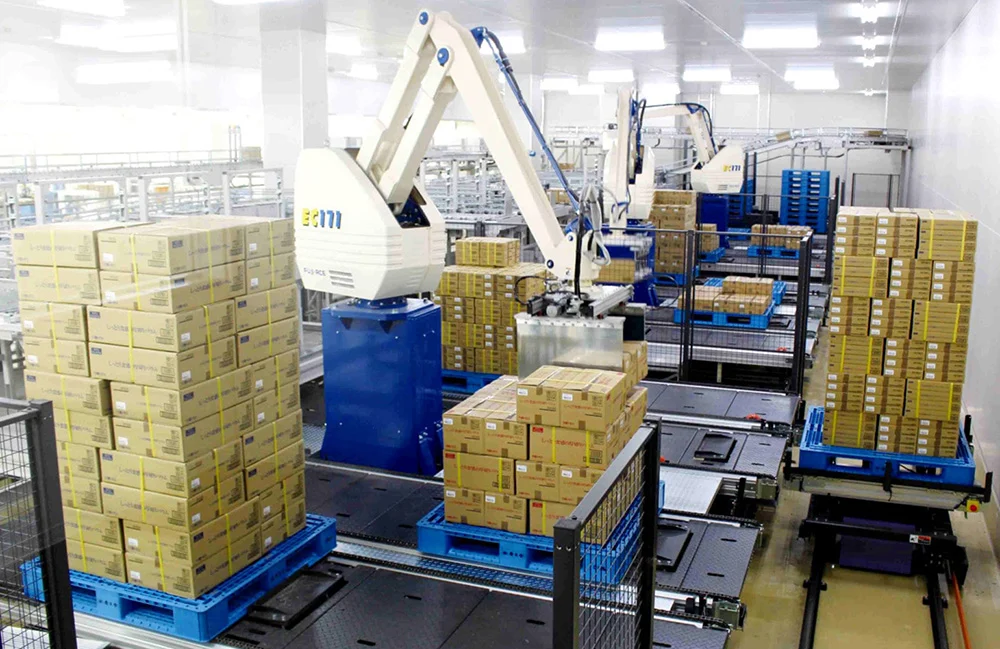
In this environment, static automation is a liability. If a facility has an automated picking system, but the sorting software doesn’t know that a palletizer is experiencing a mechanical slow-down, the system will continue to feed products into a bottleneck, causing a backup that can paralyze the entire facility.
Orchestration vs. Automation:
- Automation is the mechanical act of moving a product from point A to point B.
- Orchestration is the intellectual act of deciding why, when, and how that product should move based on the real-time status of the entire ecosystem.
Leading providers like Daifuku are increasingly moving toward solutions that emphasize this orchestration layer. By integrating disparate systems into a unified command structure, they allow the warehouse to act as a singular, living organism rather than a collection of independent machines.
The Path to Intelligent Operations
Closing the reality gap requires a pivot from "Connected Operations" to "Intelligent Operations." This transformation is built on three foundational pillars:
1. Granular Visibility
True visibility is not just knowing where a product is; it is knowing the "state" of the environment around it. This includes equipment health, the density of human workers in a specific zone, and the throughput rate of secondary systems.
2. Predictive Decision-Making
Intelligent operations leverage predictive analytics to anticipate disruptions. If a system detects a minor anomaly in a conveyor motor, it should automatically reroute orders to an alternative path before the motor fails completely.
3. Dynamic Execution
Static planning (e.g., "batch orders every 30 minutes") is being replaced by dynamic, event-driven execution. If a high-priority order arrives, the system should be able to pause lower-priority tasks and re-task automated assets instantly, without requiring manual intervention from a floor supervisor.
Official Industry Perspectives
"The objective is not simply faster data collection; it is faster, better decisions," notes Cecile Dick-Calmes, a leading strategist in warehouse automation. "In increasingly complex fulfillment environments, decision speed is becoming as important as processing speed."

Industry leaders emphasize that the transition to real-time execution requires a shift in corporate culture. It demands that companies stop viewing their Warehouse Management System as a static database and start viewing it as a dynamic, responsive engine. The "reality gap" is, at its core, a failure of information flow. When an organization bridges this, it gains a layer of resilience that competitors lack.
Strategic Implications: From Assets to Agility
The competitive landscape of the late 2020s is changing. Historically, an organization’s power was measured by its physical footprint and the sheer volume of its automated assets. Today, competitive advantage is migrating toward agility.
Building Resilience
When a facility operates in real-time, it becomes inherently more resilient. During supply chain shocks, these organizations can reconfigure their workflows in minutes, whereas competitors relying on traditional, siloed automation might take days to recalibrate their software and processes.
Optimizing Human-Machine Interaction
The reality gap often manifests in the relationship between humans and robots. If a robot is programmed to pick at a fixed speed, it cannot account for the fact that a human packer is momentarily busy. By closing the reality gap, the system can synchronize human and robot speeds, reducing "wait-time" friction and significantly lowering the physical fatigue on human operators.
Looking Ahead: The Future of the Intelligent Warehouse
The future of warehouse performance will not be defined by who has the most robots, but by who has the best "nervous system" connecting those robots. As artificial intelligence and edge computing become more accessible, the barrier to closing the reality gap will drop, making real-time execution the industry standard rather than a luxury.
Supply chain leaders must now ask themselves: Is our organization capable of turning automation into coordinated, real-time execution?
The answer lies in the integration of digital intelligence with physical reality. The warehouses that succeed in the next decade will be those that realize the greatest inefficiency isn’t in the movement of goods—it is in the delay between knowing what is happening and the ability to act upon it. The "reality gap" is closing; those who lead the charge will define the future of fulfillment, while those who ignore it risk being left behind in the static past.