By the Editorial Desk
Special Report based on industry developments and insights from Autonomous Solutions Inc. (ASI)
Main Facts: The Dawn of Large-Scale Agricultural Autonomy
American agriculture stands at a historic crossroads. Producers across the nation are routinely asked to feed a growing population despite facing a contracting labor pool, soaring input costs, and increasingly volatile weather patterns driven by shifting global climates. For generations, farming has been defined by adaptation—transitioning from draft animals to mechanical tractors, and from handwritten logbooks to satellite-guided precision farming. Today, the central debate among agricultural producers is no longer if they should adopt autonomous technology, but whether the technology is robust enough to handle the harsh, unpredictable realities of everyday farming operations.
The answer arrived this past summer in the sun-drenched fields of South Florida. Autonomous Solutions Inc. (ASI), in a landmark partnership with U.S. Sugar Corp. and Everglades Equipment Group, officially announced the deployment of the largest autonomous vehicle fleet in the history of American sugarcane farming. Spanning hundreds of thousands of acres, this initiative is not a preliminary pilot program or a localized proof-of-concept. It represents a full-scale, mission-critical operational deployment across one of the most logistically complex agricultural footprints in the United States—and it is already delivering unprecedented operational results.
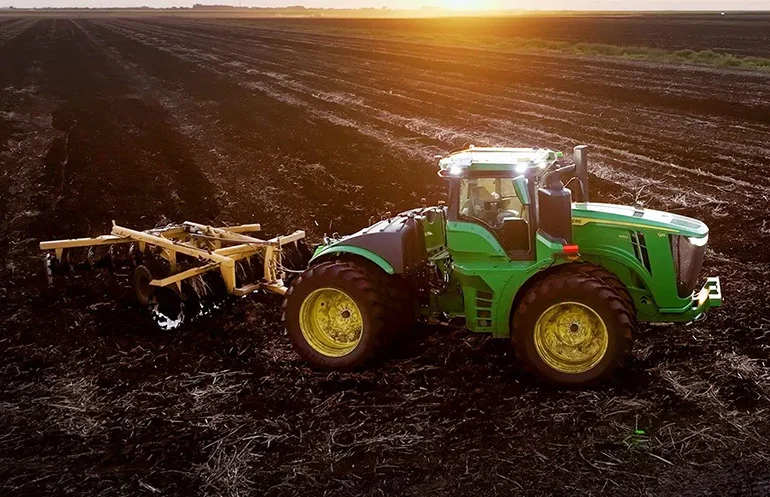
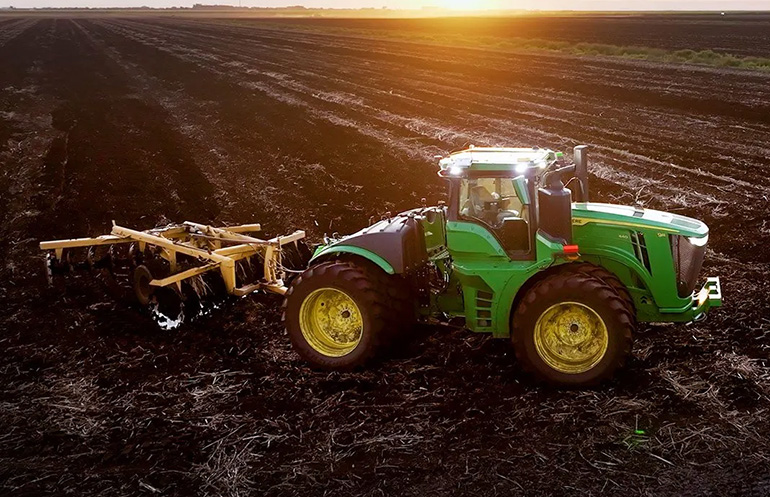
At the core of this deployment is ASI’s manufacturer-agnostic fleet orchestration platform, Mobius. By retrofitting existing John Deere tractors with advanced drive-by-wire systems and integrating them into the Mobius software ecosystem, the project has transformed familiar agricultural machinery into fully autonomous, tireless workhorses. This strategic leap forward offers a compelling blueprint for how heavy industries can leverage artificial intelligence and robotics to conquer systemic labor shortages and weather-induced vulnerabilities.
Chronology: From Academic Curiosity to Industrial Dominance
To understand the magnitude of the South Florida sugarcane deployment, it is necessary to examine the trajectory of agricultural automation over the past quarter-century.
- Late 1990s to 2000: Mel Torrie founds Autonomous Solutions Inc. (ASI) as an ambitious student emerging from Utah State University. The company is born out of a deceptively simple yet radical question: Why continue to place human workers in the most hazardous, tedious, and physically punishing seats of heavy industrial machinery?
- The 2000s–2010s: Over the next two decades, ASI builds its reputation by engineering autonomous fleets for some of the world’s most demanding environments, including open-pit mining, heavy construction, industrial logistics, and complex material handling. The company’s core software platform, Mobius, gradually evolves into a battle-tested command-and-control system capable of orchestrating hundreds of millions of tons of automated work globally.
- Early 2020s: As labor deficits in agriculture reach critical levels—exacerbated by shifting immigration trends and aging rural populations—technology providers begin setting their sights on the fields. Concurrently, climate instability introduces severe disruptions, such as sudden, anomalous deep freezes.
- The 2026 Milestone (Summer): ASI, U.S. Sugar, and Everglades Equipment Group publicly unveil their historic collaboration. Utilizing the Mobius platform, the partners deploy a massive fleet of autonomous John Deere tractors across U.S. Sugar’s sprawling 255,000-acre agricultural footprint in South Florida. The initiative marks a permanent shift from theoretical farming automation to large-scale operational execution.
- October 2026 (Upcoming): ASI founder and CEO Mel Torrie is slated to take the stage at the milestone 20th-anniversary RoboBusiness 2026 conference in Santa Clara, California, to deliver a keynote address titled "Designing the Robotics Ecosystem for Outdoor Autonomy," sharing real-world insights derived from the U.S. Sugar deployment.
Supporting Data: Quantifying the Crisis and the Solution
To fully grasp why autonomous intervention has become essential for modern farming, one must analyze the stark economic and environmental data framing the current agricultural landscape.
The Vulnerability of Modern Farming
Modern agricultural enterprises operate under extraordinarily tight margins. When climate anomalies strike, the financial devastation can be catastrophic. For example, recent unexpected deep freezes across Florida inflicted an estimated $3.1 billion in losses to the state’s broader agricultural supply chain, according to state agricultural reports.
When regional producers are thrown into survival mode, the shockwaves reverberate directly through the national food supply. Weather remains an uncontrollable variable, but the speed and efficiency with which a farm can respond to a weather threat dictate whether an incident becomes a minor inconvenience or an economic disaster.
Operational Metrics of the ASI and U.S. Sugar Deployment
- Total Acreage Under Management: U.S. Sugar sustainably farms approximately 255,000 acres (103,194.8 hectares) across five counties in South Florida.
- Workforce Impact: The cooperative provides vital economic support to rural communities by employing 3,000 local residents.
- Fleet Scale: The joint initiative represents the largest autonomous tractor fleet ever deployed in American sugarcane farming history.
- Platform Versatility: ASI’s Mobius orchestration platform is manufacturer-agnostic, allowing seamless integration with established agricultural equipment brands like John Deere via advanced drive-by-wire kits.
- Efficiency Gains: Preliminary field data indicates that autonomous tractors achieve superior land preparation accuracy compared to standard human operation, while maintaining uninterrupted round-the-clock operating schedules unaffected by shift changes, fatigue, or adverse local weather.
Official Responses and Stakeholder Perspectives
The transition toward fully autonomous farming has generated substantial dialogue among agricultural executives, technology innovators, and labor advocates. Key leaders involved in the South Florida deployment have shared critical perspectives on what this technological shift means for the future of food production.
The Technologist’s View: Mel Torrie, Founder and CEO of ASI
Reflecting on the motivations behind the deployment, Mel Torrie emphasizes that autonomy acts as a crucial operational bridge.
"Here’s the operational reality I hear from farmers: The weather is the wildcard, but the labor shortage is the multiplier," Torrie explains. "When a freeze threatens a crop, you need all hands moving fast. If you’re short a crew, or your operators are four miles away on the other side of the operation, crops stay in the field longer than they should. That’s where the losses compound. Autonomy doesn’t fix the weather. What it does is remove the constraint that turns a weather event into an economic one."
Addressing the perennial concern regarding workforce displacement, Torrie is explicit about the human element:
"The question I get asked most by farmers considering this technology is some version of: ‘What happens to my people?’ It’s the right question. U.S. Sugar has committed to retaining current employees and retraining tractor operators for the higher-skill, supervisory roles this ASI Mobius technology creates. That’s not a PR position. That’s a business reality: the people who know these fields, who understand the soil, the equipment, and the crop cycles, are exactly who you want managing autonomous fleets."
The Agricultural Producer’s View: U.S. Sugar Corp.
Founded in 1931, U.S. Sugar has weathered nearly a century of agricultural evolution. Company leadership has consistently maintained that combining bold technological innovation with traditional hard work is the single most effective strategy for keeping farming operations viable and ensuring American families remain fed. By partnering with ASI and Everglades Equipment Group, U.S. Sugar has positioned itself at the bleeding edge of agtech, proving that historic agricultural institutions can successfully embrace cutting-edge robotics without losing their foundational community commitments.

Broader Implications: Scaling Autonomy Across American Agriculture
The successful integration of autonomous fleets in South Florida is not viewed by its architects as an isolated engineering triumph. Rather, it serves as a scalable operational template poised to transform agricultural sectors far beyond sugarcane cultivation.
1. Expanding Crop Applications
While the initial phase of the deployment focuses heavily on rigorous land preparation and sugarcane cultivation, the long-term roadmap is significantly broader. U.S. Sugar has already announced intentions to expand the utilization of ASI’s autonomous technology to encompass other vital regional crops, including sweet corn and green beans. The underlying software logic, safety interlocks, and fleet coordination protocols developed for sugarcane are fully transferable to diverse crop geometries and soil types.
2. Transforming the Labor Model
The traditional agricultural labor model is plagued by chronic shortages, high turnover, and extreme physical wear-and-tear on operators. By enabling a single trained supervisor to monitor and manage multiple autonomous vehicles simultaneously, operations of immense scale can achieve unprecedented output per worker. Furthermore, transitioning workers from dusty, vibration-heavy tractor cabs into climate-controlled supervisory control rooms dramatically improves occupational safety, reduces career-ending repetitive stress injuries, and transforms tractor driving into a high-tech, highly desirable career path.
3. Cross-Industry Synergy
The methodologies powering modern agricultural autonomy are deeply informed by lessons learned in heavy industries such as mining and long-haul logistics. Because platforms like Mobius are engineered to maintain high safety standards and reliable uptime in hostile outdoor environments, agricultural deployments benefit from years of rigorous field testing in extreme conditions. As these ecosystems mature, the barriers to entry for independent farmers will continue to drop, paving the way for widespread adoption across family farms and corporate agricultural enterprises alike.
Conclusion: Building Resilience for Future Generations
Farming has forever been an exercise in resilience—managing uncontrollable variables with finite resources under immense pressure. While the core challenges of agriculture remain timeless, the modern toolkit has experienced a quantum leap in capability.
The collaborative deployment spearheaded by Autonomous Solutions Inc., U.S. Sugar, and Everglades Equipment Group demonstrates that the future of farming relies on pairing generational human expertise with intelligent robotic systems. By extending operational reach, maintaining round-the-clock productivity, and safeguarding human workers from unnecessary risk, agricultural autonomy is successfully redefining what is possible in American farming. For the upcoming generation of producers willing to embrace these innovations, technology is no longer just a luxury—it is the foundation of enduring agricultural viability.