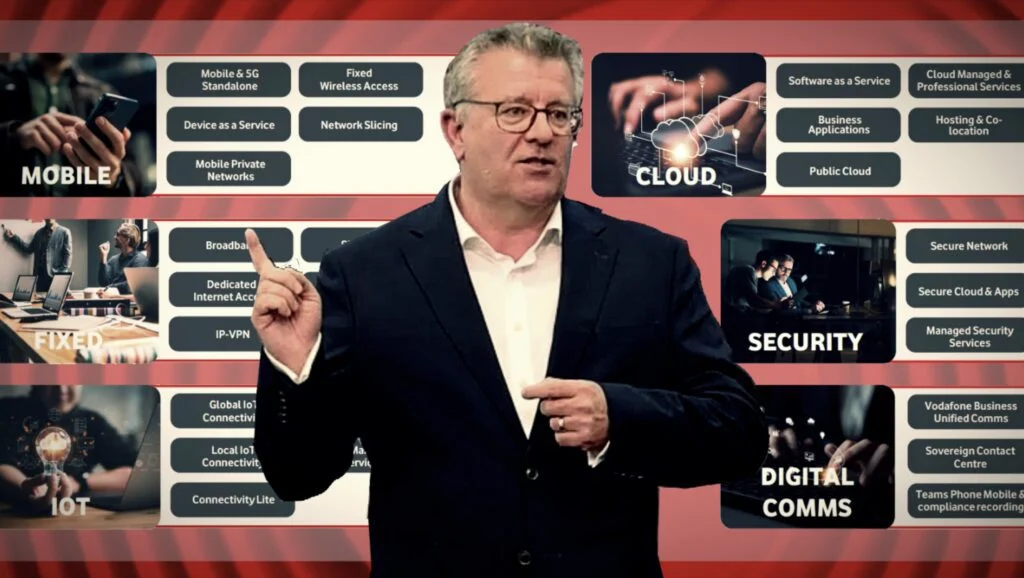
During Vodafone’s recent investor day, held on October 8, the narrative was dominated by the technical and operational complexities of its high-stakes integration with Three UK. While the headlines focused on site consolidation, spectrum deployment, and the monumental task of migrating IT systems, a quieter—yet arguably more critical—story emerged from the shadows. Vodafone Business, a division often relegated to the periphery of major corporate announcements, provided a rare and comprehensive look at its financial health, strategic priorities, and the roadmap for its most sophisticated customer base.
For observers of the telecommunications sector, the data points provided during this session offer a bellwether for the future of enterprise connectivity. With £1.85 billion in annual service revenue, Vodafone Business is not merely a subsidiary; it is the strategic cornerstone upon which the "new" VodafoneThree entity intends to build its future value.
Main Facts: The Anatomy of Vodafone Business
The investor briefing underscored that Vodafone Business accounts for approximately 27% of the total revenue for the combined VodafoneThree entity for the 2025/26 period. This figure is significant, particularly given that the Three brand will remain absent from enterprise dealings, with the company opting to migrate one million Three business connections into the existing Vodafone infrastructure.
The division operates on a massive scale, managing 6.5 million mobile connections and 15.3 million IoT (Internet of Things) connections. The latter is expanding at a breakneck pace, with the company reporting an addition rate of 11,500 connections per day. While Software-as-a-Service (SaaS) figures were largely omitted from the public presentation, the company did reveal a notable 41% growth in SaaS service revenue, suggesting that the shift from hardware-centric connectivity to software-defined services is well underway.
Chronology: A Roadmap for Integration and Growth
The integration of Three UK is a multi-year project, and Vodafone’s strategy relies heavily on the "depleted sum of its merged parts" becoming a more potent whole. The timeline for this transition involves several critical phases:
- Phase One: Infrastructure Consolidation: The immediate focus is on merging network sites and streamlining spectrum usage to ensure that the combined entity can offer superior coverage and capacity compared to the legacy firms.
- Phase Two: IT Migration: A massive undertaking involving the transition of Three’s enterprise customer base onto Vodafone’s systems. This is not just a backend operation but a commercial one, designed to facilitate cross-selling and up-selling opportunities.
- Phase Three: Portfolio Expansion: Moving beyond traditional connectivity, the company is pivoting toward higher-margin growth bets. This includes the deployment of network slicing, Fixed Wireless Access (FWA), SD-WAN, and a renewed emphasis on cloud and security services.
According to Vodafone Business director Nick Gliddon, the company is currently optimizing its segmentation to target specific market needs, acknowledging that while their stronghold in SoHo (Small/Home Office) and private enterprise is robust, there remains significant "headroom to grow" within the SME and public sectors.
Supporting Data: The Segmentation Strategy
Vodafone’s enterprise strategy is rooted in a clear understanding of its customer demographics. The revenue breakdown provided during the investor day paints a picture of a company aiming to balance volume with high-value service delivery:
- SoHo (Small/Home Office): Firms with fewer than 10 staff and a single site account for 27% of divisional revenue.
- SME (Small/Medium Enterprises): Organizations with fewer than 250 staff and multiple sites make up 23% of revenue.
- Private Enterprise: Large-scale private corporations contribute 31% of revenue.
- Public Sector: Organizations of all sizes account for 19% of the division’s revenue.
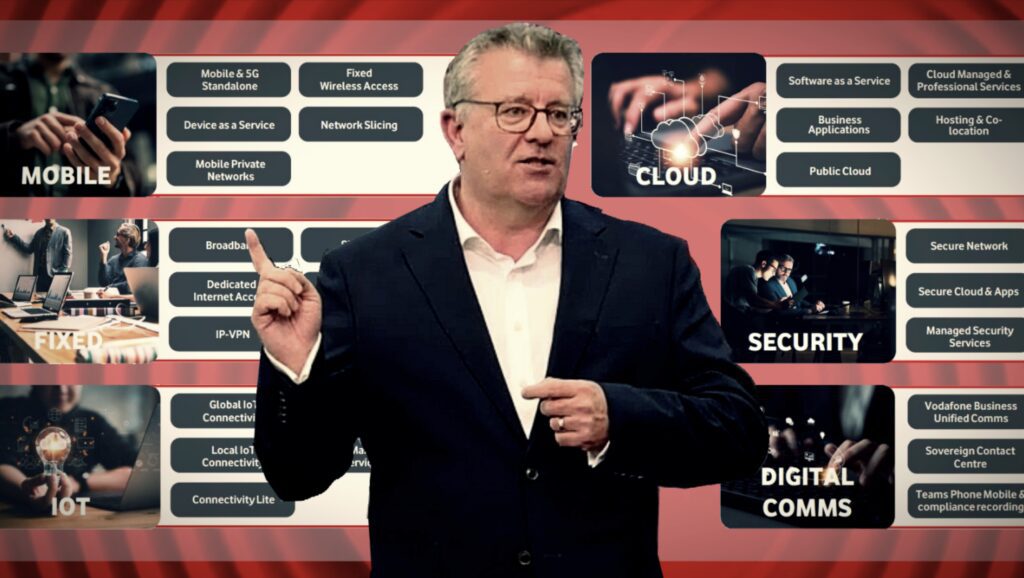
The product mix reveals a similar focus on diversification. While "Mobile" services—including 5G, private networks, FWA, and slicing—comprise 50% of service revenue, the remainder is distributed across fixed services (26%), cloud (8%), security (7%), digital communications (7%), and IoT (6%).
The CAGR (Compound Annual Growth Rate) forecasts provided by Gliddon highlight where the company expects the future of the market to lie. While traditional mobile and fixed services are expected to see modest growth (0.9% and 1.5% respectively), the company is banking on exponential growth in newer sectors:
- Network Slicing: 31% projected growth.
- Cloud Services: 14% projected growth.
- Fixed Wireless Access (FWA): 14% projected growth.
- SD-WAN: 13% projected growth.
- Security: 10% projected growth.
Official Responses and Strategic Positioning
Vodafone’s leadership was notably pragmatic throughout the briefing. When discussing the enterprise market, Nick Gliddon emphasized that the company’s current dominance in mobile—holding a 41% share compared to BT/EE’s 30% and VMO2’s 25%—provides the platform for this expansion. However, he admitted that in the fixed-line market, Vodafone still has a long way to go, trailing behind the incumbent BT/EE.
Interestingly, while the tech industry has been consumed by the "AI hype cycle," Vodafone’s approach to AI infrastructure and AI-RAN (Radio Access Network) remained decidedly grounded. Network chief Andrea Donà described these technologies as critical infrastructure rather than magic bullets. In a market where American competitors are often quick to pivot to the latest buzzword, Vodafone’s approach feels distinctly European—focused on reliability, integration, and incremental, value-driven gains.
Implications: The Path Ahead
The core implication of the investor day is that Vodafone is attempting a delicate balancing act. It is simultaneously managing the legacy of a massive network merger while positioning its business division as a high-tech, agile service provider.
The emphasis on network slicing is perhaps the most telling signal of their long-term strategy. Slicing represents the shift from selling "dumb pipes" to selling "intelligent, purpose-built networks." By targeting specific industries—a strategy that mirrors the recent private-network rationale of companies like Nokia—Vodafone is looking to move up the value chain.
However, the road ahead is not without challenges. The integration of one million business connections from Three is a monumental logistical task. Furthermore, the slow growth in IoT revenue—despite the massive number of connections—suggests that monetizing the "connected things" market is proving to be a harder nut to crack than originally anticipated.
Ultimately, the data suggests that Vodafone is betting on the convergence of fixed and mobile, secured by a growing portfolio of cloud and cybersecurity services. Whether this "British-style" pragmatic approach to infrastructure can outpace the more aggressive, AI-first strategies of global competitors remains to be seen. What is clear, however, is that Vodafone Business is no longer content to be the "overlooked" sibling in the company’s portfolio. With a clear focus on high-growth segments like slicing and SD-WAN, the division is clearly preparing for a future where its value is defined not by the number of SIMs in the field, but by the intelligence it brings to the enterprise network.
As the company moves through its integration phase, the industry will be watching closely to see if these growth bets translate into the bottom-line results that investors are demanding. The numbers presented this month provide a solid foundation, but as the old adage goes, the true test will be in the execution.