Introduction: The High-Stakes Dilemma of Market Expansion
Expanding a distribution footprint has historically been one of the most stressful undertakings for supply chain leaders. Traditionally, entering a new regional market meant making heavy capital expenditures or signing rigid, multi-year third-party logistics (3PL) contracts long before seeing a single piece of real-world operational data.
Companies would ask themselves a barrage of high-stakes questions: Will regional demand last? How much inventory should be pre-positioned there? Would a new location meaningfully reduce transit times? And, crucially, how much warehouse space will the operation actually require?
Getting these projections wrong carries severe financial penalties. If a company overestimates demand and signs a long-term lease for too much space, it bleeds capital paying for empty capacity. Conversely, underestimating regional growth leads to inventory overflow, severe operational bottlenecks, and frantic, costly scrambles to secure supplemental space.
Today, however, a shift toward flexible warehousing is changing how businesses approach market entry. By utilizing scalable 3PL models, organizations can pilot new markets, gather hard operational data, and scale their footprint only after actual consumer demand justifies the investment.
Main Facts: The Mechanics of Flexible Market Testing
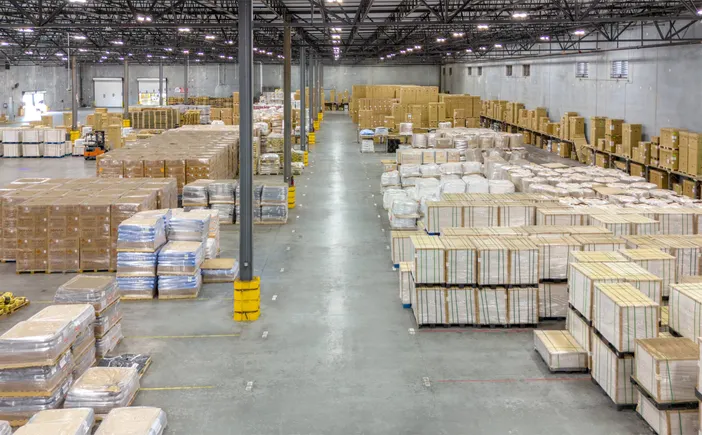
At its core, a flexible market pilot allows a company to place a limited, controlled amount of inventory into a 3PL warehouse without being locked into long-term volume minimums or fixed space allocations. Rather than forcing businesses to bind themselves to speculative forecasts made months or years in advance, flexible warehousing aligns operational capacity with real-time business needs.
The mechanics of this approach are straightforward yet transformative:
- Targeted Rollouts: A pilot can begin small, focusing on a single product line, a specific customer demographic, or a localized geographic service area.
- Dynamic Operations: As orders flow through the facility, the 3PL provider establishes standard operating procedures tailored to the shipper’s exact requirements—whether that involves basic pallet storage, floor-loaded freight handling, individual-unit picking, or value-added services like kitting.
- Organic Scaling: If regional demand surges, the footprint expands seamlessly. If the market develops differently than anticipated, the business retains the agility to adjust without incurring penalties for idle capacity.
This model transforms assumptions into empirical data, bridging the gap between theoretical market potential and bottom-line reality.
Chronology: From Static Networks to Agility-Driven Operations
The Legacy Logistics Era
For decades, supply chain design was viewed as a permanent or semi-permanent infrastructure play. Driven by long-term economic forecasts, companies built sprawling distribution centers or locked themselves into rigid, multi-decade real estate leases. Logistics strategies were designed around stability, assuming that consumer populations and consumption habits would remain relatively static over the life of a contract.
The Shift Toward Real-Time Consumer Shifts
Over the past decade, however, demographic and economic shifts accelerated dramatically. E-commerce expectations shortened delivery timelines, turning fast shipping from a luxury into a baseline consumer requirement. At the same time, regional population migrations began rendering legacy distribution networks obsolete. Logistics networks anchored to old data no longer matched where contemporary consumers actually lived and bought goods.
The Rise of Flexible 3PL Frameworks
Recognizing the friction caused by rigid leasing models, modern 3PL providers began engineering adaptable infrastructure frameworks. Instead of demanding upfront commitments for fixed blocks of square footage, forward-thinking logistics companies introduced modular fulfillment agreements. This evolutionary step allowed businesses to treat market entry not as a permanent marital vow, but as a low-risk trial period—marking the modern era of agile, demand-driven supply chain management.
Supporting Data: Demographic Shifts and Regional Realities
To understand why modern businesses are rethinking their distribution footprints, one must look closely at broader macroeconomic and demographic data.
According to U.S. Census Bureau population estimates, the American South grew by 6% between April 2020 and July 2025—a growth rate nearly double the national average. Furthermore, the South stood out as the only region in the country to record population growth across every single age demographic.
This massive demographic influx has fundamentally altered consumption patterns. More people living in the Southeast means higher volumes of goods are being consumed in the Southeast. Consequently, supply chains tethered to distant legacy hubs face structural disadvantages in transit times and shipping costs.
The Nashville Case Study
A prime example of this geographic evolution is Nashville, Tennessee. While corporate logistics strategies have historically defaulted to legacy hubs like Atlanta, Memphis, or Chicago, Nashville has emerged as a premier logistics nexus. It provides immediate access to booming Southeastern markets while simultaneously serving as an efficient springboard for distribution northward and into the Northeast.
The lesson driven by this data is clear: distribution locations must be continuously reevaluated. When populations and order patterns are on the move, rigid static networks quickly become liabilities.
Official Responses and Industry Perspectives
Industry leaders are increasingly championing flexibility as the ultimate antidote to supply chain uncertainty.
"The biggest thing from a flexible standpoint is when a customer looks at us and says, ‘We’re not quite sure how much space we’re going to need in a market. So let’s test that out,’" notes Ed Smith, Vice President of Distribution & Fulfillment at Averitt.
Instead of turning those customers away or forcing them into rigid, long-term contracts, logistics partners like Averitt are stepping in to build customized operating procedures around immediate needs.
Real-world shippers are already putting this philosophy into practice. i5 Industries, an office furniture importer and distributor based in College Station, Texas, is actively exploring regional market pilots to optimize its national dealer network.
"Our future looks bright. We are really excited about expanding. Averitt is providing that opportunity for us through some of their distribution centers, allowing us to kind of pilot or test some areas to see if there is enough business in those areas. So we are seeing if we can reduce some of our transit times by utilizing Averitt’s fulfillment centers," says Tara Laughter, President and CEO of i5 Industries.
By leveraging shared fulfillment networks, i5 Industries can test the viability of regional stocking strategies without the financial exposure of opening a dedicated company facility.
Implications: What a Market Test Measures and What Shippers Should Look For
For a market pilot to deliver genuine value, companies must look beyond basic sales metrics. A well-designed pilot converts assumptions into hard operational intelligence by measuring:
- Transit Time Reductions: Does placing inventory closer to the end consumer meaningfully accelerate delivery speeds?
- Order Accuracy and Fulfillment Efficiency: How smoothly does the 3PL handle specialized picking, packing, or value-added services for that specific region?
- Total Cost to Serve: When factoring in regional shipping savings versus 3PL holding costs, does the localized footprint improve overall supply chain margins?
- Demand Thresholds: At what order volume does a localized presence transition from a helpful experiment to an operational necessity?
Key Criteria for Evaluating a Flexible Warehouse Network
When companies begin evaluating 3PL partners for a flexible market test, supply chain executives should prioritize networks that offer:
- Scalability: The proven ability to expand or contract space allocations seamlessly as business conditions evolve.
- Strategic Geographies: Access to primary and secondary logistics hubs positioned near growing population centers (such as the Southeast and Central United States).
- Service Versatility: Expertise spanning standard pallet storage, floor-loaded freight, e-commerce unit picking, and complex kitting capabilities.
- Transparent Terms: Operating agreements that avoid penalizing shippers for short-term demand fluctuations.
Conclusion: Operating to Evaluate
Forecasting will always remain a foundational pillar of supply chain planning. However, when populations migrate, consumer expectations shift, and markets fluctuate unpredictably, historical data is rarely enough.
As demonstrated by modern logistics networks and innovative shippers alike, sometimes the absolute best way to evaluate a new market is to simply operate within it. By utilizing flexible warehousing and scalable 3PL partnerships, businesses can bypass the paralyzing fear of long-term lock-in—entering new territories with their eyes wide open, their capital protected, and their supply chains ready for growth.