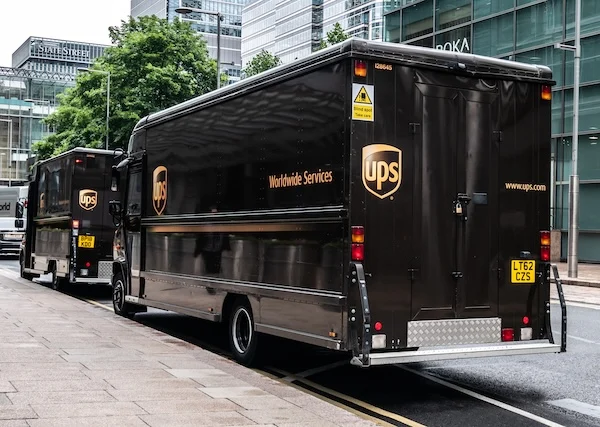
In a move that signals a profound transformation of its business DNA, Atlanta-based global logistics giant UPS has announced the implementation of a new global operating model, effective September 1. This shift, which follows the successful completion of a multi-year network reconfiguration, marks the company’s transition from a traditional small-package carrier into a fully integrated, global logistics powerhouse.
The structural change comes at a critical juncture for UPS, which has spent the past eighteen months aggressively pruning its portfolio of low-yield, residential e-commerce volume to focus on higher-margin sectors, including healthcare, specialized logistics, and enterprise-level supply chain management.
Chronology of the Structural Reset: From Amazon to Global Integration
The genesis of this strategic pivot can be traced back to early 2025, when UPS initiated what CEO Carol Tomé termed an “Amazon glide-down.” The goal was to systematically reduce reliance on lower-quality, high-volume e-commerce business that often strained the network without providing sufficient return on investment.
The Timeline of Transition
- Early 2025: UPS commences the “Amazon glide-down,” a deliberate structural reset of its U.S. domestic network.
- January 2025–Present: The company executes a reduction of its workforce by approximately 78,000 positions, a move necessitated by declining domestic volume and the drive toward automated efficiencies.
- June 2026: UPS successfully concludes its Amazon volume reduction program, having eliminated approximately two million packages per day from its network.
- September 1, 2026: The new Global Operating Model goes into effect, consolidating regional silos into a unified worldwide strategy.
- July 2028: A critical milestone for labor relations, as the current contract with the International Brotherhood of Teamsters nears its expiration, setting the stage for future negotiations.
During the second quarter earnings call, CEO Carol Tomé defended the rigor of the process, describing it as a “complex undertaking.” By the time the Amazon glide-down concluded in June, the company had successfully removed approximately $4.5 billion in related expenses. The company has signaled that further cost-rationalization efforts will continue through the remainder of 2026.
Supporting Data: Shrinking Volume, Rising Stakes
The shift toward high-margin business is not merely a strategic choice; it is a mathematical necessity. Data provided by logistics consultancies reveals the scale of the contraction in the company’s domestic footprint.
According to Robert Persuit, senior director of business development at ShipMatrix, UPS’s daily domestic package volume has dropped from 19.3 million pieces per day two years ago to 16.95 million in the first half of 2026. This contraction is a direct result of the company’s move to shed lower-yield business. However, the loss of volume has necessitated significant internal restructuring.
The $4.5 billion in expense removal has been achieved through a combination of network automation and the consolidation of aging, manual processing hubs. Yet, the pressure on the company’s stock performance remains palpable. Industry analysts have noted that UPS’s share price has consistently lagged behind both its direct competitors and the broader market, placing intense pressure on management to prove that this new "global model" can deliver the profitability promised to shareholders.
The New Executive Architecture
To oversee this transition, UPS has announced a sweeping set of executive appointments designed to align leadership with the new global strategy.
Key Leadership Appointments
- Nando Cesarone: Previously EVP and President of U.S. Operations, Cesarone has been elevated to Executive Vice President and Chief Global Operations Officer. He will oversee the global air network, surface transportation, and the development of the "Intelligent Network of the Future."
- Matt Guffey: Appointed as Executive Vice President and Chief U.S. Domestic Officer. Guffey will lead the charge in managing the company’s diverse domestic portfolio, including the Small Package business, Roadie, Happy Returns, and Mail Innovations.
- Wilfredo Ramos: A 20-year company veteran who previously managed the Asia Pacific and Brokerage segments, Ramos will step into the role of Executive Vice President and Chief International, Healthcare and Supply Chain Solutions Officer.
The promotion of Nando Cesarone is widely viewed by industry observers as a reward for his successful execution of the Amazon glide-down. By placing him at the helm of global operations, the company is signaling that the same ruthless focus on cost-reduction and automation will now be applied to its international and logistics business segments.

Conversely, the departure of Kate Guttman—a 37-year veteran who led UPS to prominence in the healthcare logistics sector—represents a significant loss of institutional knowledge. Guttman’s tenure was marked by the successful navigation of shifting U.S. trade policies and the achievement of industry-leading margins.
Implications: Can UPS "Value-Add" Its Way to Growth?
The central question facing UPS is whether it can achieve growth without relying on the sheer volume of packages it once carried.
The Shift to "Integrated Logistics"
Industry analysts, such as Rob Martinez of Shipware, argue that the "next chapter" of UPS is defined by a shift from being a high-volume carrier to a "value-extractor." The company is betting that by bundling international freight, healthcare-specific supply chain services, and traditional logistics, it can command higher margins from existing clients.
"The strategy is increasingly less about how many packages UPS can carry and more about how much value—and margin—it can extract from each customer," Martinez noted. "UPS has spent several years deliberately walking away from lower-margin volume. Now it has to prove it can grow profitably without simply extracting more from existing customers through higher rates and surcharges."
The "Global" vs. "International" Distinction
While the company emphasizes its evolution into a "truly global enterprise," market experts remain skeptical of the branding. John Haber, a parcel industry consultant, points out that the labels matter less to customers than the utility of the service. "Customers don’t care whether UPS calls itself ‘international’ or ‘global.’ They’ll care whether this makes UPS easier to do business with, improves service, and creates better solutions without simply producing another avenue for higher prices."
Labor and Future Headwinds
The most significant hurdle for Matt Guffey in his new role as Chief U.S. Domestic Officer will be the reconciliation of a leaner, more automated network with the realities of the labor market. With 78,000 domestic jobs lost since 2025, the relationship with the Teamsters is delicate.
Persuit suggests that the lead-up to the 2028 contract negotiations will be a defining period for the company. “Guffey and the union leadership will need to have creative discussions to maintain headcounts while dramatically reducing the cost of service to reverse the daily volume slide,” Persuit explained. Failure to do so could result in further attrition and increased operational friction.
Conclusion: A High-Stakes Gamble
UPS is currently undergoing a "structural reset" that is unprecedented in its scale. By betting on healthcare and high-margin logistics over traditional, low-cost e-commerce, the company is attempting to insulate itself from the volatility of the retail sector.
However, as John Haber aptly noted, "They have not executed for a significant period of time, and the stock price has been lagging. They will have to prove it." The transition to a global operating model is the company’s attempt to provide that proof. Whether it results in the desired profitability or merely alienates the remaining customer base remains the most significant question in the logistics industry today. As the September 1 deadline approaches, all eyes will be on the executive suite in Atlanta to see if the "Network of the Future" can finally deliver on its promises.