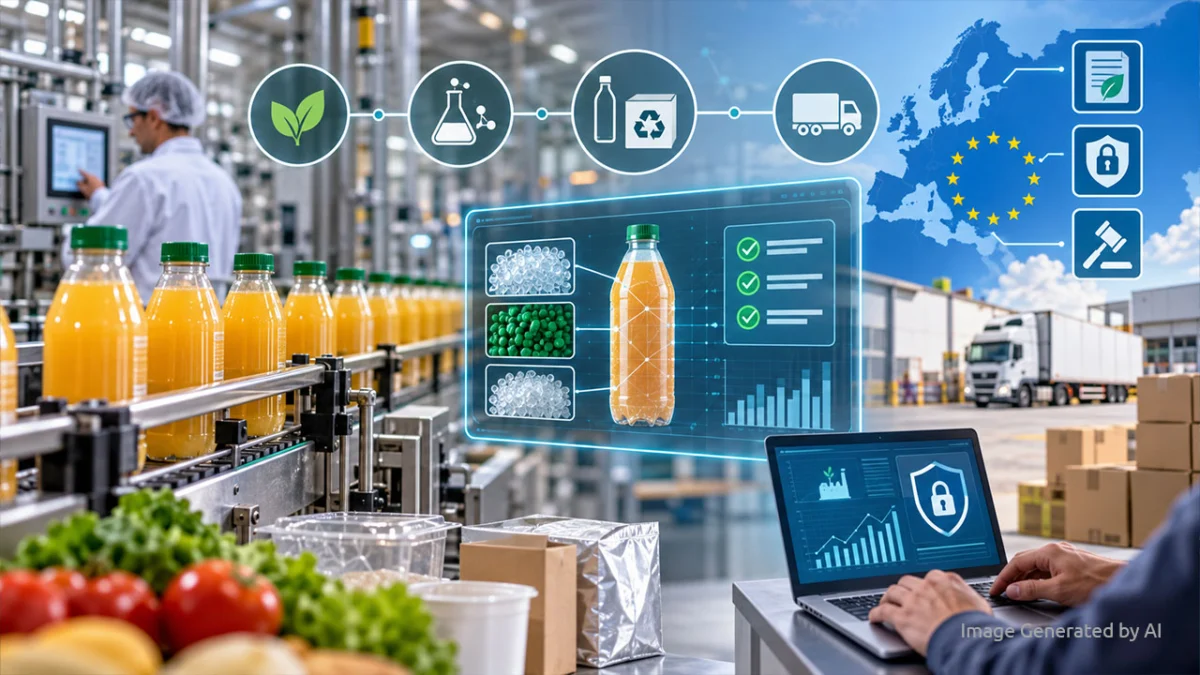
By 2030, the global food and beverage (F&B) sector is projected to lose a staggering 36% of its potential revenue to operational inefficiencies. This figure, while sobering, serves as a stark warning to an industry that has historically favored cautious, incremental technological adoption. In contrast, the life sciences sector—which has long been tethered to the stringent, compliance-heavy environment of the FDA—is expected to navigate these same pressures with greater resilience, projected to lose approximately 33% of potential revenue in the same timeframe.
As regulatory landscapes shift and cybersecurity threats intensify, the divide between these two industries is narrowing, but not for the reasons many executives might hope. According to Neil Smith, Segment President of Consumer Packaged Goods (CPG) at Schneider Electric, the F&B industry is facing a fundamental "data management crisis" that threatens to erode profitability if not addressed through comprehensive digital infrastructure.
The Chronology of Digital Maturity: Life Sciences vs. F&B
To understand the current predicament, one must look at the divergent paths these industries have taken over the last two decades.
The Life Sciences Precedent
Life sciences companies did not choose digital infrastructure out of a mere desire for innovation; they were compelled by the existential necessity of regulatory compliance. The FDA’s rigorous requirements regarding drug approval, batch traceability, and clinical trial transparency mandated a high level of data integrity.
Because life sciences organizations typically operate with higher profit margins and significant available cash flow, they were able to absorb the heavy capital expenditures required to build these "digitally enabled" ecosystems early on. This created a culture of technological fluency. By the time Industry 4.0 concepts became mainstream, these firms already possessed the data architecture required to implement advanced analytics, predictive maintenance, and real-time monitoring.
The CPG Cautious Approach
Conversely, the food and beverage industry has maintained an ethos of "progressive caution." While these firms have upheld impeccable standards for quality control and brand safety, their approach to digitization has been piecemeal. Historically, F&B manufacturing relied on localized control systems that functioned well in isolation. However, this fragmented approach has left the industry ill-equipped for the modern era, where regulatory mandates are no longer confined to the factory floor, but extend across the entire global supply chain.
Supporting Data: A Comparative Outlook
The gap between these two sectors is quantifiable through key performance metrics and operational stressors. As illustrated below, the differences in their technological baselines are stark:
| Factor | Food & Beverage | Life Sciences |
|---|---|---|
| Projected Revenue Loss (2030) | 36% | ~33% |
| Primary Regulatory Driver | EU Packaging, Cybersecurity | FDA Drug Approval/Release |
| Technology Adoption Pace | Progressive, Cautious | Earlier, Compliance-Driven |
| Available Cash Flow | Lower | Higher |
The three-percentage-point difference in revenue loss may appear slim, but in the low-margin, high-volume world of CPG, that delta represents billions of dollars in lost opportunity, wasted raw materials, and inefficient logistics.
The Regulatory Tsunami: EU Directives and Global Impact
The regulatory environment is shifting from local to global, and from product-centric to data-centric. New mandates originating from the European Union are acting as a catalyst, forcing F&B manufacturers to rethink their entire operational data strategy.
Molecule-Level Disclosures
The EU is currently rolling out stringent packaging obligations that require manufacturers to provide "molecule-level" transparency. It is no longer enough to track the final product; manufacturers must now provide granular data regarding the composition of the packaging materials themselves. This requires a level of visibility that extends deep into the tier-two and tier-three supplier network.
Cybersecurity Mandates
As manufacturing systems become increasingly connected to the Industrial Internet of Things (IIoT), they have become prime targets for cyber-attacks. The EU’s new cybersecurity requirements for connected manufacturing systems demand that firms maintain rigorous oversight of their digital architecture. For a U.S.-based multinational exporting to the EU, these rules are not optional; they are a barrier to market entry.
The "Data Management" Problem: Beyond the Factory Walls
"This looks like a regulatory problem," says Neil Smith of Schneider Electric. "The reality is it’s a data management problem. And this data management problem goes beyond the factory walls."
The Silo Effect
The primary obstacle for F&B manufacturers is the existence of disconnected systems. In a typical legacy facility, the work orders are in one system, inventory controls are in another, and supplier fulfillment is managed via a third, separate platform. To comply with modern packaging mandates, a company must be able to trace a material from its point of origin through the manufacturing process to the final, labeled package.
When these systems do not "talk" to one another, the cost of manual data reconciliation is astronomical. This is where the 36% efficiency loss begins to accumulate—in the gaps between systems where information is lost, delayed, or corrupted.
Transitioning to an Information-Enabled Enterprise
To survive this transition, F&B companies must pivot toward becoming "information-enabled" enterprises. This involves:
- Unified Data Architecture: Breaking down the walls between IT (Information Technology) and OT (Operational Technology).
- End-to-End Traceability: Implementing systems that track data points across the entire value chain, not just within the four walls of the production plant.
- Standardization: Moving away from proprietary, bespoke systems in favor of open, scalable, and interoperable digital platforms.
Implications: The Path to AI Readiness
The implications of failing to address this data deficit extend far beyond mere regulatory compliance. We are entering the age of Artificial Intelligence, and AI is only as effective as the data fed into it.
The AI Imperative
Companies that continue to operate with siloed, analog-heavy workflows will find themselves unable to leverage AI at scale. Whether it is using machine learning to optimize energy consumption, using AI-driven vision systems for quality control, or employing predictive analytics to minimize food waste, the prerequisite is a "structured data foundation."
The Competitive Advantage
The firms that successfully modernize their infrastructure will gain a massive competitive advantage. They will not only be "compliance-ready" for the next wave of global regulations, but they will also be significantly more agile. In a market characterized by volatile supply chains and shifting consumer preferences, the ability to pivot production based on real-time data is the difference between market leadership and obsolescence.
Conclusion: A Call to Action
The 2030 projections are not a destiny; they are a forecast based on current trajectories. The F&B industry has a window of opportunity to mirror the digital maturity that life sciences companies achieved through necessity. By viewing regulatory compliance not as a burden, but as a forcing function for digital transformation, manufacturers can unlock the efficiency gains necessary to protect their margins.
As Neil Smith highlights, the challenge is systemic. It requires a shift in mindset—from viewing the factory as a series of independent machines to viewing the enterprise as a single, data-driven entity. For those who can bridge this gap, the transition will be the defining factor in their long-term success.
This article is based on a video interview with Neil Smith, Segment President, Consumer Packaged Goods at Schneider Electric, and Lucian Fogoros of IIoT World. The insights provided reflect the ongoing evolution of industrial manufacturing in the face of increasing regulatory and technological pressures.