




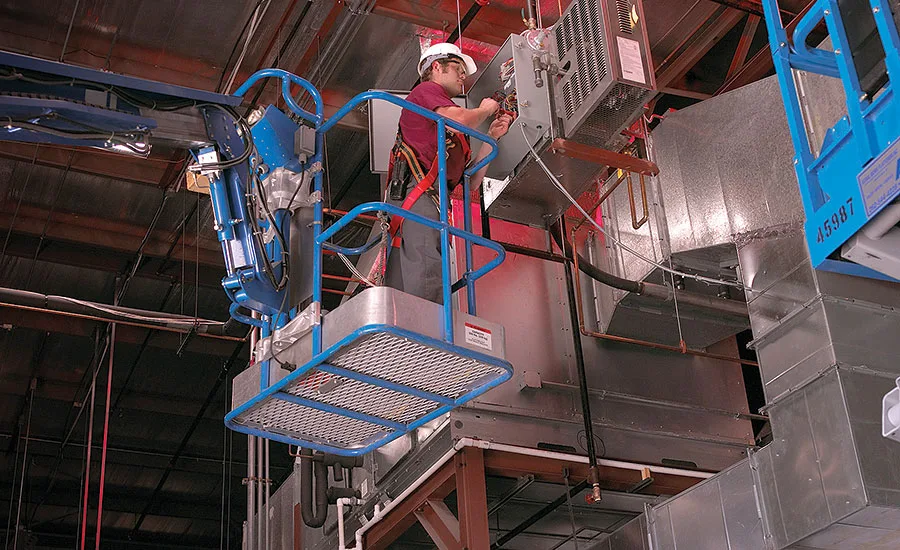
WASHINGTON — Aerial lifts are ubiquitous across modern American industry. From the skeletal steel frames of high-rise construction to the bustling corridors of manufacturing plants, healthcare facility maintenance yards, and the sprawling complexes of oil and gas refineries, boom lifts and scissor lifts are routine fixtures of daily operations. Yet, despite their widespread utility and the known hazards associated with elevated work platforms, industry culture frequently treats pre-lift precautions as optional chores rather than life-saving protocols.
A thorough analysis of worksite incidents reveals a troubling pattern: the vast majority of aerial lift accidents do not stem from unprecedented mechanical failures or unpredictable natural disasters. Instead, they trace back to the same preventable, recurring compliance violations. When crews cut corners to meet rushed project schedules, or when safety protocols give way to convenience, avoidable risks multiply exponentially. Closing these operational gaps is not merely a matter of satisfying regulatory bodies; it is an urgent imperative for protecting human life.
Main Facts: The Anatomy of Aerial Lift Hazards
The hazards of operating aerial lifts are well-documented, yet worksite shortcuts persist. Across industrial sectors, five primary compliance violations account for the vast majority of citations and injuries. These breakdowns typically manifest when time-pressed crews bypass safety standards for minor tasks, assume equipment operators possess skills they have not formally proven, or fail to account for the physical limitations of the machinery they command.
Understanding these core vulnerabilities is the first step toward institutionalizing a robust safety culture. The five most critical operational failures involve:
- Inadequate or absent personal fall protection tie-offs.
- The deployment of unauthorized or untrained operators.
- Skipped or superficial pre-shift equipment inspections.
- Exceeded manufacturer load limits and payload capacities.
- Improper positioning, stabilization, and ground assessment.
Chronology and Regulatory Landscape: A History of Preventable Risk
The evolution of aerial lift safety regulation has been written in sobering statistics. To understand the gravity of current compliance failures, one must examine the historical data and regulatory milestones that govern elevated work platforms.
The Statistical Reality (2011–Present)
Between 2011 and 2014, comprehensive federal data collected by the National Institute for Occupational Safety and Health (NIOSH) recorded 87 worker fatalities directly linked to the operation of aerial and scissor lifts. Among these, slips, trips, and falls accounted for 48 of the deaths—over 55% of the total fatalities. These numbers underscore a grim reality: workers are far more likely to perish from failing to secure themselves within the basket than from structural collapses of the lifts themselves.
The Ongoing Regulatory Focus
Despite decades of safety advancements, fall protection remains a persistent Achilles’ heel for American industry. Fall protection general requirements consistently rank as the Occupational Safety and Health Administration’s (OSHA) most frequently cited standard. For Fiscal Year 2025, this standard remains at the top of OSHA’s "Top 10 Cited Standards" list. This distinction highlights an industry-wide blind spot: organizations understand that regulations exist, yet fail to translate that knowledge into consistent daily execution on the jobsite.
Supporting Data and Deep Dive into the Top Five Violations
A granular examination of the five most prevalent aerial lift violations reveals how routine oversights transform into catastrophic incidents.
1. Bypassing Fall Protection Requirements
The scenario is distressingly common: a worker enters the aerial lift basket to perform a quick punch-list task or to grab a forgotten tool. Deciding that the brief duration of the task "doesn’t seem worth the hassle" of donning a harness, they step into the air without attaching a lanyard to the designated boom anchor point. In other instances, workers commit a dangerous improvisation by tying off to an adjacent structural element—such as a building beam or piping rack—rather than the manufacturer-designated anchor point inside the basket.
- Contributing Factors: Rushed project schedules, uncomfortable or ill-fitting harnesses, and inconsistent enforcement across different shift changes create an environment where shortcuts thrive. While operators generally understand that fall protection is mandatory, they quickly realize that enforcement is lax, fostering a culture of noncompliance.
- Mitigation Strategies: Organizations must weave tie-off verification directly into pre-lift checklists. Safety managers should conduct targeted toolbox talks focused on near-miss patterns. Crucially, noncompliance with fall protection rules must be treated as an immediate stop-work trigger without exception.
2. Unauthorized or Untrained Operators
When a jobsite runs short-handed, productivity pressures mount. If an extra pair of hands is needed quickly, an available employee may hop into the basket to expedite a task, despite lacking formal authorization or certification. In some cases, supervisors tacitly approve of this practice, allowing a worker who has merely "watched someone else operate the lift" to take the controls to keep the schedule moving.
- Risks: Untrained operators lack the spatial awareness and technical competence required to identify early warning signs. They are significantly more likely to misjudge the lift’s stability limits, fail to spot overhead power lines, miscalculate turning radiuses, or ignore uneven ground conditions.
- Mitigation Strategies: Employers can leverage technological tools such as NIOSH’s Aerial Lift Hazard Recognition Simulator. This interactive tool provides operators with a safe, virtual environment to practice identifying critical hazards—including falls, crushing pinch points, electrocution risks, and tip-over conditions—before encountering them on a live, high-stakes jobsite. Furthermore, organizations must document and refresh operator authorization status on a strict cadence for each specific location and equipment type, eliminating the dangerous assumption that certifications carry over seamlessly between different jobsites and machinery models.
3. Skipped or Inadequate Equipment Inspections
When crews fall behind schedule, comprehensive pre-shift inspections are frequently compressed into a hurried visual glance or abandoned entirely. An operator might notice a minor hydraulic fluid leak during a rushed walk-around, yet decide it is "probably fine for one more day" rather than tagging out the unit and removing it from service.
- Systemic Confusion: This violation often occurs even on well-run sites due to ambiguity surrounding inspection accountability. The equipment owner, the rental provider, and the on-site workers utilizing the machine that day often operate under overlapping assumptions regarding who holds ultimate responsibility for verification. Furthermore, many modern teams rely heavily on rental fleets, creating further confusion over pre-delivery mechanical sign-offs. Workers are rarely trained on what constitutes a truly thorough inspection beyond basic visual checks.
- Mitigation Strategies: Engaging rental companies that formally document and verify machine condition before it arrives on-site eliminates a major point of failure. Clear lines of accountability must be drawn to ensure that no machine enters service without a signed pre-shift inspection log.
4. Exceeded Manufacturer Load Limits
To save time and avoid making a second trip to the ground, a two-person crew might load excess drywall, piping, or tools into the platform. Individually, these items may not seem heavy, but combined with the weight of the workers, the cumulative load quickly exceeds the machine’s posted capacity rating. Workers frequently fail to realize that the additional cargo pushes the equipment past its structural safety margins.
- Regulatory Parallels: Capacity ratings are frequently buried within dense user manuals rather than being visibly and clearly posted on the machine control panel. While OSHA maintains rigorous, explicit load-bearing requirements for scaffolding—requiring structures to support their own weight plus at least four times the anticipated maximum load—aerial lift safety relies heavily on manufacturer discipline. Crews must treat platform limits as hard stops rather than viewing the basket as extra material storage space.
- Mitigation Strategies: Post capacity ratings in large, legible text directly on the control panel. Require crews to conduct a rapid weight tally before ascending, and mandate routine supervisor spot-checks during daily site walks.
5. Improper Positioning and Stabilization
Crews frequently cut corners during setup by leaving outriggers retracted, failing to set emergency brakes, or operating the lift on sloped, uncompacted, or uneven ground without utilizing wheel chocks. For instance, a crew might position a machine on what appears to be level pavement near a loading dock, entirely failing to account for a subtle grade that drastically shifts the lift’s center of gravity once the boom is fully extended.
- Psychological Factors: Full stabilization feels tedious for quick jobs. Moreover, ground conditions that appear stable on the surface can conceal soft sub-bases, hidden voids, or debris that yield under the weight of an extended lift.
- Mitigation Strategies: Mandate a documented ground assessment prior to every single use. Make outrigger deployment and brake verification non-negotiable line items on pre-lift checklists. Site supervisors should personally walk tight, sloped, or complex work zones before equipment deployment begins.
Official Responses and Industry Perspectives
Safety regulators and industry associations have responded to persistent aerial lift violations with renewed calls for technological integration and cultural transformation.
Federal safety officials emphasize that compliance cannot be treated as a periodic administrative exercise. Representatives from safety advocacy groups point out that while equipment manufacturers continue to engineer advanced safety interlocks—such as tilt alarms and load-sensing systems—technology cannot override negligent human behavior.
Industry leaders stress that the shift toward safer worksites relies on psychological safety: workers must feel empowered to halt operations when they spot an uninspected machine, an untrained operator, or a missing harness, without fear of schedule-driven retaliation.
Implications for the Future of Industrial Operations
The systemic persistence of these five aerial lift violations carries profound implications for the industrial sector. Financially, OSHA citations, worker compensation claims, project delays, and potential litigation drain millions of dollars from contractors and facility owners annually. Morale-wise, workplace injuries and fatalities devastate team cohesion and erode public trust in corporate safety commitments.
Ultimately, building a resilient aerial lift program requires recognizing that process failures—not malicious negligence—drive these violations. By replacing rushed improvisation with disciplined verification habits, industrial operations can close the gap between written safety policies and daily field execution. Organizations must systematically audit their current site practices against known violation patterns, address their weakest operational links first, and foster an environment where safety and productivity reinforce one another.