Introduction
When global discussions turn to electric vehicles (EVs), the conversation almost invariably bogs down in an endless parade of spreadsheets: sales percentages, battery chemistry cost curves, kilowatt-hour capacities, and charging speed benchmarks. While vital for tracking the macro-trends of the global energy transition, these statistics frequently fail to capture the profound, structural realignment happening on the ground.
What happens to the vast, multi-billion-dollar ecosystem built over a century to support internal combustion engine (ICE) vehicles? How do local mechanics, corner gas stations, specialized spare parts suppliers, and high-street auto-accessory stores adapt when a nation’s private vehicle market pivots almost entirely to battery-electric transport?
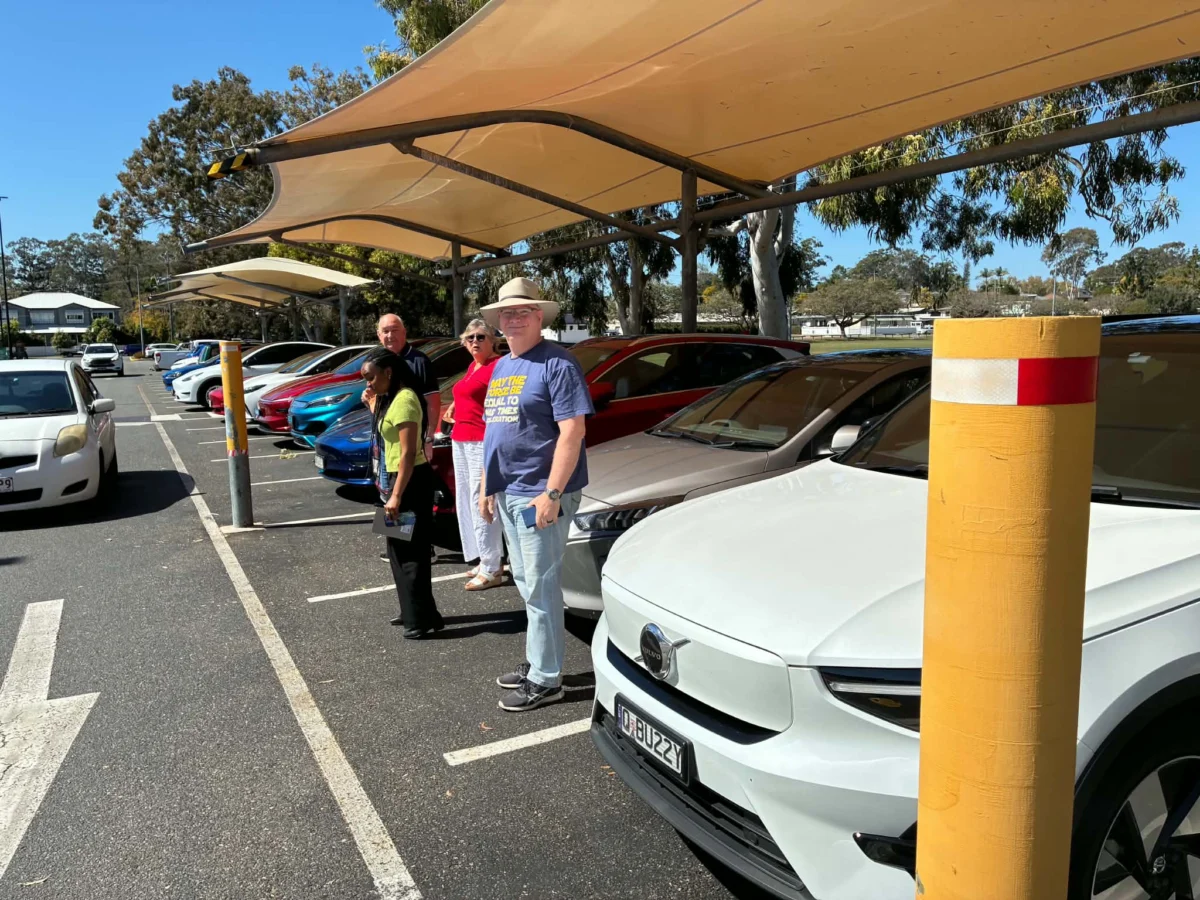
An unexpected Facebook correspondence with an EV driver in Denmark offers a rare window into these questions. While hosting a monthly coffee morning for local EV adopters and the EV-curious, an inquiry from Henrik—an electrical engineer living in Denmark—sparked a deep dive into what a mature EV market actually looks like for the everyday economy.
Denmark is no longer debating the feasibility of electrification; it is living on the other side of the curve. With 97% of new private vehicle sales now consisting of full battery-electric vehicles (BEVs), the Danish transition offers a vivid preview of the economic aftershocks awaiting the rest of the world.
Main Facts: The Danish Reality and the Post-ICE Transition
To understand the scope of Denmark’s transition, one must examine the numbers. With a population of roughly 6 million people, the country hosts a total vehicle fleet of approximately 2.8 million cars. Unlike the automobile markets of North America or Australia, Denmark has a negligible market for heavy-duty pickup trucks or "utes," focusing instead on compacts, sedans, and crossovers.
Today, over 700,000 electric vehicles are actively operating on Danish roads—a massive density for a small European nation.
The End of the ICE Debate
According to Henrik, the psychological shift is perhaps the most striking consequence of this saturation. "It’s so liberating for the mind that the Age of Internal Combustion Engines is over in Denmark," Henrik notes. "There is no need for debate or explanation anymore. Just the help for the uninformed about charging solutions and what vehicle to go after."
While markets like Australia and parts of North America remain bogged down in outdated fossil-fuel fear, uncertainty, and doubt (FUD)—such as persistent myths about grid collapse, battery life, and cold-weather failures—Danish society has moved past the friction point. The debate is no whether EVs work, but how to optimize the surrounding infrastructure.

Chronology of an EV Ecosystem Shift
The transformation of Denmark’s automotive landscape did not happen overnight, but its acceleration has fundamentally disrupted traditional supply chains and consumer habits.
Phase One: Rapid Adoption and Sales Dominance (2020–2024)
During the early 2020s, supportive government policies, tax structures, and an influx of affordable, high-range EV models from both legacy automakers and new entrants caused a tipping point. Sales curves skyrocketed, leaving traditional dealerships scrambling to secure inventory from reluctant manufacturers.
Phase Two: Infrastructure Buildout and Bottlenecks (2024–2026)
As the number of EVs surged past half a million, the charging ecosystem experienced growing pains. While fast-charging hubs along major highways proliferated, Henrik points to a looming secondary bottleneck: AC 11kW and 22kW street charging in urban centers.
- "A market that expanded quickly a few years ago, but stopped expansion and might be an issue again," Henrik explains.
- Urban apartment dwellers and street-parking residents rely heavily on overnight destination AC charging. Without continued municipal and private investment in curb chargers, urban adoption faces a localized ceiling.
Phase Three: The Mechanical Evolution (Present Day)
With the vast majority of Denmark’s EV fleet still protected under manufacturer warranties, the full economic impact on traditional independent repair shops has yet to completely play out. However, technical education is pivoting swiftly. Trade schools are actively updating their curricula, introducing specialized EV mechanic certifications.
Mechanics are no longer spending their days changing oil filters, cleaning fuel injectors, or replacing timing belts. Instead, they are learning high-voltage safety protocols, thermal management diagnostics, and software updates.
Supporting Data: The Nordic Electro-Region
Denmark is not an isolated anomaly. The entire Scandinavian region is rapidly consolidating into a unified "electro-region," setting global benchmarks for zero-emission mobility.
Regional EV Sales and Penetration (2026 Data)
- Norway: Approaching the 100% mark, Norwegians buy nearly 19,000 battery electric passenger cars per month, cementing the country as the global leader in EV saturation.
- Denmark: Citizens purchase over 20,000 EVs per month, achieving a staggering penetration rate of 89%.
- Sweden: During the first half of 2026, BEVs accounted for 41.5% of all new passenger car registrations (14,000 cars). When combining BEVs with plug-in hybrids (PHEVs), total electrified penetration hits 67%.
- Finland: Sales penetration for electrified vehicles has climbed to 62%.
Together, these Nordic countries account for roughly 56,000 new vehicle sales per month. Furthermore, total fleet penetration of plugin passenger vehicles illustrates long-term staying power: Finland sits at 13%, Sweden at 15%, Denmark at 24%, and Norway at an incredible 33%.
Beyond passenger cars, these nations are aggressively expanding their zero-emission freight and commercial vehicle fleets, putting further pressure on traditional diesel infrastructure.

Official Responses and Industry Adaptations
How is the broader industry reacting to this seismic shift? The changes are visible everywhere, from independent repair shops to multinational fuel retailers.
The Gas Station Reckoning
Traditional fossil fuel retailers are facing an existential crisis. Henrik points out the flawed assumptions made by major energy corporations early in the transition.
- "A few years ago, an executive from Circle K said that they compete for 15% of the charging market," Henrik notes. "But it turned out that 85% of charging is done at home. So, they’re fighting with the other DC fast-charge companies for a very small slice of the pie. Of course, loads of sites will disappear."
Because electric vehicle owners primarily "fuel" overnight while parked at home or work, the reliance on neighborhood petrol stations for daily energy needs evaporates. While highway-adjacent ultra-fast charging hubs will survive by catering to long-distance travelers, urban gas stations face declining revenues from both fuel sales and the convenience store items traditionally purchased during fill-ups.
The Evolution of the Independent Mechanic
The shift from internal combustion to electric propulsion alters the very nature of vehicle maintenance. Because electric motors have a fraction of the moving parts found in ICE powertrains, routine servicing requirements drop dramatically.
To see what the future of independent EV repair looks like, one can look just north to Norway, where independent workshops are collaborating with automotive tech creators and digital educators like YouTuber Bjørn Nyland. Repair shops such as Elbilmek, located near Oslo, are pioneering advanced third-party EV servicing models. Their core focus areas include:
- Advanced Diagnostics: Utilizing specialized software and hardware systems capable of pulling up to 19,000 live parameters via direct LAN connections, bypassing tightly guarded manufacturer proprietary diagnostic restrictions.
- True State of Health (SOH) Analysis: Moving past the oversimplified dashboard metrics provided by factory software—which often only measure gross capacity—to test localized internal resistance, moisture leakage into motor units, and high-voltage connector degradation.
- Aftermarket Component Optimization: Partnering with global engineering giants (such as bearing manufacturer SKF) to design and produce upgraded aftermarket parts—such as low-friction, rust-resistant bearing kits for high-mileage Tesla drive units—that outlast factory components.
Meanwhile, traditional mechanical wear items behave differently in EVs. Brakes, tires, and suspension systems still require maintenance, but with a twist: regenerative braking means friction brakes see far less use, frequently leading to issues with rust and surface degradation due to under-usage.
Implications: Lessons for Global Markets
For countries lagging behind the Nordic curve—such as Australia, where vehicle fleets are large and petroleum-dependent supply chains remain deeply entrenched—the Danish experience serves as both a roadmap and a warning.
What Happens to the Spare Parts and Aftermarket Retailer?
Walk into any large auto-parts retailer in Australia or North America, and a massive percentage of floor space is dedicated to engine oil, coolant, spark plugs, filters, exhaust systems, and belts.

When a vehicle fleet transitions to 90%+ electric, the demand for these consumable petrochemical goods plummets. Retailers that fail to diversify their inventory toward EV accessories, universal maintenance items (tires, wipers, suspension components), and home-charging gear risk financial obsolescence.
The Intergenerational Question
The transition also forces a fundamental re-evaluation of vocational training. Henrik notes that while mechanic education programs in Denmark are updating to include high-voltage and EV-specific modules, the total labor hours required to maintain an EV fleet are significantly lower than an ICE fleet.
This raises a stark question for young workers entering the trade: Would you advise your grandson to become a diesel mechanic?
As freight, public transport, and passenger vehicles inexorably trend toward zero-emission electric architectures, traditional mechanical trades must evolve into high-tech electrical engineering and software diagnostics roles, or risk phasing out alongside the internal combustion engine.
Conclusion
Denmark’s transition to a 97% new-vehicle EV market proves that the electric vehicle revolution is much more than a numbers game. It is a complete redesign of urban infrastructure, retail commerce, energy distribution, and mechanical labor.
While nations still struggling with fossil-fuel dependency debate range anxiety and battery lifespans, northern Europe has already answered those questions and moved on to the next frontier: managing the aftershocks of a decommissioned petrochemical economy. For the rest of the world, watching Denmark isn’t just an exercise in data collection—it is a glimpse into an inevitable future.