Main Facts: A Volatile Snapshot
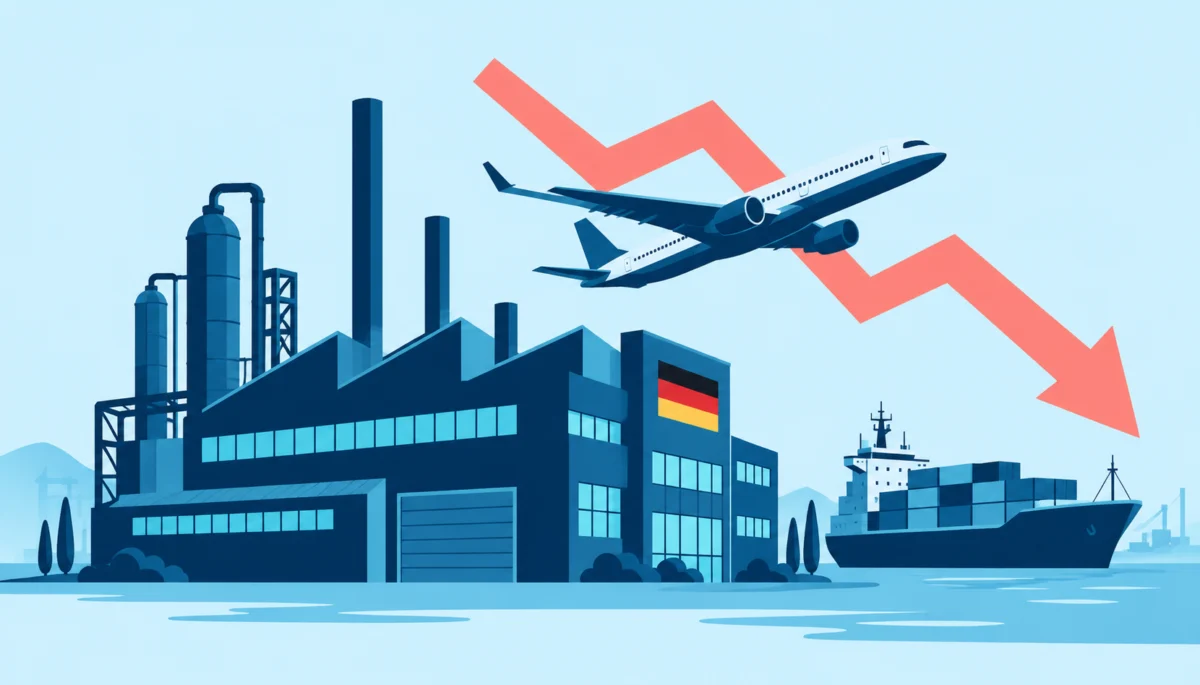
German manufacturing orders experienced a significant, albeit technically distorted, contraction in August. According to provisional, price-adjusted data released by the Federal Statistical Office (Destatis) on October 6, industrial orders fell by 10.6% compared to July. While this headline figure appears to signal a precipitous collapse in demand, it masks a more nuanced reality defined by the erratic nature of large-scale contract cycles.
When the volatile "large contracts" component—which includes high-value items like ships, aircraft, and bespoke machinery—is excluded, the decline for August narrows to a marginal 0.1%. This discrepancy is vital for market participants. For investors and credit analysts, the headline figure is an unreliable barometer of broad industrial health; instead, it highlights the outsized influence of a few major capital goods projects on aggregate German economic data.
Chronology of the Decline
To understand the current state of German manufacturing, one must examine the recent sequence of data points that have led to the current confusion:
- June–July: The industrial sector appeared to be on a moderate recovery path. July orders were revised upward to a 3.2% increase, up from the initially reported 2.5%. This growth was heavily fueled by a 129.4% surge in "other transport equipment" orders.
- August: The pendulum swung violently in the opposite direction. Orders for "other transport equipment" plummeted by 61.5%, effectively erasing the gains made in the previous month. This sharp reversal is the primary driver behind the headline 10.6% decline.
- September 10: The European Central Bank (ECB) increased its policy rates by 25 basis points, citing persistent inflationary pressures. This decision was made after the period covered by the August order data, meaning the full impact of this tightening cycle on industrial demand is yet to be reflected in official statistics.
- October 6: Destatis published the August manufacturing figures, sparking concerns regarding the stability of the Eurozone’s largest economy.
Supporting Data and Underlying Trends
The aggregate data paints a complex picture that requires deconstruction to be actionable. Beyond the headline volatility, several segments show clear signs of strain:
- Segmented Weakness: Domestic orders suffered a sharp 17.3% decline in August, while foreign orders—a traditional pillar of German industrial strength—fell by 5.4%. Furthermore, capital goods orders, which are essential for long-term industrial capacity, dropped by 15.3%.
- The Three-Month View: When analyzing the period from June through August, the aggregate data shows a modest increase of 1.3% compared to the preceding three months. However, when large contracts are stripped out, the underlying trend reveals a 2.6% contraction. This suggests that while major projects provide a buffer, the core manufacturing base is experiencing a cooling of demand.
- Production Disconnect: It is crucial to distinguish between new orders and industrial output. The July industrial production release, published by Destatis prior to the August orders data, showed a 1.1% monthly decline in real industrial output. Automotive output, a critical component of the German economy, fell by 9.2% in that period.
These figures indicate that even before the August order shock, the industrial machine was beginning to stutter. However, the presence of a robust backlog—which grew by 1.5% in July compared to the previous month—provides a temporary cushion. Manufacturers are currently burning through existing orders, which explains why a dip in new intake does not immediately result in an equivalent collapse in current production or employment.
Official Responses and Economic Context
Destatis continues to emphasize the distinction between new orders, outstanding orders (the backlog), and turnover (actual sales). By maintaining these separate reporting streams, the agency provides a roadmap for analysts to avoid conflating long-term contract fulfillment with immediate demand shifts.
The European Central Bank’s recent policy shift adds another layer of complexity. With the deposit rate now at 2.50%, the cost of financing for capital-intensive manufacturing has risen. While the August data reflects conditions prior to the latest rate hike, the future outlook for order conversion is now constrained by higher borrowing costs. The ECB has maintained a data-dependent stance, suggesting that further tightening will be contingent on incoming indicators. For German industry, this means that the "wait-and-see" approach currently adopted by many firms may persist as they recalibrate their investment plans against the backdrop of a more expensive financing environment.
Implications for Stakeholders
For Lenders and Credit Committees
The distinction between large-contract volatility and core demand is the difference between a temporary liquidity crunch and a structural credit risk. A company with a single, delayed ship contract faces a specific risk profile—potentially manageable through working capital facilities—whereas a firm losing repeat orders across a broad customer base is facing a terminal decline in market relevance. Credit committees should prioritize:
- Customer Concentration: Identifying if a firm is overly reliant on a single, volatile project.
- Order Conversion: Assessing the probability of turning a backlog into cash.
- Payment Terms: Analyzing how much of the cash flow is tied to milestone billing versus final delivery.
For Portfolio Managers and Equity Investors
Investors should resist the urge to trade based on the headline 10.6% drop. Instead, the focus should be on the quality of earnings. Companies that hold long-term, non-cancelable contracts are better positioned to weather the current volatility than those whose order books are susceptible to quick cancellation. Market participants should look for evidence of persistence: is the weakness in "new orders" becoming a multi-month trend? Is the conversion of the backlog slowing down? These are the real indicators of a shifting industrial landscape.
For the Broader Economy
The data does not, at this stage, justify talk of a national recession. The lag between order intake and actual production means that the industrial sector has a degree of inertia. However, the data does support a tightening of monitoring. If the current weakness in domestic and capital goods orders continues for several months, it will inevitably bleed into the labor market, impacting overtime hours and eventually hiring plans.
Analyst’s View: Navigating the Uncertainty
From a strategic perspective, the August orders release is a reminder that in the modern industrial economy, "aggregate data" is often a poor substitute for granular, company-specific intelligence. The headline number is a siren song that risks leading analysts toward premature conclusions about the health of the German economy.
The priority must be to distinguish between delayed demand—where a customer pushes back a delivery date but remains committed—and lost demand. A lender or investor should look for evidence of a company’s ability to navigate this: do they have adequate contract protections? Is their inventory specialized and at risk of obsolescence?
The ECB’s policy trajectory creates a financing constraint that makes the timing of cash receipts more critical than ever. Firms that must finance their inventory through floating-rate facilities are significantly more exposed to the current environment than those with fixed-rate debt and healthy customer prepayments.
Ultimately, the August dip is a "noise" event caused by the normalization of transport equipment orders. While the underlying trend shows genuine softness, it is not the catastrophic collapse that the headline suggests. The next two months of data will be the true test: if we see a continued decline in the "ex-large-contracts" figure, then the concerns regarding industrial weakness will shift from a analytical curiosity to a pressing macroeconomic reality. Until then, stakeholders should maintain a focus on the mechanics of individual balance sheets rather than the broad, volatile swings of the monthly index.