By Lee Goldberg | Contributing Editor
As the global demand for high-capacity, highly reliable portable and semi-portable electronics continues its meteoric rise, power management technology must evolve in lockstep. From the bustling market of light electric vehicles (LEVs) like e-bikes and scooters to life-saving medical devices, cordless heavy-duty power tools, and uninterruptible power supplies (UPS), the modern world runs on lithium-based chemistry. However, unlocking the full potential of these energy-dense power sources requires sophisticated, precision-engineered oversight.
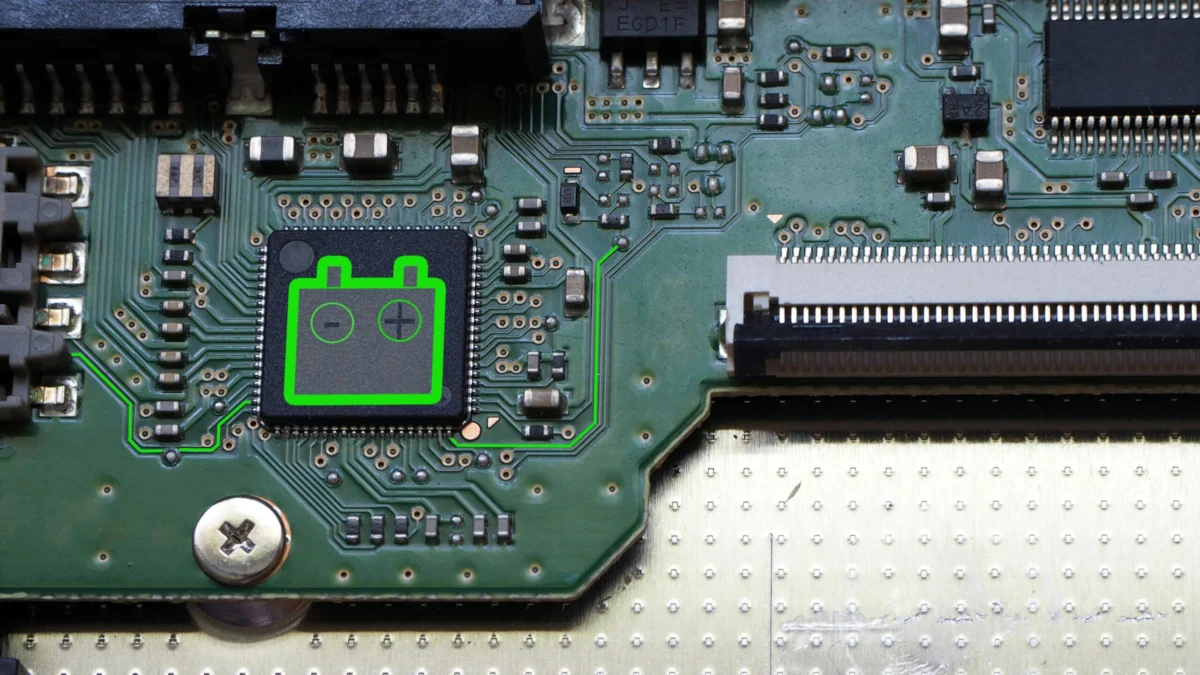
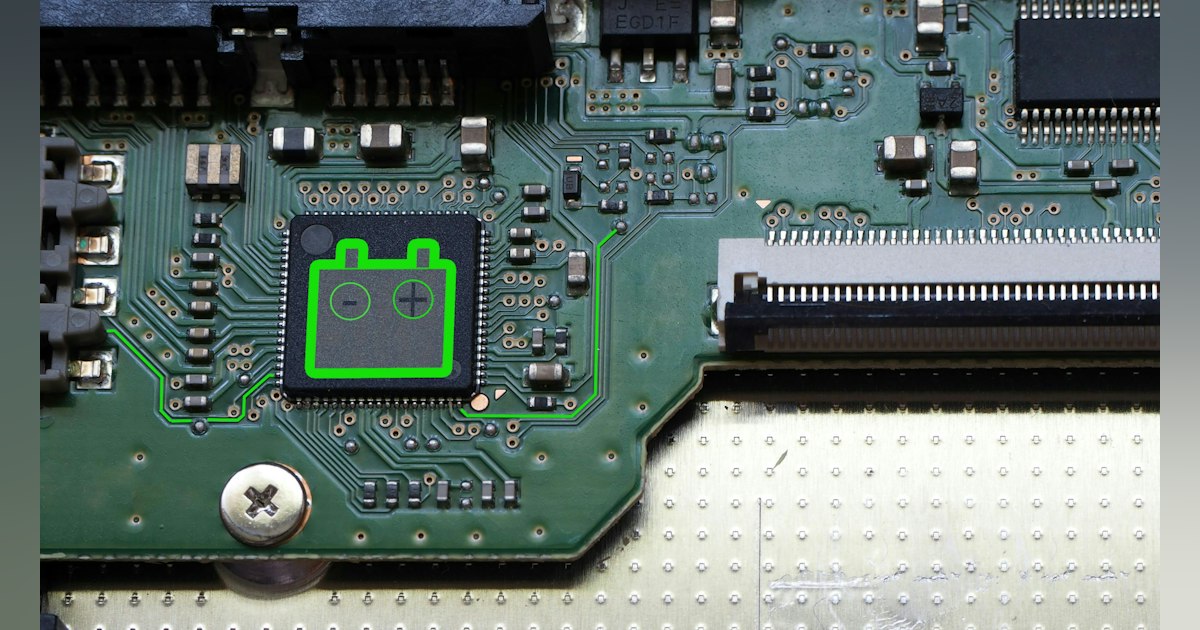
Entering this high-stakes arena is STMicroelectronics, a global semiconductor leader that has officially launched its newest advanced battery management integrated circuit (BMIC): the L9962. Designed specifically for lithium-ion (Li-ion) and lithium-polymer (Li-Po) battery packs containing up to 10 series-connected cells, this robust IC is engineered to deliver exceptional measurement precision, rapid cell balancing, and comprehensive safety protections across its entire operating temperature range. Priced aggressively at $2.89 per unit for orders of 1,000 pieces, the L9962 aims to set a new benchmark for cost-effective, high-reliability battery management systems (BMS).
Main Facts: Core Capabilities of the L9962
The L9962 is not merely a monitoring chip; it is an integrated ecosystem designed to handle the critical triad of battery management: monitoring, balancing, and protection.
At the hardware level, the device integrates a high-resolution 12-bit analog-to-digital converter (ADC) tasked with continuously measuring individual cell voltages. To ensure that energy distribution remains uniform throughout the lifecycle of the battery pack, the IC supports a robust cell-balancing current of up to 70 mA. This high-current capability guarantees rapid voltage correction, preventing the capacity degradation and thermal runaway risks associated with cell-to-cell voltage discrepancies.
Targeting applications that range from 4 to 10 series-connected cells (4S to 10S configurations), the L9962 manages to pack an extensive array of peripheral support directly into a compact 7- x 7-mm, 48-pin TQFP package. Key functional highlights include:
- High-Accuracy Current-Sense Amplifier: Utilizes Coulomb counting to meticulously track charge and discharge currents, delivering 0.25% current-measurement accuracy across the entire operating temperature range.
- Thermal Monitoring: Features ratiometric measurements using an NTC thermistor to accurately flag over-temperature and under-temperature thresholds.
- Integrated Pre-Drivers: Configurable high-side and low-side pre-drivers streamline system design by directly managing battery-pack relays.
- Fuse Management: Built-in capabilities for battery-pack fuse management reduce the reliance on external discrete components.
- Always-On Low-Dropout Regulator (LDO): A 3.3-V LDO remains operational even during standby modes, supplying continuous power to external components such as host microcontrollers (MCUs) or system status LEDs.
- Host Communication: An industry-standard $I^2C$ interface allows host systems to effortlessly configure device parameters—such as voltage-measurement intervals—while retrieving critical diagnostics like state-of-charge (SOC) and state-of-health (SOH).
Chronology: The Evolution Toward Smarter, Integrated BMS Architectures
The trajectory of battery management systems over the past two decades reflects the broader evolution of the electronics industry: a relentless push toward higher integration, smaller footprints, and lower power consumption.
Phase 1: Discrete and Basic Protection (Early 2000s)
In the early days of widespread lithium-ion adoption in consumer electronics, safety circuits were largely built using discrete components, simple analog comparators, and basic protection MOSFETs. These systems offered rudimentary over-voltage and under-voltage cutoffs, but lacked active cell balancing, precise current integration, and digital telemetry. Pack failures and thermal events were significantly more common due to the lack of granular visibility into individual cell behaviors.
Phase 2: The Rise of Application-Specific ASICs (2010s)
As portable power requirements expanded into larger industrial tools, medical devices, and early electric mobility platforms, semiconductor manufacturers began introducing dedicated BMS application-specific integrated circuits (ASICs). These early multi-cell chips integrated basic ADCs and rudimentary communication protocols (such as SPI or basic UART), moving away from purely analog protection schemes. However, these legacy chips often struggled to maintain high measurement accuracy across extreme thermal environments, requiring external calibration circuits or sacrificing performance in sub-zero or high-heat conditions.
Phase 3: High-Integration and Thermal Resilience (Present Day)
The introduction of STMicroelectronics’ L9962 represents the current zenith of this evolutionary arc. Modern BMS chips are defined by their ability to maintain precision under harsh physical conditions without inflating the bill-of-materials (BOM) cost. By incorporating high-accuracy internal references, advanced digital filtering, robust low-power standby modes, and integrated pre-drivers into a single silicon die, modern BMICs like the L9962 eliminate the trade-off between sophisticated safety features and compact system design.
Supporting Data and Technical Specifications
To fully appreciate the engineering achievement behind the L9962, one must examine the hard metrics governing its performance. Precision in battery management is measured not just in laboratory conditions at room temperature, but across the entire operational lifecycle and thermal spectrum.
Thermal Stability and Accuracy
One of the most notable engineering feats of the L9962 is its ability to maintain tight measurement tolerances across extreme temperatures.
- Current Measurement: The integrated current-sense amplifier maintains an exceptional 0.25% accuracy across the full temperature range. This precision is vital for accurate Coulomb counting—the mathematical integration of current over time used to determine the true state-of-charge (SOC).
- Voltage Alignment: The 12-bit ADC operates on a continuous cycle with programmable loop times. By performing continuous plausibility checks—comparing the total stack voltage against the sum of individual cell readings—the IC immediately identifies discrepancies. More importantly, its architecture ensures that voltage-measurement accuracy remains stable across wide temperature fluctuations, keeping individual cells tightly aligned and preventing premature aging.
Power Efficiency and Low-Power Modes
For portable and semi-portable devices, standby power consumption directly dictates shelf life and consumer satisfaction. The L9962 features an ultra-low quiescent current architecture designed to maximize runtime:
- Standby Mode: Consumes a mere 5 µA, allowing the system to wake up instantly upon demand while drawing negligible energy from the battery pack.
- Deep-Sleep Mode: Drops consumption down to 2 µA, specifically engineered for products in transit or long-term storage where self-discharge must be minimized to prevent deep-cell degradation.
| Specification Feature | L9962 Technical Metric |
|---|---|
| Supported Cell Chemistry | Lithium-ion (Li-ion), Lithium-polymer (Li-Po) |
| Cell Count Support | 4 to 10 Series-Connected Cells (4S – 10S) |
| ADC Resolution | 12-bit Analog-to-Digital Converter |
| Cell Balancing Current | Up to 70 mA |
| Current-Sense Accuracy | 0.25% across full temperature range |
| Standby Quiescent Current | 5 µA |
| Deep-Sleep Quiescent Current | 2 µA |
| Host Interface | $I^2C$ Communication Interface |
| Auxiliary Power Output | 3.3-V Low-Dropout Regulator (LDO) |
| Package Type | 7- x 7-mm, 48-pin TQFP |
| Pricing | $2.89 per unit (1,000-piece orders) |
Official Perspectives and Industry Insights
While STMicroelectronics has positioned the L9962 as a versatile workhorse for multi-cell applications, industry analysts and power electronics experts point out several key design philosophies embedded within the product’s release.
Battery management specialists note that the inclusion of a robust 70-mA balancing current in a 4-to-10 cell IC is a strategic choice. In applications like e-bikes and professional-grade power tools, high discharge and charge rates naturally accelerate cell drift. A higher balancing current means the BMS can correct voltage imbalances much faster than traditional legacy chips that typically cap balancing currents at 10 mA to 30 mA. This reduces the time required for maintenance cycles and ensures that the pack can return to peak capacity rapidly.
Furthermore, industry observers have highlighted the economic impact of the L9962’s high integration level. By absorbing functions traditionally handled by external discrete components—such as pre-drivers for high-side and low-side relays, fuse management, and an always-on 3.3-V LDO—STMicroelectronics has significantly reduced the required printed circuit board (PCB) footprint. For designers of space-constrained devices like medical diagnostic tools and compact robotics, this reduction in component count translates directly to lower manufacturing costs, simplified circuit layout, and enhanced system reliability through fewer potential points of failure.

Implications for Design Engineers and Target Markets
The release of the L9962 carries profound implications across multiple vertical markets that rely heavily on safe, efficient mid-tier lithium battery packs.
1. Light Electric Vehicles (LEVs)
E-bikes, electric scooters, and personal mobility devices operate in demanding outdoor environments subject to extreme seasonal temperatures, vibration, and rapid power cycling. The L9962’s wide-temperature stability and aggressive 70-mA cell balancing provide LEV manufacturers with a reliable tool to extend battery pack lifespans and enhance rider safety against overcharging and thermal events.
2. Medical and Healthcare Equipment
Portable medical devices—such as infusion pumps, portable oxygen concentrators, and diagnostic monitors—demand absolute reliability. A sudden power failure is not merely an inconvenience; it can be life-threatening. The L9962’s continuous diagnostic cycles, plausibility checking, and robust short-circuit discharge protection provide the rigorous safety net required for FDA-compliant and mission-critical medical hardware.
3. Cordless Power Tools and Industrial Equipment
Professional-grade cordless tools undergo severe mechanical stress and extreme current draws. The high-accuracy current-sense amplifier (0.25% accuracy) and Coulomb counting capabilities allow heavy-duty tools to accurately report remaining battery life under heavy loads, while protecting the battery pack from catastrophic short-circuits during stall conditions.
4. Uninterruptible Power Supplies (UPS) and Backup Storage
For stationary or semi-portable backup energy systems, standby efficiency is paramount. The ultra-low quiescent current modes (5-µA standby and 2-µA deep-sleep) ensure that backup systems maintain their charge over months of inactivity, ready to deploy instantly when grid power fails.
Conclusion
STMicroelectronics’ introduction of the L9962 battery management IC marks a significant step forward in the democratization of high-precision power electronics. By bridging the gap between advanced diagnostic performance, thermal resilience, and economic accessibility ($2.89 at scale), the L9962 equips design engineers with the tools necessary to build safer, smarter, and more efficient portable power systems. As the transition toward electrification accelerates across consumer, industrial, and medical sectors, components like the L9962 will serve as the invisible backbone ensuring that our energy-dense future remains safe, stable, and sustainable.