Main Facts
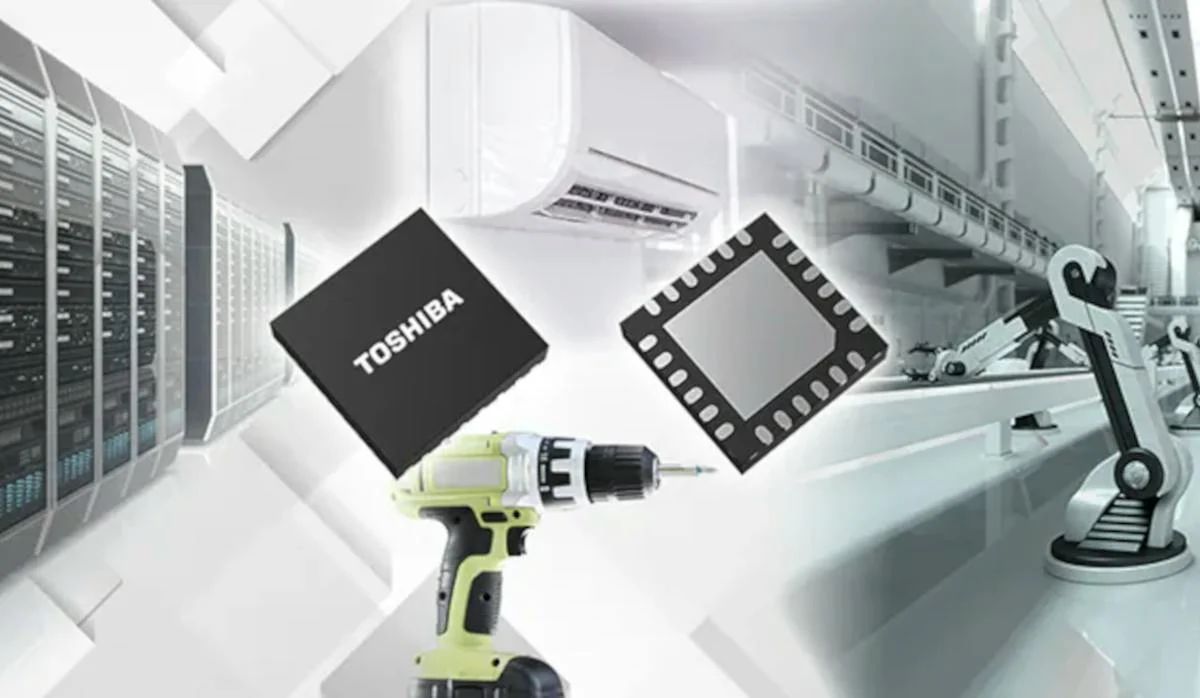
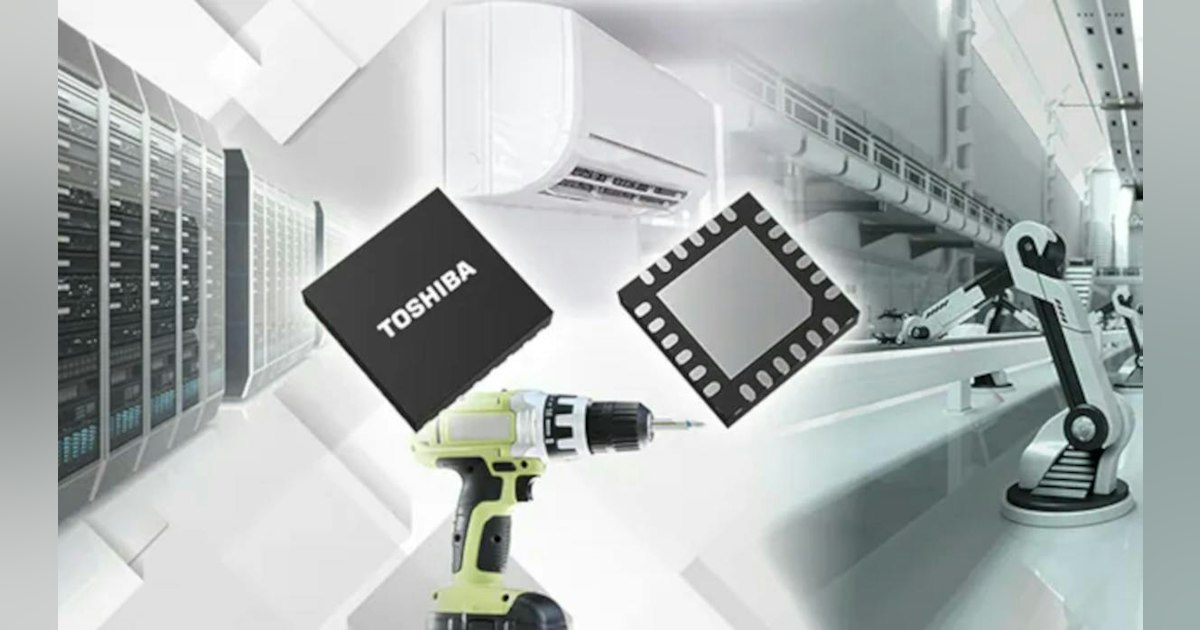
The landscape of modern power electronics is undergoing a quiet revolution. Electronic fuses, commonly known as eFuses, have transitioned from being viewed with industry-wide skepticism to serving as indispensable, high-reliability components on the bill of materials (BOM) for complex electrical subsystems. Marking a significant leap forward in this domain, Toshiba Electronic Devices & Storage Corp. has introduced the TCKE1401NM, a robust 75-V, 6-A electronic fuse IC specifically engineered to meet the stringent demands of modern servers, networking hardware, factory automation systems, and robotics.
Designed to handle wide operating voltage ranges from 4.7 V to 75 V, the TCKE1401NM is tailor-made for systems leveraging 24-V, 48-V, and 54-V power rails. As data centers, telecommunications networks, and industrial automation platforms increasingly pivot toward 48-V architectures to maximize power distribution efficiency and reduce copper losses, components capable of safely managing these elevated voltages become vital.
The device packs an impressive array of configurable safety mechanisms into a compact 4.0- × 4.0- × 0.9-mm VQFN24D package. Key specifications include:
- Voltage and Current Ratings: 75-V maximum rating, supporting continuous operation up to 6 A.
- Low On-Resistance ($R_DS(on)$): A typical value of 44.5 mΩ, which minimizes conduction losses and boosts overall system efficiency.
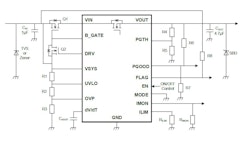
- User-Settable Protections: External resistor-adjustable overcurrent limiting (0.82 A to 6.43 A), adjustable undervoltage lockout (UVLO), and adjustable overvoltage protection (OVP).
- Advanced Safeguards: Integrated short-circuit protection, thermal shutdown, adjustable slew-rate control for inrush current mitigation via an external capacitor, and support for reverse-current blocking and input reverse-polarity protection using external MOSFETs.
- Fault Reporting: Features a two-mode selectable fault response (auto-retry vs. latch-off), a power-good output indicator, and a dedicated flag signal for instant fault notification.
Chronology: From Mechanical Skepticism to Active Semiconductor Acceptance
The Early Days: Skepticism Toward Active Protection
When electronic fuses were first introduced to the market over a decade ago, they were met with considerable hesitation by veteran hardware designers. For generations, engineers relied on traditional thermal fuses and electromagnetic circuit breakers. These mechanical and passive devices offered a tangible, unyielding guarantee of safety: when an overcurrent event occurred, a physical wire melted or a mechanical spring tripped, definitively breaking the circuit.
Asking design engineers to trust an active, complex semiconductor silicon die with power-line protection felt counterintuitive. Early adopters worried about semiconductor degradation, software dependency, unpredictable failure modes during catastrophic surges, and whether an active IC could genuinely match the fail-safe nature of a traditional fuse.
The Turning Point: Speed, Precision, and Integration
As power electronics evolved toward higher densities, faster switching frequencies, and decentralized architectures, the limitations of traditional thermal fuses became glaringly apparent. Mechanical fuses are relatively slow—acting on timescales of hundreds of milliseconds to seconds—which can spell disaster for sensitive downstream integrated circuits, microprocessors, and power semiconductor switches.
eFuses changed the paradigm by offering response times measured in mere milliseconds. Furthermore, they introduced unprecedented flexibility:
- Programmability: Thresholds could be customized dynamically via external passives or firmware.
- Remote Telemetry: Engineers could read system health, monitor current draw, and reset tripped circuits remotely.
- Localized Deployment: Unlike bulk central protection, eFuses could be "sprinkled" liberally across a circuit board to isolate faults down to specific branches, preventing a localized short from shutting down an entire system.
Regulatory Acceptance and Modern Integration
The turning point for widespread industry adoption arrived when international safety standards and regulatory bodies validated the performance and reliability of eFuses for overcurrent protection. Because standard-setting organizations do not update safety protocols lightly, this formal recognition served as a watershed moment.
Today, eFuses do not necessarily spell the absolute end of the classic fuse; rather, top-tier design methodologies often employ eFuses for rapid, precise, everyday fault management and resetting capabilities, while retaining a classic high-level fuse as an ultimate backup. Toshiba’s release of the TCKE1401NM represents the maturity of this trajectory—delivering sophisticated, high-voltage protection tailored precisely to the current industrial migration toward 48-V power distribution networks.
Supporting Data and Technical Specifications
Implementing an advanced eFuse like the TCKE1401NM requires a deep understanding of its electrical parameters, thermal characteristics, and supporting circuitry. Toshiba’s comprehensive 24-page datasheet, accompanied by application notes and design guides, provides engineers with the mathematical formulas and timing diagrams necessary to optimize layout and component selection.

Electrical Performance and Thermal Efficiency
In high-power environments, thermal management is paramount. The TCKE1401NM addresses this through a remarkably low typical on-resistance ($RDS(on)$) of 44.5 mΩ. To put this into perspective, lower $RDS(on)$ directly translates to reduced $I^2R$ power dissipation during normal operation, minimizing heat generation within the compact VQFN24D footprint.
Power Dissipation (P_loss) = I^2 × R_DS(on)At a continuous operating current of 5 A, the typical power loss across the switch is exceptionally modest, allowing the device to operate reliably without requiring bulky heatsinks.
Customization via External Passives
Unlike fixed-limit protection devices, the TCKE1401NM is designed for adaptability. Engineers can configure exact operational parameters using standard external components:
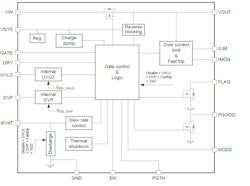
- Overcurrent Limiting: Adjustable continuously from 0.82 A to 6.43 A via an external resistor connected to the ILIM pin. This precision protects downstream traces and components from sustained overloads.
- Inrush Current Control: Large capacitive loads can cause massive transient inrush currents upon startup, leading to supply rail voltage dips. By placing an external capacitor on the dV/dt pin, designers can precisely control the output slew rate, ensuring smooth, linear ramp-ups.
- Undervoltage Lockout (UVLO) and Overvoltage Protection (OVP): External resistor dividers allow the eFuse to monitor the input rail actively. If the voltage drops below or spikes above user-defined safe operating windows, the eFuse immediately disconnects the load, shielding sensitive electronics from brownouts and surges.
Fault Management Protocols
When faults do occur, system behavior must be predictable. The TCKE1401NM features a user-selectable fault response mode:
- Auto-Retry Mode: The device periodically attempts to re-engage power after a cooling-off period, ideal for transient faults or systems in remote, inaccessible locations.
- Latch-Off Mode: The device permanently cuts off power upon fault detection until a manual reset is triggered via the enable pin or power cycling, protecting systems from repetitive fault cycles.
Additionally, a dedicated flag output pin asserts a low-level signal whenever an overcurrent, thermal shutdown, UVLO, or OVP event is detected, enabling real-time diagnostics by an onboard microcontroller or power management integrated circuit (PMIC).
Official Responses and Documentation
Toshiba Electronic Devices & Storage Corp. has positioned the TCKE1401NM not merely as a component, but as an integrated subsystem solution backed by robust technical enablement. Recognizing that high-voltage eFuses require careful PCB layout—particularly regarding creepage, clearance, and thermal dissipation—the company has released extensive support materials alongside the primary datasheet.
Key reference publications include:
- "eFuse IC for robust power supply protection" (Catalog / User Guide): Outlines system-level benefits, architecture selection criteria, and comparative advantages over traditional discrete protection schemes.
- "Basic usage and functions of eFuse IC" (Application Note): Provides step-by-step guidance on calculating external resistor and capacitor values for UVLO, OVP, current limits, and slew-rate control, minimizing engineering design cycles.
Industry analysts and distribution partners, such as Mouser Electronics, have noted that the introduction of parts like the TCKE1401NM reflects a broader market shift. Component manufacturers are moving away from rigid, single-function protection devices toward intelligent, highly configurable power management ICs that integrate seamlessly into smart industrial and enterprise ecosystems.
Implications for Industry and Future Trends
The commercial availability of the Toshiba TCKE1401NM carries profound implications for multiple vertical markets, reshaping how engineers approach power integrity, safety, and board-level architecture.
1. Acceleration of 48-V Power Architectures
For years, telecommunications infrastructure relied on 48-V DC rails, but enterprise data centers and automotive systems historically stuck to 12-V distributions. However, as computational densities soar and artificial intelligence (AI) server racks demand unprecedented amounts of power, 12-V systems suffer from excessive resistive losses ($I^2R$). Transitioning to 48-V distribution cuts current levels by a factor of four for the same delivered power, drastically improving efficiency. Devices like the TCKE1401NM—with its 75-V absolute maximum rating and tolerance for 54-V peaks—provide the necessary bridge to protect these high-efficiency rails safely.
2. Miniaturization and Space Savings in Factory Automation and Robotics
Industrial robots and factory automation equipment operate in harsh electrical environments characterized by inductive kickbacks, motor load dumps, and fluctuating power lines. Traditionally, protecting these systems required bulky banks of fuses, discrete MOSFETs, current-sense resistors, and supervisory comparators. By consolidating these functions into a tiny 4.0- × 4.0-mm VQFN package, designers can reclaim valuable printed circuit board (PCB) real estate, enabling smaller, lighter, and more densely packed robotic control modules.
3. Enhanced System Reliability and Predictive Maintenance
The integration of flag signals and intelligent fault-handling capabilities transforms the eFuse from a passive safety device into an active participant in system health monitoring. In industrial Internet of Things (IIoT) deployments, diagnostic flags can report intermittent overloads or thermal stress to a central cloud dashboard long before catastrophic failure occurs. This capability paves the way for predictive maintenance schedules, reducing costly unplanned downtime in automated manufacturing plants and enterprise server farms.
Summary
Toshiba’s TCKE1401NM eFuse underscores the maturation of active circuit protection technology. By bridging high-voltage tolerance, low on-resistance, user-programmable limits, and comprehensive fault diagnostics, it offers a sophisticated blueprint for modern power distribution. As industries continue their relentless pursuit of higher efficiency, miniaturization, and intelligence, the eFuse has firmly cemented its place as a cornerstone of modern electronic design.