Date: October 15, 2026
Author: Mary Bailey (Adapted and Expanded)
Industry: Chemical Engineering & Industrial Maintenance
1. Main Facts
In a significant development for industrial asset management, MentorAPM—a leader in asset lifecycle management platforms based in Phoenix, Arizona—has announced a major expansion of its asset intelligence capabilities. Through a strategic integration with Teledyne FLIR’s advanced iXX-Series of thermal-imaging cameras, the MentorLens platform now incorporates high-precision thermal data directly into the industrial condition-assessment workflow.
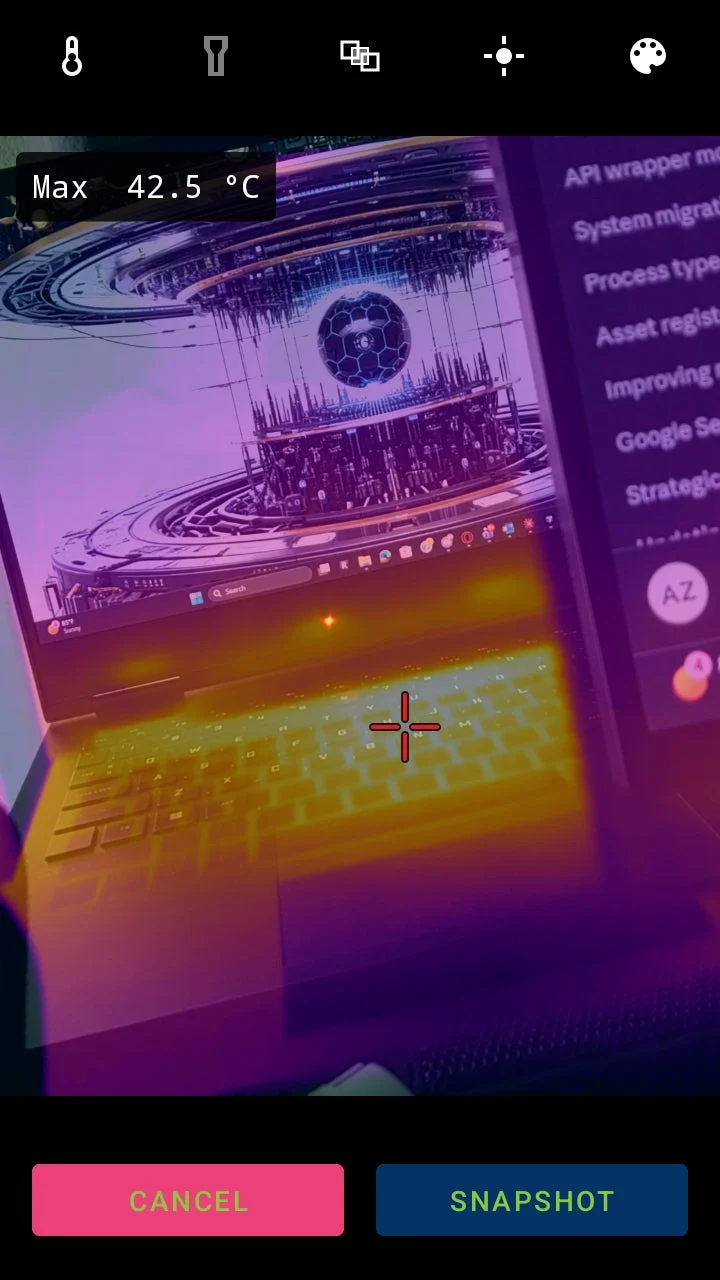
Historically, industrial operators have relied on fragmented approaches to asset monitoring. Visual inspections, nameplate documentation, and thermal imaging were often conducted using separate tools, leading to isolated data silos, lost metadata, and delayed maintenance responses. The new integration bridges this operational gap. By running the MentorLens application natively on Teledyne FLIR’s iXX-Series hardware, maintenance and reliability teams can simultaneously capture nameplate data, visual condition photos, and thermographic scans using a single, unified device.
This combined data streams directly into comprehensive asset records. The captured information can either feed natively into MentorAPM’s enterprise platform or integrate seamlessly with an organization’s legacy Enterprise Asset Management (EAM) or Computerized Maintenance Management System (CMMS). Consequently, industrial facilities—ranging from chemical processing plants and refineries to municipal water utilities and manufacturing centers—can upgrade their predictive maintenance capabilities without undergoing the disruptive and costly process of replacing their core enterprise software.
2. Chronology of Events and Integration Development
The convergence of thermal imaging and enterprise asset management did not happen overnight; it represents the culmination of years of iterative development in industrial internet of things (IIoT) edge computing, software-hardware interoperability, and artificial intelligence (AI) assistance.
- Phase I: The Siloed Era of Industrial Inspections (Pre-2023): For decades, maintenance technicians conducted routine rounds carrying multiple tools: a clipboard or digital tablet for logs, a standard camera for visual assessments, and a dedicated thermal camera to detect heat signatures denoting friction, electrical resistance, or fluid restriction. These data points were rarely synchronized at the point of capture. Thermal images were saved to physical SD cards, requiring technicians to manually transfer files to laptops at the end of a shift, risking the loss of critical radiometric metadata.
- Phase II: The Rise of AI-Assisted Visual Assessments (2023–2025): The introduction of platforms like MentorLens brought AI-assisted visual condition assessments to the forefront. These tools allowed operators to photograph assets, automatically read nameplates, and log basic health parameters. However, bridging the gap between visual AI and deep thermographic diagnostics remained a technical hurdle.
- Phase III: Hardware-Software Convergence (Late 2025–Mid 2026): Recognizing the industry’s demand for frictionless data pipelines, engineers at MentorAPM and Teledyne FLIR initiated collaborative development to embed the MentorLens application directly onto the operating system of the FLIR iXX-Series hardware. This eliminated the need for intermediary software bridges.
- Phase IV: Official Commercial Launch (October 2026): Formally announced on October 15, 2026, the integrated solution officially hits the market, offering asset-intensive organizations a streamlined, edge-computed pathway from thermographic capture to centralized enterprise record-keeping.
3. Supporting Data and Technical Architecture
To understand the operational significance of the MentorAPM and Teledyne FLIR integration, one must examine the friction points it eliminates in traditional industrial maintenance workflows.
The Problem with Traditional Data Hand-Offs
In a standard plant inspection, the lifecycle of a thermal image typically follows a circuitous route:
- Capture: A technician takes a thermal image of a failing motor or heat exchanger.
- Extraction: The image is stored on an SD card. Crucial metadata—such as emissivity settings, exact ambient temperature, and precise radiometric temperature profiles—is vulnerable to corruption or loss during file renaming and transfer.
- Manual Routing: The file is transferred to a local laptop or network shared drive.
- Administrative Bottleneck: A reliability engineer must manually match the image file to the correct equipment tag within the CMMS or EAM, a process prone to human error and significant delays.
The Unified Edge-Computing Solution
The native integration of the MentorLens app on the FLIR iXX-Series fundamentally alters this architecture:
- Zero-Loss Metadata Transfer: Because the application runs directly on the camera, images upload instantly to the asset record with all thermal metadata fully intact.
- Hardware Feature Retention: Technicians do not sacrifice any diagnostic capabilities. All native FLIR imaging and hardware controls—including MSX (Multi-Spectral Dynamic Imaging), custom palette selections, integrated lamps, and targeting lasers—remain fully operational. The exact device used to diagnose a thermal anomaly is also used to capture visual proof and asset metadata.
- In-Field Record Creation: Technicians can generate brand-new asset profiles or update existing ones directly from the camera interface in the field, bypassing the need to return to a control room or administrative desk before logging critical findings.
4. Official Responses and Industry Perspectives
Industry leaders from both partnering organizations have emphasized the transformative impact of combining advanced thermal imaging with robust asset lifecycle management.

Representatives from MentorAPM, operating out of their headquarters in Phoenix, Arizona, highlighted that the value of an industrial inspection is dictated less by the clarity of the initial image and more by the efficiency of its downstream processing. By removing manual data handoffs, organizations can shift their maintenance paradigms from reactive firefighting to true predictive reliability.
Similarly, technical spokespersons from Teledyne FLIR, based in Wilsonville, Oregon, underscored the synergy between high-end thermography and enterprise software architecture. They noted that providing maintenance personnel with tools that integrate seamlessly into existing CMMS and EAM frameworks lowers the barrier to entry for advanced predictive maintenance technologies. Rather than forcing plants to adopt entirely new management ecosystems, this integration enriches the data already flowing through their legacy infrastructure.
Independent reliability engineers have also weighed in, noting that asset-intensive industries—particularly chemical processing plants dealing with high temperatures, pressures, and corrosive environments—stand to benefit immensely from having instant, verifiable thermal data tied directly to equipment histories.
5. Implications for Chemical Engineering and Industrial Operations
The integration of Teledyne FLIR’s thermal imaging capabilities into the MentorLens platform carries profound implications for asset-intensive sectors, most notably the chemical processing industries (CPI), petrochemical refineries, power generation facilities, and heavy manufacturing plants.
Enhanced Process Safety and Mechanical Integrity
In chemical engineering environments, catastrophic failures are often preceded by subtle thermal anomalies. Undetected friction in high-speed pumps, electrical resistance in switchgear, or refractory degradation in high-temperature furnaces can escalate rapidly into safety hazards, environmental incidents, or costly unplanned shutdowns. By embedding thermal data into AI-assisted visual assessments, plant operators ensure that early-stage thermal signatures are immediately categorized, tracked, and acted upon, reinforcing mechanical integrity and compliance programs.
Minimizing Administrative Overhead
Maintenance planners and reliability engineers spend an inordinate amount of time managing data rather than analyzing it. Streamlining the intake of thermal and visual data into existing enterprise systems reduces administrative friction. Technicians spend less time filing paperwork, sorting image folders, and cross-referencing equipment tags, allowing them to focus on hands-on maintenance and root-cause analysis.
Financial and Operational Efficiency
Unplanned downtime remains one of the single largest drains on profitability in the process industries. By empowering frontline workers to capture complete, uncorrupted asset intelligence in a single site visit, organizations can catch microscopic equipment degradations before they manifest as major operational failures. Furthermore, because the solution works alongside existing EAM and CMMS platforms, facilities can extract maximum value from their current software investments without undertaking disruptive system migrations.
Future Outlook
As industrial facilities continue to embrace digital transformation, edge computing, and artificial intelligence, integrations that bridge the gap between physical hardware and cloud or enterprise databases will set the standard for operational excellence. The collaboration between MentorAPM and Teledyne FLIR establishes a benchmark for how specialized diagnostic tools can be unified within a single, cohesive asset management strategy.