Main Facts: The Burden of Technological Advancement
In an era defined by rapid technological evolution, modern soldiers are more connected, digitized, and protected than at any point in military history. From advanced night-vision optics and thermal sights to secure communication headsets and heads-up displays, the modern infantryman acts as a walking hub of sophisticated electronics. However, this growing reliance on head-borne and body-worn technology comes with a steep, often overlooked physical and cognitive cost.
Enter the HEADS UP project—a pioneering, human-centred research initiative spearheaded by the UK’s Defence Science and Technology Laboratory (Dstl). Launched to evaluate and optimize the safe usage of head-mounted military technology, the project aims to fundamentally shift how defense equipment is designed. Instead of forcing soldiers to adapt to increasingly heavy and awkward gear, HEADS UP places the human operator squarely at the center of the design process.
The core challenge lies in basic physics and human biology. Adding mass to the head drastically alters a soldier’s biomechanics. Increased weight translates directly to heightened metabolic energy expenditure, accelerated thermal strain (trapping heat and making body temperature regulation difficult), and severe biomechanical loading. Over time, this leads to chronic muscle strain in the neck and shoulders, fatigue, and an increased risk of long-term musculoskeletal injuries. Furthermore, the cognitive toll of managing bulky gear—ranging from situational awareness burdens to restricted field-of-view and sensory overload—can degrade decision-making capabilities in high-stress combat scenarios.
By systematically analyzing these stressors, Dstl hopes to reduce fatigue, preserve operator health, and ultimately enhance the lethality, agility, and battlefield resilience of British armed forces.
Chronology: The Evolution of the HEADS UP Trials
The genesis of the HEADS UP project reflects a growing realization within defense circles that human physiological limits are fast becoming the primary bottleneck in military technological capability.
Phase 1: Conceptualization and Inter-Agency Partnership
The framework for HEADS UP began taking shape as Dstl recognized a critical knowledge gap in how cumulative head-borne mass impacts operational performance. Traditional procurement focused heavily on the standalone capabilities of a piece of tech—how far it could see, how encrypted its signal was, or how durable its casing proved to be. Little attention, however, was paid to the cumulative compounding effects of wearing multiple disparate devices simultaneously.
To tackle this complex interdisciplinary challenge, Dstl forged a robust partnership combining military personnel, academic rigor, and defense engineering expertise. They teamed up with the University of Chichester—specifically leveraging the institution’s renowned Occupational Performance Research Group (OPRG)—and defense technology giant QinetiQ.
Phase 2: Mobilizing the Frontline
A trial of this magnitude requires authentic data gathered from real-world operators. To achieve this, Dstl enlisted active-duty soldiers from some of the British Army’s most storied regiments. Personnel from the Queen’s Royal Hussars, the Princess of Wales’s Royal Regiment, the Royal Dragoon Guards, and the Royal Engineers stepped forward to serve as trial participants.
Phase 3: Rigorous Laboratory Simulation
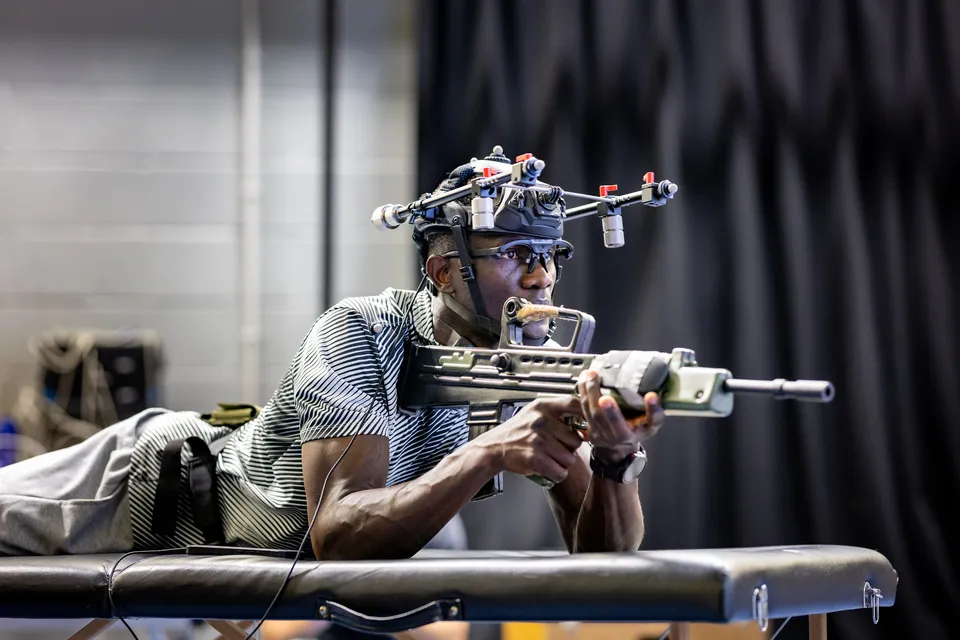
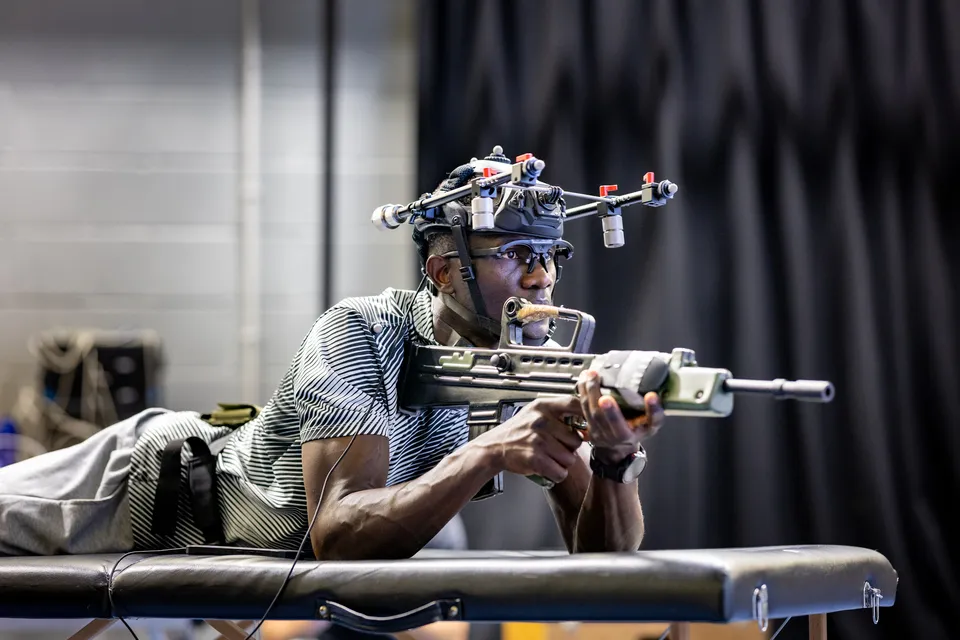
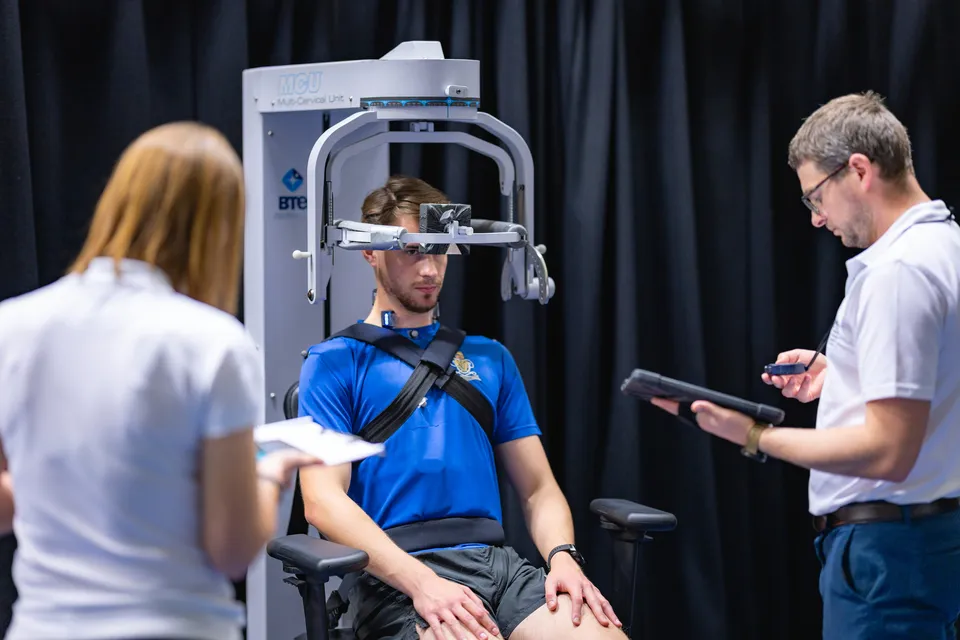
Rather than throwing unproven equipment straight into hazardous environments, the project utilized advanced laboratory settings at the University of Chichester. Here, participating soldiers were fitted with custom-engineered rigs designed to simulate various head-mount load configurations. While wearing these rigs, the soldiers executed a series of standardized, physically demanding tasks representative of actual military operations.
Through motion capture, telemetry, and biometric sensors, researchers began logging vast amounts of physiological and cognitive data, charting the exact tipping points where equipment weight degrades human performance.
Supporting Data: Measuring the Toll of the Helmet
To accurately capture how head-mounted equipment influences a soldier, the HEADS UP trial utilizes a comprehensive suite of high-precision metrics. The research methodology bridges sports science, biomechanics, and cognitive psychology to paint a holistic picture of the wearer’s experience.
Researchers are tracking several key data streams:
Biomechanical Load and Muscle Activity: Using electromyography (EMG) and motion-capture technology, the team measures muscle strain across the neck and upper spine, evaluating how different weight distributions alter posture and gait.
Metabolic Cost: Gas analysis and heart-rate telemetry gauge how much extra energy a soldier expends simply keeping their head upright under heavier load configurations.
Cognitive and Visual Performance: Through integrated eye-tracking software and reaction-time tests, researchers monitor attentional demand, assessing how much mental bandwidth is consumed just managing or looking through the mounted technology.
Thermal Strain: Core body temperature and sweat rates are monitored to understand how additional gear impedes the body’s natural cooling mechanisms during strenuous exertion.
Initial findings from these multi-faceted trials are providing engineers with concrete numerical thresholds. Instead of guessing how many grams a helmet can bear before inducing neck strain, designers will soon have empirical datasets to guide ergonomic optimization.
Official Responses: A Collaborative Vision for the Future
The success of the HEADS UP project hinges on the seamless integration of military operational feedback, academic scientific inquiry, and industrial engineering capabilities.
A spokesperson for Dstl emphasized the strategic necessity of the initiative, stating:
"The trial puts the soldier at the centre of new equipment design. By reducing the negative effect of equipment, such as fatigue, we can improve performance and effectiveness. This will improve the soldier’s lethality, agility, and resilience."
Academic leadership has played an equally crucial role in shaping the parameters of the research. Professor Sam Blacker of the University of Chichester elaborated on the institution’s specialized focus:
"The Occupational Performance Research Group at the University of Chichester specialises in improving health and performance in physically demanding occupations, particularly the military. Our work ranges from collecting data in the field and running studies in our sport and exercise science laboratories."
Highlighting the strength of the collaborative effort, Professor Blacker added:
"For this particular project, we have brought together a multidisciplinary team of researchers from the University of Chichester and QinetiQ to investigate the effects of carrying additional load mass on the physical and cognitive aspects of soldier performance."
Through this union of minds—spanning Dstl’s defense foresight, QinetiQ’s technical infrastructure, and Chichester’s physiological expertise—the project represents a gold standard in modern defense acquisition research.
Implications: Reshaping the Future of Soldier Systems
The implications of the HEADS UP project extend far beyond immediate comfort; they touch upon the core operational readiness of future armed forces.
1. Procurement and Design Standards
As Dstl processes the data harvested from the University of Chichester laboratories, the insights are expected to directly influence future Ministry of Defence procurement contracts. Manufacturers vying to supply next-generation optics, helmet-mounted displays, and communication gear will likely be held to strict human-factors engineering standards. If a device is too front-heavy or disrupts the wearer’s natural balance, it may fail procurement criteria, regardless of its electronic capabilities.
2. Mitigation of Long-Term Injuries
Beyond immediate combat effectiveness, military healthcare systems bear a heavy long-term burden from service-related musculoskeletal disorders. Neck, shoulder, and spinal injuries resulting from decades of carrying poorly balanced heavy loads account for significant medical discharges and veteran care costs. By engineering out these ergonomic hazards at the design stage, the MoD can safeguard the long-term health and wellbeing of service personnel.
3. Cognitive Overmatch on the Battlefield
In modern multi-domain operations, cognitive bandwidth is just as vital as physical stamina. Soldiers who are distracted by physical discomfort or struggling to maintain focus under the mental weight of complex equipment are more vulnerable in high-tempo engagements. By lightening the cognitive and physical load, HEADS UP helps ensure that soldiers maintain razor-sharp situational awareness when it matters most.
As Dstl marks milestones like its 25 years of cutting-edge defence technology innovation, projects like HEADS UP prove that the future of military supremacy relies as much on understanding human biology as it does on silicon chips and advanced software. By putting the soldier first, the UK defense sector is building a smarter, safer, and far more resilient fighting force for the challenges of tomorrow.