Hydraulic systems have long served as the muscular foundation of global industrial output. From the crushing force of metal-forming presses to the delicate, high-precision movements of automated production lines, fluid power remains unparalleled in its power density, robustness, and reliability. However, as the global manufacturing sector grapples with the dual pressures of rising energy costs and aggressive sustainability mandates, the traditional approach to hydraulics is undergoing a radical transformation.
The industry is currently shifting from a “power-at-all-costs” mindset to an era of intelligent, energy-optimized fluid power. This evolution is not merely about replacing legacy components; it is a systemic shift in how we design, operate, and maintain hydraulic architectures to meet the rigorous demands of Industry 4.0.
The Core Challenge: Reconciling Performance with Efficiency
At its most fundamental level, a hydraulic system is an energy conversion machine. It transforms mechanical energy into fluid power—typically via a pump—and then converts that fluid energy back into mechanical work through actuators. Each stage of this process introduces potential energy losses, primarily through heat generation, friction, and pressure drops.
The Myth of Inefficiency
There is a common misconception that hydraulic systems are inherently wasteful. In reality, historical design choices often prioritized "over-engineering"—creating massive safety margins to ensure that equipment could handle peak loads without failure. While this guaranteed reliability, it often resulted in systems operating at low-efficiency states for the majority of their duty cycle. Modern engineering is now proving that we do not need to sacrifice reliability for efficiency; rather, we can achieve both through smarter control logic and adaptive hardware.
Chronology of Hydraulic Innovation: From Constant Speed to AI-Driven Control
The journey toward modern, energy-efficient hydraulics can be viewed through several distinct technological milestones:
- 1950s–1980s: The Constant Speed Era. Systems relied on fixed-displacement pumps driven by induction motors running at constant speeds. Energy waste was rampant, as excess flow was often simply bypassed over a relief valve.
- 1990s–2000s: The Proportional Revolution. The introduction of proportional valves and pressure-compensated systems allowed for more refined control, though energy was still largely dictated by the primary mover.
- 2010s: The Advent of Variable Speed Drives (VSDs). The integration of VSDs changed the game, allowing the electric motor to throttle its speed based on the specific load requirements of the hydraulic cycle.
- 2020s–Present: The Digital and Electrohydraulic Era. Today, we see the rise of high-bandwidth servopumps and AI-integrated controllers that treat hydraulics as a data-driven, closed-loop system.
Supporting Data: Why Efficiency Matters
Recent industrial studies indicate that in typical hydraulic applications, up to 30–50% of energy input can be lost due to inefficient throttling and idling. By transitioning to modern electrohydraulic systems, facilities can realize significant operational gains:
- Reduced Idle Consumption: Systems utilizing servopumps can reduce energy consumption by up to 70% during standby or low-load phases compared to traditional constant-speed power units.
- Heat Load Reduction: By eliminating unnecessary throttling, the cooling requirements for hydraulic oil are significantly decreased, further reducing the energy footprint of the facility’s climate control and cooling systems.
- Extended Component Life: Precise control minimizes pressure spikes and thermal fatigue, extending the mean time between failures (MTBF) for pumps, seals, and valves by an estimated 15–20%.
Technological Pillars of Modern Efficiency
The transition to high-efficiency hydraulics rests on four critical technological pillars that manufacturers are deploying today.
1. Variable Speed Drives (VSDs)
VSDs are the "brain" of the modern power unit. By adjusting the RPM of the electric motor to match the real-time flow demand, VSDs eliminate the need to dump excess fluid across a relief valve. This is especially transformative in applications with cyclical loads, such as injection molding, where the machine requires high pressure during injection but minimal flow during cooling.
2. Load-Sensing and Pressure-Compensated Systems
These systems act as a feedback loop. They continuously monitor the load on the actuator and adjust the pump’s output pressure and flow to match only what is required for the task. This prevents the system from running at maximum pressure when only a fraction is needed.
3. Electrohydraulic Servopumps
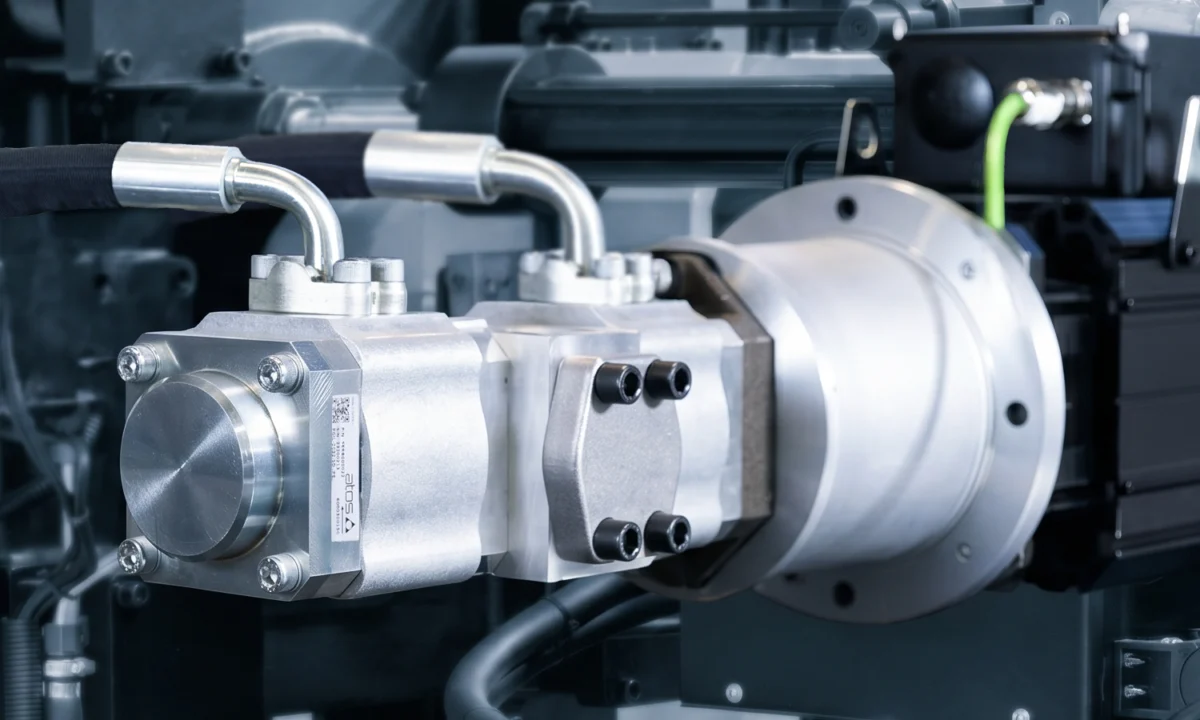
Leaders in the field, such as The Atos Group, have pioneered advanced servopump technology that bridges the gap between digital precision and hydraulic power. These units integrate high-speed electronic control with high-performance hydraulic hardware. By digitizing the control of pressure and flow, these systems allow for sub-millisecond adjustments that were previously impossible, ensuring that energy usage is perfectly aligned with the mechanical demand.
4. Energy Recovery Systems
The most advanced systems now incorporate regenerative circuits. During the deceleration phase of a heavy load or during the lowering of a press, the potential energy is captured via accumulators or regenerative valves rather than being dissipated as heat. This "stored" energy can be fed back into the next cycle, creating a circular energy economy within the machine.
Official Perspectives: The Industry Shift
According to technical experts in fluid power, the shift is driven by a convergence of regulatory pressure and the need for data-backed operational excellence.
"Energy efficiency is no longer a peripheral goal; it is a central pillar of corporate strategy," notes a spokesperson from the Atos Group. "The goal is to align hydraulic performance with the sustainability mandates of the 21st-century factory floor. By leveraging electrohydraulic architectures, manufacturers are not only lowering their electricity bills but are gaining unprecedented diagnostic capabilities that prevent downtime before it happens."
Regulators across Europe and North America are increasingly codifying these expectations into law. With policies favoring high-efficiency motors and stricter greenhouse gas reporting, companies are finding that investing in smart hydraulics is an essential step in maintaining a competitive, compliant manufacturing facility.
Implications for the Future: Hydraulics in the Age of AI
As we look toward the next decade, the role of hydraulic systems will continue to evolve through the integration of Artificial Intelligence and Machine Learning (ML).
Predictive Maintenance
The future of hydraulics is not just efficient; it is predictive. By analyzing data from pressure sensors, vibration monitors, and oil quality sensors, AI algorithms can predict when a seal is about to fail or when a filter needs changing. This shift from "reactive" to "predictive" maintenance ensures that the system is always running at its peak efficiency rating, preventing the degradation that occurs in poorly maintained systems.
The Hybrid Future
We are also seeing the emergence of hybrid architectures—systems that combine the high-force density of hydraulics with the rapid, clean response of electric actuators. In these designs, hydraulics handle the heavy-duty lifting and pressing, while electric components manage high-frequency, low-force positioning. This "best-of-both-worlds" approach is likely to become the standard for heavy-duty automation.
Conclusion: A Balanced Approach to Industrial Excellence
The modernization of hydraulic systems represents a significant opportunity for industrial manufacturers. While the transition requires initial investment and a commitment to technical training for plant personnel, the long-term ROI is clear.
By prioritizing system-level design, embracing electrohydraulic integration, and adopting a data-centric approach to maintenance, manufacturers can ensure that their hydraulic assets remain a source of strength rather than a drain on resources. Hydraulics are not a legacy technology; they are a vital, evolving component of the smart factory of the future. As the industry continues to refine these technologies, the focus will remain on the delicate balance of power, precision, and performance—ensuring that the machines of tomorrow are as efficient as they are powerful.
Disclaimer: This article is presented as a deep-dive into the current state of hydraulic efficiency and is supported by content provided by The Atos Group.