By Puja Mitra
Published in Linear Motion & Automation News
Main Facts
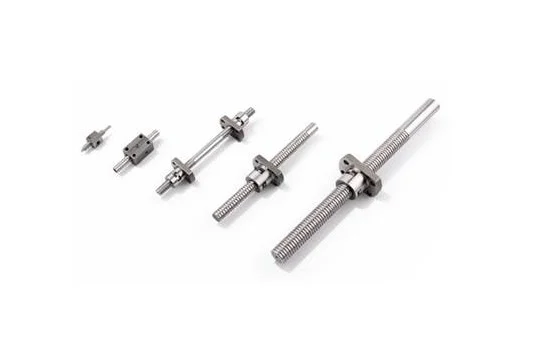
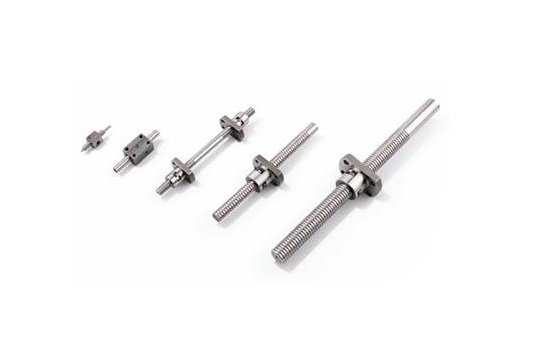
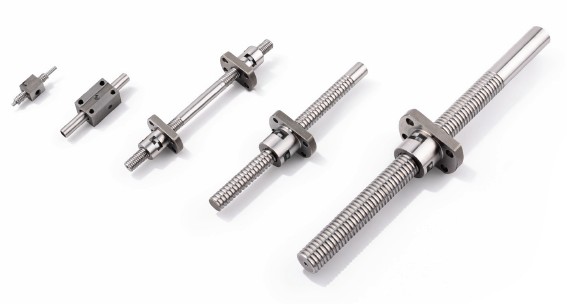
DINGS’ Motion USA has officially announced a significant expansion of its precision motion control portfolio, introducing a new line of miniature ball screw and nut assemblies specifically engineered for Original Equipment Manufacturers (OEMs). The newly released product line is meticulously designed to address the growing industrial demand for high mechanical efficiency, minimal backlash, and deep, application-specific customization in miniature linear motion applications.
As modern industrial automation, medical device manufacturing, electronics assembly, and laboratory instrumentation trend toward faster speeds, smaller footprints, and tighter tolerances, design engineers frequently encounter performance bottlenecks with off-the-shelf components. Traditional miniature ball screw assemblies often present hurdles such as rigid, fixed catalog configurations, extended manufacturing lead times, and the logistical friction of sourcing motors, mechanical drives, and feedback systems from disparate vendors.
To combat these challenges, DINGS’ Motion USA is leveraging its vertically integrated manufacturing infrastructure. The company’s new offering gives OEM engineering teams the ability to tailor components directly to their unique operational parameters. By combining motor selection, precision screw design, mechanical guidance, and encoder feedback into a unified developmental framework, DINGS aims to optimize the performance of the entire motion axis rather than isolated mechanical parts. Furthermore, vertical integration allows the company to slash typical custom configuration lead times from several months down to mere weeks, drastically accelerating time-to-market for modern automation developers.
Chronology: The Evolution of Miniature Motion and the DINGS Expansion
To fully understand the market significance of DINGS’ latest product rollout, it is helpful to examine the chronological progression of precision linear motion technology and the strategic developments that led to this launch.
Phase I: The Standardization Era (Late 20th Century to Early 2000s)
Historically, the linear motion industry relied heavily on standardized catalog components. OEMs designing compact machinery were forced to design their mechanical envelopes around pre-existing ball screw sizes, pitches, and nut configurations. While this worked well for heavy industrial machinery and macro-scale automation, it severely limited the miniaturization of high-precision equipment. Engineers wishing to implement ball screw assemblies—valued for their high load capacity and efficiency compared to lead screws—often had to compromise on space, weight, or performance metrics because custom assemblies were prohibitively expensive and suffered from protracted production cycles.
Phase II: The Micro-Automation Boom (2010s)
The rapid expansion of the Internet of Things (IoT), portable medical diagnostic equipment, semiconductor manufacturing, and smartphone assembly lines catalyzed an unprecedented demand for miniature motion components. Traditional lead screws offered simplicity and low cost, but their lower efficiency and susceptibility to wear under high-duty cycles proved inadequate for high-speed, high-precision micro-positioning. Ball screws offered the ideal mechanical advantage, but miniaturizing them while maintaining zero-backlash performance and high load ratings remained a formidable manufacturing challenge. Component suppliers began introducing miniature variants, yet customization options remained scarce.
Phase III: The Vertical Integration Shift (Present Day)
Recognizing that modern OEMs require agile, tailored solutions rather than rigid parts, manufacturers like DINGS began reshaping their production models. The introduction of DINGS’ miniature ball screw assemblies represents the maturation of this shift. By establishing end-to-end vertical integration—controlling everything from raw material sourcing and thread grinding to assembly and testing—DINGS positioned itself to bridge the gap between mass-produced catalog parts and bespoke engineering. This latest rollout marks a pivotal milestone in the company’s broader corporate strategy to transition from a single-component supplier to a comprehensive, single-source linear motion system provider.
Supporting Data & Technical Specifications
The engineering architecture of the new DINGS miniature ball screw assemblies is designed to meet the rigorous demands of high-cycle, high-precision automation environments. Below is a detailed breakdown of the technical capabilities and structural advantages integrated into the new product line:
Core Performance Metrics
- Mechanical Efficiency: Achieving upwards of 90% efficiency, these ball screw assemblies drastically reduce energy loss and heat generation compared to traditional sliding friction lead screws (which typically operate at 30% to 50% efficiency).
- Backlash Management: Engineered for low-to-zero backlash performance, ensuring exceptional bidirectional repeatability essential for high-precision positioning tasks.
- Miniature Form Factor: Optimized for compact spatial envelopes, allowing OEMs to reduce the physical footprint of their mechanical stages without sacrificing load-bearing capabilities.
- Lead Time Reduction: Through optimized vertical manufacturing pathways, customized prototype-to-production lead times have been compressed from traditional industry averages of 12–16 weeks down to a matter of weeks.
Comparative Analysis: Ball Screws vs. Lead Screws in Miniature Applications
| Performance Parameter | Traditional Lead Screws | DINGS Miniature Ball Screws |
|---|---|---|
| Efficiency | Low (30% – 50%) | High (Up to 90%+) |
| Wear & Lifespan | Higher friction leads to accelerated wear over high-cycle use. | Rolling element design minimizes friction and extends operational lifespan. |
| Heat Generation | Moderate to High due to sliding friction at continuous high speeds. | Low, making them ideal for temperature-sensitive laboratory and medical environments. |
| Customization Flexibility | Often constrained to standard stock configurations. | Tailored pitch, length, end-machining, and nut integration for specific OEM needs. |
| Sourcing Complexity | Often requires multi-vendor procurement for motors and drives. | Streamlined single-source architecture (motor, screw, feedback). |
Official Responses and Engineering Insights
Industry response to the announcement has highlighted the growing necessity for supplier flexibility in high-tech manufacturing sectors. Representatives from DINGS’ Motion USA engineering division have emphasized that the modern design philosophy must move away from treating mechanical components in isolation.
"As automation systems become progressively faster, smaller, and infinitely more precise, engineers frequently discover that off-the-shelf, static ball screw assemblies simply cannot satisfy the unique physical and operational constraints of their applications," noted a senior technical spokesperson for DINGS. "Our objective with this portfolio expansion was not merely to add another part number to a catalog, but to provide OEM engineering teams with a flexible, highly customizable mechanical foundation. By taking a holistic approach to the entire motion axis—integrating the motor, the screw geometry, guidance mechanisms, and feedback systems—we enable our clients to optimize performance right from the drawing board."
Furthermore, engineering management has underscored the distinct advantage of vertical integration in resolving supply chain vulnerabilities. By keeping manufacturing processes internal, DINGS insulates its OEM partners from external supply chain shocks while retaining rigorous quality control over critical dimensions, surface finishes, and preload characteristics.
Implications for OEMs and the Industrial Automation Industry
The introduction of DINGS’ miniature ball screw assemblies carries profound implications for multiple industries, including medical technology, robotics, optics, and semiconductor manufacturing.
Streamlined Multi-Vendor Consolidation
One of the most persistent bottlenecks in machine building is the administrative and logistical overhead of sourcing components from disparate suppliers. An OEM might previously have sourced the stepper or servo motor from one vendor, the lead or ball screw from a second, the linear guide from a third, and the encoder from a fourth. Coordinating lead times, ensuring mechanical compatibility, and troubleshooting integration failures across multiple vendor ecosystems can consume valuable engineering hours.
By offering a comprehensive ecosystem where miniature ball screws integrate seamlessly with DINGS’ existing motor and motion control lines, the company provides a streamlined, single-source procurement model. This consolidation dramatically simplifies the bill of materials (BOM), reduces administrative overhead, and accelerates overall product development cycles.
Accelerated Prototyping and Time-to-Market
In competitive technology sectors, the first company to bring a product to market often captures the lion’s share of the market. Long lead times for custom mechanical components have historically crippled startup timelines and delayed enterprise product refreshes. By cutting custom configuration lead times down to weeks through localized vertical integration, DINGS empowers OEMs to iterate rapidly during the prototyping phase. Engineers can test custom-pitched miniature ball screws in real-world conditions, tweak parameters, and transition smoothly into full-scale production without suffering extended project delays.
Enhanced Precision in Space-Constrained Environments
As medical devices (such as automated pipettors, miniature infusion pumps, and surgical robotics) and optical inspection systems continue to shrink, the demand for high-precision actuation within ultra-tight spaces intensifies. The new DINGS miniature ball screw assemblies allow design engineers to pack high-load, high-efficiency linear motion into footprints previously reserved for lower-performing lead screws. This technological leap enables the creation of smarter, faster, and more reliable portable and benchtop automation systems.
Conclusion
DINGS’ Motion USA has strategically positioned itself at the intersection of miniaturization and customization with its latest product rollout. By addressing the historical pain points of rigid catalog limitations, extended lead times, and fragmented multi-vendor sourcing, the company offers a robust, vertically integrated solution for modern OEMs. As automation trends continue to push the boundaries of speed, scale, and precision, innovations like these will serve as the mechanical backbone for the next generation of intelligent industrial and medical systems.
For further technical documentation, CAD models, or to discuss application-specific customization requirements with an engineering specialist, visit the official DINGS’ Motion USA website at dingsmotionusa.com.