By Abhishek Jadhav
Technology Writer & Embedded Systems Analyst
Executive Summary & Main Facts
The robotics landscape is currently experiencing an unprecedented wave of transformation. Spanning from autonomous mobile robots (AMRs) deployed in sprawling logistics centers to advanced humanoid systems designed for dynamic environments, robotics companies are pushing the boundaries of what machines can achieve. Yet, building a functional prototype that performs impressively in a controlled laboratory environment is only the opening act. The true crucible for any hardware startup lies in navigating the complex transition from a successful proof-of-concept to a commercially viable product capable of high-volume manufacturing and reliable field deployment.
To address this critical bottleneck, Analog Devices Inc. (ADI) is aggressively expanding its Emerging Tech Hub initiative within the Analog Garage. Designed to bridge the chasm between startup agility and corporate-scale manufacturing resources, the Hub provides early-stage and established robotics developers with direct access to ADI’s elite engineering talent, advanced prototyping facilities, rigorous testing infrastructure, and reliable semiconductor sourcing networks.
By centering its strategy on "co-development" and strict intellectual property (IP) protection, ADI aims to solve the hardware-level integration challenges that often stall physical AI innovations. As the industry prepares to discuss these frameworks at upcoming events like RoboBusiness 2026, the intersection of semiconductor manufacturing expertise and startup innovation is emerging as the defining trend for the next generation of intelligent automation.
The Chronology of Modern Robotics Scaling: From Idea to Mass Production
The lifecycle of a modern robotics enterprise is fraught with engineering hurdles. According to ADI’s internal frameworks, the journey from a conceptual sketch to a globally deployed commercial fleet can be broken down into four distinct yet interconnected phases: Idea, Prototype, Validate, and Scale.
Phase 1: The Idea and Conceptualization (Years 0–1)
In the nascent stages of a robotics startup, engineering efforts are laser-focused on proving a novel thesis—whether that is a novel actuator design, a proprietary SLAM (Simultaneous Localization and Mapping) algorithm, or an innovative humanoid form factor. At this juncture, teams are usually small, lean, and heavily reliant on commercial-off-the-shelf (COTS) components to stitch together a working conceptual framework.
Phase 2: Prototyping and the Physical AI Reality
As detailed in ADI’s recent whitepaper, The Race to Make AI Physical, bridging the digital-to-physical divide requires harmonizing multiple complex subsystems:
- Sensing and signal conversion
- Perception and reasoning
- Real-time motion control and computing
- System-wide validation
During the prototyping phase, developers discover that executing a high-level decision made by an edge-AI model depends entirely on the fidelity of raw sensor data, the latency of control signals, and the robust delivery of electrical power. A prototype successfully demonstrates that a technology can work, but it rarely accounts for the thermal, mechanical, and electrical stresses encountered in the real world.
Phase 3: Validation and System Integration (Years 2–3)
Validation is where many promising startups stumble. Moving beyond a lab bench means testing integrated systems under extreme operating conditions—vibration, temperature fluctuations, electromagnetic interference (EMI), and continuous mechanical wear. As Cameron Villone, Senior Product Technology Manager at ADI, notes, the speed at which the robotics industry moves makes keeping up with component obsolescence and rigorous validation standards exceptionally difficult for smaller teams.
Phase 4: Scale, Sourcing, and Manufacturing (Year 3 and Beyond)
Scaling introduces a completely new tier of engineering and operational challenges. Securing long-term semiconductor components, coordinating multi-tier supply chains, and maintaining strict quality control as production volumes scale from dozens of units to thousands require deep manufacturing expertise. This is precisely the operational gap that ADI’s Emerging Tech Hub has been engineered to fill.
Supporting Data & The Mechanics of the Emerging Tech Hub
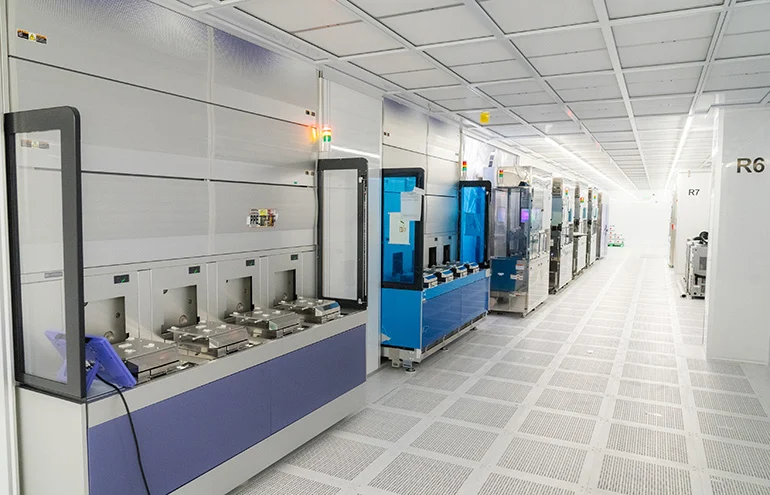
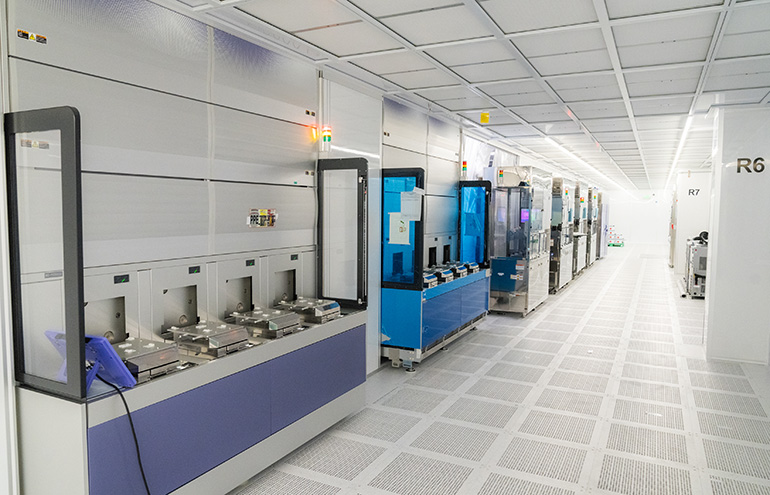
Operating out of state-of-the-art facilities—such as ADI’s cleanroom and testing labs in Beaverton, Oregon—the Emerging Tech Hub serves as an incubator for physical AI hardware. The Hub is built around three foundational pillars of support:
- Technical Expertise: Access to domain specialists well-versed in robotics architectures, motion control, edge AI processing, power management, and high-speed data interconnects. For instance, ADI’s proprietary GMSL™ (Gigabit Multimedia Serial Link) technology is frequently deployed to solve complex camera connectivity and multi-sensor synchronization issues in autonomous systems.
- Development Resources: Startups gain entry into professional-grade laboratories, advanced prototyping tools, comprehensive reference designs, and structured validation environments. This hands-on engineering support ensures that architectural flaws are caught and rectified long before tooling for mass production begins.
- Supply Chain and Sourcing Guidance: Transitioning to production requires surety of supply. ADI leverages its decades of semiconductor manufacturing history to guide startups through component selection, lifecycle management, and scalable sourcing strategies.
Official Perspectives: Balancing Startup Agility with Corporate Scale
Historically, a cultural and operational friction has existed between agile tech startups and legacy semiconductor giants. Startups pride themselves on rapid iteration, creative problem-solving, and complete autonomy over their technology stack. Conversely, large corporations are often perceived as slow, bureaucratic, and overly protective of their internal structures.

Cameron Villone acknowledges this historical hesitation candidly:
"The biggest challenge I see robotics startups facing today is the speed at which the industry moves… Some startups are initially reluctant to work with larger corporations because they worry about what such a relationship could mean for their business."
However, ADI is deliberately upending this dynamic through a philosophy of co-development with strict IP preservation. Under the Emerging Tech Hub model, startups retain 100% ownership of their intellectual property. ADI’s commercial interest remains firmly anchored in empowering these breakthrough robotic applications using advanced semiconductors, while providing startups with access to resources that would be mathematically and financially impossible to build independently.
This collaborative paradigm will take center stage at the upcoming RoboBusiness conference on October 20. During the session titled "Robotics Startup Boot Camp Part 2: Challenges & Best Practices for Working with Corporate Partners," Colm Prendergast, Senior Director and Head of the Emerging Tech Hub at ADI, will be joined by industry leaders from MassRobotics and WiBotic. The panel will dissect how startups can effectively pitch proofs of concept, how major corporations evaluate strategic partners, and how to successfully harmonize startup velocity with institutional engineering processes.
Implications for the Future of Automation
The establishment of ADI’s Emerging Tech Hub—with applications opening to wider external participation by late 2026—signals a broader maturation phase for the robotics sector.
As physical AI transitions from speculative venture-backed experiments into indispensable industrial infrastructure, the companies that succeed will not be those working in complete isolation. Rather, success will belong to agile innovators who can seamlessly tap into foundational semiconductor ecosystems. By bridging the gap between benchtop prototyping and high-volume commercial scaling, initiatives like ADI’s Emerging Tech Hub are ensuring that the next generation of autonomous mobile robots and humanoid systems can move swiftly, reliably, and profitably from the cleanroom floor out into the real world.