





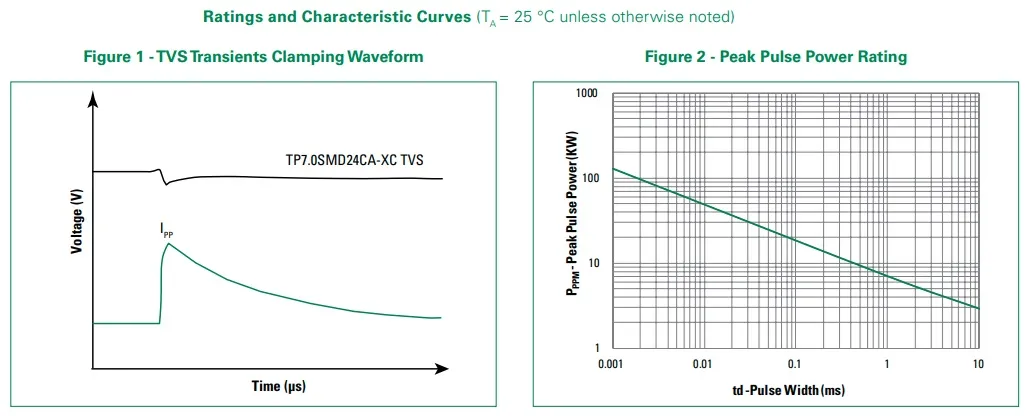
ADVANCED PROTECTION: By leveraging innovative foldback technology, Littelfuse’s new surface-mount transient voltage suppression diodes deliver a formidable 7,000 W of peak pulse power while maintaining an exceptionally low and flat-clamping voltage. The engineering breakthrough promises enhanced protection for next-generation automotive architectures, including 12V, 24V, and 48V systems.
Main Facts
Circuit protection and power control specialist Littelfuse has officially announced the global launch of its TP7.0SMD-XC series of automotive transient voltage suppression (TVS) diodes. Designed specifically to endure the harsh electrical environments found within modern vehicles, these surface-mount devices deliver an impressive 7,000 watts (7 kW) of peak pulse power. More importantly, they introduce a low, flat-clamping voltage profile that effectively shields sensitive automotive integrated circuits (ICs) from destructive voltage transients.
Target applications for the new series are expansive, spanning traditional 12V automotive battery systems, zone control units (ZCUs), advanced driver-assistance systems (ADAS), and critical anti-reverse protection circuits.
By integrating state-of-the-art silicon semiconductor architectures, the TP7.0SMD-XC components solve a long-standing engineering dilemma: how to absorb massive energy spikes without allowing the voltage across downstream electronics to rise to dangerous levels. The flagship model of the lineup—the TP7.0SMD24CA-XC—is immediately available through authorized Littelfuse distributors, supplied in standard tape-and-reel packaging in quantities of 3,000 units.
Chronology of Development
The release of the TP7.0SMD-XC series represents the culmination of years of targeted research and development within Littelfuse’s advanced semiconductor design laboratories.
- Early Research Phases: As modern automotive architectures began shifting away from decentralized wiring harnesses toward centralized domain controllers and zone-based topologies, component engineers noted an exponential increase in localized electrical noise and transient threats. Traditional TVS diodes, while capable of handling high power, often suffered from high dynamic resistance, leading to clamping voltages that threatened delicate, sub-micron silicon ICs.
- Adoption of Foldback Technology: Littelfuse engineers turned to advanced semiconductor foldback technology—a design strategy that allows the diode to transition into a lower clamping voltage state after breakdown is initiated. This breakthrough enabled the development team to marry high power-handling capability with a significantly flatter, lower voltage curve.
- Compliance and Qualification: Over the subsequent testing phases, prototypes underwent rigorous automotive stress testing to ensure compliance with stringent industry standards, including load-dump pulses and jump-start scenarios.
- Commercialization: With validation complete, Littelfuse finalized the manufacturing lines for the surface-mount packages, leading to the official product rollout and the immediate availability of evaluation samples for tier-one automotive suppliers worldwide.
Supporting Data and Technical Architecture
To fully appreciate the engineering significance of the TP7.0SMD-XC series, one must examine the electrical realities of the modern automotive power rail. A vehicle’s electrical system is notoriously hostile, subject to severe load dumps, inductive switching spikes, electrostatic discharge (ESD), and emergency jump-starts where external power sources can inadvertently apply up to 24V or higher to a 12V rail.
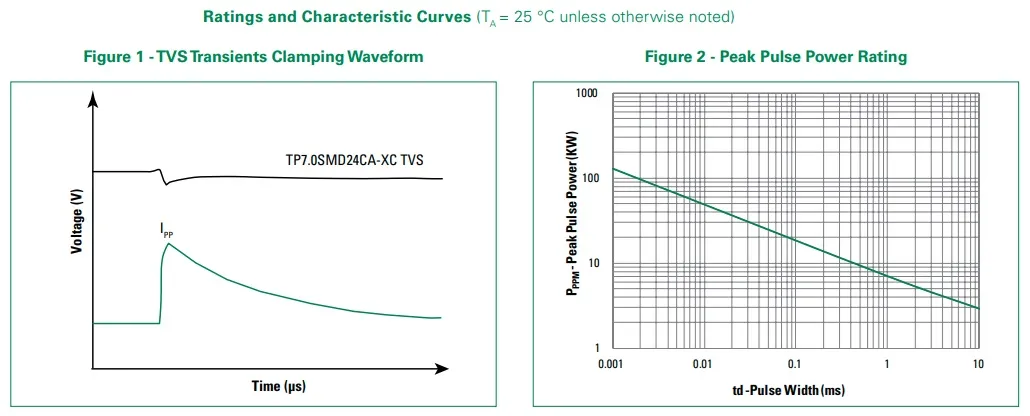
Key Technical Attributes:
- Peak Pulse Power: 7,000 W (7 kW), providing massive headroom against high-energy transients.
- Clamping Characteristics: Utilizes advanced foldback architecture to achieve an extremely low, flat-clamping voltage that outperforms conventional TVS alternatives.
- System Versatility: Officially certified to meet both 12V and 24V jump-start compliance requirements within a single, unified device footprint.
- Scalability for 48V Architectures: By implementing a series TVS configuration, automotive design engineers can easily extend this low-clamping protection methodology into emerging 48V mild-hybrid and auxiliary electrical systems.
- Packaging and Availability: Delivered in robust surface-mount device (SMD) packages, optimized for automated pick-and-place manufacturing environments. The specific model
TP7.0SMD24CA-XCis packaged in standard tape-and-reel formats of 3,000 pieces.
Official Responses and Industry Perspectives
In the official product launch announcement, Charlie Cai, Director of Product Marketing at Littelfuse, emphasized the strategic advantages the new diodes offer to hardware and systems designers.
"By employing advanced foldback technology, the TP7.0SMD-XC series achieves an extremely low clamping voltage that conventional TVS devices can’t match, while still passing automotive jump-start compliance testing," stated Cai.
He further elaborated on the practical design benefits for automotive Tier-1 suppliers and original equipment manufacturers (OEMs):
"This gives our customers the headroom to protect sensitive ICs with low absolute maximum ratings, reduce component count, and even specify lower-voltage-rated MOSFETs without compromising on automotive reliability."
Industry analysts point out that Cai’s comments address a critical pain point in modern automotive electronics design. As vehicles incorporate more advanced computing power—such as AI-driven ADAS processors, high-resolution infotainment displays, and complex body control modules—the underlying silicon is increasingly manufactured on smaller process nodes. These smaller nodes are inherently more sensitive to overvoltage stress. By lowering the clamping voltage threshold safely below the absolute maximum ratings of these sensitive ICs, Littelfuse has provided a vital safeguard for next-generation vehicle platforms.
Industry Implications and Future Outlook
The introduction of the TP7.0SMD-XC series arrives at a pivotal juncture in the automotive industry. Several macro-trends are converging to reshape how vehicles manage power and protect circuitry:
1. The Shift to Zone Control Architectures
Traditional vehicles relied on sprawling, heavy point-to-point wiring harnesses connected to a central fuse box. Modern software-defined vehicles (SDVs), by contrast, are adopting zone-based architectures where local Zone Control Units (ZCUs) manage power distribution and data communication within specific physical quadrants of the vehicle. These ZCUs operate in close proximity to harsh environmental elements and electromechanical loads, requiring robust, localized protection like that offered by high-power TVS diodes.
2. The Rise of 48V Subsystems
With the proliferation of heavy electrical loads—such as electronic active roll stabilization, electric turbochargers, and advanced climate control systems—automotive designers are increasingly turning to 48V power nets alongside traditional 12V batteries. The ability of the TP7.0SMD-XC series to scale into 48V architectures via a series TVS configuration makes it a versatile, future-proof component for multi-voltage vehicle platforms.
3. Cost and Space Optimization on the PCB
As Cai noted, the exceptional performance of these diodes allows engineers to streamline their bill of materials (BOM). By providing superior protection in a single, highly efficient surface-mount package, designers can eliminate supplementary clamping stages, reduce overall component counts, and select lower-voltage-rated MOSFETs. This translates directly to reduced printed circuit board (PCB) footprint, lower system weight, and optimized manufacturing costs—all of which are paramount goals for automotive OEMs operating in a competitive global market.
Summary
Littelfuse’s rollout of the TP7.0SMD-XC automotive TVS diode series demonstrates how component manufacturers are innovating to meet the exacting demands of modern electrical and autonomous vehicle designs. By successfully combining 7 kW of peak pulse power with an ultra-low, flat-clamping voltage enabled by advanced foldback technology, Littelfuse has established a new benchmark for automotive overvoltage protection. Engineers looking to evaluate these components can currently access product samples and documentation through the official Littelfuse distribution network.