Introduction
Five years after the release of his star-studded, apocalyptic climate satire Don’t Look Up!, Academy Award-winning filmmaker Adam McKay is back in the trenches of cultural commentary. This time, however, he is trading feature-length cinematic chaos for sharp, concise digital disruption.
Collaborating with Yellow Dot Studios—a non-profit media organization he established to counter fossil fuel disinformation—McKay has released a satirical mock commercial targeting major oil conglomerates. Narrated by veteran actor and environmental activist Woody Harrelson, the short-form spoof takes direct aim at corporate greenwashing, drawing a sharp connection between industry rhetoric and the compounding severity of global climate anomalies, specifically the "once-in-a-millennium" super El Niño event currently unfolding across the Northern Hemisphere.
Main Facts
The newly released satirical video is designed to mimic a high-budget corporate advertisement produced by an oil major, utilizing polished aesthetics to deliver a dark, biting critique of corporate accountability.
- The Creators: The project is a joint effort between filmmaker Adam McKay and Yellow Dot Studios, a non-profit media studio explicitly created to leverage entertainment against fossil fuel greenwashing and climate misinformation.
- The Talent: The spoof features the distinct voiceover work of acclaimed actor Woody Harrelson, known both for his cinematic career and his long-standing advocacy for environmental causes.
- The Catalyst: The video is directly inspired by contemporary climate dynamics, specifically the intense, record-breaking super El Niño event sweeping across the Northern Hemisphere.
- The Core Message: The piece lampoons how multinational oil companies attempt to market themselves as forward-thinking energy providers while continuing to drive record fossil fuel extraction and climate destabilization.
Chronology: From Don’t Look Up to Digital Disruption
To understand the context of McKay’s latest release, it is helpful to trace the evolution of his climate-focused media activism over recent years:
- December 2021: Adam McKay releases Don’t Look Up! on Netflix. The satirical film—starring Leonardo DiCaprio, Jennifer Lawrence, and Meryl Streep—serves as an allegory for societal and governmental apathy toward the climate crisis. The film sparks intense public debate, polarizing audiences while achieving massive streaming numbers.
- The Post-Film Interlude: In the years following Don’t Look Up!, McKay deepens his focus on climate communication, recognizing that traditional Hollywood pipelines can be slow and subject to studio hesitancy regarding overtly political content.
- The Founding of Yellow Dot Studios: Seeking a more agile, direct-to-consumer medium, McKay helps launch Yellow Dot Studios. The non-profit hub begins producing short, highly shareable sketches, digital shorts, and spoof advertisements aimed at dismantling Big Oil narratives.
- Mid-2026: As scientists record extraordinary global temperature spikes and an exceptionally severe, unprecedented "super El Niño" cycle impacts ecosystems and human infrastructure worldwide, Yellow Dot Studios conceptualizes its latest rapid-response satire.
- Present Day: The release of the fake Exxon-style commercial featuring Woody Harrelson drops online, aiming to capture public attention during a period of acute climate visibility.
Supporting Data: The Climate Context Behind the Satire
While McKay’s approach is comedic, the underlying data driving the project is rooted in severe scientific projections and real-world meteorological phenomena.
The Super El Niño Phenomenon
El Niño-Southern Oscillation (ENSO) phases naturally fluctuate between El Niño (warming) and La Niña (cooling). However, modern climate science demonstrates that background anthropogenic warming—driven overwhelmingly by greenhouse gas emissions from the fossil fuel industry—supercharges these cycles.
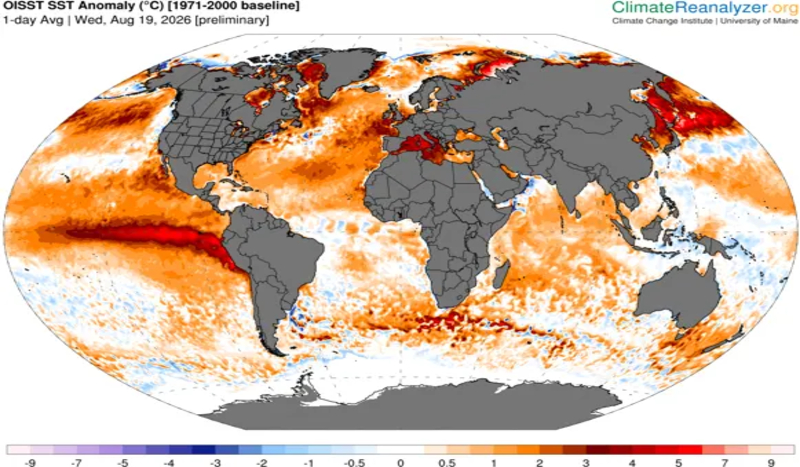
The current decade has witnessed unprecedented marine heatwaves and atmospheric temperature records. Climatologists note that the ongoing super El Niño event is exacerbating extreme weather patterns globally, including prolonged droughts, catastrophic flooding, and unprecedented agricultural stress across the Northern Hemisphere.
The Economics of Fossil Fuel Disinformation
Independent analyses and archival investigations have repeatedly shown that major fossil fuel corporations—such as ExxonMobil—historically understood the connection between hydrocarbon combustion and global warming as early as the 1970s and 1980s. Despite internal modeling that accurately predicted future temperature rises, public-facing campaigns frequently downplayed the risks, funded climate-skeptic think tanks, or shifted the burden of carbon reduction entirely onto individual consumers.
Yellow Dot Studios’ strategy relies on puncturing this corporate veneer. By adopting the exact visual language of a petroleum company’s "corporate citizenship" ad, the mock commercial highlights the stark dissonance between glossy PR campaigns and rising global temperatures.
Official Responses and Industry Dynamics
The release of high-profile cultural satires targeting the energy sector highlights a broader, ongoing war over public perception and narrative control.
The Fossil Fuel PR Strategy
Major energy corporations have increasingly adopted sophisticated public relations tactics, frequently referred to as "greenwashing." Campaigns often emphasize low-carbon investments—such as carbon capture and storage (CCS), biofuels, or hydrogen research—while the vast majority of capital expenditures remain anchored in oil and gas extraction. Industry representatives argue that these companies are necessary to maintain global energy security while transitioning at a pace dictated by market and technological realities.
The Activist and Non-Profit Counter-Offensive
Conversely, climate communication groups like Yellow Dot Studios, alongside international legal bodies and scientific coalitions, argue that corporate advertising campaigns actively delay necessary policy action. By using humor, satire, and recognizable talent like Woody Harrelson, advocacy groups attempt to bypass traditional news fatigue, cutting through complex policy jargon to make corporate accountability a mainstream cultural conversation. Media analysts note that short, punchy satirical pieces frequently outperform dense scientific reports in driving social media engagement and youth mobilization.

Implications: The Intersection of Culture and Climate Action
The launch of McKay’s latest short raises broader questions about how modern audiences process existential crises and the efficacy of art as an instrument of political pressure.
The Power of Satire in Environmental Advocacy
Historically, environmental messaging has often leaned heavily on fear, data deprivation, and apocalyptic imagery. While effective for certain demographics, relentless doomerism can lead to psychological burnout and public apathy—a central theme satirized in Don’t Look Up!.
Satire functions differently. By inverting corporate messaging and exposing absurdity through humor, projects like Yellow Dot Studios’ El Niño commercial empower viewers. They transform helpless frustration into shared cultural laughter, making complex systemic critiques accessible to broader demographics who might otherwise ignore dry policy debates.
The Future of Corporate Accountability
As extreme weather events become harder to ignore and the economic costs of climate change mount globally, the social license of the fossil fuel industry faces unprecedented scrutiny. Public art, independent journalism, and digital media campaigns are converging to reshape the debate. Whether a satirical digital short can fundamentally shift consumer behavior or pressure regulatory bodies remains to be seen, but projects like McKay’s ensure that the fossil fuel industry cannot easily control the cultural narrative surrounding the consequences of its products.
Conclusion
Adam McKay’s return to climate satire underscores a persistent urgency. As the world navigates severe meteorological events like the current super El Niño, the cultural battle lines between fossil fuel PR and climate realism are sharper than ever. Through Yellow Dot Studios and the voice of Woody Harrelson, the new mock commercial serves as both a piece of entertainment and a pointed reminder that behind every corporate slogan lies the stark reality of a warming planet.