PROSSER, Wash. — In a major strategic push to bridge the gap between theoretical agtech development and real-world farm deployment, agricultural innovation center and venture capital firm Reservoir has partnered with a coalition of regional heavyweights to launch a cutting-edge agricultural robotics incubator in Washington State.
The announcement, made jointly by Reservoir, Washington State University’s (WSU) Prosser Irrigated Agriculture Research and Extension Center (IAREC), the Washington Tree Fruit Research Commission (WTFRC), and the Tri-City Development Council (TRIDEC), establishes a specialized proving ground for agtech startups. By embedding robotics companies directly into Washington’s sprawling orchards, vineyards, and berry fields, the initiative aims to fast-track automation solutions for some of the most complex, labor-intensive crops on the planet.
This expansion marks another milestone in Reservoir’s aggressive Western United States growth strategy, following the launch of its flagship Salinas Valley hub earlier this year, winter pilot programs in Arizona, and a multi-million-dollar R&D partnership with manufacturing giant John Deere.
Main Facts: The Washington Robotics Initiative
The newly established incubator is designed to place early- and growth-stage agricultural robotics startups directly into active agricultural environments. Rather than testing in controlled laboratories or generalized trial plots, robotics developers will work side-by-side with commercial growers and academic researchers in the field.
- Target Crops: The incubator’s primary focus is on crops that have historically stymied automation efforts due to delicate handling requirements, uneven terrain, or complex canopy structures. These include apples, cherries, pears, blueberries, wine grapes, and hops.
- Key Partners: The initiative leverages the localized agricultural expertise and research infrastructure of WSU’s Prosser IAREC, the industry connectivity of the WTFRC, and the regional economic development backing of TRIDEC.
- Core Mission: To alleviate acute labor pressures by fast-tracking the commercialization of rugged physical AI and robotics stacks, transitioning prototypes into commercially viable field tools at an accelerated pace.
The initiative comes at a critical juncture for Pacific Northwest agriculture. Washington growers face intensifying economic pressures driven by escalating labor costs and a shrinking agricultural workforce. Because specialty crops like tree fruits and berries require meticulous human-like dexterity, harvesting and maintenance have remained stubbornly difficult to automate. Reservoir’s new incubator intends to give startups the precise operational feedback and scale needed to solve these intractable engineering hurdles.
Chronology of Expansion: From Salinas to the Pacific Northwest
Reservoir’s trajectory reflects a rapid scaling model built on strategic academic partnerships and deep industry integration. The timeline of its recent ecosystem-building efforts highlights how the firm has positioned itself at the epicenter of modern agricultural technology:
- 2024: Reservoir is founded with a mission to align venture capital investment with the physical realities of specialty crop farming, initiating its first major relationship with John Deere.
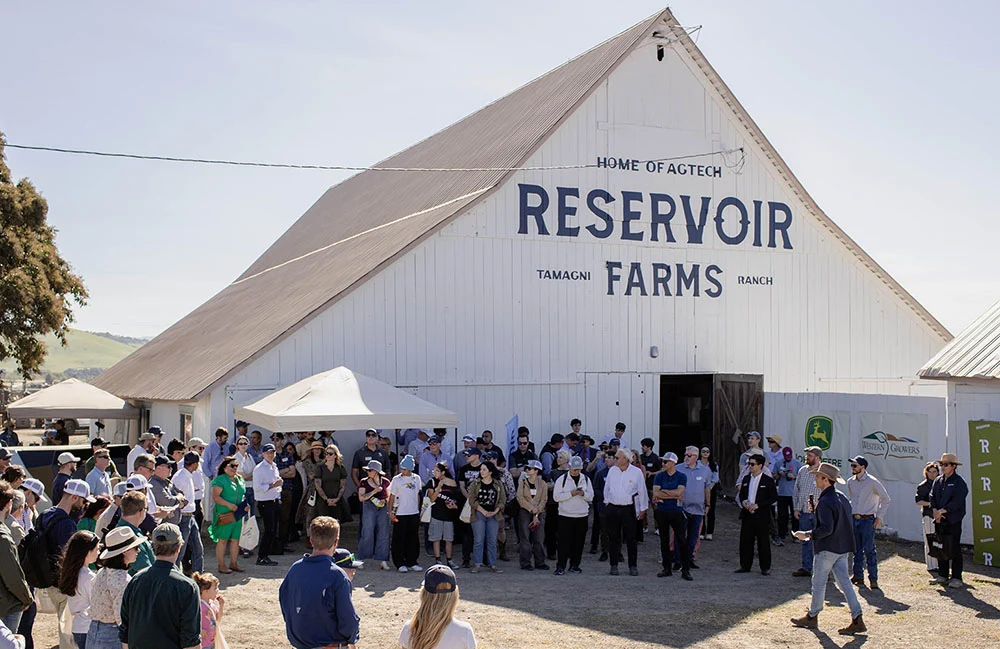
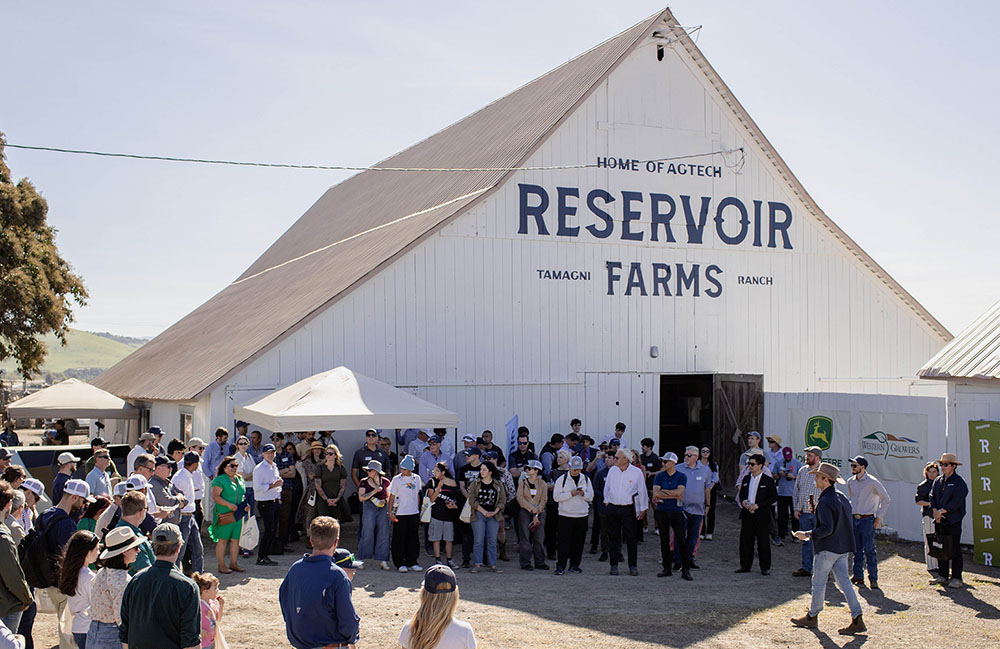
- Early 2025 (Projected/Recent): Reservoir officially opens its flagship on-farm innovation hub, Reservoir Farms – Salinas, in California’s Salinas Valley. Spanning 24 acres of dedicated commercial test fields and multiple innovation barns, the site draws over 300 agricultural leaders, investors, and public officials for its grand opening.
- Summer 2025: Reservoir outlines its broader regional expansion strategy, committing to establish localized innovation hubs across California, Arizona, and the Pacific Northwest, each anchored by prominent agricultural research institutions.
- Winter 2025–2026: Startups are invited to run cold-weather and desert-climate pilots at the University of Arizona’s Yuma Agricultural Center, testing automation stacks in rigorous commercial desert vegetable production environments.
- August 2026: Reservoir announces a landmark $10 million, three-year R&D partnership with John Deere to accelerate the commercialization of rugged AI technologies for high-value crops.
- Late 2026: Reservoir partners with WSU Prosser IAREC, WTFRC, and TRIDEC to establish its newest agricultural robotics incubator in Washington State, extending its footprint into the Pacific Northwest’s multi-billion-dollar tree fruit and wine industries.
Supporting Data & Industry Ecosystem
The economic and structural imperatives fueling Reservoir’s expansion are rooted in the widening chasm between venture capital investment in software and the rugged realities of physical agriculture.
The Specialty Crop Labor Bottleneck
While broadacre farming (such as corn, wheat, and soybeans) has seen widespread adoption of GPS-guided tractors and autonomous machinery, specialty crops—fruits, nuts, and vegetables—rely heavily on manual labor. According to agricultural labor economists, labor accounts for anywhere from 40% to 60% of total operating costs for labor-intensive specialty crops.
As regulatory pressures tighten labor supply and minimum wages rise, growers face thinning profit margins. Manual harvesting of delicate fruits like Washington apples and tart cherries requires visual recognition, selective picking based on ripeness, and bruise-free mechanical handling—tasks that push the boundaries of current computer vision and soft-robotics engineering.
The Reservoir Farms – Salinas Blueprint
The Washington incubator mirrors the operational structure established at Reservoir Farms – Salinas. The California flagship features:
- 24 Acres of Commercial Test Fields: Real-world testing grounds simulating authentic commercial farming conditions rather than sanitized test tracks.
- Innovation Barns: Dedicated spaces for hardware iteration, rapid prototyping, and software integration.
- Cross-Pollination of Stakeholders: A physical convergence point where venture capitalists, software engineers, mechanical designers, and multi-generational growers interact daily to refine product-market fit.
The John Deere R&D Partnership
Underpinning Reservoir’s technical validation pipeline is its $10 million, three-year agreement with John Deere. By linking startup agility with Deere’s manufacturing scale and engineering resources, the partnership creates a seamless pipeline for rugged artificial intelligence systems. Technologies incubated in hubs like Salinas, Yuma, and now Prosser have a direct track toward industrialization, ensuring that startups do not stall out in the "valley of death" between prototype and commercial deployment.
Official Responses and Stakeholder Perspectives
The launch of the Washington robotics incubator has generated significant enthusiasm across the state’s agricultural, academic, and economic sectors. Leadership from each founding partner emphasized the collaborative nature of the initiative.
"From our early days, Reservoir listened intently to partners to understand where innovation in agriculture was stuck," said Danny Bernstein, founder and CEO of Reservoir. "Once our vision to create an on-farm innovation center was clear, we worked relentlessly with partners across the industry to bring the energy, focus, and skills necessary to manifest the space and people necessary to make this a reality. With the doors open, the focus turns to execution and impact — in the form of real-world solutions for growers, upskilled jobs for rural communities, and a more secure food supply for American consumers."
The inclusion of Washington State University’s Prosser center brings decades of agricultural science credentials to the table. WSU’s IAREC has long been a bastion of horticultural research, irrigation science, and pest management in the Pacific Northwest. By integrating robotics startups directly into WSU’s research ecosystem, the incubator bridges the gap between biological science and mechanical engineering.
Similarly, the Washington Tree Fruit Research Commission (WTFRC) provides direct channels to the state’s commercial orchardists. The WTFRC plays a crucial role in directing grower-funded research toward pressing operational challenges, ensuring that incoming robotics solutions address actual grower pain points—such as pruning, thinning, and harvest optimization—rather than speculative tech trends.
Tri-City Development Council (TRIDEC) views the partnership as an economic catalyst for southeastern Washington. By drawing high-tech agtech startups, venture capital, and specialized engineering talent to the Tri-Cities region, the incubator is expected to foster high-paying technical jobs and stimulate regional economic diversification.
Speaking on the broader industry ecosystem, representatives from John Deere reiterated the importance of collaborative innovation:
The partnership reflects a shared commitment to an innovation ecosystem that moves faster from prototype to grower impact, ensuring that advanced automation is field-ready when it reaches the farm gate.
Implications for the Future of AgTech and Regional Agriculture
The establishment of Reservoir’s Washington incubator carries profound implications for the trajectory of agricultural technology, regional economics, and global food security.
1. Shortening the Feedback Loop for Startups
In traditional agtech development, startups often build products in urban incubators, far removed from the dirt, dust, heat, and humidity of actual farms. By dropping these teams into WSU Prosser’s research sphere and Washington’s commercial orchards, flaws in computer vision models, sensor durability, and power management under field conditions will be exposed and corrected much faster. This tight feedback loop dramatically increases the survival rate of early-stage robotics companies.
2. Safeguarding Pacific Northwest Specialty Crops
Washington is a dominant global supplier of apples, sweet cherries, pears, and hops. Without successful automation, the long-term economic viability of these high-value sectors is threatened by labor scarcity. A successful robotics incubator could secure the region’s agricultural harvest for generations, insulating farmers from labor market shocks and maintaining stable consumer prices.
3. Economic Modernization of Rural Hubs
Initiatives like this challenge the notion that advanced tech innovation must be confined to coastal metropolitan tech hubs. By anchoring high-tech robotics incubators in agricultural heartlands like Salinas, Yuma, and now Prosser/Tri-Cities, rural communities are transformed into vibrant agtech clusters. This creates new career pathways in robotics maintenance, data analytics, and mechanical engineering, upskilling rural workforces and retaining local talent.
As the Washington incubator opens its doors and boots on the ground begin field trials, the agtech industry will be watching closely. If successful, Reservoir’s model of regional, on-farm, academically anchored incubators may well serve as the universal blueprint for how agricultural automation goes from concept to commercial reality.