In a major development for the Texas energy landscape, Entergy Texas has officially brought the Orange County Advanced Power Station (OCAPS) into commercial operation. The commissioning of this 1,215 MW facility marks a critical milestone in the utility’s mission to bolster the reliability of the Southeast Texas grid. As the state grapples with record-breaking population surges and a robust expansion of its industrial sector, OCAPS serves as a vital injection of base-load and flexible power capacity designed to meet the growing energy demands of the region.
The Main Facts: A New Pillar of Reliability
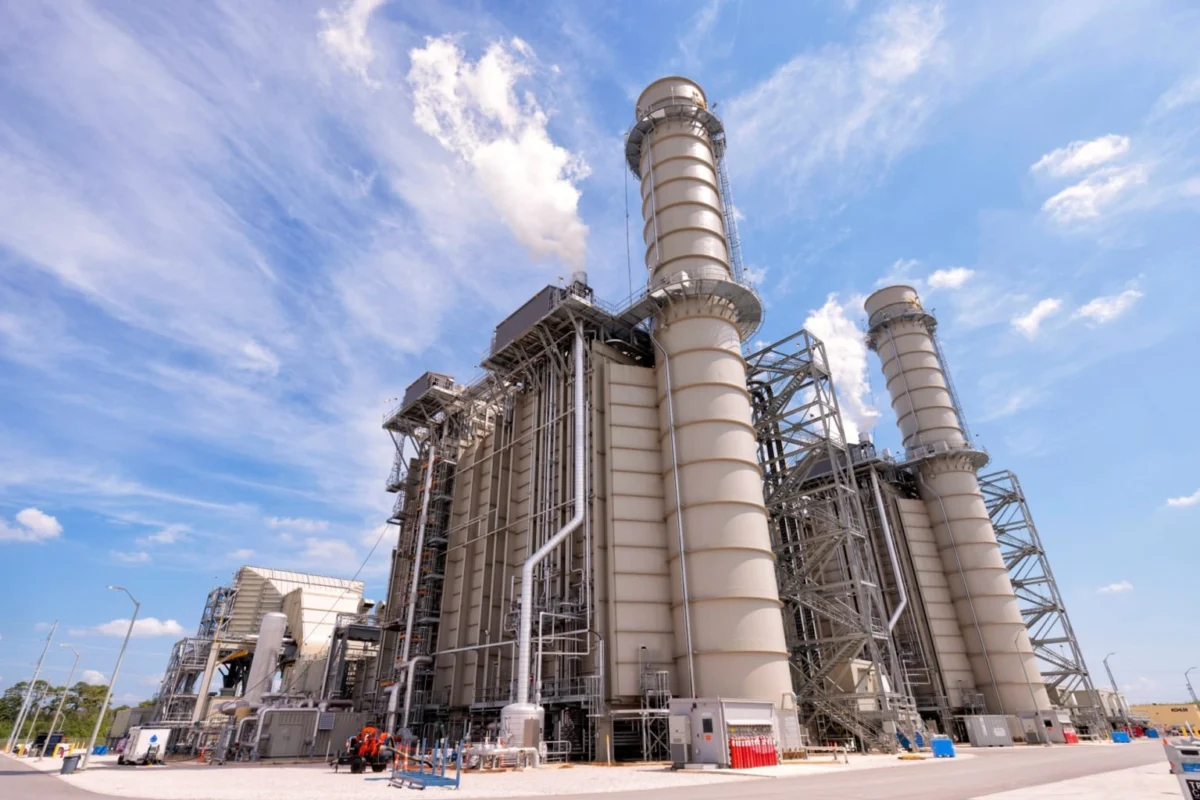
The Orange County Advanced Power Station is a combined-cycle gas turbine (CCGT) facility that leverages cutting-edge technology to provide 1,215 MW of electricity—enough to power hundreds of thousands of homes and businesses. The plant utilizes two of Mitsubishi Power’s flagship M501JAC gas turbines, widely regarded for their high efficiency and operational flexibility.
Beyond the gas turbines, the site features a state-of-the-art steam turbine, a heat recovery steam generator (HRSG), and an advanced control system. These components work in tandem to ensure that the plant operates at peak thermal efficiency. Perhaps most significantly, the facility is engineered with a forward-looking design that allows for the integration of hydrogen as a fuel source. According to Mitsubishi Power, the plant’s infrastructure is capable of transitioning to utilize up to 100% hydrogen in the future, providing a potential pathway for decarbonization as hydrogen production and storage technologies mature.
The facility is characterized by its "fast-start" capabilities, allowing operators to rapidly ramp generation up or down. This flexibility is essential for maintaining grid stability, especially as the region integrates a higher mix of intermittent renewable energy sources like wind and solar, which require reliable, dispatchable power to fill the gaps during periods of low generation.
Chronology of Development: From Groundbreaking to Grid-Ready
The journey of OCAPS from a conceptual blueprint to a fully operational power plant has been relatively swift, reflecting the urgent necessity for new capacity in the Texas energy market.
- Spring 2023: Entergy Texas officially breaks ground on the OCAPS project. At the time, the project was estimated to cost approximately $1.2 billion, reflecting a significant capital investment into the regional energy infrastructure.
- 2023–2025: Construction crews navigate the complexities of building a massive, high-tech power facility in Southeast Texas. Throughout the construction phase, the project remained a focal point for regional economic development and utility planning.
- 2025: The Public Utility Commission of Texas (PUCT) grants approval for further expansion projects, including the Legend and Lone Star power stations, signaling a broader regulatory consensus on the need for additional natural gas-fired capacity.
- Late 2026: Entergy Texas announces that OCAPS has achieved commercial operation, successfully integrating its 1,215 MW into the grid.
Supporting Data: The Drivers of Growth
The urgency behind the OCAPS project is rooted in undeniable demographic and industrial data. Texas has consistently led the nation in population growth, with the period between 2024 and 2025 seeing the state add more residents than any other. This massive influx of people has necessitated a commensurate increase in infrastructure, ranging from housing and water systems to the foundational requirement of electricity.
However, residential growth is only half of the story. Southeast Texas remains a global hub for industrial activity, particularly in petrochemicals, manufacturing, and energy processing. These sectors are notoriously energy-intensive, and their continued expansion—coupled with the electrification of various industrial processes—has pushed the demand for power to new heights.
Entergy Texas projections indicate that electricity demand across its specific service area is expected to grow by approximately 13% between 2024 and 2028. To put this in perspective, a double-digit percentage increase in demand over a four-year window represents an extraordinary strain on existing infrastructure. Without the addition of assets like OCAPS, the utility warned that the grid could face significant reliability challenges, potentially stifling the economic growth that the region is currently experiencing.
Official Responses: The Leadership Perspective
The commissioning of OCAPS has been framed by utility leadership as both a triumph of engineering and a fulfillment of a social contract. David Borde, CEO of Entergy Texas, highlighted the importance of the station during the ribbon-cutting phase.

"OCAPS is yet another way that we’re making sure Texas families and businesses have the energy and infrastructure they need to succeed," Borde said. "Our customers count on us to power critical parts of their everyday lives, and OCAPS helps us deliver even more of the safe and reliable power they deserve in a cost-effective manner. Today is a huge milestone for our communities, and a big step toward the stronger and more resilient energy future Southeast Texas needs to thrive."
The emphasis on "cost-effectiveness" is a recurring theme in the utility’s messaging. By utilizing high-efficiency gas turbines, the plant is designed to minimize fuel consumption relative to power output, which serves as a hedge against volatile natural gas prices. Furthermore, the partnership with Mitsubishi Power underscores a strategy of investing in Tier-1 technology to ensure long-term equipment reliability, reducing the likelihood of unplanned outages that can be incredibly costly for industrial customers.
Implications: A Strategic Roadmap for 2028 and Beyond
The activation of OCAPS is merely the beginning of a larger, aggressive capacity expansion plan for Entergy Texas. The utility has set a target of adding more than 2.4 GW of new generation capacity by 2028. This strategy is multi-faceted and represents a significant shift toward a more robust generation profile.
The Legend and Lone Star Projects
Beyond OCAPS, Entergy Texas is moving forward with the development of the Legend and Lone Star power stations. These two natural gas facilities are slated to add another 1,200 MW to the grid. With the PUCT’s stamp of approval already in hand, these projects are moving through their construction phases with the goal of serving customers by 2028.
The Hydrogen Transition
Perhaps the most intriguing implication of the OCAPS project is its potential role in the "hydrogen economy." By building in the capability to fire 100% hydrogen, Entergy Texas is effectively future-proofing its investment. While the current market for hydrogen in power generation is still developing, the physical infrastructure is now in place to pivot away from natural gas should environmental regulations tighten or should green hydrogen become economically viable on a large scale.
Grid Resilience and Energy Security
The broader implication of these additions is the stabilization of the ERCOT (Electric Reliability Council of Texas) market. Recent years have seen the Texas grid tested by extreme weather events and surges in demand. The addition of 1,215 MW of dispatchable, CCGT capacity provides a crucial buffer. Unlike solar or wind, which are dependent on meteorological conditions, OCAPS provides consistent, "always-on" power that can be modulated based on real-time market signals.
Economic Development and Industrial Retention
For the industrial corridors of Southeast Texas, the reliability of the grid is the primary factor in investment decisions. Large-scale manufacturing and data centers require high-quality power with minimal voltage fluctuations. By proactively increasing generation capacity, Entergy Texas is effectively marketing the region as a reliable destination for capital-intensive businesses. The synergy between new power plants and industrial growth creates a positive feedback loop: more power supports more industry, which drives economic growth, which in turn fuels the need for further energy investment.
Conclusion
The Orange County Advanced Power Station stands as a testament to the scale of energy infrastructure required to sustain the modern Texas economy. Through its high-efficiency design, future-ready hydrogen compatibility, and rapid dispatch capabilities, the plant is poised to be a cornerstone of regional grid reliability for decades to come. As Entergy Texas marches toward its 2028 goal of adding 2.4 GW of new capacity, the OCAPS facility provides a clear, actionable template for how the utility intends to bridge the gap between today’s energy demands and the needs of a rapidly evolving, high-growth future.