By Global Energy Transition Desk
Published: January 2026
1. Main Facts
In a landmark transaction reshaping the global residential energy storage and clean-tech landscapes, sonnen USA has officially confirmed its departure from energy giant Shell following a 100% acquisition of its global parent business by TIVEN, a prominent private family office investment group with strategic operational bases in Malta and Germany.
The high-profile buyout encompasses sonnen’s entire global footprint, including its critical American business line, sonnen USA. The transition comes on the heels of a transformative financial and operational year for the company, heavily propelled by high-profile virtual power plant (VPP) deployments and strategic partnerships—most notably with SOLRITE—across major U.S. load pockets including Texas, New England, California, and a multitude of fast-emerging regional energy markets.
Despite the change in ownership, leadership at sonnen USA has doubled down on its core mission. The company has emphasized that its trajectory toward market leadership in distributed energy resources (DERs) and VPP innovation will not only remain uninterrupted but will be heavily accelerated under TIVEN’s private ownership umbrella.
Key Transaction Metrics at a Glance:
- Target Company: sonnen (Global enterprise, inclusive of sonnen USA)
- Acquiring Entity: TIVEN (Malta- and Germany-based family office investment group)
- Previous Owner: Shell
- Acquisition Scope: 100% of global equity and assets
- Strategic Focus Moving Forward: Residential and commercial Virtual Power Plants (VPPs), grid resiliency, and software-driven energy independence.
2. Chronology of Events: From Shell’s Portfolio to TIVEN’s Private Vision
To understand the weight of the TIVEN acquisition, it is necessary to examine the evolutionary phases sonnen has traversed over the last decade, transitioning from a pioneering German hardware manufacturer to a global software and hardware VPP powerhouse.
The Early Independent Era and the Shell Acquisition
Founded in Germany, sonnen established itself early on as a vanguard of residential lithium-ion energy storage, introducing smart battery systems designed to maximize self-consumption of rooftop solar. As the decentralized energy transition gathered momentum, the company caught the eye of major international energy players looking to hedge against fossil fuel decline.
In February 2019, Royal Dutch Shell completed its acquisition of sonnen, absorbing the company into its New Energies division. Under Shell’s corporate wings, sonnen gained access to deep capital reserves, global supply chain networks, and corporate synergy opportunities. However, as global energy markets faced unprecedented post-pandemic volatility, supply chain constraints, and shifting corporate decarbonization strategies, questions lingered regarding how an agile, software-forward residential storage provider would scale within a traditional oil and gas major.
The Pivot to Aggressive VPP Expansion (2023–2025)
Over the past three years, sonnen USA—under the stewardship of CEO Blake Richetta—pivoted hard toward the aggregation of residential storage batteries into functional Virtual Power Plants. By leveraging proprietary software platforms, sonnen began turning thousands of individual home batteries into flexible grid assets capable of discharging power during peak demand events, thereby stabilizing local grids and providing financial relief to homeowners.
Key milestones during this period included:
- The SOLRITE Partnership: A massive rollout pairing high-efficiency solar deployment with intelligent sonnen storage across multiple states.
- Geographic Penetration: Deepening market saturation in grid-stressed territories like the Texas ERCOT market, California (navigating complex NEM 3.0 regulations), and the ISO New England (ISO-NE) territory.
- The Scaling of Hardware-Agnostic Software: Enhancing grid services capabilities that allow utilities to dispatch cleaner, faster-responding capacity than traditional peaker plants.
The TIVEN Buyout (Late 2025–January 2026)
Negotiations between Shell and TIVEN culminated in the definitive agreement to transfer 100% of sonnen’s global business to the private investment group. Unlike a strategic corporate buyer with competing legacy interests, TIVEN’s profile as a family office investment group signals a patient capital approach. This structural shift allows sonnen to operate with renewed entrepreneurial agility while retaining the financial backing necessary to compete in the multi-billion-dollar North American VPP market.
3. Supporting Data & Market Context: The Rise of the Virtual Power Plant
The timing of TIVEN’s acquisition of sonnen is far from coincidental. It mirrors a massive structural evolution in the North American power grid, characterized by the convergence of aging infrastructure, surging electricity demand from data centers and electric vehicles (EVs), and the rapid proliferation of distributed renewable generation.
Why VPPs Are Dominating the Energy Conversation
A Virtual Power Plant is a cloud-based distributed power plant that aggregates the capacities of heterogeneous distributed energy resources—such as rooftop solar panels, residential battery storage systems, electric vehicle chargers, and smart thermostats—to function as a single, unified power plant.
According to recent market analyses by energy research firms like Wood Mackenzie and BloombergNEF, the North American residential VPP market is transitioning from an experimental niche into a cornerstone of grid reliability. Several macroeconomic and regulatory drivers explain this explosive growth:
- Extreme Weather and Grid Vulnerability: Events like Winter Storm Uri in Texas and recurring public safety power shutoffs (PSPS) in California have driven consumers and utilities to seek hyper-localized resilience.
- The Capacity Crunch: With the explosive growth of artificial intelligence, data centers, and industrial electrification, utilities are facing unprecedented peak demand challenges. Building new natural gas peaker plants is costly, time-consuming, and runs counter to federal and state decarbonization mandates. VPPs offer an immediate, software-enabled alternative.
- Federal Incentives: The Inflation Reduction Act (IRA) has fundamentally altered the economics of home energy storage. By offering a standalone Investment Tax Credit (ITC) for energy storage—even when charged exclusively from the grid rather than solar—homeowners can install batteries at a significantly reduced net cost, feeding directly into the economic viability of VPP participation.
sonnen’s Competitive Moat in the U.S. Market
Unlike manufacturers who focus purely on hardware margins, sonnen has spent years refining its proprietary software architecture to interact seamlessly with wholesale electricity markets, aggregators, and utilities. Its hardware is engineered for high cycling, safety (utilizing lithium iron phosphate, or LFP, chemistries), and rapid response times.
The company’s strategic footprint in key U.S. power markets gives it a distinct first-mover advantage:
- Texas (ERCOT): Operating in a deregulated, energy-only market where price volatility creates high-value arbitrage and demand-response opportunities for aggregated residential batteries.
- California: Mitigating the punishing effects of net metering reforms (NEM 3.0) by encouraging self-consumption and automated grid-export during high-tariff hours.
- New England: Helping utilities manage constrained transmission lines and heavy winter heating loads through coordinated dispatch of home energy reserves.
4. Official Responses and Leadership Insights
The transition of ownership has drawn optimistic commentary from both executive leadership at sonnen USA and the incoming investment group, signaling a shared vision for aggressive scaling.
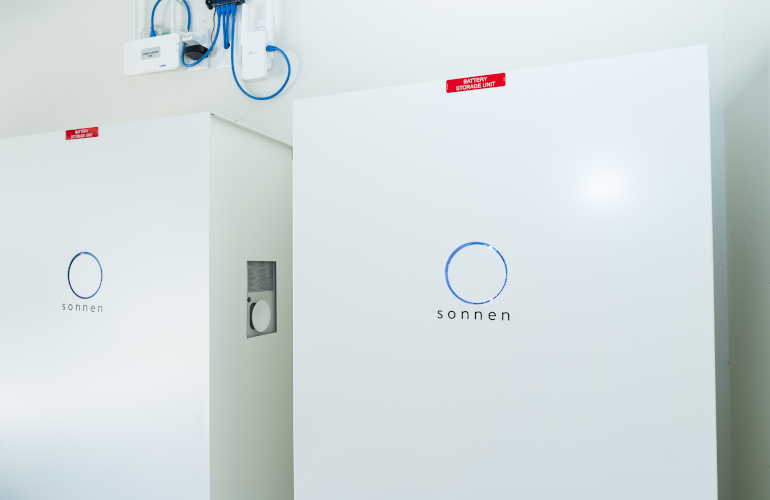
Blake Richetta, CEO of sonnen USA
Blake Richetta, who has steered sonnen USA through its recent phase of hyper-growth, emphasized that the acquisition by TIVEN provides the ideal structural runway for the company’s next chapter.
"sonnen USA remains laser-focused on bold VPP market innovation and continued success in the U.S., delivering the products and services that our partners and customers rely on," stated Richetta.
He added, "TIVEN is firmly committed to the long-term success of sonnen USA as a strong, market-leading company in the North American VPP energy market. This partnership ensures that our team can continue to execute our vision without the corporate constraints typically found within traditional oil and gas conglomerates."
Richetta’s leadership has long championed the concept of the "clean energy home," where residential buildings act not as passive energy consumers, but as active participants in wholesale electricity markets, effectively decentralizing the traditional utility grid.
TIVEN Spokesperson Statement
A representative for TIVEN, the Malta- and Germany-based family office group, underscored the macroeconomic rationale behind the acquisition and expressed deep confidence in sonnen’s existing American executive team.
"The North American market for residential VPP solutions is significant, and we are pleased to enter it with sonnen, a true pioneer of the sector," the TIVEN spokesperson noted.
Highlighting the current challenges facing modern electrical grids, the spokesperson continued: "Blake and his team have built sonnen USA for this moment, enabling residents, developers, solar providers, and utilities to address rising energy costs and grid volatility. We look forward to bolstering the company’s impressive growth trajectory through patient, strategic capital allocation and unwavering operational support."
Industry analysts interpret TIVEN’s emphasis on "long-term patient capital" as a clear signal that the investment group intends to fund multi-year research, software scaling, and partner network expansions without demanding the short-term, high-margin pressures often imposed by publicly traded energy conglomerates.
5. Broader Implications for the Energy Storage and VPP Sector
The acquisition of sonnen by TIVEN carries profound implications not just for the company itself, but for the broader clean-tech ecosystem, hardware manufacturers, and residential solar installers across North America.
1. The Maturation of Family Office Capital in Clean Tech
For years, venture capital, private equity funds focused on short-term liquidity, and major multinational energy corporations (oil majors) have dominated clean-energy investments. The entry of sophisticated family offices like TIVEN into the tier-one energy storage manufacturing space represents a growing trend: patient capital seeking stable, long-term infrastructure plays in the energy transition. Family offices are uniquely positioned to weather macroeconomic cycles and regulatory shifts, allowing portfolio companies to focus on multi-year technological roadmaps rather than quarterly earnings reports.
2. Validation of the VPP Business Model
By ensuring that VPPs remain sonnen’s absolute core focus, the acquisition validates the industry-wide shift from passive hardware sales to active grid-services aggregation. For solar contractors, regional developers, and regional installers, this offers vital commercial reassurance. Installers need to know that the battery platforms they sell to homeowners today will be supported by robust, well-capitalized software ecosystems tomorrow, capable of generating ongoing grid-service revenue streams.
3. Increased Competitive Pressure on Traditional Utilities
As aggregated residential VPPs scale in capacity, traditional electric utilities face a paradigm shift. Rather than viewing distributed energy resources as a threat or a nuisance on the distribution edge, forward-thinking utilities are increasingly realizing that partnering with companies like sonnen is the most cost-effective way to manage grid congestion and defer billions of dollars in costly transmission upgrades. TIVEN’s backing ensures that sonnen will have the financial clout to bid on major utility contracts, participate in formal capacity markets, and expand its software integrations with grid operators nationwide.
4. Navigating Future Headwinds
Despite the celebratory tone surrounding the acquisition, challenges remain. Navigating complex state-by-state utility interconnection rules, overcoming lingering supply chain vulnerabilities for critical raw materials, and educating the average homeowner on the financial and resilience benefits of VPP participation will require sustained effort. However, with a streamlined corporate structure, dedicated private backing, and an established market presence, sonnen USA appears uniquely positioned to turn these challenges into competitive advantages.
Conclusion
As sonnen officially closes its chapter under Shell and embarks on its new journey with TIVEN, the company stands at the epicenter of the North American energy transition. With residential electricity prices climbing, extreme weather events testing the limits of legacy grids, and the demand for flexible capacity reaching an all-time high, the focus on Virtual Power Plants has never been more urgent.
By keeping its eyes locked firmly on VPP innovation, sonnen USA—bolstered by patient European private capital and proven domestic leadership—is poised to cement its legacy not merely as a manufacturer of premium home batteries, but as a foundational architect of the modern, decentralized electrical grid.