NEW YORK — At the high-profile "GM Forward" event in New York City, General Motors laid out a sweeping, ambitious blueprint for the future of its automotive manufacturing operations. Confronting an evolving global automotive landscape shaped by stringent trade barriers, shifting consumer demands, and rapid technological disruption, the American legacy automaker made it clear that it is not abandoning electric vehicles. Instead, GM is doubling down on a radically reimagined, technology-driven manufacturing ecosystem.
Central to the company’s new strategy is a massive bet on Lithium Manganese Rich (LMR) battery chemistry, a streamlined fourth-generation EV platform, and a transformative, AI-native development process designed to slash vehicle creation timelines in half. Yet, given the company’s history of strategic flip-flops and mixed signals regarding its electrification timeline, industry observers are watching with a mixture of intrigue and skepticism.
Main Facts: The Core of GM’s New Strategy
General Motors’ latest roadmap introduces a series of fundamental shifts in how the company plans to design, build, and market its next generation of vehicles. The core pillars of the GM Forward announcements include:
The LMR Battery Breakthrough: GM is moving away from a uniform reliance on traditional Nickel Manganese Cobalt (NMC) or standard Lithium Iron Phosphate (LFP) chemistries. Partnering with LG Energy Solution, the automaker is pioneering Lithium Manganese Rich (LMR) battery cells, making it the first major manufacturer to commit to this chemistry at scale.
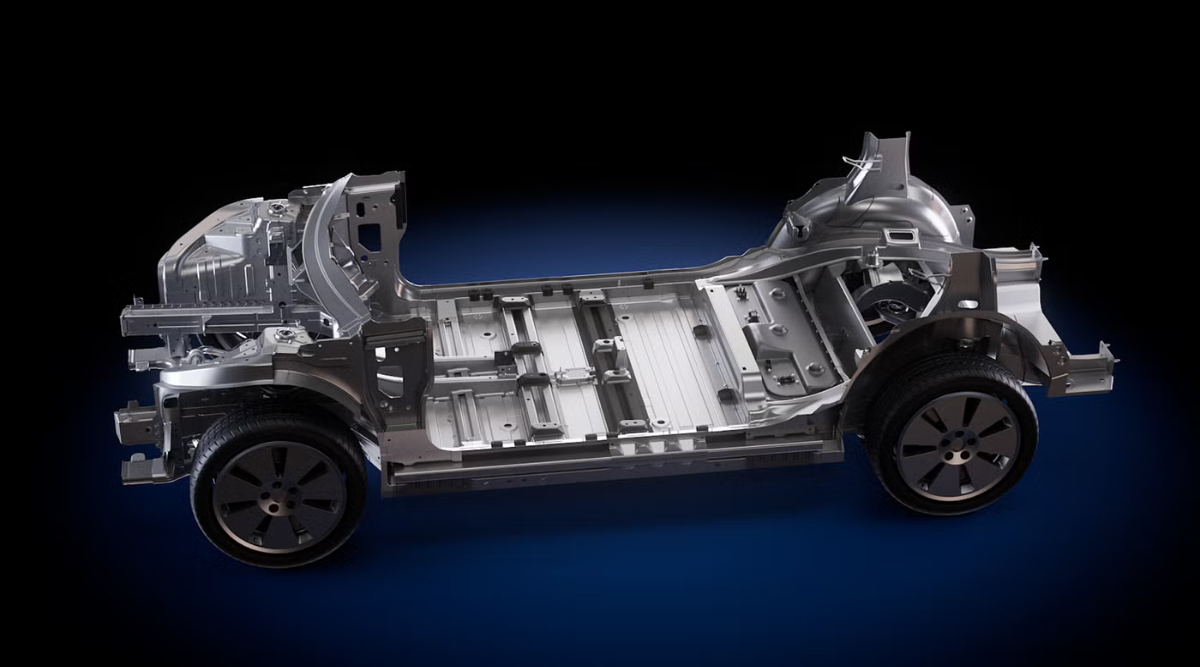
The Fourth-Generation EV Platform: Future electric vehicles will benefit from a newly engineered architecture featuring smaller, lighter electric motors. GM has successfully reduced drive unit part counts by 40%, optimizing interior packaging and lowering production costs.
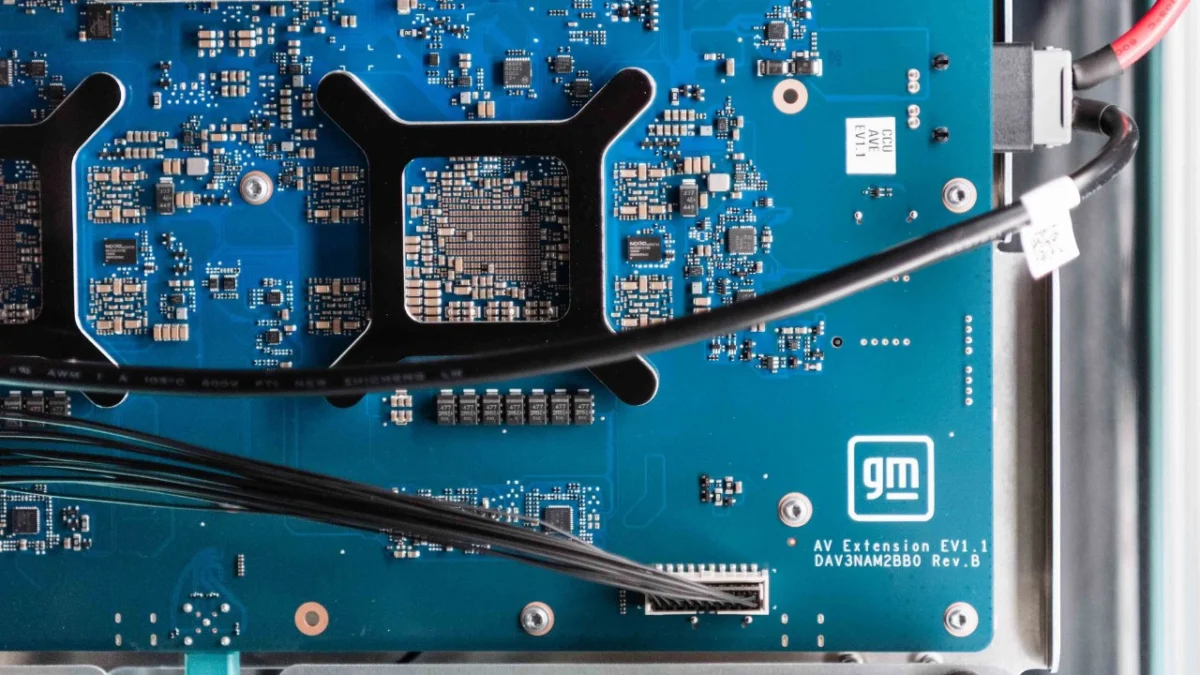
Centralized Compute and Zonal Architecture: By consolidating perception, propulsion, active safety, and chassis controls into a single "Central Compute Unit," GM is cutting vehicle wiring by 30% and eliminating dozens of redundant control modules.
AI-Powered Manufacturing ("PlantBrAIn"): GM is transforming its engineering and production pipelines by utilizing generative artificial intelligence and computer modeling. The company claims this allows it to compress vehicle development lifecycles from five years down to just two years.
Chronology: How GM Reached the "Forward" Milestone
The path to the October 21 event in New York City has been marked by significant pivots, market pressures, and internal recalibrations.
The Lead-Up to GM Forward
Early 2026: Amid fluctuating consumer adoption rates in North America, GM made waves by halting production of its second-generation Chevy Bolt, leaving a temporary gap in its affordable EV lineup while simultaneously signaling continued investments in internal combustion engine (ICE) updates, including new V-8 engines.
Mid-October 2026: Subsidiary and partner announcements began trickling out, most notably when Ultium Cells confirmed plans to bring LMR prismatic battery cell production to Tennessee to support future GM electric platforms.
October 21, 2026: At the GM Forward event in New York City, executives formally unveiled the complete architecture of the company’s electric vehicle future, detailing the integration of LMR chemistry, zonal computing, and the PlantBrAIn manufacturing system.
Supporting Data and Technological Specifications
To understand the weight of GM’s gamble, one must examine the metrics behind the hardware and software updates presented at the New York showcase.
Battery Density and Performance Economics
The newly developed LMR battery chemistry is engineered to deliver approximately 33 percent higher energy density than standard Lithium Iron Phosphate (LFP) cells. In practical terms, this allows engineers to pack significantly more range into a physically smaller, lighter battery pack while maintaining a cost structure comparable to LFP alternatives.
Prior to building physical prototypes, GM engineers utilized AI-driven computer modeling to simulate and test more than 300,000 distinct battery designs. According to the company, the timeline from the initial LMR concept to formal program approval was compressed to a remarkable one month.
Powertrain and Architectural Efficiency
The fourth-generation EV platform relies heavily on component reduction to achieve manufacturing efficiencies:
Drive Units: The number of individual parts in each drive unit has been slashed by 40 percent, contributing directly to lower vehicle weights and reduced production overhead.
Wiring and Computing: Transitioning to a zonal architecture has enabled a 30 percent reduction in total vehicle wiring.
Processing Power: The consolidated Central Compute Unit boasts a 40 percent increase in processing speed, handling complex tasks ranging from active safety systems to autonomous driving functions.
AI-Driven Manufacturing Ratios
Through the deployment of "PlantBrAIn"—a digital ecosystem combining factory-floor telemetry with predictive computer modeling—GM manufacturing teams can virtually test assembly lines, evaluate equipment ergonomics, and identify safety bottlenecks before installing a single piece of physical hardware. This concurrent engineering model has already reduced the time required to complete a battery pack build cycle by 30 percent.
Official Responses and Executive Perspectives
General Motors executives used the New York stage to address both the skeptics and the believers, framing the announcements as a necessary evolution for a legacy manufacturer entering the artificial intelligence era.
Defending the EV Commitment
Addressing the assembled press, GM President Mark Reuss pushed back against narratives suggesting the company was abandoning its electric ambitions.
"This technology will appear in our highest volume segments, and it’s a great example of how we’re bringing battery innovation to mass market EVs, with lower costs, long range, and improved performance," Reuss stated. "One of every four vehicles sold around the world is an EV. That number is only rising. We’re not walking away from that. We’re embracing it. We continue to develop our future EVs and work to reduce battery costs. And when the US market is ready for EVs in large numbers, we will be there for them."
Redefining the Cabin Experience
With autonomous driving capabilities integrated into the foundational design of the Central Compute Unit, interior designers emphasized a shift in how humans will interact with their vehicles. Sebastian Bauer, head of human interface design, noted:
"As we move towards a more autonomous future, it becomes what you need it to be when you need it—a genuine thinking space, a planning space, a space to recharge. It really extends your life onto the road instead of pausing it until you get to your destination."
Bauer also stressed the importance of consumer confidence: "None of this works without trust, and trust is not a feature. It is a foundational design principle, and one that means adapting to your conditions and your needs, and being very transparent about the decisions that the vehicle is making so that you always understand why."
The Shift to Concurrent Engineering
Sterling Anderson, GM’s chief product officer, elaborated on how AI is reshaping the corporate culture and structural timelines of the legacy automaker:
"We’re replacing this entirely sequential process with a new operating system built on large-scale data and concurrent development. What we’re building collapses design, engineering, and manufacturing into a set of probabilistic optimizations that create better products in half the time."
Anderson added: "In the age of AI, data is currency. Large companies like General Motors have a reputation for being large, for having a lot of inertia, for being slow. In the age of AI, the data and the scale that we have stops being a drag and becomes an advantage."
Implications: A High-Stakes Bet on Unproven Chemistry
While GM’s presentation paints a picture of a sleek, agile, and technologically dominant manufacturing titan, the real-world implications of these announcements are complex and carry considerable risk.
The LMR Gamble
By choosing Lithium Manganese Rich chemistry, GM is stepping onto an untrodden path. While nearly the rest of the global automotive industry is converging on LFP for entry-to-mid-tier vehicles and maintaining NMC for high-end performance models—with some exploring sodium-ion alternatives to bypass lithium altogether—GM is staking its mass-market volume on a less-proven formulation. If LMR delivers on its promise of high energy density at a low cost without hidden drawbacks, GM could secure a formidable competitive advantage. However, if the chemistry suffers from unforeseen degradation issues, thermal management hurdles, or cold-weather performance deficits—details noticeably absent from the initial GM Forward disclosures—the company could face costly recalls and delayed deployments.
Mixed Signals and Market Trust
Market analysts and consumers alike have noted the dichotomous messaging coming out of the Renaissance Center. On one hand, GM is investing billions into next-generation EV platforms, AI-driven factories, and advanced computing architectures. On the other hand, the company has publicly supported recent rollbacks of federal exhaust emissions standards, scaled back marketing budgets for existing electric models, and continued to invest heavily in next-generation V-8 internal combustion engines.
This duality has left many questioning whether GM is genuinely committed to an electric future or simply hedging its bets to appease short-term financial pressures while meeting regulatory minimums.
Conclusion
General Motors has laid down its cards. The GM Forward event demonstrated that the company possesses the technical vision, the engineering prowess, and the digital tools necessary to modernize its operations. Yet, trust in the automotive sector is built on execution, not PowerPoint presentations and press events. Whether GM’s aggressive bet on LMR batteries and AI-accelerated manufacturing will propel it to leadership in the next era of mobility—or serve as another expensive misstep along a bumpy road—remains one of the most critical questions facing the global auto industry today.