New York State is aggressively accelerating its transition to a decarbonized grid, announcing a massive infusion of capital and infrastructure aimed at stabilizing its energy future. The New York State Energy Research and Development Authority (NYSERDA) has finalized contracts for a sprawling portfolio totaling 1.7 gigawatts (GW) of new power capacity. This initiative, which couples large-scale bulk energy storage with new renewable generation, represents a pivotal moment in the state’s efforts to meet the ambitious mandates set forth in the Climate Leadership and Community Protection Act (CLCPA).
By mobilizing more than $3.7 billion in private investment and fostering the creation of over 1,000 high-skilled jobs, the Empire State is signaling to the energy market that it is open for business. The projects are not merely experimental; they are the backbone of a sophisticated plan to manage the intermittency of wind and solar power while simultaneously reinforcing the grid against the increasing volatility of climate-driven weather events.
The Core Components: A 1.7 GW Energy Renaissance
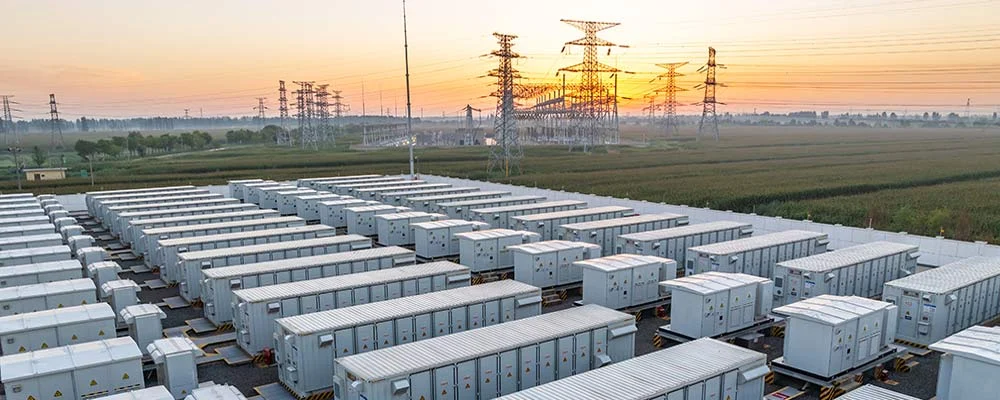
The recent awards break down into two distinct, yet inextricably linked, categories: 950 megawatts (MW) of bulk energy storage and 719 MW of renewable generation capacity. This dual-track approach is designed to solve the "duck curve" phenomenon—a situation where solar energy production peaks during the day but drops off precisely when evening electricity demand spikes.
The eight bulk energy storage projects were selected through a highly competitive process, winnowed down from a field of 46 distinct proposals representing approximately 6 GW of potential power. These winning projects will rely predominantly on advanced lithium-ion technology, with storage durations ranging from four to eight hours. This longer-duration capacity is essential for grid stability, allowing for the strategic discharge of energy during peak periods.
Parallel to the storage initiatives, NYSERDA awarded 13 contracts for large-scale renewable projects, including solar, wind, and hydroelectric power. Once fully operational, these projects are projected to generate enough clean electricity to power more than 230,000 New York homes annually.
Chronology of a Green Transition
The path to these awards began with the state’s commitment to achieving a zero-emission electricity grid by 2040. However, the operational timeline for these specific projects is focused on the next five years:
- 2023–2024: The competitive solicitation process took place, with NYSERDA vetting proposals for technical viability, community impact, and financial rigor.
- Late 2024: Finalization of contracts and public announcement of the 1.7 GW portfolio.
- 2025–2029: A period of intensive construction, permitting, and environmental review. Developers are required to navigate local siting laws and community feedback loops.
- 2030: The critical "In-Service" deadline. All eight storage projects and 13 renewable projects are mandated to be fully operational and delivering power to the grid by the end of this year.
This timeline is aggressive, necessitating a streamlined approach to permitting and supply chain management. NYSERDA has implemented a rigorous performance-based payment structure; developers will not receive state funding until they have successfully secured all necessary permits, satisfied local environmental requirements, and officially entered commercial operation.
Supporting Data and Technical Specifications
The technical requirements for these projects reflect a maturing industry that prioritizes safety and long-term reliability. Unlike the early days of energy storage, where protocols were nascent, these projects must adhere to New York’s stringent energy storage safety codes.
These standards include:
- Facility Siting: Advanced fire-suppression systems and setbacks to protect local neighborhoods.
- First-Responder Preparedness: Developers are required to provide comprehensive training to local emergency services, ensuring that fire departments and local authorities are fully equipped to handle lithium-ion battery technology.
- Emergency Response Plans: Each site must maintain a live, audited safety plan that is regularly updated to account for evolving best practices in battery management.
The economic data surrounding the investment is equally compelling. The $3.7 billion in private capital is expected to stimulate local economies through construction wages, materials procurement, and long-term maintenance contracts. Furthermore, NYSERDA’s analysis suggests that the projects will deliver more than $127 million in direct economic benefits to disadvantaged communities. This is achieved through targeted investments, local hiring mandates, and the displacement of older, polluting "peaker" plants that have historically been sited in marginalized urban areas.
Official Responses and Strategic Rationale
State officials view these contracts as a necessary evolution of the grid. In public briefings, representatives from NYSERDA emphasized that the integration of bulk energy storage is the "missing link" in the renewable energy puzzle. By capturing energy during periods of low demand or high renewable production, the state can effectively "shift" time, smoothing out the peaks and valleys of energy supply.
"We are moving past the phase of just adding solar panels and wind turbines," noted a lead planner for the authority. "The current mandate is about the intelligence of the grid. By incentivizing 950 MW of storage, we are ensuring that the green energy we produce today is available when we need it most tomorrow."
The policy also serves as a hedge against energy price volatility. By relying on domestic, renewable sources and local battery storage, New York reduces its dependence on volatile fossil fuel markets and imported natural gas. The emphasis on transparency—requiring developers to clear all regulatory hurdles before receiving payment—is designed to minimize the risk of "stranded assets" or abandoned projects that have plagued other states’ renewable transitions.
Implications: A Model for the Northeast?
The implications of New York’s strategy extend far beyond its borders. As other states in the PJM and NYISO power pools watch, New York is effectively beta-testing a blueprint for high-density, high-storage renewable integration.
Grid Reliability
The primary concern for any grid operator is "firmness"—the ability of the grid to provide power under any conditions. By adding 1.7 GW of flexible capacity, New York is enhancing its ability to withstand extreme weather, such as the heat waves that have recently pushed regional grids to their breaking point.
The Roadmap for 2030 and Beyond
These awards are merely the first phase of a larger vision. NYSERDA has already signaled its intent to issue another Request for Proposals (RFP) by the end of this year. The ultimate goal is to procure 3 GW of bulk energy storage through three major solicitations. This tiered approach allows the market to adapt to price changes in battery components and technological improvements in energy density.
Equity and Inclusion
Perhaps the most significant aspect of the program is the focus on disadvantaged communities. For too long, the energy sector has operated in a way that concentrated environmental burdens on low-income populations. By mandating that these projects provide tangible economic benefits—and by replacing aging, polluting infrastructure—the state is setting a new precedent for "Just Transition" policies.
The Path Forward
As the industry looks toward the 2030 horizon, the success of these projects will hinge on three factors:
- Supply Chain Stability: The availability of lithium, cobalt, and nickel, along with the manufacturing capacity to produce battery cells.
- Regulatory Efficiency: The ability of local governments to process permits without unnecessary bureaucratic delay.
- Community Engagement: Maintaining the "social license" to operate by ensuring that the benefits of the transition—jobs and clean air—are felt at the local level.
In conclusion, New York’s recent energy awards represent more than just a procurement exercise; they are a calculated, multi-billion-dollar bet on the future of infrastructure. As the state moves to implement these 1.7 GW of capacity, it is essentially reinventing the modern power plant—shifting from burning fossil fuels to capturing and storing the infinite potential of the wind and sun. The outcome of these projects will likely dictate the pace and feasibility of the national energy transition for years to come.