SAN FRANCISCO — For decades, the global solar industry has chased a singular, relentless metric: the cost per watt. By scaling manufacturing, refining silicon purity, and driving economies of scale, visionaries transformed photovoltaic (PV) technology from an expensive niche into the cheapest source of new electricity in human history. Yet, for all its manufacturing prowess, the fundamental architecture of the solar panel remained largely unchanged. A solar panel is still, at its core, a passive piece of hardware—susceptible to the harsh, messy reality of shade, dust, shifting weather patterns, and uneven degradation.
Enter Optivolt. After nine years of rigorous research, development, and engineering, the San Francisco-based power electronics company has announced a $32 million Series A funding round. Led by VXI Capital—a hard-tech fund founded by the former CTO of the U.S. Military’s Defense Innovation Unit—alongside heavy-hitting participants like RA Capital, Valo Ventures, and Atlas Innovate, this latest capital infusion brings Optivolt’s total funds raised to $42 million.
More importantly, the round brings validation from the architects of modern solar energy. Optivolt’s cap table reads like a who’s who of the renewable energy revolution, featuring backing from founding Enphase CEO Paul Nahi, former SunPower CEO Tom Werner, and former New York energy czar Richard Kauffman. With more than 20,000 units of its proprietary hardware already deployed in the field, Optivolt is poised to transition from a technical breakthrough into a foundational platform for the next generation of solar infrastructure.
Main Facts: What is Optivolt’s Power Balancer?
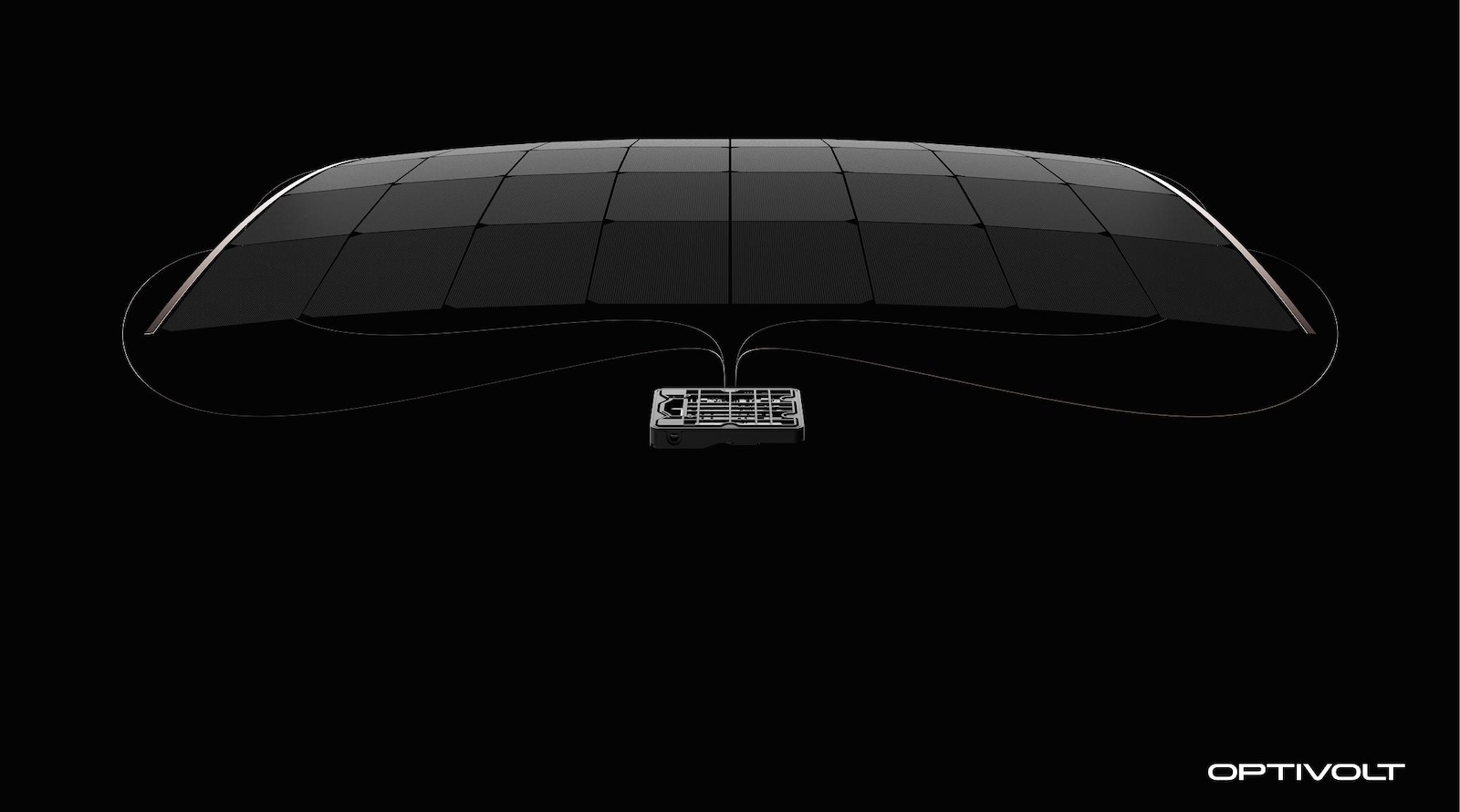
The core innovation driving Optivolt’s valuation and investor enthusiasm is the Power Balancer, a piece of technology that embeds active power electronics directly inside the solar panel itself.
In a conventional solar setup, panels are rated under pristine, controlled laboratory conditions. But out in the real world, panels face partial shading from trees, buildings, or clouds, as well as an accumulation of dust, dirt, and long-term degradation. In a standard panel, if even a single solar cell is shaded or underperforming, it acts as a bottleneck, dragging down the output of an entire cell group—or forcing a bypass diode to completely deactivate that section, cutting off vital power generation.
Optivolt has upended this paradigm by giving the panel a digital nervous system. The Power Balancer manages energy dynamically among cell groups in real time. Instead of letting localized shade or damage suppress a wider area, the system redirects and balances the energy internally. Furthermore, because these active electronics are integrated natively into the panel’s junction box, they take over the functions of traditional bypass diodes, rapid-shutdown hardware, and separate module-level optimizers or microinverters.
According to internal company testing under strict shade scenarios, panels equipped with Optivolt’s technology have produced up to six times as much power as panels utilizing conventional, bolted-on optimizers. Operating at a staggering 99.4% conversion efficiency under typical conditions, the technology promises to fundamentally reshape the financial and energetic returns of solar deployments at every scale—from residential rooftops to utility-scale farms designed to feed power-hungry AI data centers.
Chronology: Nine Years in the Making
Optivolt’s journey from a nascent concept to a heavily backed industry disruptor spans nearly a decade, reflecting the immense difficulty of marrying aerospace-grade electronics with rugged, long-life terrestrial solar panels.
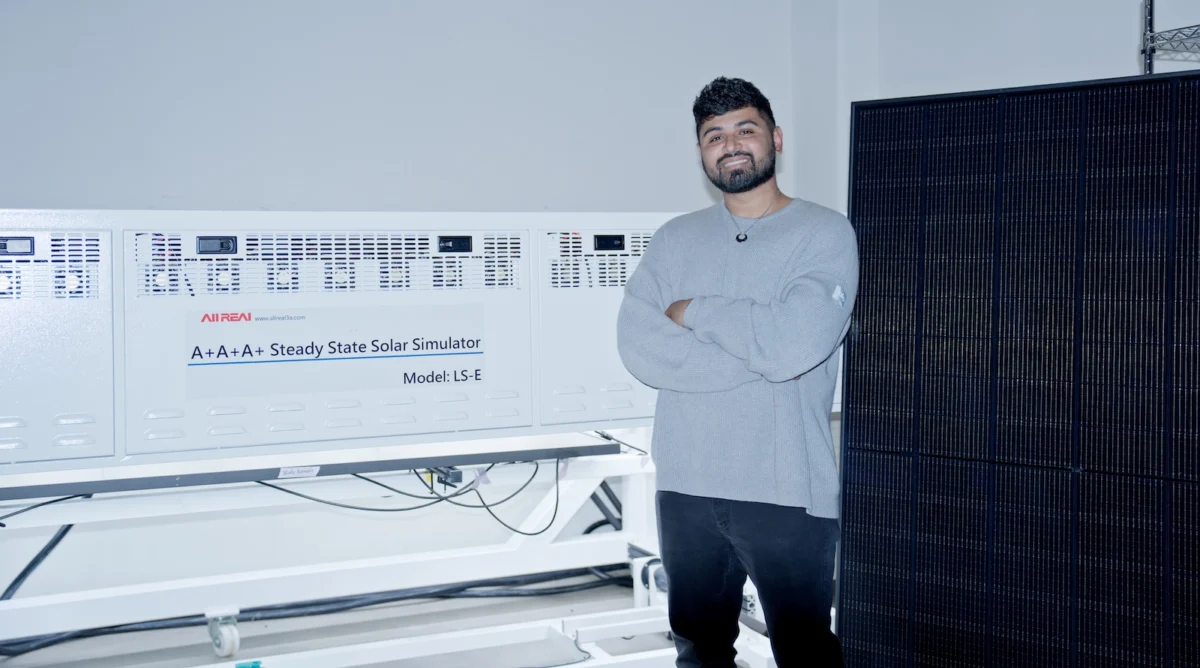
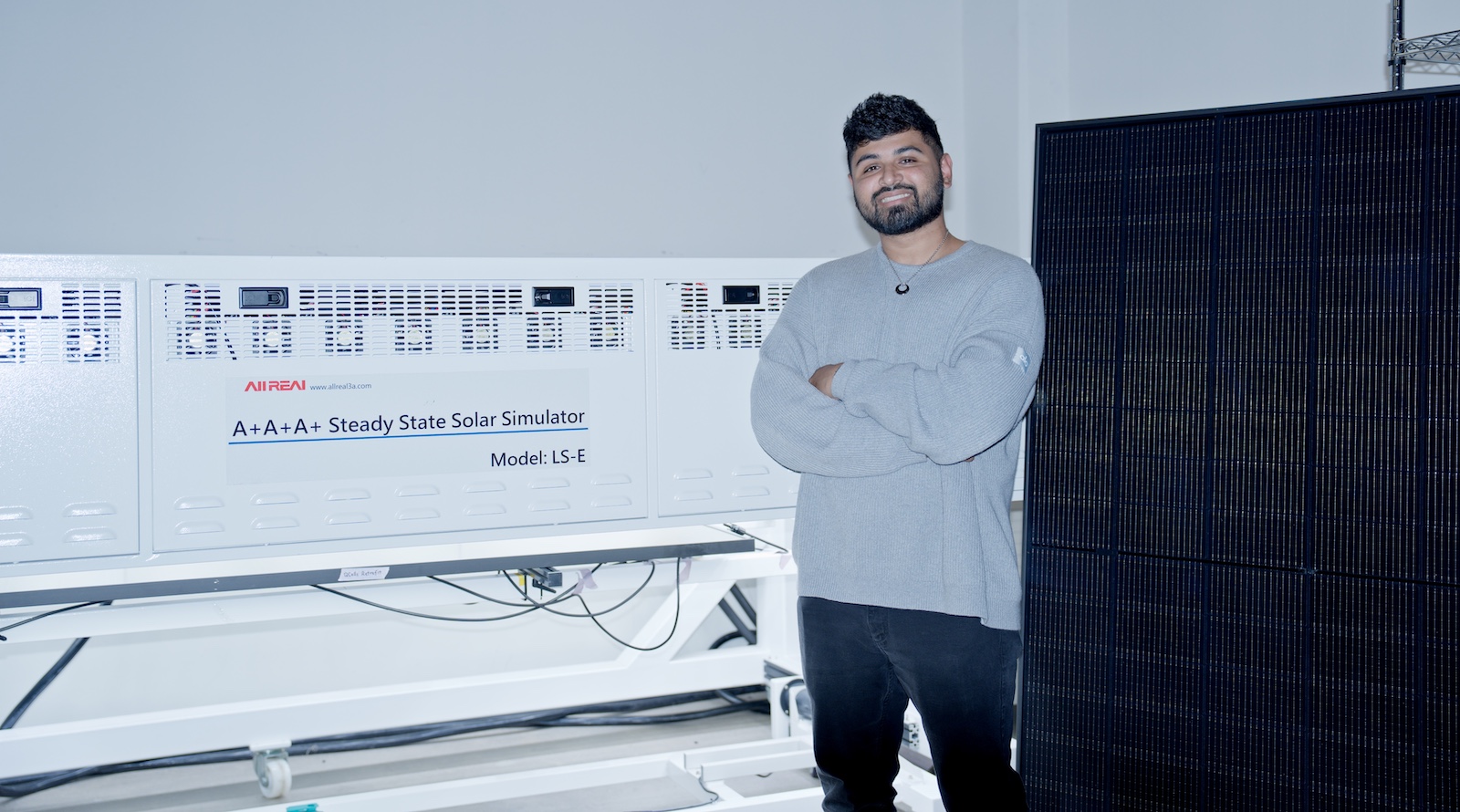
Foundation: Optivolt was founded by Rohit Kalyanpur, a Thiel Fellow who recognized that while solar cells were becoming increasingly efficient, the systems managing them were fundamentally outdated. His goal was simple yet audacious: to make solar intelligent enough to actively adapt to its environment.
The R&D Phase (2015–2024): For nine years, the engineering team tackled what many industry veterans considered an insurmountable hurdle: thermal management. Putting active power electronics inside a sealed solar panel creates extreme heat, which can degrade components over time. To solve this, Optivolt recruited engineers with satellite and aerospace design backgrounds—industries where every milliwatt matters and hardware must operate autonomously for decades without maintenance.
Patents and Certifications: Over the course of its development, Optivolt amassed an intellectual property portfolio comprising 19 issued patents and 27 pending applications covering its panel-integrated power architecture. The company also secured crucial safety and compliance credentials, earning UL certifications for its integrated junction-box enclosure, electronics, rapid-shutdown systems, and overall module safety.
Early Commercialization: Prior to its Series A, the company successfully shipped more than 20,000 panels incorporating the Power Balancer, proving out its reliability in real-world environments.
The Series A Milestone: In late 2026, Optivolt officially announced its $32 million Series A round led by VXI Capital, setting the stage for aggressive manufacturing expansion and mass market penetration.
Supporting Data and Technical Metrics
The transition from passive hardware to active intelligence is backed by hard engineering metrics and financial realities:
$42 Million: Total capital raised by Optivolt to date, following the $32 million Series A.
20,000+: The number of Optivolt-enabled panels already shipped and operating in the field.
19 Issued Patents (27 Pending): A robust IP moat protecting the company’s panel-integrated power electronics architecture.
99.4% Efficiency: The operational conversion efficiency of the Power Balancer under typical real-world conditions.
6x Power Multiplier: The performance factor recorded in internal testing when comparing Optivolt panels against bolted-on optimizers under severe, defined shade scenarios.
Official Responses and Industry Perspectives
The backing of elite clean-tech veterans highlights the profound shift Optivolt aims to bring to the market.
Rohit Kalyanpur, Founder and CEO of Optivolt:
"Solar became cheap enough to compete. I founded Optivolt to make it intelligent enough to power the world. For nine years, we’ve rebuilt the solar panel from first principles, embedding aerospace-grade power electronics so it can respond to Earth as it actually is, not the ideal conditions of a lab. The result is the first solar panel system that thinks for itself — one that adapts to shade, weather, dirt and degradation in real time, recovering energy conventional solar leaves behind. The next step is putting it everywhere."
Orin Hoffman, Managing Director at VXI Capital:
"The next era of energy will not be built by simply installing more of the same passive solar panels we already have. It will be built by making solar intelligent enough to become the backbone of the global power system. Optivolt has spent nine years building the architecture for that future. This financing is about taking it from a technical breakthrough to the platform on which the next generation of solar is built."
Paul Nahi, Founding CEO of Enphase and Optivolt Investor:
"At Enphase, we transformed rooftop solar by managing power at the output of each panel. Today, rising panel power, the widespread adoption of storage, and the urgent need to reduce costs demand a new approach. Optivolt is bringing a new class of power electronics inside the panel itself to unlock the next leap in performance and economics. I helped build the last generation of solar power electronics. At Optivolt we are building the next."
Tom Werner, Former CEO of SunPower and Optivolt Investor:
"At SunPower, we spent nearly three decades pushing the limits of how efficiently a solar panel could turn sunlight into electricity. Optivolt is attacking the other half of the problem: how much energy that panel actually delivers in the real world once it leaves the factory. The next great solar panel won’t just produce more power under ideal conditions. It will deliver more energy across the imperfect conditions of its working life."
Richard Kauffman, Former Chairman of Energy and Finance for New York and Optivolt Investor:
"I’ve spent most of my career making clean energy financeable at scale — building new financing tools, redesigning markets and driving deployment costs down. But finance can only take the industry so far. When the same solar project produces more energy over its lifetime, the economics change everywhere. Optivolt rewrote that equation inside the panel itself, dramatically expanding the share of the world’s energy demand that solar can economically serve."
Implications for the Future of Energy
Optivolt’s Series A announcement arrives at a pivotal inflection point for global energy markets. As artificial intelligence, cloud computing, and electric vehicle adoption drive unprecedented surges in electricity demand, data center operators and utilities are scrambling for reliable, high-yield power sources. Solar is the primary candidate to fill this void, but land constraints, grid congestion, and real-world efficiency losses pose persistent bottlenecks.
By integrating intelligence directly into the panel, Optivolt addresses these macro challenges on multiple fronts:
Simplified System Design: By baking optimization, rapid shutdown, and diode management directly into the module, developers can bypass the cost, complexity, and failure points of external hardware. This slashes BOS (balance of system) costs.
Maximized Land and Asset Efficiency: Utility-scale solar farms occupy vast tracts of land. If panels can capture up to six times more energy under suboptimal real-world conditions, project developers can generate more power from a smaller footprint, drastically improving project internal rates of return (IRR).
The Grid of Tomorrow: Optivolt’s long-term vision extends beyond mere power recovery. By transforming each solar panel into an intelligent, connected node in a global energy network, panels will eventually be capable of self-diagnosing, reporting micro-degradation trends, and coordinating dynamically with local battery storage systems and grid operators.
As Optivolt scales its manufacturing footprint with its newfound capital, the company is shifting the conversation from how cheaply we can manufacture passive glass and silicon to how much true, uncompromised energy we can harvest from our planet. The solar panel has finally grown a brain—and the modern energy landscape will never be the same.