By Cabe Atwell, Technology Editor, Electronic Design
Introduction and Main Facts
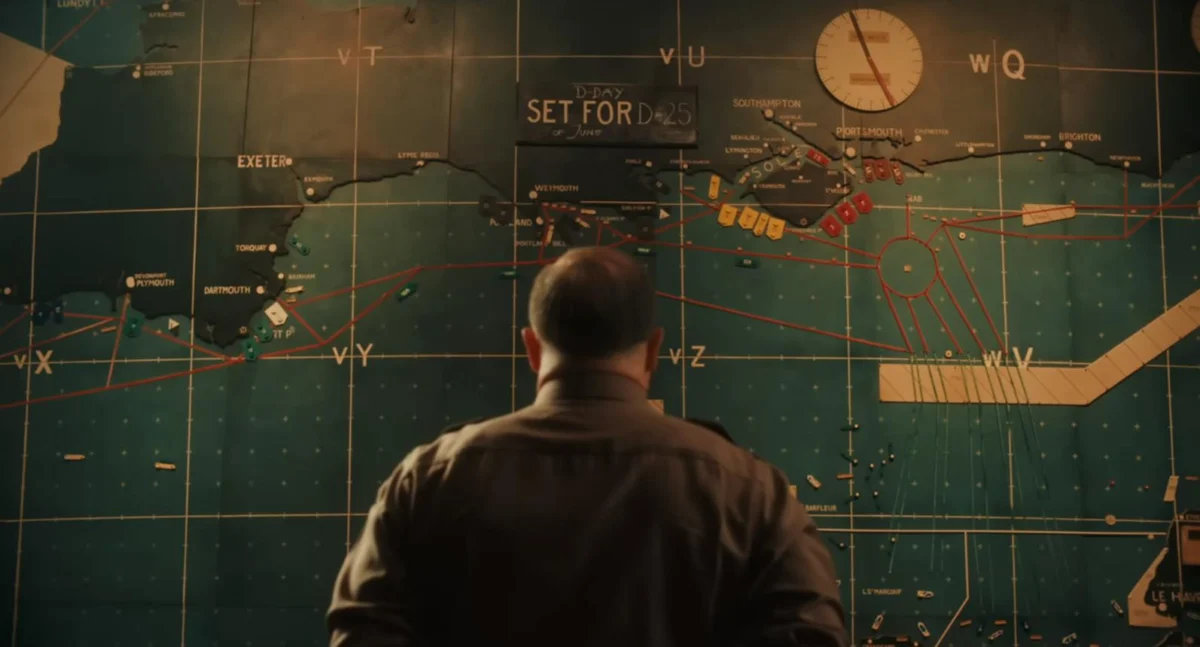
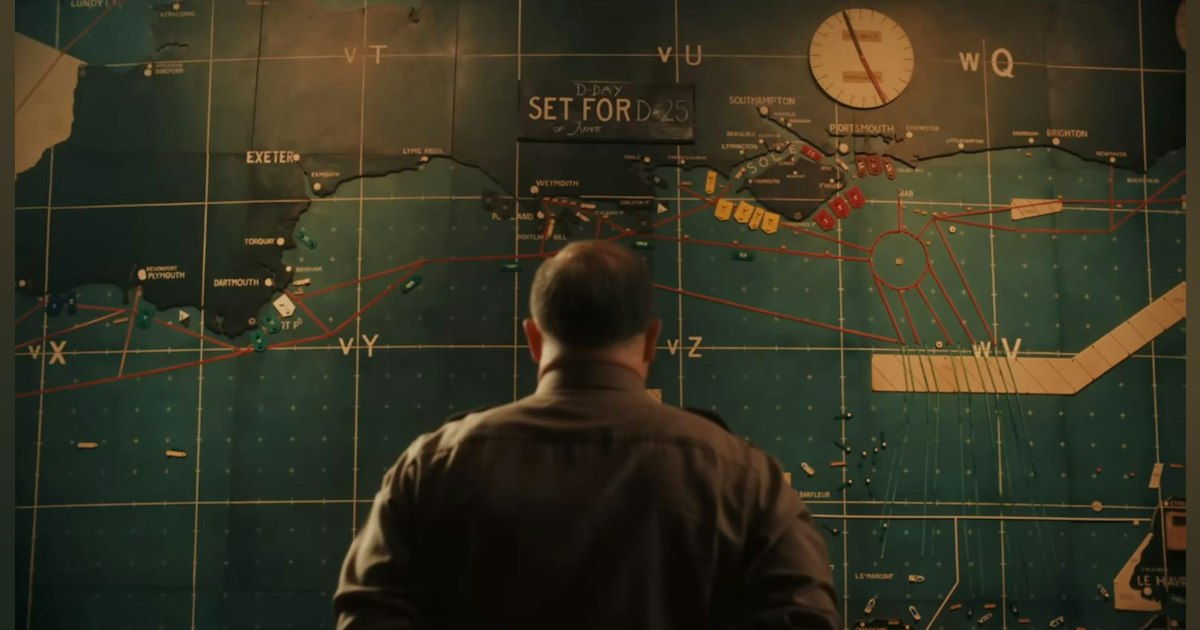
The 2026 historical drama Pressure brings to light a high-stakes, lesser-known narrative behind Operation Overlord: the critical 24-hour weather-induced delay that altered the course of World War II. Originally slated for June 5, 1944, the massive Allied invasion of Normandy was abruptly postponed due to severe, turbulent Atlantic storms that made amphibious landings and aerial support virtually impossible.
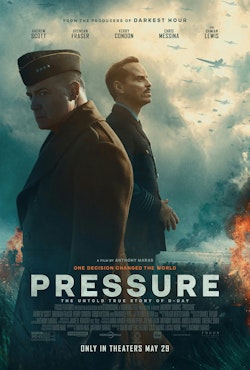
Directed with a keen eye for historical tension, Pressure examines the immense psychological and strategic burden shouldered by Allied leadership—most notably U.S. General Dwight D. Eisenhower, British General Bernard Montgomery, and Royal Navy Admiral Bertram Ramsay—as they navigated catastrophic pre-invasion wargames, elaborate deception tactics, and an unforgiving meteorological landscape.
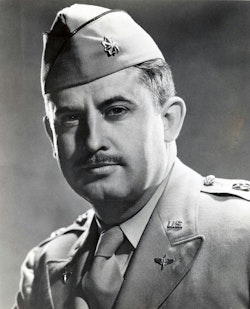
At the heart of the film’s narrative conflict is a clash of predictive methodologies between American meteorologist Irving Krick and his British counterpart, Captain James Stagg. While Krick relied on an innovative "analog days" historical pattern-matching system, Stagg gathered real-time global telemetry to forecast approaching low-pressure fronts. Their collaborative, albeit contentious, modeling provided Eisenhower with the narrow break in the weather needed to greenlight the Normandy landings for June 6, 1944.
This article explores the technical foundations, historical chronology, data collection methods, leadership decisions, and lasting modern implications of the meteorological science that shaped one of history’s most pivotal military operations.
Chronology: The Road to June 6, 1944
The execution of Operation Overlord was not merely a matter of military might; it was a complex logistical equation bound by strict environmental parameters. The Allies required a very specific convergence of conditions:

- A low tide to expose German beach obstacles (such as Rommel’s asparagus and mines) just as troops reached the shore.
- Moonlight to illuminate targets for airborne paratroopers dropped behind enemy lines.
- Manageable seas and limited cloud cover to allow amphibious landing craft to navigate safely and air forces to execute bombing runs.
The Initial Plan and Wargame Disasters
Months before the scheduled invasion, Allied command ran exhaustive wargames to stress-test their amphibious assault plans. The outcomes were catastrophic, resulting in simulated losses exceeding 700 military personnel. These grim trials impressed upon General Eisenhower that Operation Overlord operated like a precision machine: if any single component failed—whether it was the timing of naval gunfire, the deployment of inflatable Axis-deception decoys, or troop transport schedules—the entire operation would collapse.
The 24-Hour Delay Decision
As June 5 approached, Allied leadership assembled at Southwick House near Portsmouth, Hampshire, to review daily weather briefings.
- The American Forecast: Irving Krick assured Eisenhower that historical analogues pointed toward improving skies.
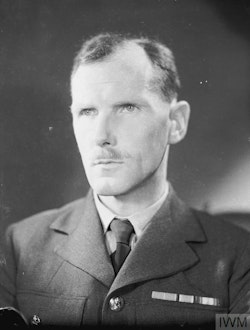
- The British Forecast: Captain James Stagg, appointed directly by Winston Churchill, warned of fast-moving, severe Atlantic storms. Refusing to sugarcoat the data, Stagg stated that stormy conditions were highly likely, knowing that an inaccurate forecast would result in thousands of unnecessary casualties.
Faced with conflicting predictions and deteriorating conditions on June 4, Eisenhower made the agonizing decision to postpone the invasion by 24 hours. This delay bought precious time, allowing the meteorological team to pinpoint a fleeting high-pressure window over the English Channel for June 6.
Supporting Data: 1940s Meteorological Technology
To appreciate the gravity of Stagg and Krick’s success, one must understand the primitive state of 1940s meteorology. Today, we rely on automated numerical weather prediction models, geostationary satellites, and high-resolution Doppler radar systems. During World War II, however, forecasting was an analog exercise dependent on sparse, manually collected data from across the globe.
Global Data Collection Networks
To construct a viable weather model, Allied meteorologists pooled data from a vast, distributed network:
- Radiosondes: Battery-powered telemetry instruments suspended from hydrogen-filled balloons, measuring temperature, humidity, and atmospheric pressure as they ascended into the upper atmosphere.
- Pilot Balloons (Pibals): Visually tracked balloons used to determine upper-level wind speeds and directions.
- Ships and Merchant Vessels: Naval and civilian ships operating across the Atlantic transmitted vital surface weather observations via radio code, despite the constant threat of German U-boat detection.
- Coastal and Inland Weather Stations: Ground posts distributed across North America, Greenland, Iceland, and the British Isles logged hourly barometric changes.
Modeling Techniques: Analog Days vs. Cyclone Models
The two lead forecasters brought radically different approaches to Allied headquarters:
- Irving Krick’s Analog Days Method: Krick utilized a pioneering system that indexed historical weather archives. By identifying past atmospheric patterns that closely mirrored current barometric configurations, he projected how future weather would evolve based on historical precedent.
- Captain James Stagg’s Synoptic Approach: Stagg focused on active, real-time observations. By mapping surface pressures, temperature gradients, and Norwegian cyclone models (which tracked warm fronts, cold fronts, and occlusions), he traced the vector and velocity of active Atlantic storms.
Without digital computers, meteorologists worked entirely by hand. They drafted surface weather charts on large sheets of graph paper, calculated pressure gradients using slide rules and analog charts, and synthesized disparate atmospheric readings through sheer operational experience.
Official Responses and Cinematic Portrayal
The tension between scientific theory, military urgency, and personal ego forms the dramatic core of the 2026 film Pressure. The production boasts stellar performances that breathe life into historical figures:
- Brendan Fraser captures the crushing executive weight carried by General Dwight D. Eisenhower as he balances diplomatic alliances with battlefield realities.
- Damien Lewis portrays the unyielding, pragmatic British General Bernard Montgomery.
- Robert Portal embodies Royal Navy Admiral Bertram Ramsay, who managed the immense naval logistics of the cross-channel armada.
- Andrew Scott delivers a compelling performance as Captain James Stagg, standing firm against immense political and military pressure to deliver an honest, unvarnished meteorological assessment.
- Chris Messina portrays Irving Krick, highlighting the friction between American technological optimism and British empirical caution.
The Significance of Barometric Indicators
The title Pressure carries a dual meaning throughout the film. It refers not only to the psychological stress weighing on the Supreme Headquarters Allied Expeditionary Force (SHAEF), but also to the literal barometric pressure readings tracked relentlessly across global charts. A falling barometer signaled impending disaster; a rising pressure gradient offered a narrow corridor for freedom.
Implications for Modern Meteorology and Military Strategy
The success of Operation Overlord fundamentally shifted how military organizations and governments viewed meteorological intelligence. Before World War II, weather was often treated as an unpredictable act of nature to be endured rather than a variable to be factored into strategic calculus.
The Evolution of Environmental Intelligence
Following the war, the integration of radar networks, computational modeling, and eventually meteorological satellites revolutionized forecasting. Today, environmental intelligence (ENVIINT) is a core component of modern military planning, dictating everything from drone operations and missile trajectories to naval deployments and logistical supply chains.
Lessons in Scientific Integrity
Beyond military history, the Stagg-Krick dynamic showcased in Pressure remains a powerful case study in scientific integrity. Captain Stagg’s refusal to alter his forecast to please high-ranking commanders highlights the ethical duty of scientists and engineers to present objective, data-driven truths, especially when human lives hang in the balance.

As Pressure demonstrates, the greatest amphibious invasion in human history was won not just by soldiers on the beaches of Normandy, but by the meticulous science of meteorologists who dared to read the skies and buy the Allies twenty-four hours of destiny.