LONDON — As the global transition toward renewable energy accelerates, the wind power sector faces an invisible yet critical engineering bottleneck: field maintainability. While much of the industry’s attention focuses on maximizing energy capture, extending fatigue life, and lowering levelized cost of energy (LCOE), a fundamental truth is emerging from nacelles and towers worldwide.
Safety and operational efficiency during decades of wind turbine maintenance are rarely determined by technician training alone. Instead, many of the risks, delays, and physical strains encountered in the field are hardcoded years earlier during the mechanical design phase.
For mechanical engineers, designing for maintainability is no longer a secondary service consideration. It must be evaluated alongside structural integrity, mass, reliability, and cost from the very beginning of the product lifecycle.
1. Main Facts: The Intersection of Mechanical Design and Field Safety
Wind turbine maintenance is a high-stakes, physically demanding discipline. It combines routine inspections, lubrication, bolt tensioning, and adjustments with corrective repairs and sophisticated condition-based or predictive interventions. Typical mechanical workloads involve servicing bearings, gearboxes, brakes, yaw systems, pitch drives, and complex hydraulic assemblies.
However, the physical reality of performing these tasks inside the confined spaces of a nacelle, hub, or tower is dictated by geometry.
- The Working Envelope: Component placement, access geometry, lifting provisions, and tool clearances dictate whether technicians can maintain stable postures and controlled movements.
- Stored Energy Hazards: Gravity loads, high-pressure hydraulics, tensioned springs, and rotating assemblies require absolute mechanical control before work begins.
- The Human Factor: While technicians undergo rigorous safety training—such as Global Wind Organisation (GWO) certification covering working at height and manual handling—the machinery itself must provide the physical architecture to support those safe practices.
When filters are hidden behind complex pipework, fasteners lie outside ergonomic reach zones, or heavy components lack dedicated hoist paths, even the most competent technician is forced into awkward body positions, overreaching, and improvised handling.
2. Chronology: The Evolution of Turbine Maintainability
The awareness of maintainability as an upstream design metric has evolved alongside the scaling of wind turbine technology over the past three decades.
- Early Generation Turbines (Late 1990s – Early 2000s): As commercial wind turbines scaled into the megawatt range, mechanical designers primarily focused on structural survival in harsh offshore and onshore environments. Maintenance was largely reactive, and service access was often an afterthought, resulting in high physical demands on early service crews.
- The Rise of Specialized Training (2010s): With the formalization of industry-wide safety standards like GWO training, the sector recognized the need for standardized safety competencies. However, a disconnect persisted: highly trained technicians were frequently deployed to service poorly configured machinery that lacked adequate tool clearances and isolation points.
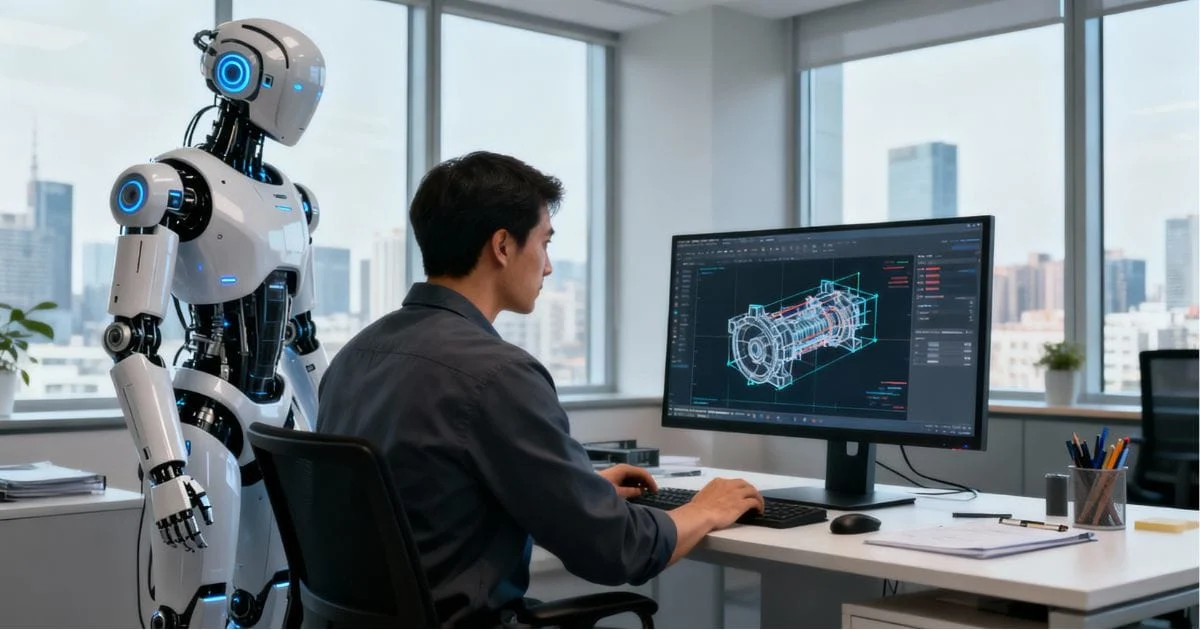
- The Shift to Digital Human Modelling (Present Day): Modern engineering teams are increasingly integrating digital human modeling (DHM), virtual reality (VR) simulations, and tool-envelope testing into the CAD phase. Rather than treating maintenance as a downstream problem for the operations and maintenance (O&M) team, forward-thinking manufacturers are incorporating maintainability checks directly into preliminary design reviews.
3. Supporting Data & Technical Insights: Engineering for the Field
To unpack why maintenance bottlenecks occur, industry data and mechanical principles point to specific friction points in turbine architecture.
Designing Around the Technician’s Working Envelope
A component can be mechanically sound yet functionally hazardous to service. Technicians operating inside a nacelle are encumbered by Personal Protective Equipment (PPE), heavy fall-protection harnesses, and specialized torque tools.
- CAD vs. Reality: A clearance that looks acceptable on a clean CAD screen is frequently inadequate once a technician, a safety harness, a heavy torque multiplier, and a removed component occupy the same physical space.
- Ergonomics: Service access must be reviewed using realistic human dimensions and full PPE profiles to eliminate the need for awkward repositioning and micro-strains.
Controlling Heavy Component Handling
Wind turbines are packed with heavy, bulky mechanical items—such as motors, pumps, hydraulic blocks, and drivetrain accessories—that require controlled lifting.
- Load Paths: Mechanical engineers can mitigate handling risks by designing certified lifting points, clear hoist paths, and removable structural interfaces directly into the equipment.
- Zero-Blind-Weight Handling: The load path must remain controlled from its installed position to a stable landing zone without forcing technicians to manually support, twist, or guide excessive weight. Clearly rated lifting eyes and predictable centers of gravity are essential.
Managing Stored Mechanical Energy
Uncontrolled stored energy is a primary hazard in wind turbine maintenance. Whether dealing with gravitational potential energy in suspended components, trapped hydraulic pressure, or torsional forces in drivetrain and pitch systems, machines must be built to make isolation foolproof.
- Locking Mechanisms: Mechanical locks and locking pins must be easily accessible and unambiguous in their engagement status.
- Pressure Relief: Hydraulic circuits require readily accessible bleed points with visible indicators showing that residual pressure has been safely evacuated.
Fasteners and Interfaces as Maintenance Features
Bolted joints are the structural backbone of wind turbines, but their ongoing maintainability depends on service geometry.
- Reaction Space: A bolt may be correctly torqued on paper, but if there is insufficient reaction space for a hydraulic torque tool or poor socket access, maintenance times skyrocket.
- Modularity: Where possible, complex assemblies should be broken down into defined modules. Replacing a pre-tested module under controlled conditions is far safer and faster than performing intricate overhauls in situ.
4. Industry and Expert Perspectives
As the pressure to reduce O&M costs mounts—especially across aging onshore fleets and expanding offshore arrays—industry leaders are reframing how they view mechanical performance.
"A wind turbine that performs efficiently in terms of energy capture but requires unnecessarily difficult maintenance is carrying a hidden design weakness into decades of commercial operation," notes a leading European wind energy engineering consultant. "Safety and maintainability are not peripheral box-ticking exercises; they are core metrics of mechanical quality."
Health and safety experts echo this sentiment, emphasizing the synergy between technician education and machine design. GWO-certified training equips workers to recognize hazardous energies and manage physical loads, but industry advocates argue that the hardware must actively cooperate.
When equipment features intuitive energy isolation, predictable lift interfaces, and unobstructed fastener access, human error decreases, and safe behaviors become the path of least resistance.
5. Implications for the Future of Wind Energy
The integration of maintainability into early-stage mechanical engineering carries profound implications for the wind power sector’s future financial and operational viability.
1. Downward Pressure on O&M Costs
Operations and maintenance represent a significant portion of a wind farm’s lifecycle expenses. By engineering out awkward access points, reducing mean time to repair (MTTR), and minimizing the need for specialized temporary rigging, operators can drastically lower operational expenditure (OPEX).
2. Enhanced Technician Retention and Safety
The wind industry faces ongoing labor and skills shortages. Improving the ergonomic and safety profile of turbine interiors directly reduces fatigue, musculoskeletal injuries, and safety near-misses, helping to retain skilled technicians in a competitive labor market.
3. Data-Driven Design Loops
Forward-looking manufacturers are closing the loop between field feedback and future CAD iterations. By analyzing maintenance logs, near-miss reports, and recurring technician workarounds, engineering teams can convert qualitative field frustrations into quantifiable design criteria for next-generation turbine platforms.
Conclusion
Ultimately, safe and efficient field maintenance is a direct output of disciplined mechanical engineering. By treating maintainability with the same analytical rigor applied to fatigue life, reliability, structural integrity, and cost, the wind energy sector can ensure that its machines protect the workforce just as reliably as they generate clean power.