





Executive Summary: A Shift in Strategic Momentum
For the better part of the last decade, the narrative surrounding the future of American nuclear power was dominated by the promise of Small Modular Reactors (SMRs). Viewed as the "holy grail" of nuclear innovation, these compact, factory-assembled units were touted as the solution to the industry’s historic struggles with long lead times, ballooning capital costs, and massive site footprints. However, the energy landscape of 2024 tells a different story.
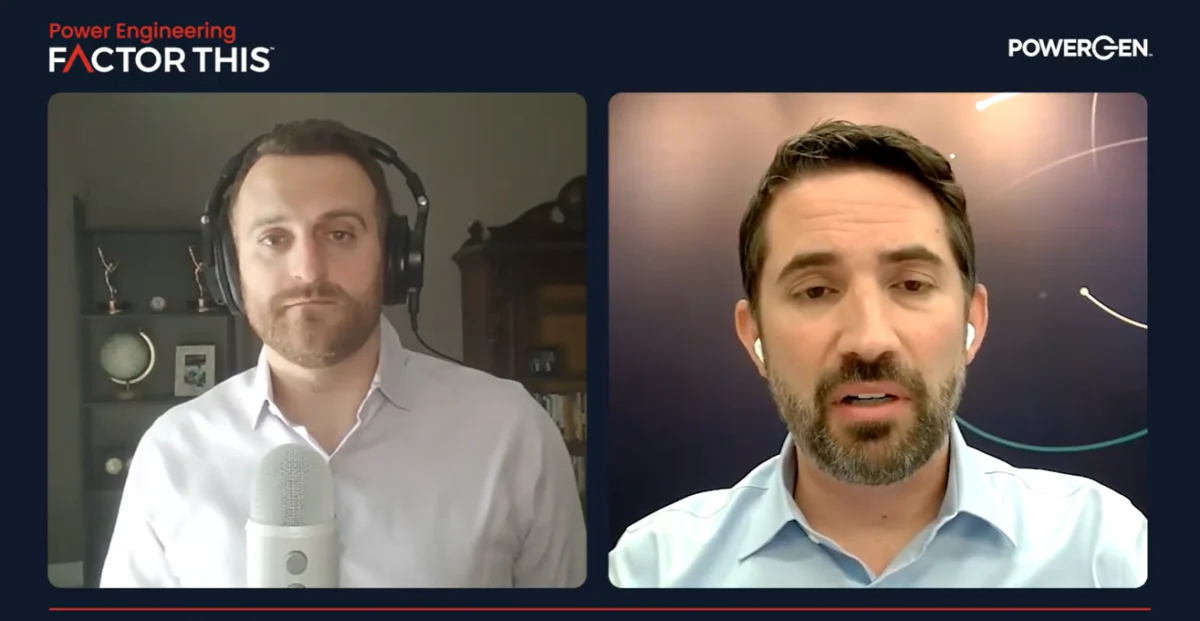
Chris Ferraro, the Vice President and head of nuclear sales for Siemens Energy North America, recently highlighted a pivotal shift in industry sentiment. In an interview with Factor This Power Engineering, Ferraro noted that the momentum—once squarely behind the modular movement—is pivoting back toward large-scale light water reactors (LWRs). This shift is not a rejection of innovation, but a pragmatic response to the sheer magnitude of power demand currently facing the North American grid. As the U.S. experiences an unprecedented surge in industrial electrification and data center expansion, the industry is finding that only the "bulk power" capabilities of traditional large reactors can effectively meet the challenge.
Chronology: From Stagnation to Renaissance
The trajectory of the U.S. nuclear sector over the last forty years has been a rollercoaster of regulatory hurdles and economic uncertainty. To understand the current "Great Pivot," one must examine the timeline of the industry’s evolution:
- The 1970s Boom: A period of rapid nuclear construction that established the U.S. as the world leader in atomic energy. This era built the "muscle memory" that industry leaders like Ferraro are now attempting to reclaim.
- The Decades of Stasis: Following the Three Mile Island incident and shifting economic priorities, new nuclear construction in the U.S. ground to a halt for nearly 30 years.
- The SMR Hype Cycle (2015–2022): As climate goals intensified, the industry pinned its hopes on SMRs. The promise of "plug-and-play" nuclear energy captured the imagination of investors and regulators, leading to significant R&D spending.
- The Demand Shock (2023–Present): The rise of generative AI and the massive scale-up of hyperscale data centers, combined with the "reshoring" of American manufacturing, created an energy demand curve that SMRs—in their current early-stage deployment phase—could not immediately satisfy.
- The "Big Plant" Re-evaluation (Today): Utilities that once declared they would "never build a large light water reactor again" are now actively exploring them, recognizing that if they are going to navigate the regulatory process for nuclear, they might as well secure the multi-gigawatt capacity that only large-scale plants can provide.
Supporting Data: The Drivers of Demand
The push for massive power capacity is not merely speculative. It is anchored in three distinct pillars of modern economic growth:
1. The Data Center Elephant
While data centers represent the most visible driver of power demand, Ferraro emphasizes that they are merely the "catalyst." The massive energy requirements of AI training clusters and cloud infrastructure have forced energy providers to look for 24/7 carbon-free baseload power. Intermittent renewables, while vital, cannot sustain the "always-on" nature of modern computing without massive battery storage investments that are still scaling.
2. The Reshoring of Manufacturing
The U.S. is currently witnessing a massive influx of manufacturing, particularly in semiconductors, battery production, and automotive sectors. These industrial facilities require consistent, high-voltage power that is resistant to the price volatility of natural gas and the intermittency of wind and solar.
3. Electrification of the Economy
Beyond industrial usage, the transition toward electric vehicles and the electrification of heating systems across residential and commercial sectors are pushing grid load forecasts to all-time highs. The math is simple: to support this level of electrification, the U.S. needs more power, and it needs it to be reliable.
Official Perspective: Siemens Energy’s Strategic Positioning
Siemens Energy occupies a unique position in this landscape. By providing critical infrastructure—such as high-efficiency steam turbines and generator sets—the company remains technology-agnostic. Whether a project involves a 1,900 MW large-scale plant or a 450 MW Rolls-Royce SMR, Siemens Energy is the backbone of the mechanical conversion of thermal energy into electricity.
Ferraro stresses that the industry is not "counting SMRs out." Instead, he envisions a tiered energy architecture:
- Large Light Water Reactors: For the massive, centralized baseload needs of the national grid.
- Utility-Scale SMRs: For localized industrial zones and regional grid support.
- Microreactors (like the Oklo Aurora powerhouse): For remote locations, military bases, or specific high-tech campus applications.
"There is room for all of them," Ferraro notes. "But the priority has shifted to where the biggest, fastest impact can be made on the gigawatt-scale deficit."
Operational Reality: Upgrades, Restarts, and "The Training Ground"
Before the industry can realistically look at a new wave of massive reactor construction, it must master the art of maintaining existing assets and reviving dormant ones.
The Pickering and Byron/Braidwood Upgrades
Siemens Energy is currently deep into the renovation of aging nuclear fleets. By upgrading steam turbines, generators, and control systems at plants like Constellation’s Byron and Braidwood stations (Illinois) and OPG’s Pickering site (Ontario), the company is effectively "uprating" existing power plants. This provides more megawatts of capacity for a fraction of the cost and time required for a new build.
The Palisades Precedent
Perhaps the most significant development is the restart of the Palisades nuclear plant in Michigan. This project is a global test case for nuclear viability. As the first fully decommissioned plant in the U.S. to be brought back online, it represents a massive engineering undertaking. Ferraro acknowledges the difficulty, stating, "Palisades is the first one… so not everything is going to go perfect the first time." However, the success of this project could unlock the potential for dozens of other retired nuclear assets across the nation.
Implications: The Bottleneck is Human Capital
Perhaps the most critical takeaway from the current state of the nuclear industry is that the primary constraint is not engineering or capital—it is people.
The Workforce Gap
The industry lost a generation of specialized expertise during the long drought of nuclear construction. Ferraro, who began his career as a field engineer, views the current upgrade projects as the "training ground" for the future. "We need to get that muscle memory back," he says.
To bridge this gap, Siemens Energy has taken aggressive steps:
- Tripling Training Programs: The company has scaled its field engineer and project manager training pipelines to accommodate an influx of both industry veterans and new talent.
- Collaborative Education: Working directly with trade schools to ensure a steady supply of craft labor—welders, pipefitters, and specialized technicians—who are qualified for the rigorous standards of nuclear work.
- Supply Chain Qualification: The nuclear industry requires specialized components. Siemens Energy is actively mentoring suppliers to ensure the domestic supply chain can handle the precision required for the coming nuclear surge.
The Pitch for the Future
For those entering the workforce, the message from the nuclear sector is increasingly compelling. These are not "gig economy" jobs; they are multi-decade career paths. The revitalization of the nuclear industry promises competitive wages, high job security, and the satisfaction of working on the most important infrastructure challenge of the 21st century.
Conclusion: The Path Forward
The U.S. nuclear sector is at a crossroads where necessity is driving a return to proven, large-scale solutions. While the innovation of small modular reactors will undoubtedly play a long-term role in decentralized energy, the immediate pressure of the digital and industrial age demands the bulk power that only large reactors can reliably supply.
By focusing on life-extension projects, the complex engineering required to restart dormant plants, and a massive investment in the human capital necessary to maintain them, companies like Siemens Energy are laying the groundwork for a new era. The "muscle memory" of the 1970s is returning, but it is being modernized for a future that requires cleaner, more efficient, and more reliable power than ever before. The pivot to large-scale reactors is not a step backward; it is a calculated leap forward to ensure that the American grid remains as robust as the economy it supports.