





Main Facts: Bringing the Solar Revolution Indoors
In a sweeping legislative move that could fundamentally reshape residential energy consumption across the United States, federal lawmakers have introduced the Socket Full of Sunshine Act (H.R. 10851). Proposed in the House of Representatives on October 19, this landmark piece of legislation seeks to legalize and streamline the use of plug-in solar systems nationwide, cutting through a tangle of state-level red tape, utility fees, and landlord restrictions that have long hindered the democratization of renewable energy.
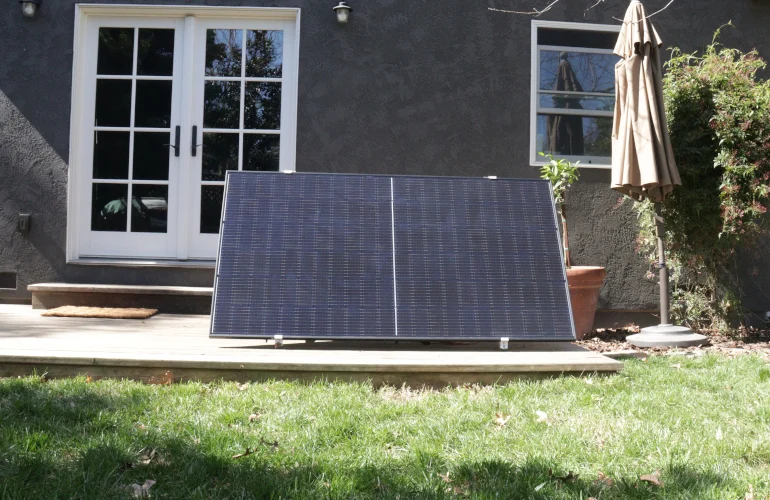
Unlike traditional, capital-intensive rooftop solar installations—which typically require months of engineering reviews, complex permitting processes, thousands of dollars in upfront construction costs, and specialized contractors—plug-in solar technology offers a radically simplified alternative. Often referred to in global markets as "balcony solar," these modular systems consist of one or more portable solar panels connected to a microinverter. The defining feature of the technology is its simplicity: the microinverter plugs directly into a standard household alternating current (AC) electrical outlet, feeding clean electricity straight into a home’s internal grid to offset baseline power consumption.
H.R. 10851 targets plug-in solar systems with a maximum power rating of 1.2 kilowatts (kW) or lower. Under the provisions of the proposed bill, federal protections would be established to eliminate interconnection barriers, exempt these small-scale systems from utility approval processes, and ban auxiliary insurance or operating fees levied by utility providers.
Authored by Representative Rob Menendez (D-NJ), the bill also includes a targeted Department of Energy (DOE) grant initiative designed to provide financial relief to low- and middle-income (LMI) households. Through this program, eligible residents could receive rebates of up to $1,000 for purchasing plug-in solar systems, provided that at least 55% of the system’s components are manufactured domestically. By pairing consumer accessibility with robust domestic manufacturing incentives, the Socket Full of Sunshine Act aims to spark a grassroots renewable energy boom while safeguarding American supply chains.
Chronology: From Grassroots Balcony Trend to Federal Legislation
The journey of plug-in solar from an informal, European-pioneered concept to a formal U.S. congressional bill reflects the rapid evolution of distributed energy generation over the past several years.
The Global Prelude and State-Level Momentum (Late 2025 – Mid 2026)
While plug-in and balcony solar systems gained widespread traction internationally—particularly in densely populated European nations like Germany—U.S. adoption was initially stifled by an archaic regulatory framework designed for large, utility-tied arrays. However, momentum began to shift in late 2025. State legislative bodies across the country started recognizing the unique nature of these portable units, passing localized bills that reclassified plug-in solar devices from industrial generation assets to simple household appliances.
Despite these localized victories, regulatory landscapes varied wildly from state to state, and in some cases, from one utility district to another. Consumers eager to lower their monthly bills faced a confusing patchwork of municipal codes, utility pushback, and outright bans, creating an urgent need for federal standardization.
Introduction of H.R. 10851 (October 19, 2026)
Recognizing the regulatory chaos holding back widespread consumer adoption, Representative Rob Menendez officially introduced H.R. 10851, the Socket Full of Sunshine Act, in the House of Representatives. As the first federal bill drafted to explicitly support the nationwide use of plug-in solar products, the legislation immediately drew attention from energy analysts, environmental advocates, and manufacturing coalitions alike.
Projected Regulatory Timeline
If enacted, the legislation outlines a clear and structured timeline for implementation across the American energy sector:
- Year One Post-Enactment: State utility regulators will be legally required to initiate comprehensive preparations for the integration of plug-in solar systems, reviewing existing grid codes and laying the groundwork for frictionless consumer adoption.
- Year Two Post-Enactment: Regulators must formally establish a unified national standard for plug-in solar interconnectivity, effectively dismantling remaining state and local barriers to entry.
- Ongoing EPA Oversight: Simultaneously, the Environmental Protection Agency (EPA) is mandated to develop standardized metrics for estimating consumer savings and to establish rigorous consumer safety standards to protect homeowners and renters alike.
Supporting Data: Affordability, Equity, and Manufacturing Metrics
To understand the transformative potential of the Socket Full of Sunshine Act, one must examine the economic and demographic data surrounding modern energy burdens and solar equity in the United States.
Easing the Household Energy Burden
According to energy efficiency data cited by congressional proponents, American families are facing unprecedented financial pressure from rising utility costs. Traditional solar installations, while effective, remain out of reach for a vast majority of the population. A standard residential rooftop solar system often costs between $15,000 and $25,000 before tax incentives, putting it far beyond the financial horizon of low- and middle-income families.
In stark contrast, plug-in solar systems represent a fraction of that cost, typically running between several hundred to a little over a thousand dollars depending on capacity. By allowing consumers to offset their baseline energy usage—such as the constant draw of refrigerators, internet routers, and standby electronics—these units can shave noticeable percentages off monthly electricity bills without requiring a home equity loan or a decades-long financing agreement.
Empowering the Renter Demographic
One of the most profound demographic shifts promised by H.R. 10851 lies in its inclusion of renters. Historically, the solar market has suffered from a deep structural inequality: homeowners can invest in solar arrays to build equity and lower bills, while renters—who make up roughly one-third of the U.S. population—are entirely excluded from these financial benefits because they lack roof ownership or the legal authority to alter property structures.
The Socket Full of Sunshine Act explicitly protects the rights of tenants. Under the proposed legislation, landlords would be legally barred from preventing tenants from purchasing and utilizing a plug-in solar system, subject only to reasonable and clearly defined spatial limitations (such as balcony safety clearance or structural weight distribution). This single provision opens up the residential solar market to millions of apartment-dwellers, condominium owners, and urban residents previously locked out of the clean energy transition.
Bolstering Domestic Manufacturing
The legislation is not solely focused on consumer savings; it also addresses strategic industrial policy. By tying the proposed $1,000 low-to-middle-income consumer rebates to a strict domestic content requirement—mandating that at least 55% of system components originate within the United States—the bill creates a protected, high-demand market for American-made clean energy technology.
This provision is designed to feed directly into the ongoing renaissance of the U.S. domestic solar manufacturing base, ensuring that every kilowatt of plug-in solar deployed in an American living room or apartment balcony simultaneously supports domestic factory jobs and supply chain resilience.
Official Responses: Stakeholder Perspectives and Political Backing
The introduction of the Socket Full of Sunshine Act has garnered enthusiastic support from a diverse coalition of lawmakers, consumer advocates, and industrial manufacturing representatives.
Congressional Advocacy
In his official press release introducing the legislation, Representative Menendez emphasized the immediate, practical relief the bill offers to hardworking Americans struggling with inflation and climbing utility expenses.
"Families are getting squeezed by electric bills that keep going up," Menendez stated. "Plug-in solar is a simple, affordable way to cut those bills, but outdated rules and unnecessary fees are standing in the way."
By framing the issue around consumer rights and economic relief, Menendez has positioned the bill as a common-sense reform that bridges the gap between environmental sustainability and household financial pragmatism.
Manufacturing and Industrial Support
The industrial sector has likewise rallied behind the bill, viewing it as a vital bridge between consumer accessibility and domestic economic fortification. Mike Carr, executive director of the Solar Energy Manufacturers for America (SEMA) Coalition, released a statement highlighting the dual benefits of the legislation:
"As America works to rebuild its domestic solar manufacturing industry, we need to make sure growing demand for solar energy also supports the workers and companies making these products here at home," Carr said.
He added: "The Socket Full of Sunshine Act recognizes that expanding access to affordable solar energy and supporting American manufacturing should go hand in hand. By prioritizing American-made products and tying federal rebates to domestic manufacturing and content requirements, this legislation can help create new demand for U.S.-made solar products and strengthen our domestic supply chains."
Anticipated Utility and Safety Considerations
While consumer and manufacturing groups have praised the bill, industry observers note that the legislation will likely face scrutiny from traditional utility companies during the congressional debate. Historically, utilities have expressed technical concerns regarding the injection of unmanaged, localized generation into residential circuits, citing potential grid interference or safety hazards if equipment fails to meet strict UL (Underwriters Laboratories) certifications.
To preempt these concerns, the Socket Full of Sunshine Act proactively integrates the Environmental Protection Agency (EPA) into the regulatory framework, charging the agency with establishing rigorous consumer safety standards. This ensures that every plug-in unit sold or rebated under the program meets high safety thresholds, protecting both household electrical systems and utility line workers.
Implications: A New Era for Distributed Energy Generation
The potential enactment of the Socket Full of Sunshine Act carries profound long-term implications for the American energy landscape, touching everything from local power grid dynamics to national carbon reduction goals.
Decentralization of the Grid
For over a century, the American electrical grid has operated on a top-down model: large, centralized power plants generate electricity, which is then transmitted over vast distances to passive consumers. The proliferation of rooftop solar over the past two decades began shifting that paradigm, but plug-in solar accelerates decentralization to an entirely new level.
By enabling millions of citizens to become active participants in micro-generation without requiring professional installation crews, the bill democratizes energy production. Cumulative millions of 1.2 kW plug-in systems operating concurrently across neighborhoods nationwide could effectively flatten peak demand curves, reducing stress on local transformers during hot summer afternoons when air conditioning loads peak.
Reforming PURPA for the 21st Century
By amending the historic Public Utility Regulatory Policies Act of 1978 (PURPA)—a foundational statute that originally forced utilities to open their markets to independent power producers—the Socket Full of Sunshine Act updates 20th-century regulatory mechanisms for a 21st-century digital and modular economy. It forces state regulators to acknowledge that energy generation is no longer the exclusive domain of massive utility conglomerates or homeowners with sprawling suburban roofs.
Toward an Inclusive Clean Energy Future
Ultimately, the Socket Full of Sunshine Act represents a philosophical shift in how environmental policy is executed in the United States. By combining low-barrier technology, renter equity protections, and domestic manufacturing mandates, the legislation offers a blueprint for how climate action can directly benefit everyday citizens.
If H.R. 10851 successfully navigates the halls of Congress, the familiar sight of a small solar panel mounted on an apartment balcony or plugged into a living room wall may soon become as ubiquitous in the American landscape as the smartphone charger—signaling a quiet, powerful revolution in how the nation powers its homes.