WASHINGTON — In its latest maneuver to stall the expansion of American renewable energy, the Trump administration is asking a federal judge to permit the reconsideration of a major federal permit granted to the massive New England Wind project off the coast of Massachusetts. The aggressive legal step marks the fourth major offshore wind development targeted by the Republican leadership in recent months, setting off a high-stakes battle that threatens to unravel delicate bipartisan compromises in Congress.
The Department of the Interior has formally requested permission to re-evaluate its own approval of the construction and operations plan for the New England Wind project, which was originally greenlit in 2024 during the final year of the Biden administration. In a filing submitted Tuesday in the U.S. District Court for the District of Columbia, the Department of Justice argued that the court should remand the permit back to the agency because the initial authorization allegedly ignored or underplayed significant adverse environmental and ecological impacts.
The move is part of a broader, multi-pronged campaign by the White House to dismantle the U.S. offshore wind sector. Utilizing executive orders, aggressive agency interventions, and targeted litigation, the administration has consistently sought to halt a technology that President Donald Trump has frequently maligned as aesthetically unappealing, economically burdensome, and unreliable compared to traditional fossil fuels like coal and natural gas.
Chronology of an Escalating Federal Crackdown
The ongoing confrontation between federal regulators and the offshore wind industry represents a profound reversal of energy policy direction over the past several presidential administrations.
- Late 2024 / January 2025: Just days before President Trump’s inauguration to a second term, federal approval was granted to the SouthCoast Wind project in Massachusetts. Shortly thereafter, federal judges signaled openness to letting the incoming administration reconsider that permit.
- Early 2025: The Trump administration attempted to halt construction on Vineyard Wind—a major milestone project built off Massachusetts by Avangrid in a joint venture with Copenhagen Infrastructure Partners—citing vague national security concerns. Despite the regulatory hurdles, construction on Vineyard Wind successfully reached completion in March 2025, making it the first major offshore wind farm to cross the finish line during Trump’s second term.
- August 2025: A federal judge granted the administration’s request to reconsider the permit for the Atlantic Shores project in New Jersey. That development had already been thrown into deep uncertainty shortly after Trump took office when co-owner Shell abruptly walked away from the venture.
- Late 2025: The federal government signaled its intent to scrutinize the New England Wind approval, a sentiment that culminated in Tuesday’s formal court filing.
- Present: The Interior Department is now systematically targeting multiple projects at various stages of development. Alongside New England Wind, the agency is seeking to pull back its prior approvals for Revolution Wind—a project intended to serve Rhode Island and Connecticut that has already finished construction—and the Maryland Offshore Wind Project, which remains in pre-construction.
Supporting Data: The Scale of New England Wind and Industry Exposure
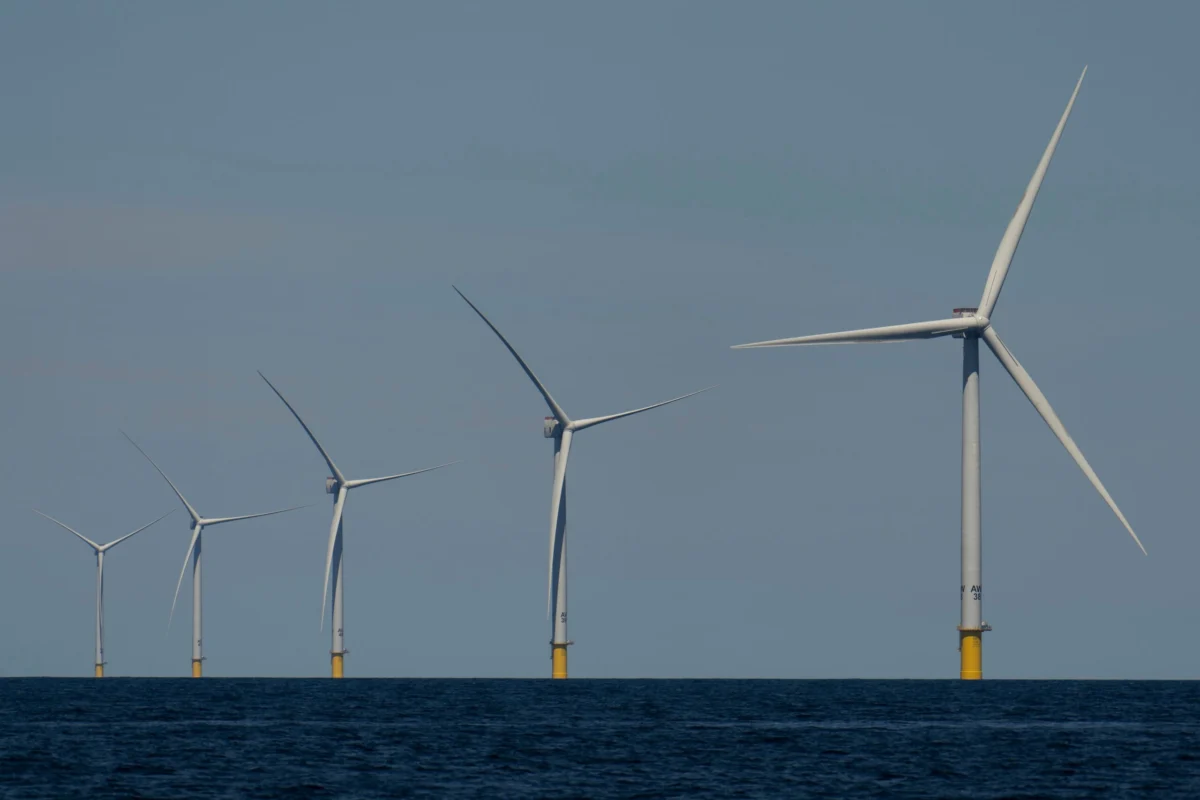
The New England Wind project represents a substantial pillar of the region’s long-term energy transition strategy. According to project designs developed by Avangrid, the initiative calls for the installation of up to 129 wind turbines in federal waters south of Martha’s Vineyard.
- Generation Capacity: The complex is designed to generate up to 2,600 megawatts (MW) of clean electricity.
- Homes Powered: At full operational capacity, the turbines are projected to supply renewable power to more than 900,000 households annually across New England.
- Current Status: Construction on New England Wind has not yet commenced. Avangrid, the project’s lead developer, has thus far navigated a complex web of regulatory approvals and local opposition, including a lawsuit filed in the District of Columbia by "ACK for Whales," a Nantucket-based resident group alleging federal statutory violations. Avangrid declined to comment on the latest Department of Justice filing.
The regulatory uncertainty is not limited to unbuilt projects. Revolution Wind, which has already completed construction, now faces the unnerving prospect of having its foundational federal permits unraveled post-completion. This retrospective targeting has unnerved traditional energy coalitions as well as renewable advocates.
Official Responses and Stakeholder Reactions
The administration’s aggressive posture has drawn sharp rebukes from Capitol Hill, environmental organizations, and industry trade groups alike, though for widely varying reasons.
Congressional Alarm Over Permitting Reform
The most immediate political fallout may center on Capitol Hill, where lawmakers had recently achieved a fragile, bipartisan consensus on infrastructure streamlining. In September, the U.S. Senate reached a landmark bipartisan deal on a comprehensive permitting reform bill designed to accelerate environmental reviews for all major energy and infrastructure projects—a priority for both fossil fuel developers and renewable energy firms.
That bill has not yet come to the floor for a full vote, but the administration’s actions threaten to scuttle the entire effort.

"This is how you blow up a permitting deal," warned Sen. Sheldon Whitehouse, D-R.I., in a starkly worded statement on Wednesday. Whitehouse argued that weaponizing the judicial review process to arbitrarily revoke previously issued permits destroys the baseline of regulatory predictability that investors require.
Environmental Advocacy
Pasha Feinberg, an offshore wind strategist at the Natural Resources Defense Council (NRDC), pointed out the bitter irony of the administration’s actions at a time when American consumers continue to grapple with high inflation and volatile utility costs.
"It’s long past time for the Trump administration to realize its war on clean energy is backfiring," Feinberg said, asserting that halting domestic renewable energy generation will ultimately constrain supply and keep consumer electricity prices artificially elevated.
Industry and Trade Associations
Even traditional fossil fuel advocates are expressing deep anxiety regarding the slippery slope of reopening established federal permits. Erik Milito, president of the National Ocean Industries Association (NOIA)—which represents a broad spectrum of offshore energy developers spanning oil, natural gas, and wind—emphasized that regulatory stability is paramount for capital-intensive marine engineering.
"The Senate has made meaningful progress on deep reforms that would provide greater certainty for energy projects across the board," Milito said. He noted that the administration’s unpredictable interventions "%underscore why Congress needs to get this done"% to strip executive agencies of unchecked retroactive authority.
For its part, the Department of the Interior defended its legal filings. In an official statement released Wednesday, the agency insisted that its Tuesday court submission was merely a routine compliance measure within an established briefing schedule rather than a sudden policy announcement. The statement maintained that the administration’s stance on offshore wind has remained entirely consistent since taking office.
Broader Implications for American Energy Markets
The ongoing legal battles over projects like New England Wind, Revolution Wind, and Atlantic Shores carry profound implications for the future of American infrastructure financing:
- Chilling Effect on Investment: Capital markets detest regulatory volatility. When federal agencies successfully ask courts to undo permits that were rigorously vetted and legally issued under previous administrations, institutional investors face unprecedented sovereign risk. Financing multi-billion-dollar infrastructure projects becomes exceedingly difficult if approvals can be rescinded at the whim of a changing political administration.
- The "Lease Buyback" Precedent: Having faced setbacks when federal judges initially blocked outright construction bans on multiple East Coast wind farms, the administration pivoted to alternative strategies—including buying back offshore wind leases and leveraging technical environmental challenges in court. This indicates a protracted legal war of attrition rather than a swift knockout punch.
- Implications for the Fossil Fuel Sector: While President Trump’s policies explicitly favor coal, oil, and natural gas, industry groups like NOIA fear that weaponizing the permitting process against wind sets a dangerous precedent. A future administration could theoretically use identical legal mechanisms to invalidate drilling leases, pipelines, and fossil fuel terminals.
As the litigation surrounding New England Wind moves forward in the federal district court, the ultimate outcome will extend far beyond the waters off Massachusetts. It will test the resilience of the American renewable energy transition, challenge the boundaries of executive authority over federal permits, and determine whether bipartisan legislative deals in Washington can survive an era of hyper-polarized energy politics.