





Main Facts
The intersection of rapid technological advancement and corporate workforce strategy has reached a critical tipping point. In late August 2026, Microsoft co-founder Bill Gates published a widely discussed essay examining the profound societal implications of the unbridled expansion of artificial intelligence. While acknowledging the immense potential benefits AI brings to various sectors, Gates delivered a stark warning: the transition to a fully automated era risks becoming one of the most turbulent periods in human history. He highlighted severe threats, including large-scale job displacement, the lowered barrier for malicious actors to cause systemic harm, and the potential stunting of cognitive development in younger generations.
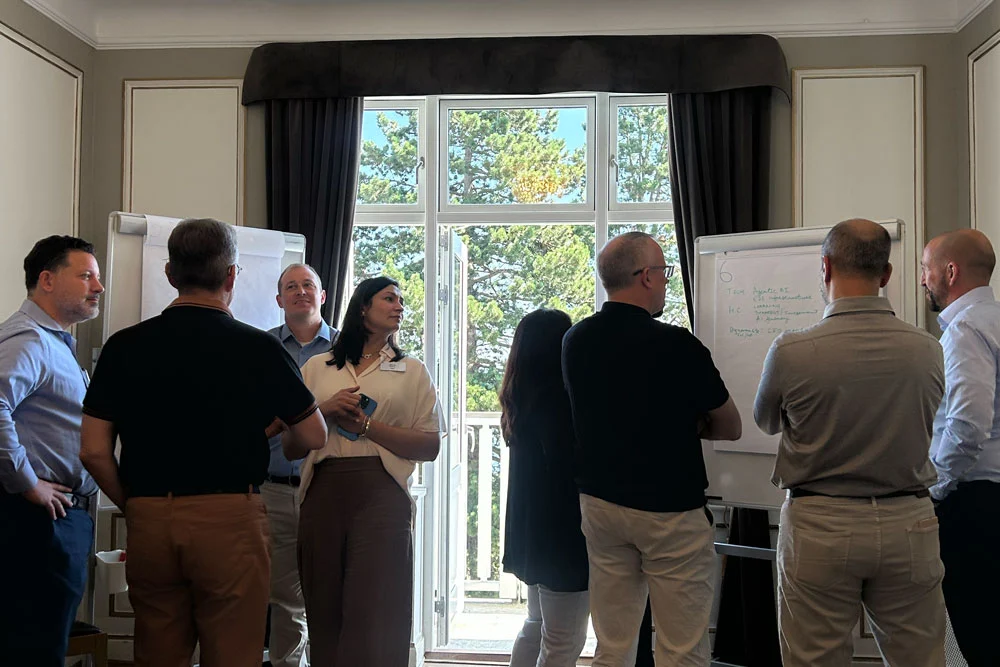
These warnings are no longer confined to theoretical technology ethics discussions; they are directly impacting the highest levels of corporate leadership. At the Procurement Leaders Ovation retreat held in July, Chief Procurement Officers (CPOs) were forced to confront the harsh realities of workforce restructuring driven by generative AI and advanced automation. Discussions at the retreat revealed a glaring dichotomy within executive suites: while some leaders publicly argue that automation will merely elevate procurement professionals into higher-value strategic roles, others—driven by mandates from CEOs and CFOs—are quietly planning or executing massive headcount reductions. Workshop estimates during the retreat suggested potential workforce reductions ranging from 30% to 80% within procurement functions.
Further compounding this tension is a philosophical shift highlighted at the retreat by London School of Economics (LSE) President and Vice-Chancellor Larry Kramer. Kramer argued that to successfully navigate the AI transition without triggering unprecedented economic inequality, societies must pivot from viewing people primarily as "consumers" to recognizing them fundamentally as "workers." For decades, corporate cost-cutting, relentless efficiency optimization, and global competition—driven heavily by procurement functions—have prioritized consumer savings at the expense of labor stability. Reversing or balancing this trend will require profound structural changes, increased government intervention, and renewed international multilateralism. For modern CPOs, these macro-level ethical and economic debates are rapidly transitioning from abstract philosophy to daily operational imperatives.
Chronology
To understand how procurement has arrived at this precarious crossroads with artificial intelligence, it is essential to trace the timeline of technological integration, economic pressures, and leadership reckonings leading up to the current debate.
- Early to Mid-2020s (The Rise of Generative AI): Following the widespread commercialization of large language models, enterprise software vendors began embedding AI capabilities into procurement suites. Initially marketed as efficiency tools for drafting supplier emails, summarizing contracts, and organizing spend data, these tools quickly evolved into predictive analytics engines capable of autonomous market analysis and supplier negotiations.
- July 2026 (The Procurement Leaders Ovation Retreat): CPOs gathered for the annual Ovation retreat, where organizers introduced a deliberately provocative workshop session. Executives were asked to break their traditional operating models and model out the maximum possible impact of AI adoption on team structures. The resulting discussions yielded startling predictions of 30% to 80% headcount reductions, exposing the friction between stated corporate optimism and harsh operational cuts. During the same event, LSE President Larry Kramer delivered a keynote address challenging the decades-long paradigm of treating humans strictly as consumers rather than workers.
- Late August 2026 (Bill Gates Publishes His AI Essay): Microsoft co-founder Bill Gates released his comprehensive essay on the societal trajectory of AI. Sounding a cautionary note, Gates emphasized that the transition phase would be exceptionally turbulent, explicitly citing structural unemployment, safety risks, and socio-economic displacement as immediate crises that must be mitigated before celebrating technological milestones.
- Present Day (The CPO Dilemma): Enterprise leaders find themselves caught between the productivity mandates of their executive boards and the ethical imperatives highlighted by thinkers like Gates and Kramer. CPOs are now tasked with designing automated futures that safeguard organizational output without entirely hollowing out the human workforce.
Supporting Data
The discourse surrounding AI in procurement is underpinned by shifting metrics, workforce forecasts, and structural tensions within enterprise operations.
- 30% to 80% Projected Reductions: During the radical scenario-planning workshops at the Ovation retreat, participating CPOs and procurement experts estimated that aggressive AI integration could automate away between 30% and 80% of traditional procurement tasks—ranging from transactional purchasing and invoice matching to routine contract generation and tier-2 supplier management.
- The Executive Narrative Disconnect: Data gathered from procurement leadership forums highlights a persistent contradiction. Approximately 70% of CPOs publicly champion the "augmentation" narrative—the belief that AI frees human workers for strategic category management, sustainability tracking, and stakeholder relationship building. Conversely, financial metrics from corporate restructurings indicate that enterprise leadership teams (CEOs and CFOs) frequently utilize automation implementations as direct justifications for net-negative headcount growth.
- Decades of Cost-Optimization Pressures: Economic retrospectives cited during LSE presentations note that over the past forty years, global supply chain and procurement strategies have driven down the cost of consumer goods by an estimated factor of multiple times. However, this hyper-focus on consumer surplus has coincided with stagnant real wages for median workers and the erosion of middle-management tiers—a trend that advanced cognitive automation threatens to accelerate across white-collar professions.
Official Responses
As the implications of Bill Gates’ essay and the Ovation retreat discussions ripple through the corporate landscape, industry figures, academic leaders, and enterprise executives have begun articulating their responses to the automation crisis.
Bill Gates, Microsoft Co-Founder
In his August 2026 essay, Gates adopted a measured yet sobering tone regarding the rapid acceleration of AI technologies. While noting that humanity has historically adapted to technological revolutions—such as the agricultural and industrial shifts—he warned that the cognitive velocity of AI is fundamentally different.
"Even under the best circumstances, the transition to this new AI era will be one of the most turbulent times in human history," Gates wrote.
He stressed that society cannot afford to take a laissez-faire approach to employment displacement, urging policymakers and technologists to build robust safety nets and regulatory frameworks before the technology renders traditional labor markets obsolete.
Larry Kramer, President and Vice-Chancellor, London School of Economics
Addressing the procurement community at the Ovation retreat, Kramer challenged the foundational economic assumptions that have governed corporate strategy for generations. He argued that the post-war economic model has become dangerously unbalanced by prioritizing the cheapness of goods for the consumer over the stability and dignity of the worker.
"To successfully transition to this new era, we must think of people as workers and not as consumers," Kramer stated.
He warned that if corporations continue to leverage AI purely for labor arbitrage and cost minimization under the consumer-first paradigm, the resulting wealth polarization will necessitate unprecedented government market interventions and international regulatory cooperation.
Procurement Leaders Community & CPOs
Reaction from the frontline of enterprise supply management has been characterized by introspection and urgency. CPOs attending the Ovation sessions acknowledged that their historical function—built on wringing cost savings out of supply chains through aggressive negotiation and workforce leverage—must now be re-evaluated. Several enterprise CPOs noted that while automation is essential for maintaining competitive parity in fast-moving global markets, the human cost of unmanaged downsizing poses severe reputational, operational, and ethical risks to their organizations.
Implications
The convergence of Bill Gates’ warnings, extreme AI scenario-planning in procurement, and the theoretical critiques of modern capitalism carries profound implications for the future of enterprise leadership.
1. The Redefinition of the Procurement Function
For decades, the metric of success for a CPO was straightforward: drive down costs, secure favorable contract terms, and optimize supply chain velocity. Generative AI and intelligent automation threaten to completely commoditize these traditional pillars. If software can autonomously source suppliers, run reverse auctions, draft compliant contracts, and monitor geopolitical risk in real-time, the value proposition of a large procurement department shifts dramatically. CPOs must pivot from managing transaction-heavy teams to orchestrating high-level risk management, sustainability compliance, and ethical supply chain stewardship. However, this transition leaves open a critical question: if entry-level and mid-level transactional roles are eliminated by AI, how will organizations cultivate the next generation of procurement leaders?
2. The Ethical Burden on Corporate Leadership
CPOs and enterprise officers can no longer hide behind the techno-optimistic shield that "technology creates more jobs than it destroys" without examining the friction of the transition. As workshop data from the Ovation retreat suggests, anticipating reductions of up to 80% in specific operational workflows means that thousands of professionals face displacement. Leaders must grapple with the moral hazard of implementing software designed specifically to reduce human headcount, balancing fiduciary duties to shareholders against corporate social responsibility to employees and the broader community.
3. Macroeconomic and Regulatory Fallout
If Larry Kramer’s assessment is correct—that prioritizing consumers over workers has created systemic socio-economic fragility—then the widespread deployment of AI in enterprise operations could trigger a structural crisis that individual companies cannot solve alone. Governments may be forced to step in with sweeping labor market regulations, retraining subsidies, or alternative economic models such as taxation on automated labor (often referred to as "robot taxes"). CPOs will need to operate in an environment where regulatory compliance extends far beyond environmental, social, and governance (ESG) reporting into workforce preservation and digital ethics.
Conclusion
The message from Bill Gates, reinforced by academic insights from the London School of Economics and tested in the rigorous workshops of the Procurement Leaders community, is unambiguous: the AI revolution in procurement is not just an upgrade in software; it is a fundamental stress-test of human capital management. For CPOs navigating this turbulent landscape, the challenge of the future will not be figuring out how to make machines work like humans, but rather determining how humans retain purpose, dignity, and livelihood in a world increasingly run by code.