As artificial intelligence continues its relentless integration into enterprise operations, corporate leaders find themselves standing at a precarious crossroads. On one side lies the promise of unprecedented efficiency, hyper-optimized supply chains, and automated workflows; on the other, the sobering reality of mass labor displacement, socioeconomic friction, and a fundamental philosophical crisis regarding the value of human labor.
This tension was brought into sharp focus in late August 2026, when Microsoft co-founder Bill Gates published a sweeping essay addressing the societal implications of unbridled AI development. For Chief Procurement Officers (CPOs) and other enterprise executives, Gates’ warnings are not merely theoretical musings for policymakers—they are an urgent call to action. As automation reshapes organizational architectures, procurement leaders must confront a difficult truth: how people fit into an automated future is no longer a downstream HR issue; it is a core strategic mandate.
Main Facts: The Collision of AI Acceleration and Human Capital
The modern enterprise is experiencing an unprecedented technological sprint. Artificial intelligence has evolved from a predictive novelty into an autonomous engine capable of managing complex procurement lifecycles, supplier negotiations, and risk assessments. However, this technical triumph has triggered a profound operational paradox.
- The Gates Warning: In his August 2026 essay, Bill Gates described the transition into the AI era as potentially “one of the most turbulent times in human history.” He highlighted scenarios ranging from widespread job losses and the facilitation of large-scale malicious acts to the stunting of human and child development. While acknowledging potential long-term benefits, Gates argued that systemic risks must take precedence over celebration.
- The Procurement Reality: CPOs are caught in a narrative contradiction. On one hand, executive leadership champions automation as a force multiplier that frees teams for higher-value, strategic work. On the other hand, stark financial realities—often driven by CFOs and CEOs mandating aggressive cost-cutting—are resulting in significant headcount reductions justified by algorithmic efficiency.
- The Strategic Blindspot: Enterprise leadership has historically viewed workers through a purely economic, consumer-centric lens. This perspective values human output primarily through the metric of cost reduction and efficiency, a paradigm that the procurement function has historically helped enforce. The rapid rise of AI threatens to take this logic to its ultimate, destabilizing conclusion.
Chronology: From Summer Retreats to Global Warnings
To understand how the procurement sector is grappling with these developments, it is necessary to trace the convergence of recent industry events and macroeconomic alarms.
July 2026: The Ovation CPO Retreat
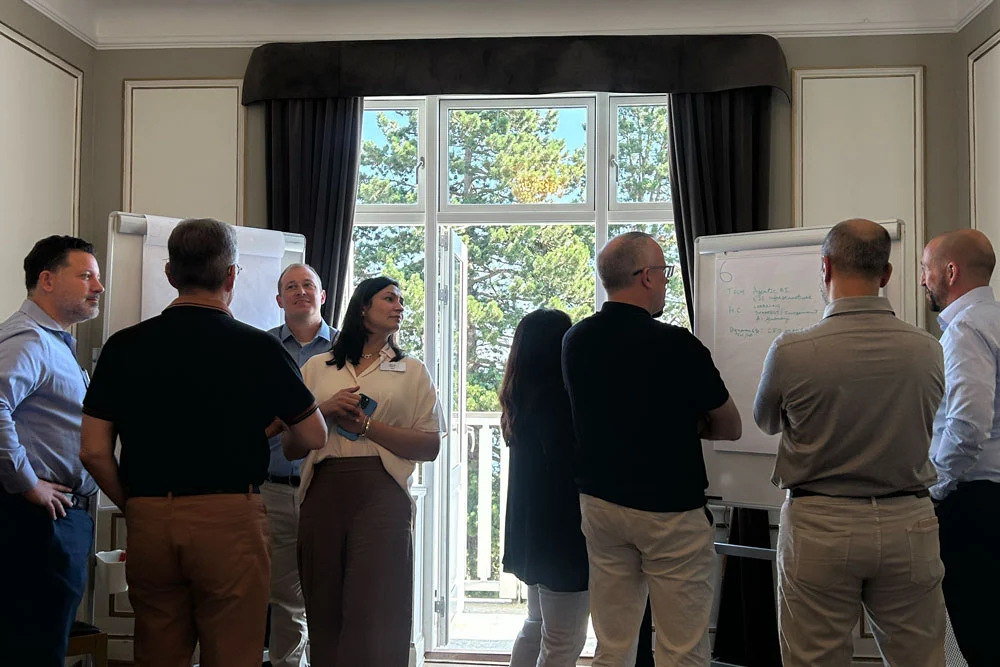
Months before Gates’ essay reverberated through global media, the tension between automation and workforce sustainability took center stage at Ovation, the annual Procurement Leaders CPO retreat. During a series of intensive workshops, organizers pushed attendees to think boldly, break their legacy operating models, and confront the unvarnished impact of AI adoption on team structures and headcounts.
Rather than relying on safe, incremental projections, the workshop facilitators deliberately challenged participants to stress-test their organizations against extreme technological integration.
Late August 2026: Gates’ Intervention
Against the backdrop of these internal industry deliberations, Bill Gates released his essay. The timing underscored a growing consensus among technology pioneers and business strategists: the speed of AI deployment is drastically outpacing society’s structural capacity to absorb its impact. Gates’ emphasis on the “turbulent transition” provided validation for the existential anxieties already brewing within executive leadership circles, including the procurement community.
September 2026 and Beyond: The Strategic Reckoning
Following the retreat and the publication of the Gates essay, enterprise leaders are finding themselves forced to bridge the gap between abstract technological futures and concrete operational strategies. CPOs are no longer asking if AI will transform their departments, but how to navigate the fallout of that transformation without eroding the organizational culture, institutional knowledge, and human capital necessary for long-term resilience.
Supporting Data: The Shocking Projections of Workforce Reduction
To appreciate the gravity of the decisions facing CPOs, one must examine the data emerging from executive simulations and industry think tanks.
During the July Ovation retreat, CPOs were asked to model the absolute limits of AI integration within their procurement operations. The results were startling:
- Projected Headcount Reductions: Participating CPOs cited potential workforce reductions ranging anywhere from 30% to 80% as a direct outcome of advanced automation.
- The Polarization of Enterprise Narratives: Industry surveys continue to reveal a deep fracture in corporate messaging. While roughly 65% of CPOs publicly claim that automation absorbs repetitive tasks to elevate human workers into strategic advisory roles, internal financial planning documents frequently target aggressive FTE (Full-Time Equivalent) reductions to satisfy short-term margin expansions.
- The Two-Truths Problem: As noted during the retreat discussions, both scenarios cannot simultaneously be true. An organization cannot simultaneously hollow out its foundational transactional workforce via automation and maintain a robust pipeline of experienced professionals equipped to handle high-level strategic procurement.
These figures demonstrate that while the workshop exercises were deliberately provocative, the extreme outcomes simulated by CPOs align perilously closely with the systemic risks outlined by Bill Gates.
Official Responses and Expert Perspectives: Rethinking the Human Paradigm
The ethical and operational dilemmas posed by AI-driven automation have drawn sharp commentary from macroeconomic thinkers, academic leaders, and enterprise strategists.
Larry Kramer: Workers vs. Consumers
A pivotal moment at the Ovation retreat came from guest speaker Larry Kramer, President and Vice Dean of the London School of Economics (LSE). Kramer challenged the foundational economic orthodoxy that has dominated Western capitalism for decades.
Kramer argued that to successfully manage the transition into the AI era, society must fundamentally shift how it views people: we must think of individuals as workers, not merely as consumers.
For generations, corporate strategy has prioritized the consumer—driving relentless cost reduction, margin optimization, and intense market competition to deliver cheaper goods and services. The procurement function has historically served as a primary engine for this mission, squeezing supply chains to extract maximum value.
However, Kramer warned that continuing this consumer-first, cost-slashing trajectory in an age of intelligent automation will dismantle the labor market entirely. If humans are systematically stripped of their roles as workers and income earners, the consumer base collapses alongside them. Protecting human dignity and socioeconomic equality, Kramer suggested, will require moving beyond corporate self-regulation, demanding greater government intervention, and doubling down on international multilateralism to manage labor displacement on a global scale.
The CPO Dilemma: Efficiency vs. Empathy
Industry leaders are increasingly vocal about the tightrope walk required to balance fiduciary responsibilities with social stewardship. While optimizing procurement spend through generative AI and machine learning algorithms is essential for competitive survival, CPOs are discovering that the human cost of these efficiencies carries downstream risks—including loss of supplier innovation, diminished institutional memory, and severe reputational damage.
Implications: What the AI Future Demands of Procurement Leaders
While macroeconomic restructuring, global taxation models for robots, and universal basic income debates may not feature on a CPO’s daily operational to-do list, the implications of the AI transition will inevitably land on their desks. Enterprise officers and leaders of people must expand their strategic scope to address several critical fronts:
1. Redefining the Value of Procurement Talent
If automation absorbs 50% to 80% of transactional procurement tasks—such as purchase order generation, invoice matching, and routine supplier communication—the profile of the procurement professional must change. CPOs must pivot from managing large operational teams to cultivating specialized units focused on ethical sourcing, complex multi-tier risk management, sustainability compliance, and high-stakes collaborative negotiation.
2. Guarding Against Institutional Amnesia
Hollowing out entry-level and mid-level procurement teams for the sake of immediate algorithmic savings creates a dangerous talent drought. Organizations risk losing the "apprenticeship model" through which junior professionals learn the nuanced, intuitive aspects of supplier relationship management. CPOs must architect talent pipelines that allow human workers to coexist with AI, ensuring that institutional wisdom is preserved rather than automated out of existence.
3. Ethical Supply Chain Governance
As AI enables more sophisticated monitoring and predictive analytics, CPOs are uniquely positioned to demand ethical standards not only within their own enterprise workforces but across their entire global supply chains. If automation drives widespread labor displacement, procurement leaders will face mounting pressure from consumers, regulators, and investors to ensure that their supplier ecosystems do not engage in exploitative labor practices to offset technological costs.
4. Integrating Macroeconomic Foresight into Strategy
Procurement can no longer operate in a silo focused solely on cost avoidance and delivery timelines. CPOs must actively participate in C-suite dialogues regarding workforce resilience, automation ethics, and long-term societal stability. As Bill Gates noted, the transition will be turbulent; organizations that fail to plan for the human impact of their technological deployments will find themselves destabilized by the very efficiencies they sought to capture.
Conclusion
The convergence of Bill Gates’ sobering warnings, the stark data emerging from executive retreats like Ovation, and the philosophical challenges articulated by leaders like Larry Kramer point to an inescapable conclusion: the future of procurement is not just about smarter algorithms; it is about smarter human stewardship.
For CPOs, the challenge is clear. The march toward automation is irreversible, but the manner in which organizations navigate the human transition remains within their control. By moving beyond short-term cost reduction, rethinking the value of the worker, and planning boldly for an automated future, procurement leaders can help steer their enterprises away from turbulent disruption and toward a balanced, sustainable horizon.
To receive weekly insights, strategic analysis, and executive discussions from the Procurement Leaders community, sign up to the CPO Crunch newsletter.