





By CleanTechnica Insights
Published: October 2026
Main Facts
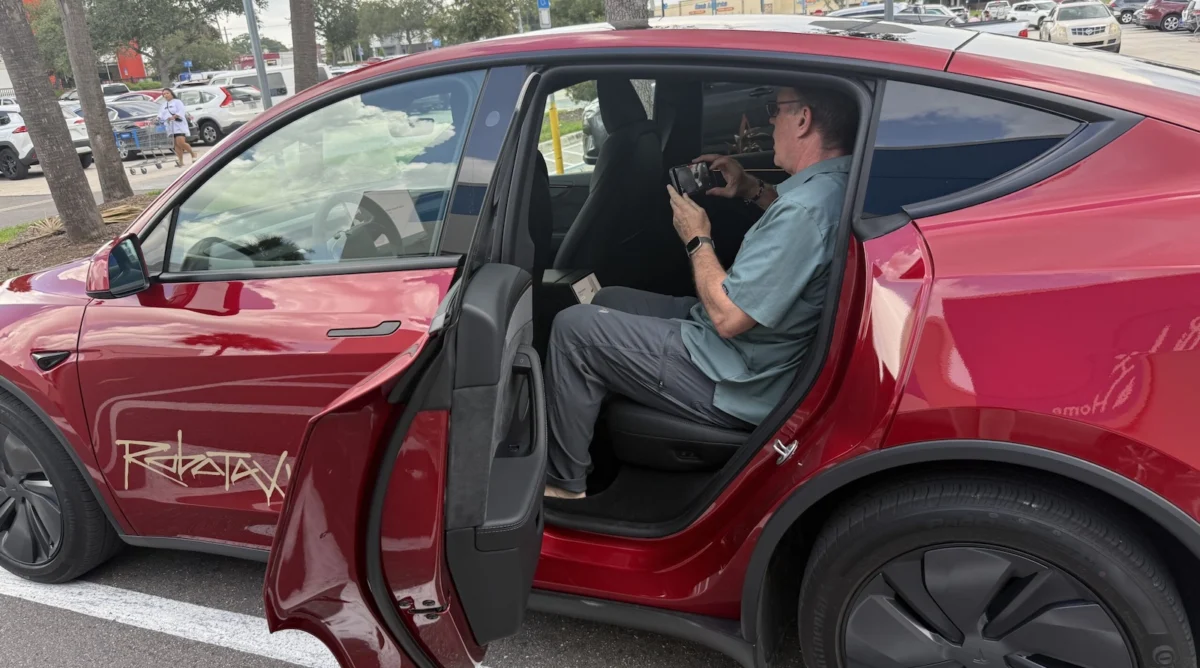
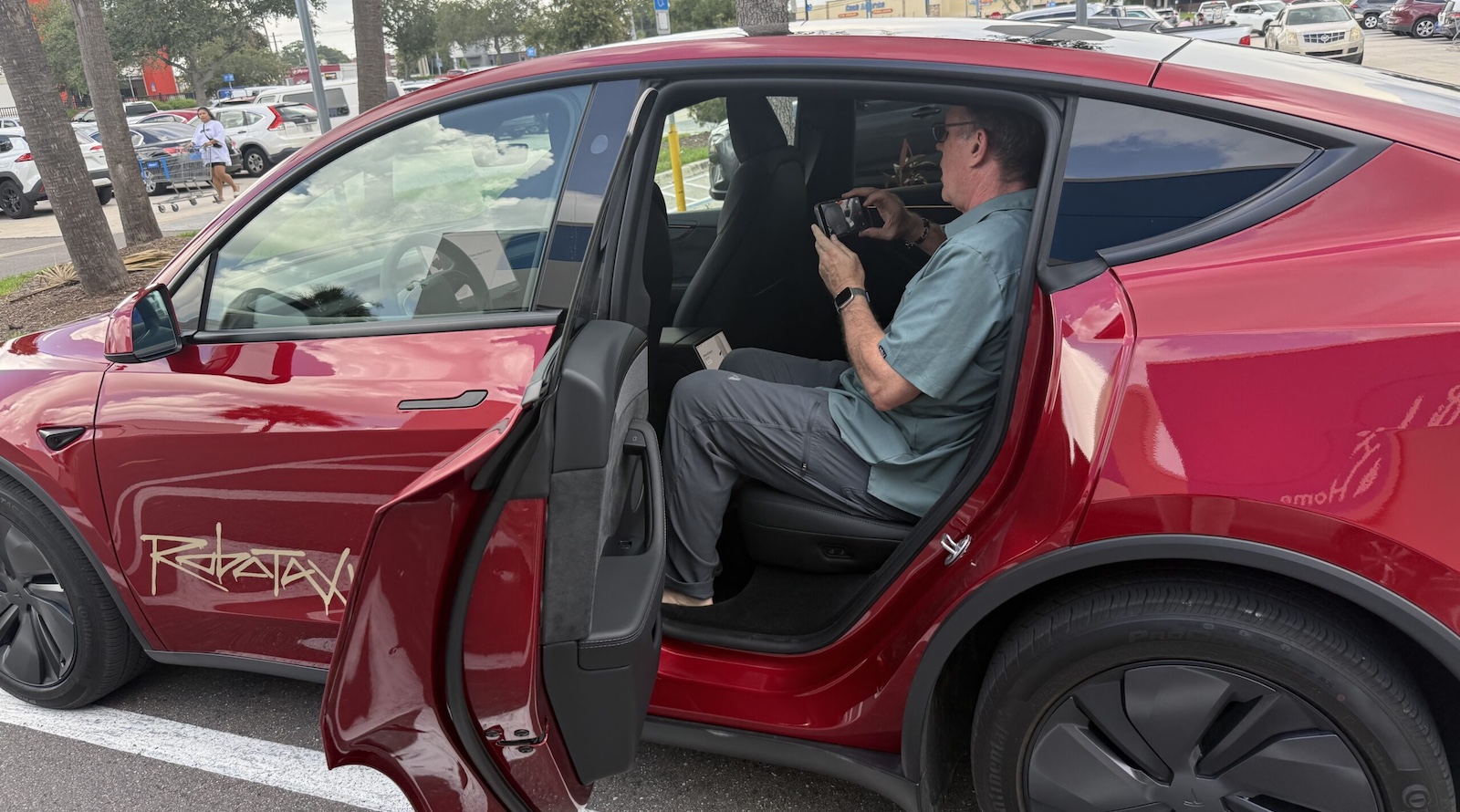
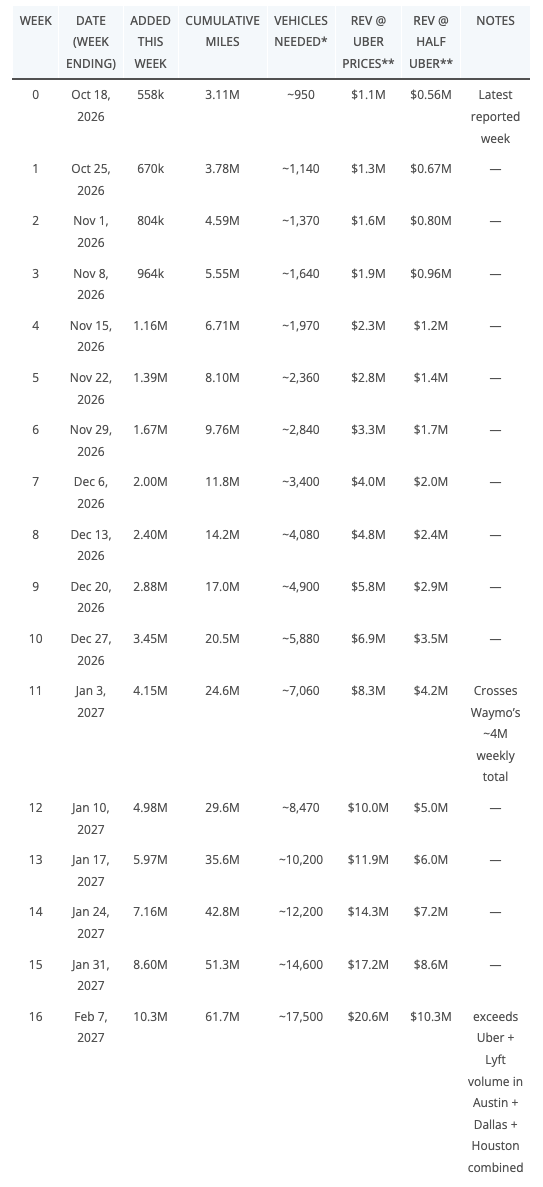
The autonomous vehicle landscape is experiencing a seismic shift. Recent data indicates that Tesla has officially overtaken Waymo in weekly unsupervised driverless miles within Austin, Texas. Fuelled by an aggressive compound weekly growth rate hovering near 20%, Tesla’s autonomous fleet—comprising a mix of dedicated Cybercabs and autonomous Model Y units—is rapidly scaling across key southern markets.
If this momentum holds, industry projections suggest Tesla could surpass Waymo’s national weekly unsupervised mileage totals in roughly eleven weeks. Furthermore, by mid-February, the company’s cumulative output across just three Texas metros (Austin, Dallas, and Houston) could rival the combined ride-hailing volume of established giants Uber and Lyft.
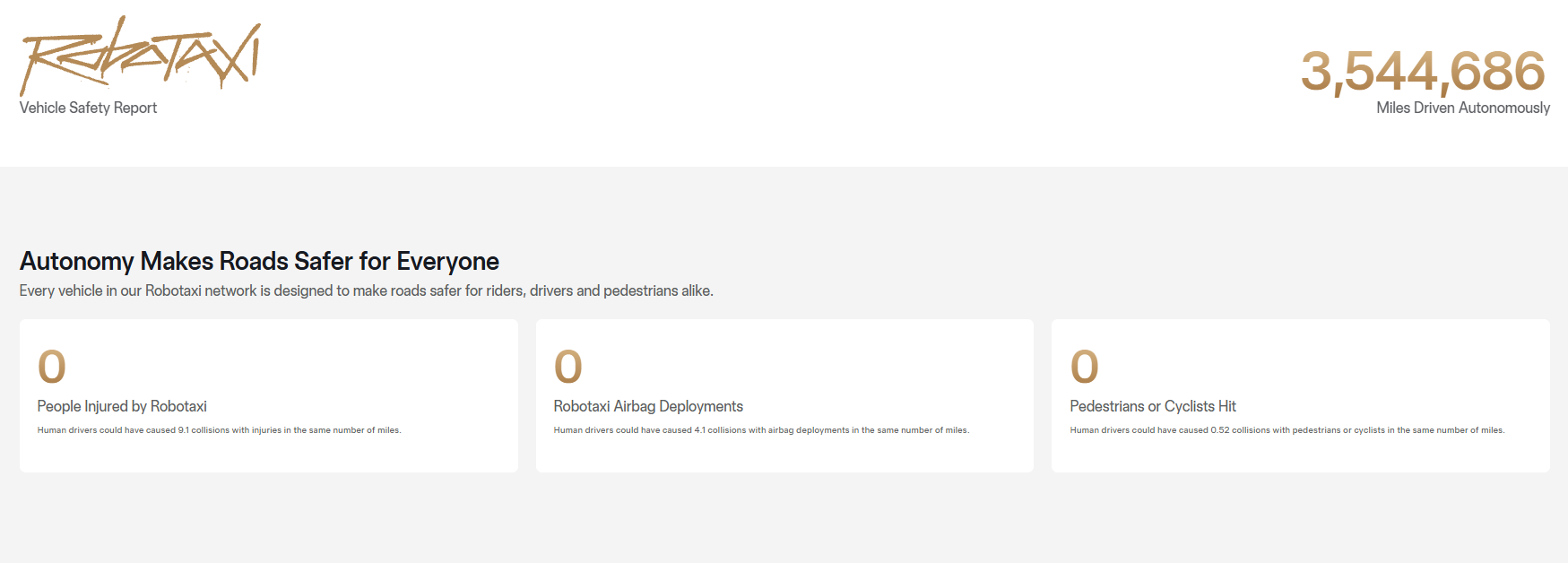
This rapid accumulation of unsupervised miles is not merely a milestone in operational scaling; it is providing the empirical data necessary to address long-standing questions regarding autonomous safety benchmarks, human-to-machine comparisons, and the contentious debate over whether expensive LiDAR suites are genuinely required to achieve Level 4 autonomy.
Chronology of the Surge
To understand the suddenness of Tesla’s acceleration in the autonomous sector, one must examine the timeline of its latest scaling phase:
- Late Q3 2026: Tesla reports a modest baseline of roughly 250,000 unsupervised robotaxi miles for the preceding quarter.
- End of Q3 Earnings Call: On the same day as the quarterly report, updated metrics reveal that unsupervised mileage has surged to approximately 1.7 million miles, quickly climbing to 3.3 million miles shortly thereafter. This points toward an explosive 20% compound weekly growth rate.
- October 2026: Registrations tracked via Texas DMV data reveal an active fleet of approximately 950 registered Tesla robotaxis operating across Texas and Florida. Concurrently, data shows Tesla surpassing Waymo’s weekly output specifically within the Austin geofence.
- Projected Late Q4 2026 / Early Q1 2027: Based on current exponential trajectories, Tesla’s national weekly unsupervised mileage is slated to intersect and surpass Waymo’s established national footprint. By mid-February 2027, the weekly volume in Texas alone is projected to hit the 10-million-mile mark.
Supporting Data and Comparative Metrics
An analysis of the raw numbers reveals stark contrasts between Tesla’s current exponential curve and the maturing growth rate of its primary competitor, Waymo.
Waymo’s Growth Plateau
According to public safety and regulatory disclosures, Waymo logged 271.3 million cumulative rider-only miles through the end of June 2026. However, a closer look at quarterly data exposes a significant cooling trend in percentage growth. In Q2 2026, Waymo added approximately 50.7 million miles—virtually flat compared to the 49.9 million miles logged in Q1 2026. This represents a sequential quarterly growth rate of just 1.6%.
By comparison, Waymo enjoyed quarterly growth rates exceeding 15% throughout much of 2025. City-specific metrics reflect similar cooling: Phoenix has experienced two consecutive quarters of declining volume, Austin’s quarter-over-quarter growth dropped from triple digits in early 2025 to roughly 4% in Q2 2026, Los Angeles hovered around 9%, and San Francisco registered near 13%.
The Texas Tri-City Footprint
Tesla’s operations are currently anchored in three primary Texas metropolitan areas, each presenting distinct scaling challenges:
- Austin: Spanning a metro population of 2.4 to 2.6 million people—with roughly 45 million daily vehicle-miles traveled (VMT)—Austin serves as Tesla’s proving ground. Tesla’s recent weekly output in the city reached approximately 438,000 miles, slightly ahead of Waymo’s local weekly rate of roughly 400,000 miles.
- Dallas-Fort Worth: Boasting a population of 5.7 million and an estimated 157 million daily VMT, Dallas features a Tesla operational zone significantly larger than Austin’s early 81-square-mile footprint. Dallas has already crossed 600,000 cumulative unsupervised miles.
- Houston: With a population of roughly 5.9 million and 144 million daily VMT, Houston’s current Tesla geofence remains more compact (approx. 25 square miles), accumulating over 226,000 cumulative miles to date.
The Economics of Pricing
The addressable market expands exponentially when factoring in potential pricing models. If Tesla prices its robotaxi service at roughly 50% of traditional Uber or Lyft fares, the service ceases to be a direct substitute solely for existing ride-hailing apps. Instead, it begins to compete directly with the fully loaded cost of personal vehicle ownership and operation.
With private driving across the three Texas metros totaling hundreds of millions of miles per week, capturing even a 1% to 2% shift from private cars to autonomous fleets introduces millions of new weekly trips.
Official Responses and Industry Context
While traditional competitors and municipal authorities have historically emphasized caution, the rapid deployment of vision-only autonomous systems has forced a reassessment across the transportation sector.

Waymo continues to champion its multi-sensor approach—integrating LiDAR, radar, and cameras—arguing that sensor redundancy is essential for edge cases and adverse weather conditions. Alphabet executives have maintained that safety validation requires extensive mapping and hardware diversity.
Conversely, Tesla’s executive leadership has doubled down on an end-to-end neural network architecture that relies exclusively on optical cameras and heavy compute, bypassing LiDAR entirely. The accumulation of millions of unsupervised miles in complex urban environments like Austin, Dallas, and Houston is framed by Tesla advocates as real-world validation of its vision-only philosophy. By scaling the fleet without expensive laser-mapping hardware, Tesla aims to achieve unit economics that traditional robotaxi operators have struggled to replicate at scale.
Strategic Implications
The crossing of these operational thresholds carries profound implications for the future of urban mobility, corporate valuations, and technology design.
1. The Death of the "LiDAR is Required" Dogma
For years, mainstream autonomous vehicle developers insisted that safe, unsupervised driving was mathematically and technically impossible without LiDAR. Tesla’s rapid scaling of vision-only unsupervised miles provides a robust dataset to test this hypothesis. If Tesla’s incident rates remain stable or lower than human averages as the fleet scales into the tens of millions of weekly miles, the industry-wide consensus regarding sensor suites will face a foundational challenge.
2. The S-Curve Realities and Operational Bottlenecks
While mathematical projections of 20% compound weekly growth present a compelling financial narrative, the physical world introduces friction. Scaling an autonomous fleet from thousands to hundreds of thousands of vehicles is not merely a software update; it is an exercise in heavy industrial logistics.
- Infrastructure: Charging depots, automated cleaning, and rapid-response remote assistance fleets must expand in lockstep with vehicle deployment.
- Regulatory Approvals: Expanding geofences in major metropolitan areas like Dallas and Houston requires ongoing cooperation from local and state regulators. A single high-profile incident could trigger regulatory freezes, instantly flattening the exponential curve.
- Fleet Utilization: Maintaining high utilization rates while avoiding empty repositioning miles remains a complex operational puzzle.
3. Financial and Market Disruption
If Tesla successfully executes its scaling strategy through 2027, the monetization of Full Self-Driving (FSD) and the Cybercab fleet will transition from a speculative valuation metric to a dominant revenue driver. By undercutting traditional ride-hail pricing while maintaining healthy margins, Tesla could effectively compress the total addressable market of urban transportation, accelerating the obsolescence of human-driven ride services and challenging public transit ridership during off-peak hours.
Conclusion
Tesla is no longer merely participating in a theoretical debate over the future of autonomy. By demonstrating rapid, compounding growth in unsupervised weekly miles across major urban centers, the company has forced a recalibration of timelines across the mobility sector. Whether the current 20% weekly growth trajectory can survive the physical constraints of scaling remains the defining question of the coming months. However, the arithmetic no longer requires an impossible expansion of cities; it simply requires the current model to hold its course.