




By Jeremy Adelman
Published: October 22, 2026
Main Facts
Nearly three years into his turbulent presidency, Argentine President Javier Milei stands as a polarizing global icon of radical free-market economics. Armed during his campaign with his literal and figurative "chainsaws," the self-described anarcho-capitalist has achieved what many mainstream economists deemed impossible: a baseline economic recovery and relative price stability in a country long crippled by hyperinflation.
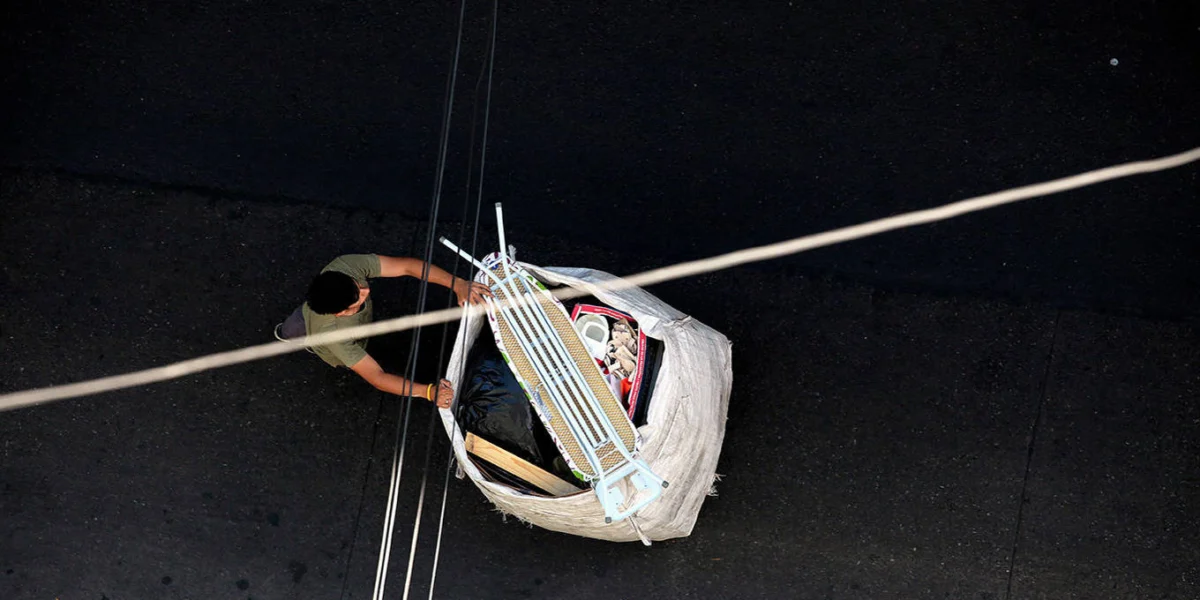
Yet, this stabilization has come at an exorbitant human cost, driving millions of Argentines into deep destitution.
Milei’s aggressive fiscal consolidation has transformed him into the lynchpin of US President Donald Trump’s geoeconomic strategy for Latin America. Lauded by Trump as his "favorite president," Milei has aligned Buenos Aires squarely with Washington’s hemispheric objectives. This alliance was underscored last year when the Trump administration orchestrated an unprecedented $20 billion currency swap line. This massive financial lifeline rescued the Argentine peso from free fall on the eve of critical legislative elections—a high-stakes gambit that paid off politically when Milei’s party secured a surprising victory.
However, as Argentina approaches crucial national elections next year, economic policymakers and international observers warn that the "Milei model" may soon become Washington’s weakest geopolitical link. The artificial suppression of inflation and the engineered trade surpluses have been sustained by suppressing domestic consumption, slashing public services, and eroding the purchasing power of the working and middle classes. With social unrest bubbling beneath the surface, the sustainability of Milei’s economic miracle is facing an existential stress test.
Chronology
To understand the precarious state of Argentina’s political economy in late 2026, it is essential to trace the rapid escalation of policies and interventions that brought the country to this juncture:
- December 2023: Javier Milei is inaugurated as President of Argentina, inheriting an economy plagued by triple-digit inflation, depleted central bank reserves, and a sprawling public sector. He immediately initiates "shock therapy," devaluing the peso by over 50% and slashing government ministries.
- Throughout 2024: The administration implements severe austerity measures. Public works are frozen, subsidies for energy and transportation are cut, and thousands of public-sector jobs are eliminated. While monthly inflation begins a slow descent from its peak, poverty rates surge dramatically across urban centers.
- Late 2025: Facing mounting capital flight and a deepening currency crisis ahead of crucial midterm legislative elections, President Donald Trump steps in. Washington extends a historic $20 billion currency swap line to Argentina, stabilizing the foreign exchange market and restoring fleeting confidence among foreign investors.
- October 2025: Bolstered by the US financial intervention and a temporary stabilization of consumer prices, Milei’s political coalition defies expectations, securing a decisive victory in the legislative elections and strengthening his mandate in Congress.
- Early–Mid 2026: Despite legislative wins, the social fallout deepens. Labor unions launch nationwide general strikes. Reports from social welfare organizations indicate that more than half of the population is living below the poverty line, with extreme poverty hitting historic highs.
- October 2026: As the countdown to next year’s presidential and general elections begins, cracks in the economic facade widen. Analysts question whether the fragile price stability can survive without ongoing external life support from Washington.
Supporting Data
The duality of Javier Milei’s administration is starkly illustrated by macroeconomic indicators running parallel to severe social indicators.
Macroeconomic Stabilization
- Inflation Trajectory: After hitting an annualized rate exceeding 200% at the end of 2023, monthly inflation prints have steadily compressed through 2025 and 2026, hovering down to single-digit monthly figures—a feat that has won praise from the International Monetary Fund (IMF).
- Fiscal Balance: For the first time in decades, Argentina’s federal government recorded consecutive primary fiscal surpluses, largely achieved by halting infrastructure spending and withholding transfers to provincial governments.
- The US Intervention: The $20 billion currency swap line extended by the Trump administration last year remains one of the largest bilateral financial rescues in modern Latin American history, effectively serving as a backstop for Argentina’s foreign exchange reserves.
The Human Toll
- Poverty Rates: Independent socio-economic studies indicate that national poverty rates have climbed to nearly 55%, with extreme indigence affecting close to 20% of the population. Families face crippling utility and food costs as state price controls and subsidies were abruptly dismantled.
- Employment and Consumption: Real wages have failed to keep pace with the cumulative price adjustments of 2024 and 2025. Domestic retail consumption has plummeted to multi-year lows, as middle-class households exhaust their savings to pay for basic necessities.
- Industrial Output: Small- and medium-sized enterprises (SMEs), which form the backbone of domestic employment, have struggled under high interest rates and diminished local demand, leading to a wave of corporate bankruptcies and rising unemployment.
Official Responses
The divergence in how the Milei administration’s policies are perceived highlights a deep ideological and political chasm both within Argentina and across the international community.
The Milei Administration
President Milei and his economic team vigorously defend their methodology, arguing that decades of populist mismanagement left no room for gradualism.
"There are no painless alternatives to decades of socialist decay," Milei stated during a recent address to business leaders in Buenos Aires. "What we are doing is tearing out the root causes of inflation—monetary printing and fiscal irresponsibility. The sacrifices being made today are the foundation of a prosperous, free-market tomorrow."
Government officials emphasize that foreign direct investment is beginning to return, particularly in the energy and mining sectors, pointing to the Vaca Muerta shale formation as proof that structural reforms are unlocking Argentina’s long-dormant potential.
Washington and International Allies
In Washington, the Trump administration views Milei not just as an economic reformer, but as a crucial ideological counterweight to leftist governments in Latin America. US Treasury and State Department officials have framed the $20 billion financial backstop as an investment in hemispheric stability.
Furthermore, regional copycat movements—such as Flávio Bolsonaro’s presidential campaign in Brazil—have explicitly modeled their economic manifestos on Milei’s playbook, signaling a potential rightward shift in South American geopolitics.
Domestic Opposition and Labor Unions
Conversely, domestic critics, Peronist opposition leaders, and organized labor unions view the administration’s policies as a humanitarian catastrophe.
"President Milei has balanced the national ledger by bankrupting the Argentine family," said a prominent trade union leader during a recent mobilization in Plaza de Mayo. "You cannot call an economy healthy when millions of children go to bed hungry and the domestic market is completely eviscerated. This is not freedom; it is economic abandonment."
Critics argue that the administration’s reliance on foreign debt and currency interventions is merely kicking the can down the road, leaving the country vulnerable to external shocks when the current political cycle peaks.
Implications
As Argentina looks ahead to next year’s high-stakes elections, the implications of Milei’s governance extend far beyond its borders, carrying heavy weight for regional stability and US foreign policy.
1. Domestic Political Vulnerability
The central paradox of the Milei administration is that while its macroeconomic metrics—such as primary surpluses and falling inflation—please international bondholders and multilateral lenders, the daily reality for the electorate is punishing. If voters translate their economic hardship into electoral backlash next year, the fragile coalition holding Milei’s party in power could collapse. A return of populist governance would instantly reverse years of painful structural adjustments, plunging the country back into economic isolation.
2. Geoeconomic Risk for the United States
For Washington, tying its regional strategy so closely to a single, volatile administration carries immense risk. The $20 billion currency swap line represents a massive financial exposure for the United States. Should Milei lose power or fail to contain social unrest, the US could find itself holding distressed debt in a politically fractured nation, undercutting Trump’s broader narrative of successful economic nationalism and hemispheric partnership in Latin America.
3. The Future of Radical Free-Market Reform
Argentina has effectively become a global laboratory for anarcho-capitalist governance. If Milei manages to weather the upcoming electoral cycle, curb inflation permanently, and foster sustainable private-sector growth, he will rewrite the playbook for emerging markets trapped in chronic stagflation. However, if the social contract shatters under the weight of mass destitution, the "chainsaw" experiment will serve as a cautionary tale of the limits of ideological shock therapy—proving that an economy can be successfully stabilized on paper, even as the society holding it together breaks apart.