




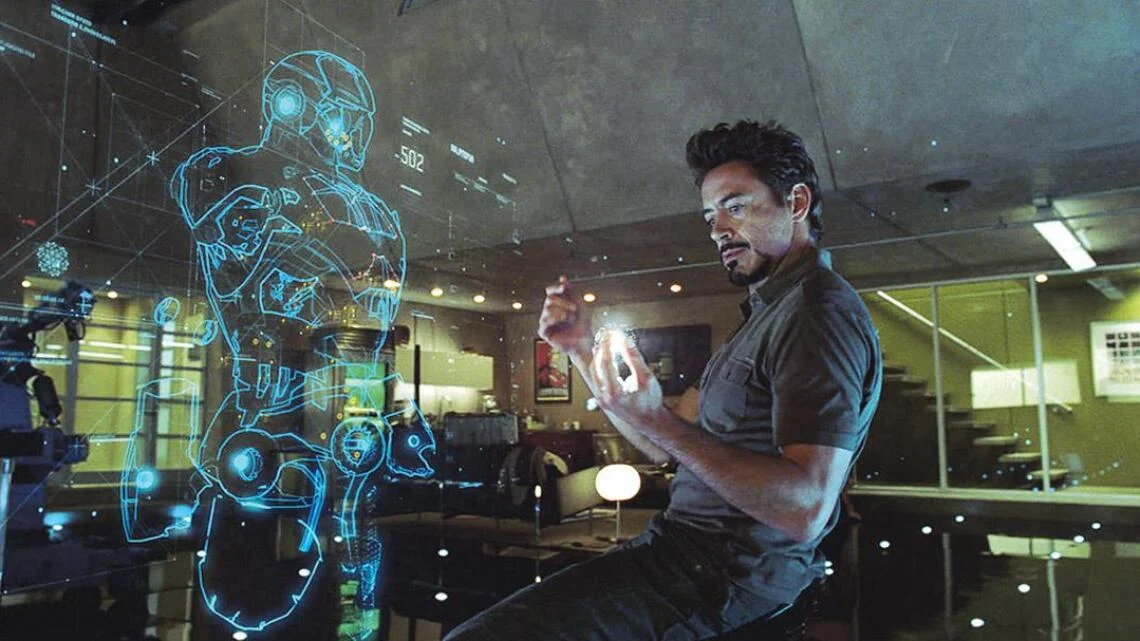
Imagine, for a moment, that you are Tony Stark. You stand in the center of your workshop, a flick of your wrist manifesting a complex, three-dimensional blueprint of an arc reactor. You reach out, pinch the air, and rotate the digital model, inspecting its internal wiring as if it were a physical object resting on your workbench. This seamless integration of high-fidelity computing with the physical environment—the hallmark of J.A.R.V.I.S.—has long been the "holy grail" of industrial design. With the arrival of the Apple Vision Pro, that science-fiction dream has transitioned into our reality.
The Apple Vision Pro is not merely a new iteration of virtual reality hardware; it is a fundamental shift in how humans interact with digital information. By ushering in the era of "spatial computing," Apple has provided product designers, mechanical engineers, and 3D modelers with a tool that dissolves the boundaries between the desk-bound screen and the physical world.
Main Facts: The Anatomy of Spatial Computing
At its core, the Apple Vision Pro functions as a high-performance computer that utilizes the user’s surroundings as its primary interface. Unlike traditional VR headsets that isolate the user in a digital void, the Vision Pro is designed to blend digital content into the physical space.
The Technological Backbone
The device is powered by a dual-chip architecture. The M2 chip handles the heavy lifting of computational tasks, such as running complex CAD software and rendering high-fidelity environments. However, the true innovation lies in the R1 chip. This silicon is specifically dedicated to processing input from an array of 12 cameras, five sensors, and six microphones. It eliminates latency by streaming images to the displays within 12 milliseconds—eight times faster than the blink of an eye. This is what prevents the motion sickness common in earlier VR iterations and creates the "Stark-like" fluidity of movement.
Key Capabilities
- Spatial Canvas: Designers are no longer limited by the two-dimensional real estate of a monitor. They can pin windows, 3D models, and reference documentation anywhere in their 3D workspace.
- Intuitive Input: The system relies on eye tracking, hand gestures, and voice commands. There is no controller to learn; the interface responds to where you look and how you move your hands.
- High-Resolution Fidelity: With more pixels in each eye than a 4K TV, the display technology allows for the rendering of intricate mechanical parts, textures, and material finishes with enough detail for professional engineering review.
Chronology: The Road to Spatial Maturity
The path to the Vision Pro was not an overnight success but a decade-long refinement of Apple’s ecosystem.
- 2014–2017: The Foundation. Apple began its aggressive acquisition of augmented reality (AR) and computer vision startups (such as Metaio and Flyby Media). During this period, the internal development of ARKit began, signaling a shift toward mobile-based spatial experiences.
- 2020: The LiDAR Integration. With the release of the iPad Pro and iPhone 12 Pro, Apple introduced LiDAR scanners to consumer hardware. This allowed devices to "map" the real world, a necessary prerequisite for the persistent spatial anchors used in the Vision Pro.
- June 2023: The Reveal. Apple officially unveiled the Vision Pro at the Worldwide Developers Conference (WWDC). The announcement focused on the transition from "mobile computing" to "spatial computing."
- 2024: Market Entry. The official retail launch set the stage for professional integration, with developers and enterprises beginning to port existing CAD and design workflows into the visionOS ecosystem.
Supporting Data: The Power of OpenUSD
The potential for the Vision Pro to revolutionize industry relies heavily on the OpenUSD (Universal Scene Description) framework. Originally developed by Pixar, this open-source standard allows for the seamless interchange of 3D data between different software environments.
The Ecosystem Integration
The efficiency of the Vision Pro is amplified by its compatibility with industry-standard software. Collaboration with tech giants ensures that a model built in SolidWorks, Maya, or Alias can be moved into a spatial environment without losing metadata or material properties.
- Pixar: Provides the foundation for high-fidelity 3D rendering.
- Nvidia: Offers the Omniverse platform, allowing engineers to collaborate in real-time within a shared, physics-based virtual world.
- Adobe: Brings its suite of creative tools into the 3D space, allowing designers to texture and iterate on models while they appear to float in their actual office or studio.
Standardization is the key to enterprise adoption. By utilizing OpenUSD, companies can ensure that a design created in a 2D CAD environment can be instantly visualized in 3D, reviewed by a remote team, and annotated in real-time, drastically reducing the "time-to-market" for physical products.
Official Responses and Industry Outlook
Industry leaders have responded to the Vision Pro with a mix of awe and practical optimism. While critics initially pointed to the high entry price, the professional engineering sector views it as a "workstation-grade" investment rather than a consumer toy.
"We are looking at a fundamental change in how we perceive the design process," notes one senior product engineer. "The ability to walk around a 1:1 scale model of a product, to look inside the housing of an engine, or to test ergonomics in a virtual environment before a single piece of aluminum is cut—that is the holy grail of lean manufacturing."
Apple, for its part, has positioned the device as the "pinnacle of user-intuitive design." Their messaging emphasizes that the goal is not to trap the user in a headset, but to give the user "superpowers" in their physical workspace. The company’s focus on privacy, security, and integration with existing macOS workflows suggests a long-term plan to replace the traditional multi-monitor setup with a singular, infinite virtual workspace.
Implications: A New Era for Design and Engineering
The integration of spatial computing into the professional design pipeline carries three major implications for the future of the industry:
1. From Prototyping to "Pre-typing"
Physical prototyping is expensive and time-consuming. By utilizing the Vision Pro to create high-fidelity, interactive digital twins, engineers can perform stress tests, clearance checks, and assembly sequences in a virtual environment. This "pre-typing" phase identifies design flaws before the physical materials are ever ordered, leading to significant cost savings and reduced environmental waste.
2. The Democratization of 3D Visualization
Previously, visualizing complex 3D data required high-end rendering workstations and specialized training. The Vision Pro simplifies the interface, making the 3D environment as accessible as a smartphone. This allows stakeholders—such as project managers, clients, or investors—to participate in the design review process by actually "stepping into" the product, fostering better communication and faster consensus.
3. The Necessity of Reskilling
For the modern designer or engineer, proficiency in 2D software is no longer sufficient. To stay competitive, professionals must adapt to the spatial paradigm. This involves learning how to manage 3D space, understanding spatial ergonomics, and mastering the workflows associated with AR/VR content creation.
Educational institutions and training providers, such as Design Engine, are already pivoting to meet this demand. By offering specialized training in 3D modeling and integration, these organizations are ensuring that the next generation of engineers is prepared to harness the full power of spatial computing.
Conclusion
The Apple Vision Pro is more than a piece of hardware; it is a catalyst for a paradigm shift. Just as the Graphical User Interface (GUI) changed how we interacted with computers in the 1980s, spatial computing is changing how we interact with our designs in the 2020s.
By bridging the gap between the digital and physical realms, Apple has provided the tools necessary to unlock unprecedented levels of creativity and efficiency. As we look toward the future, the boundary between the designer and the design will continue to blur. Those who embrace this technology—who learn to manipulate the digital world as easily as Tony Stark manipulates his holograms—will be the ones to define the next era of innovation. The future of design isn’t just on a screen; it’s all around you.