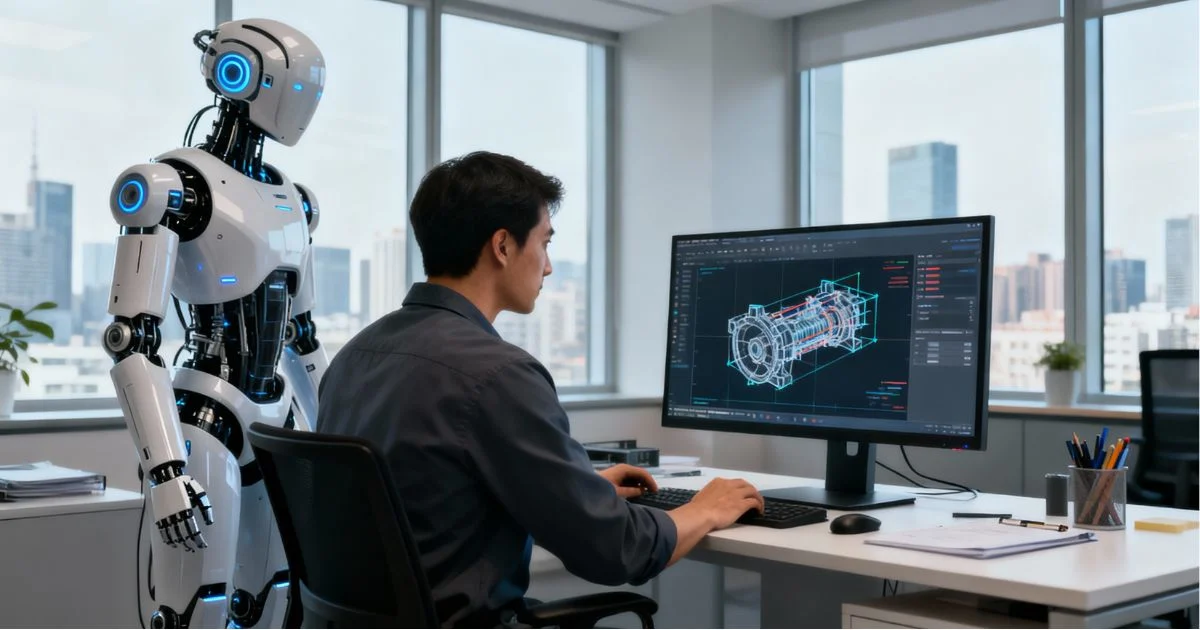
As the industrial sector marches through 2026, the intersection of artificial intelligence, advanced simulation, and human expertise has reached a critical inflection point. For the past several years, the narrative surrounding manufacturing and engineering technology has been dominated by a singular promise: complete automation. Yet, mid-2026 industry updates from automotive giants, software powerhouses, and robotics innovators reveal a more nuanced reality.
AI is no longer viewed as a magic wand capable of replacing human intuition; instead, it is a powerful accelerator that exposes the absolute necessity of rigorous data hygiene, virtual validation, and—most importantly—the seasoned judgment of veteran engineers.
This comprehensive briefing examines the major developments shaping mechanical engineering, design, simulation, and manufacturing in June 2026, analyzing how industry leaders are balancing algorithmic speed with real-world practicality.
Main Facts: The State of Industrial AI and Engineering in 2026
The industrial landscape is undergoing a massive transformation, characterized by several headline-grabbing developments across automotive manufacturing, CAD software, factory automation, and industrial data management:
- Ford’s Quality Renaissance: Ford Motor Company captured the top spot in the mainstream brand category of the J.D. Power 2026 Initial Quality Study—marking its first win in this metric since 2010. Crucially, Ford attributes this success not just to AI defect-detection tools, but to the strategic hiring, promotion, and re-engagement of approximately 350 veteran technical specialists.
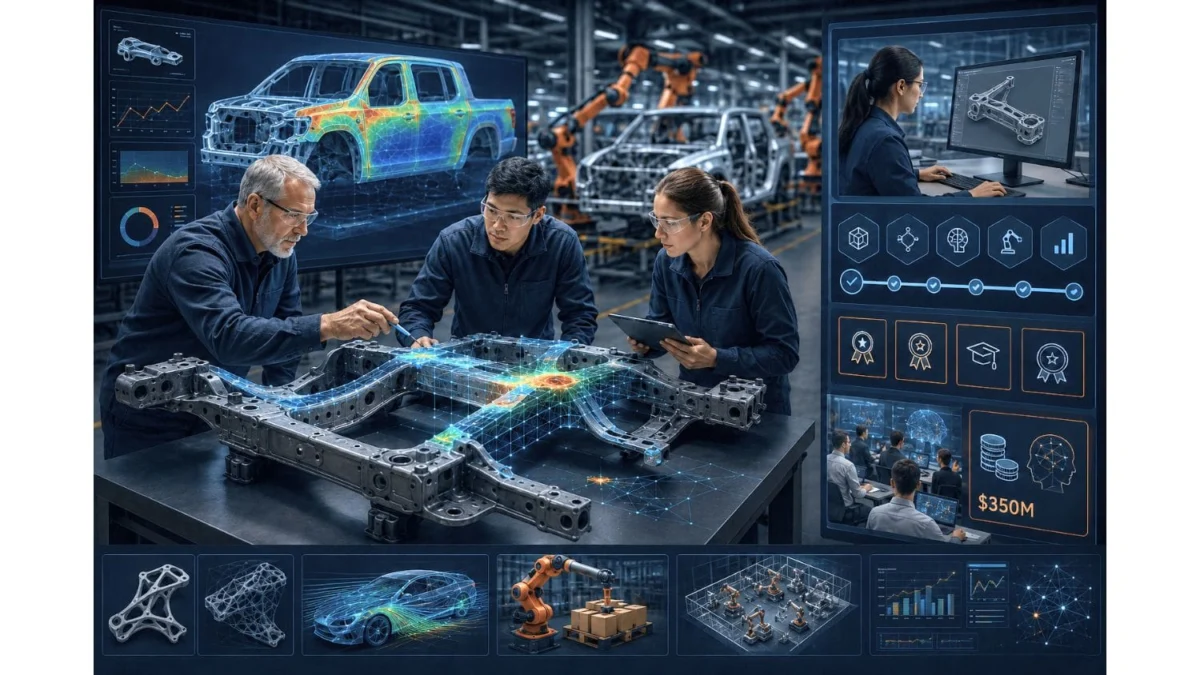
- Massive Investment in AI Workforce Training: According to the Autodesk AI Jobs Report 2026, roles requiring artificial intelligence skills across architecture, engineering, construction (AEC), product design, and manufacturing have skyrocketed by 147% over the past two years. Autodesk is committing $350 million over three years to train nearly one million people and secure over 200,000 industry-recognized certifications by the end of 2028.
- Generative Physics and Concept Design: Siemens introduced Simcenter PhysicsAI Generate (integrated into Simcenter Hypermesh 2026.1), allowing engineers to generate physics-aware 3D design concepts from basic dimensional and performance targets in seconds.
- Radical Acceleration in Vehicle Validation: General Motors announced that machine learning and advanced simulation have slashed vehicle safety analysis times—specifically roof-crush testing simulations—from a grueling 8 to 40 hours down to under five minutes.
- Smart Factory Robotics and Palletizing: Doosan Robotics debuted the PalletizHD+ AI palletizing system at Automate 2026, capable of handling variable box sizes and optimizing travel paths on the fly. Simultaneously, Vention and Teradyne Robotics launched a joint digital twin cell-design platform to streamline Universal Robots (UR) deployments.
- Data-Centric Industrial AI: AVEVA rolled out enterprise-wide AI upgrades at AVEVA World 2026, focusing on unifying plant, engineering, and operational data infrastructure to feed clean data into industrial AI tools.
- Autonomous CAM Programming: Siemens updated NX X Manufacturing with generative AI capabilities that analyze raw feature geometry to suggest machining strategies and custom parametric tool definitions, bypassing outdated shop-floor habits.
Chronology of Key 2026 Industry Developments
To understand how these milestones fit into the broader technological timeline of 2026, we can trace the progression of major product launches, workforce reports, and enterprise strategy announcements over the first half of the year:
- Early 2023 – 2025: Industrial firms aggressively adopt foundational large language models and predictive maintenance tools. Many discover that raw automation often falls short when dealing with edge-case engineering failures and complex physical interactions.
- Early 2026: Autodesk tracks an acceleration in specialized hiring, noting a 33% year-over-year growth in AI-centric engineering roles.
- June 2026 (Automate & Industry Events):
- Doosan Robotics unveils the PalletizHD+ system, tackling the chaotic variables of end-of-line packaging.
- Vention and Teradyne launch their collaborative modular robot cell-design platform.
- AVEVA hosts AVEVA World 2026, emphasizing foundational data infrastructure as a prerequisite for factory AI.
- Mid-June 2026 (Automotive & Software Updates):
- Ford is officially crowned leader of the J.D. Power 2026 Initial Quality Study, proving the value of its 2023–2026 engineering talent reinvestment strategy.
- GM publishes breakthroughs in virtual validation labs, dropping complex crash-test simulation times to mere minutes.
- Siemens releases Simcenter Hypermesh 2026.1 and NX X Manufacturing 2606, embedding advanced physics-aware generative design and AI CAM tooling into the hands of designers and programmers.
- Autodesk formally commits its $350 million educational funding initiative to close the growing industrial skills gap.
Supporting Data and Metrics
Data dictates the direction of modern engineering. The statistics emerging from the 2026 reports highlight both the explosive growth of AI integration and the stubborn physical realities of manufacturing:
- 147%: The two-year growth rate of AI-related job postings across engineering, manufacturing, and product design, according to Autodesk.
- 350: The number of veteran technical specialists Ford hired, promoted, or brought back to mentor automated systems and intercept warranty-draining design flaws.
- 16th to 1st: Ford’s quality trajectory, moving from years of mid-to-lower tier performance in mainstream J.D. Power Initial Quality metrics up to the top spot for 2026.
- < 5 Minutes: GM’s drastically reduced timeline for complex roof-crush analysis simulations, down from historical windows of 8 to 40 hours.
- < 10 Seconds: The timeframe in which Siemens Simcenter PhysicsAI Generate can propose a novel, physics-compliant 3D electronics housing concept based purely on target metrics.
- 1 Million: The target number of individuals Autodesk aims to train in AI-driven design and manufacturing workflows by the close of 2028.
- 11 Boxes per Minute: The processing throughput of Doosan’s new AI-powered PalletizHD+ system under dynamic shop-floor conditions.
Official Responses and Executive Insights
Industry leaders are increasingly candid about the limitations of pure automation, shifting their messaging from unbridled techno-optimism to pragmatic systems integration.
Ford: The Limits of Algorithmic Perfection
Executives at Ford have been remarkably transparent regarding their quality reset initiated in 2023. While the company heavily integrated artificial intelligence to catch manufacturing defects early in the production pipeline, leadership openly admitted that AI and automation are insufficient on their own.
"AI can flag patterns and risks," notes executive commentary reported by Business Insider. However, Ford’s leadership emphasizes that algorithms cannot replace experience. “Veteran engineers know where failures hide, why they repeat, and which ‘minor’ issue becomes a warranty nightmare.” By pairing machine learning with human oversight, Ford secured its historic J.D. Power victory.
Autodesk: Bridging the Talent Chasm
Addressing the dramatic surge in specialized hiring, Autodesk’s leadership has framed their $350 million investment as an essential societal and industrial stabilizer. With job roles expanding by nearly 150% in two years, the enterprise recognizes that software capability means little if the workforce lacks the competency to wield it.
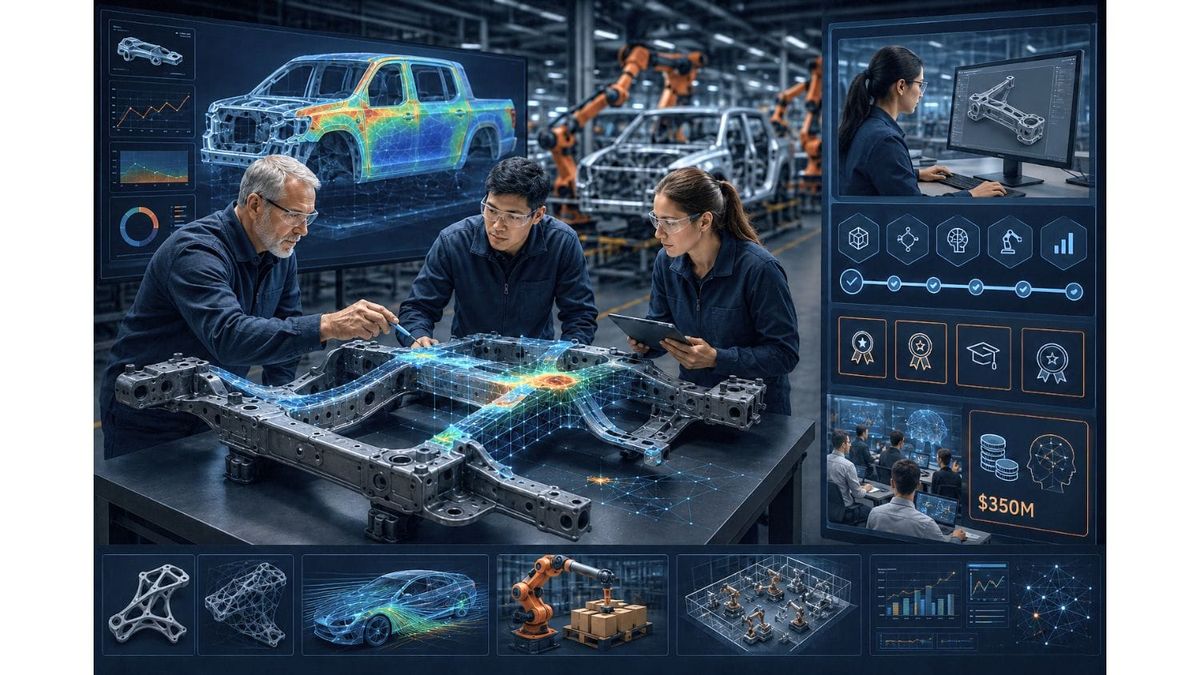
“Preparing the next generation for the AI jobs that design and make the physical world is no longer optional—it is the primary bottleneck for industrial growth,” notes the core thesis of the Autodesk AI Jobs Report 2026.
Automotive Validation and Shop-Floor Pragmatism
At General Motors, the pivot toward high-speed machine learning in virtual labs is seen as an enabler of creativity rather than a replacement for physical testing. By cutting simulation times from days to minutes, validation teams can explore dozens of geometric permutations that were previously abandoned due to schedule constraints.
Meanwhile, automation vendors like Doosan, Vention, and Teradyne stress that software must bend to the messy reality of the factory floor. Whether dealing with warped corrugated boxes or custom fixturing in robotic cells, industry engineers continue to insist that digital twins and AI accelerators are only as good as their correlation to physical reality.
Implications for Mechanical Engineers and Manufacturers
As we look toward the remainder of 2026 and beyond, what do these trends mean for everyday mechanical engineers, CAD professionals, and plant managers?
1. The Rehabilitation of Human Experience
The narrative that experienced engineers are obsolete in an automated world has been decisively dismantled. Ford’s success proves that institutional knowledge—understanding the subtle nuances of material fatigue, thermal expansion, and assembly ergonomics—is irreplaceable. Junior engineers trained on modern AI platforms must actively seek mentorship from veteran specialists to bridge the gap between algorithmic design and physical manufacturability.
2. The Data Infrastructure Prerequisite
As highlighted by AVEVA and Siemens, implementing industrial AI is entirely dependent on data hygiene. Companies with fragmented data silos, legacy naming conventions, and missing metadata will find themselves locked out of generative engineering gains. Manufacturing engineers must prioritize data architecture before expecting AI tools to optimize plant operations.
3. Generative Tools as Copilots, Not Autopilots
Whether looking at Siemens’ generative 3D concept creation or its AI CAM machining suggestions, the overarching theme is assistance, not autonomy. Tools that generate a part geometry in 10 seconds or suggest a novel toolpath do not remove the engineer from the loop; rather, they remove the tedious blank-page syndrome. The responsibility of verification, safety, tolerance stack-ups, and machine limits remains firmly with the human professional.
4. Upskilling is an Urgent Career Imperative
With Autodesk pumping hundreds of millions into training and certification, the professional landscape is shifting. Engineers who refuse to engage with AI-assisted workflows, digital twins, and generative simulation risk falling behind. Conversely, professionals who master these tools while retaining foundational mechanical principles will find themselves exceptionally valuable in a competitive global market.
Conclusion
The 2026 engineering landscape is characterized by a mature, pragmatic embrace of artificial intelligence. The industry has moved past the initial hype cycle of total automation and recognized a fundamental truth: technology accelerates execution, but human ingenuity dictates excellence. By combining the raw computational speed of machine learning with the hard-earned wisdom of veteran engineers—supported by robust data infrastructure and targeted educational investments—the manufacturing and design sectors are entering a new era of quality, resilience, and innovation.