




In a landmark moment for the field of embodied artificial intelligence, Cambridge, Massachusetts-based startup Eka Robotics has announced a successful $150 million Series A funding round. The investment, which signals a massive vote of confidence from top-tier venture capital firms, is earmarked for scaling the company’s proprietary "Vision-Force-Action" (VFA) model. While much of the robotics industry has been preoccupied with training systems to mimic human movement through video observation, Eka Robotics is taking a radically different path: teaching robots to understand the fundamental laws of physics.
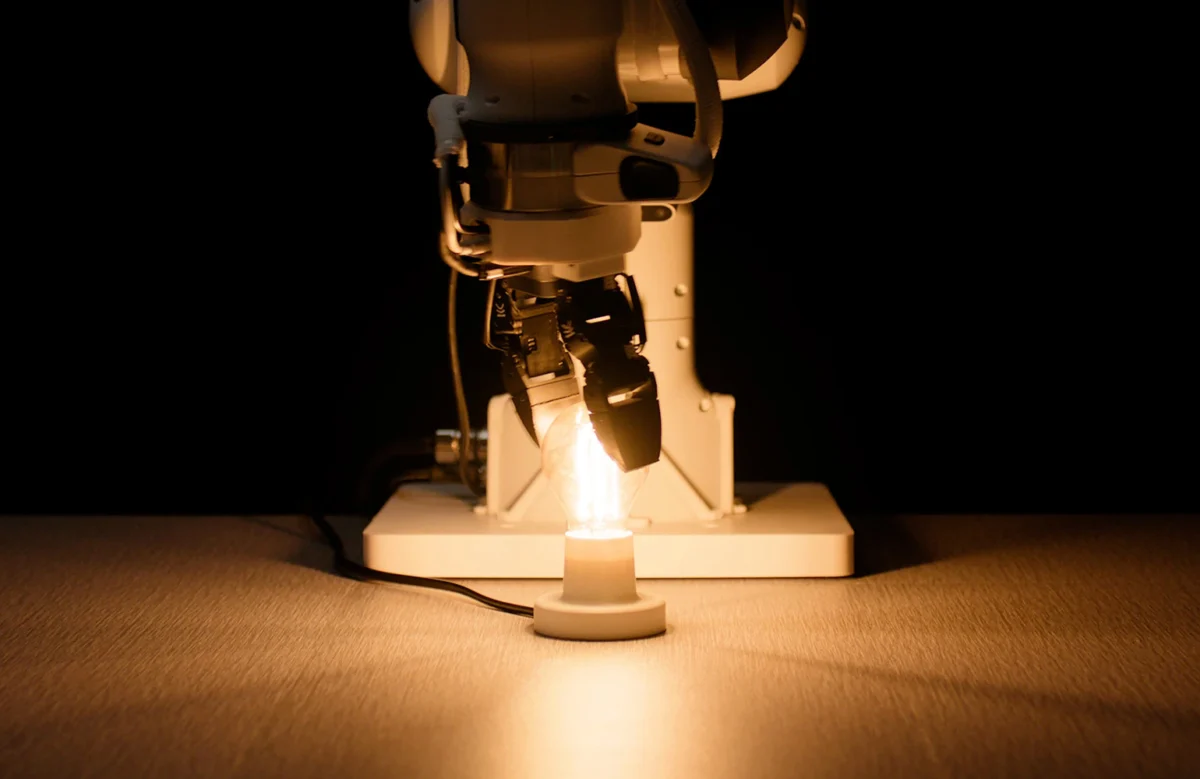
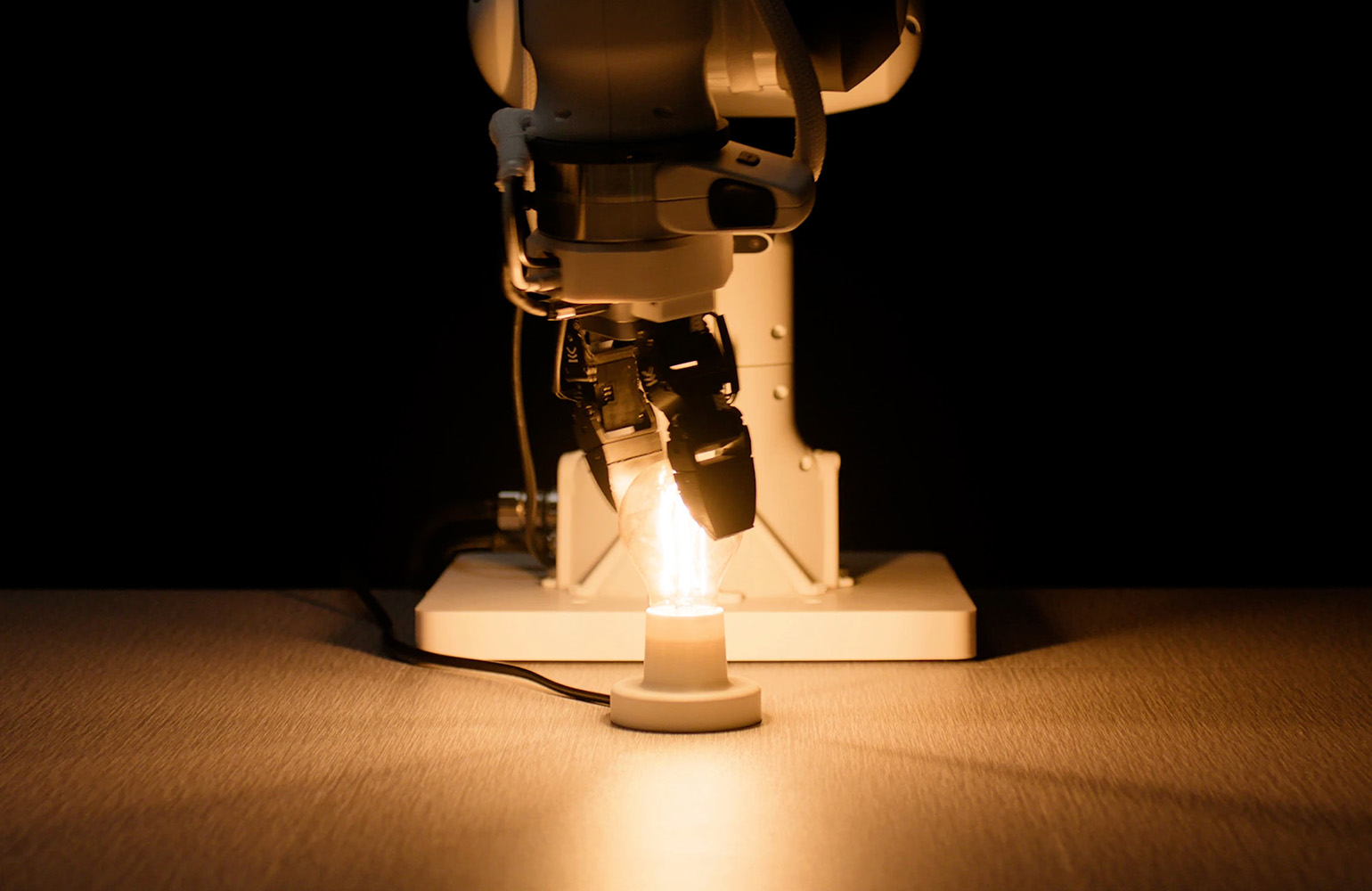
Founded in 2024, Eka Robotics is betting that the key to unlocking general-purpose robotics lies in intuition, not imitation. By leveraging massive-scale reinforcement learning within simulated environments, the company is developing systems capable of handling complex, dexterous tasks—from the delicate insertion of wires to the precise mechanics of screwing in a lightbulb—with a level of reliability previously unseen in the commercial sector.
Main Facts: The VFA Breakthrough
The core of Eka Robotics’ value proposition is its VFA model. Unlike traditional robotic programming, which relies on rigid scripts, or modern machine learning approaches that rely on mimicking human demonstrations, Eka’s model builds an internal "physics engine" of sorts.
- The Funding: The $150 million Series A was co-led by Andreessen Horowitz (a16z) and F-Prime, with significant participation from Obvious Ventures, E14 Fund, MFV Partners, Bison Ventures, Glasswing Ventures, Samsung Next, and several Fortune 500 strategic partners.
- The Technology: The Vision-Force-Action model enables robots to process visual data alongside haptic (force) feedback in real-time. This allows the robot to "feel" its way through a task, adjusting its grip and pressure based on the physical resistance it encounters, rather than relying solely on pre-programmed coordinates.
- Performance Metrics: Eka reports that its robots can operate at speeds of approximately 1,500 operations per hour. Perhaps most impressively, these robots demonstrate an ability to generalize across objects, tasks, and environments they have never encountered in training—a critical hurdle that has stalled many other robotics firms.
Chronology: A Rapid Rise from Concept to Capital
Eka Robotics’ trajectory is a testament to the accelerated pace of AI development.
Early 2024: Foundation
The company was incorporated in Cambridge, Mass., emerging from a cohort of researchers and engineers focused on solving the "dexterity gap." The founders identified that while robots had become excellent at moving from Point A to Point B, they remained notoriously clumsy when asked to interact with the physical world in unpredictable ways.
Mid-2024: Prototyping and Simulation
During its stealth phase, the team focused on building a high-fidelity simulation environment. By shifting the burden of learning from the real world to the digital realm, Eka succeeded in generating thousands of hours of robot "experience" in a matter of minutes. This allowed them to iterate on their VFA model, training it against millions of variations of physical objects and environmental conditions.
Late 2025: Proving the Sim-to-Real Barrier
The company began testing its models on physical hardware, successfully demonstrating that the "sim-to-real" barrier—a notorious obstacle in robotics where models fail when moved from simulation to the messy, non-ideal physical world—could be effectively bridged.
October 2026: Series A and Commercial Scaling
With the closing of its $150 million Series A, Eka officially moved into its current phase: scaling commercial deployments. The company is now transitioning from a research-heavy startup to a commercial entity capable of delivering reliable, high-throughput robotic solutions to enterprise clients.
Supporting Data: Why "Intuition" Trumps Mimicry
The robotics industry has long relied on the "imitation learning" paradigm, where robots watch videos of humans performing tasks and attempt to copy the trajectory. Eka Robotics argues that this approach is fundamentally flawed for industrial applications.
The Problem with Mimicry
Human data is noisy, inconsistent, and often fails to capture the "force" component of a task. A human can perform a task despite being tired, distracted, or working in sub-optimal lighting. A robot trained solely on video data often struggles when the environment changes by even a few degrees—such as a different light level or a slightly different texture on an object.
The Physics Advantage
Eka’s reliance on reinforcement learning allows the robot to explore the state space of a task. If a robot is tasked with picking up a tool, it doesn’t just look for a shape that matches a "tool" label; it calculates the weight, the center of gravity, and the friction required to maintain a secure grip.
- Generality: By learning the laws of physics, Eka’s robots don’t need to be "re-trained" for every new object. If the model understands the physics of grasping, it can apply that to a box, a bottle, or a delicate electronic component.
- Throughput: In industrial settings, speed is everything. By refining its VFA model, Eka has achieved a cadence of 1,500 operations per hour, a rate that makes automation economically viable for tasks that previously required human hands.
Official Responses: The Investor Perspective
The involvement of high-profile investors like Andreessen Horowitz and F-Prime highlights the shift in market sentiment toward "deep tech" robotics.
Raghu Raghuram, a general partner at a16z, emphasized the practical utility of Eka’s approach: "Eka’s Vision-Force-Action model is the first approach I’ve seen that truly solves manipulation with the generality and throughput needed for deployments. This team has the ideal DNA to push the frontier of robotics research while scaling commercial operations."
The sentiment was echoed by Shyam Kamadolli, a managing director at Fine Structure Ventures, who noted the critical nature of breaking away from human-dependent training: "Early on, I recognized that current approaches to generalization simply won’t get us there. Achieving the next level of performance requires a deep understanding of physics and, crucially, breaking free from our dependence on human demonstrations."
Implications: The Future of Dexterous Automation
The implications of Eka Robotics’ success are far-reaching, potentially signaling the end of the "specialized robot" era.
Reshaping Manufacturing and Logistics
For decades, factory robots have been relegated to "cages" because they lacked the dexterity to work safely alongside humans or handle unpredictable variables. Eka’s technology suggests a future where robots are as versatile as they are tireless. A single robotic arm could, in theory, perform multiple tasks on an assembly line without needing mechanical retooling—it simply updates its software model to understand the physics of the new task.
The "General-Purpose" Dream
The ultimate goal of Eka Robotics is to create a foundation model for manipulation. Just as Large Language Models (LLMs) like GPT-4 became "general-purpose" by ingesting vast amounts of text, Eka is creating a "Large Behavior Model" by ingesting vast amounts of physical experience.
If this model reaches maturity, the barrier to entry for robotic automation will drop significantly. Businesses will no longer need to spend months custom-engineering robotic grippers or programming specific motion paths. Instead, they will be able to deploy a pre-trained "physics-intelligent" robot and allow it to learn the nuances of their specific environment in hours rather than months.
Economic and Ethical Considerations
While the efficiency gains are clear, the rise of such capable robots will inevitably prompt discussions regarding labor. If a robot can master dexterous tasks once thought to be exclusively "human," the nature of blue-collar work will face significant disruption. However, proponents argue that by taking over the most repetitive, physically taxing, and often dangerous tasks, these robots will allow human workers to move into supervisory and creative roles, effectively augmenting human productivity rather than simply replacing it.
As Eka Robotics moves forward with its Series A funding, the industry will be watching closely. The company has moved beyond the hype of AI-powered robotics to deliver a concrete, scalable solution. If their VFA model holds up under the rigors of mass deployment, Eka Robotics may very well be the company that finally brings the dream of the "general-purpose robot" into the real world.