




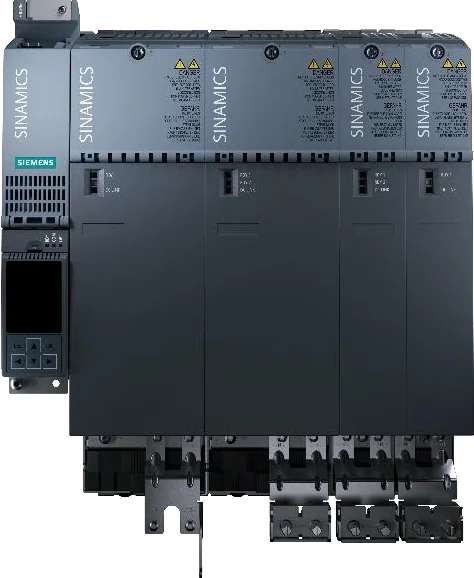
CHICAGO — In an aggressive push toward the future of smart manufacturing, Siemens has officially announced the global launch of its advanced Sinamics S220 drive system. Building directly upon the proven architecture of the industry-standard Sinamics S120 platform, the new S220 is engineered to redefine multi-axis motion control, digital workflow integration, and industrial cybersecurity.
As part of the broader Siemens Xcelerator portfolio, the system bridges the gap between physical machinery and virtual engineering environments. Industry professionals will get their first live look at the hardware during the upcoming Automate trade show in Chicago, running from June 22–25, 2026, at Booth 1214.
1. Main Facts: Core Architecture and Technological Breakthroughs
At the heart of the Sinamics S220 is the all-new CU320-3 multi-axis control unit, a powerhouse designed to handle complex automation tasks with unprecedented efficiency.
- High-Density Multi-Axis Control: A single CU320-3 control unit can independently manage up to 12 distinct axes, drastically reducing the hardware footprint and wiring complexity inside industrial control panels.
- Exceptional Computing Power: The unit features an integrated multicore processor capable of processing heavy computational workloads locally, minimizing latency and maximizing throughput.
- High-Speed Data Transmission: Powered by the cutting-edge Drive-Cliq-Express interface, the system supports blazing-fast data transfer rates of up to 1 Gbit/s.
- Advanced Sensorless Control: Utilizing an innovative test-pulse method driven by three voltage sensors per axis, the S220 delivers sensorless control precision that closely mirrors traditional encoder-level performance, boosting both energy efficiency and physical robustness.
- Unprecedented Scalability: At launch, the system offers air-cooled motor modules in both book-size and chassis formats tailored for 3AC 380 to 480 V systems. Rated currents range from a compact 3 A (1.1 kW) up to a massive 1,518 A (900 kW), with capacity easily expanded via up to eight parallel connections.
2. Chronology: From the S120 Legacy to the S220 Era
The rollout of the Sinamics S220 represents the culmination of years of iterative engineering evolution at Siemens, tracking the rapid shift toward digitalization and Industrie 4.0 paradigms.
- The Foundation (Pre-2024): For nearly two decades, the Siemens Sinamics S120 modular motion control system served as the backbone for high-performance applications in packaging, printing, textile, and metal-forming machinery. However, as factories grew more data-dependent, the need for faster processing speeds and native cloud connectivity became apparent.
- The Xcelerator Integration (2024–2025): Siemens initiated a strategy to modernize its hardware offerings by embedding them within the Siemens Xcelerator open digital business platform. This paved the way for hardware that natively supports digital twins, advanced simulations, and edge computing.
- Development and Field Testing (2025–Early 2026): Engineers focused heavily on refining cybersecurity measures and shrinking safety cycles. The integration of the IEC 62443-4-1 secure development lifecycle ensured that the hardware would meet upcoming global security mandates.
- The Global Launch Announcement (June 2026): Siemens formally debuts the Sinamics S220, positioning it as a direct successor to legacy high-end drives, complete with advanced diagnostic tools, universal modules, and a shortened safety cycle.
- The Public Debut (June 22–25, 2026): The system makes its official physical debut at the Automate 2026 conference in Chicago, where automation engineers, system integrators, and industry leaders can test its capabilities firsthand.
3. Supporting Data: Performance Metrics, Configurations, and Safety
The technical specifications of the Sinamics S220 underscore its positioning as a heavy-duty industrial asset capable of handling diverse operational demands.
Power Supply and Universal Modules
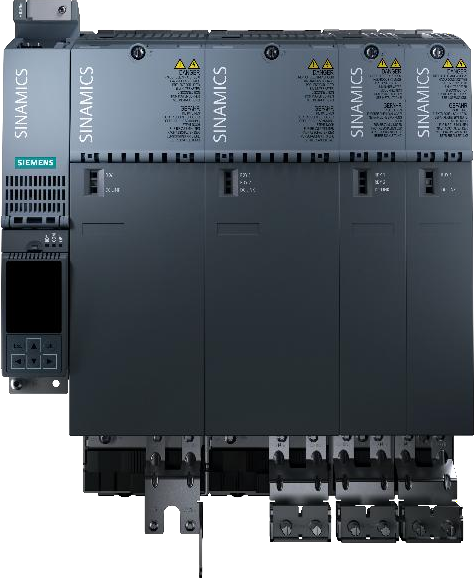
To accommodate evolving facility requirements and streamline inventory management, Siemens has introduced regenerative active infeeds ranging from 210 kW to 921 kW, which are fully scalable through parallel connections. Furthermore, the introduction of air-cooled universal modules allows a single hardware device to function interchangeably as either a motor module or an active line module. Just six distinct device variants cover the entire functional and performance spectrum, vastly simplifying spare parts management for maintenance teams.
Safety Architecture Upgrades
Safety is a primary pillar of the S220 design. Siemens has successfully slashed its safety cycle time from 12 milliseconds down to 4 milliseconds, enabling near-instantaneous response times during emergency stops and safety-interlock triggers.
- SIL 3 Compliance: The drive is certified to Safety Integrity Level 3 (SIL 3) across all operating states.
- Automatic Background Diagnostics: Continuous, automated background testing ensures uninterrupted production runs without requiring manual safety checks.
- Offline Parameterization: Engineers can configure safety parameters offline, drastically reducing commissioning times and human error on the factory floor.
Environmental Performance and Sustainability
In alignment with global corporate sustainability goals, the S220 is built with a minimized spatial footprint, allowing machine builders to construct tighter, more efficient enclosures. Integrated Industrial Edge applications empower operators to track, capture, and visualize real-time energy consumption and $textCO_2$ emissions. Transparency is guaranteed via an ISO 14021-certified environmental product declaration, offering a comprehensive lifecycle audit of the product’s ecological impact.
4. Official Responses and Industry Perspectives
While Siemens continues to roll out comprehensive technical documentation, leadership and engineering teams have emphasized the strategic philosophy driving the S220’s development.
Industry analysts note that the launch addresses two conflicting demands in modern manufacturing: the need for raw, uncompromised mechanical power, and the parallel need for granular, software-driven digital oversight. By merging these philosophies into a single platform, Siemens aims to capture market share across traditional heavy industries and automated high-tech assembly lines alike.
Early feedback from beta-testing industrial partners highlights the effectiveness of the Smart Drive Interface (SDI). Available either as a compact panel built directly onto the CU320-3 or as a remote version (SDI Pro) featuring an expanded display and integrated web server, the interface allows technicians to troubleshoot systems locally or remotely via a dedicated Smart WiFi adapter. This flexibility has been widely praised as a major time-saver for maintenance crews operating in hazardous or hard-to-reach plant environments.
5. Implications: What the Sinamics S220 Means for the Future of Automation
The introduction of the Sinamics S220 has wide-ranging implications for machine builders, system integrators, and end-users across the global manufacturing landscape.
1. Accelerated Virtual Commissioning
By integrating deeply with the TIA Portal and supporting advanced simulation platforms like DriveSim Designer, the S220 allows engineering teams to virtually build, test, and optimize entire production lines before a single physical bolt is tightened. This virtual commissioning approach slashes time-to-market windows and dramatically reduces costly on-site debugging errors.
2. Heightened Cybersecurity Resilience
As industrial plants increasingly connect to enterprise networks and cloud platforms, they become prime targets for cyber threats. Developed in strict compliance with the IEC 62443-4-1 secure development standard, the S220 incorporates robust user access controls, encrypted drive data integrity checks, and secure firmware authentication. These features offer a vital line of defense against modern industrial espionage and ransomware attacks.
3. Predictive Maintenance at Scale
With the inclusion of high-frequency data transmission capabilities via the X128 interface, maintenance teams can transition from reactive or scheduled maintenance models to true predictive maintenance. By continuously streaming high-resolution operational data to edge computing systems, anomalies can be detected and addressed weeks before they result in catastrophic mechanical failure.
Summary
The Siemens Sinamics S220 drive system is more than just an incremental hardware upgrade; it is a comprehensive ecosystem designed to meet the rigorous demands of modern smart factories. By blending massive multi-axis processing power, sub-millisecond safety cycles, rigorous cybersecurity, and native digital workflow integration, Siemens has set a new benchmark for industrial motion control.
Industry professionals attending Automate 2026 in Chicago will have the unique opportunity to witness how this next-generation drive system will shape the factories of tomorrow.