




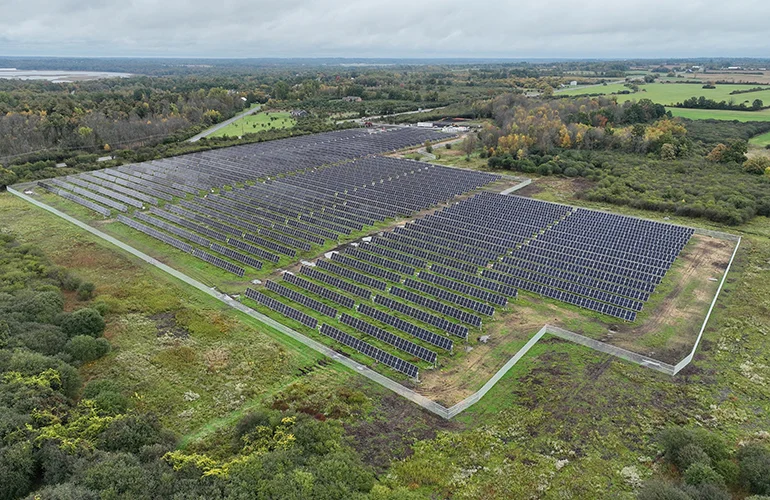
JEFFERSON COUNTY, N.Y. — In the rapidly evolving landscape of renewable energy, engineering prowess is measured not just by projects that go smoothly, but by how well a team responds when unexpected obstacles arise. Distributed Energy Infrastructure (DEI), a leading engineering, procurement, and construction (EPC) firm specializing in commercial and utility-scale solar and battery energy storage systems, has officially announced the completion of the 3.37-megawatt-direct-current (MWDC) Sapphire Solar project in Jefferson County, New York.
While the completion of a clean energy project of this scale is routinely celebrated for its contribution to local grid decarbonization, the story of Sapphire Solar is equally notable for the exceptional technical hurdles the project team faced—and successfully overcame. Confronted by adverse geological and hydrological conditions that threatened to derail construction timelines, DEI’s integrated teams executed a masterclass in agile engineering, pivoting mid-construction to deliver a reliable, long-term asset without sacrificing schedule or operational integrity.
Main Facts: The Sapphire Solar Project at a Glance
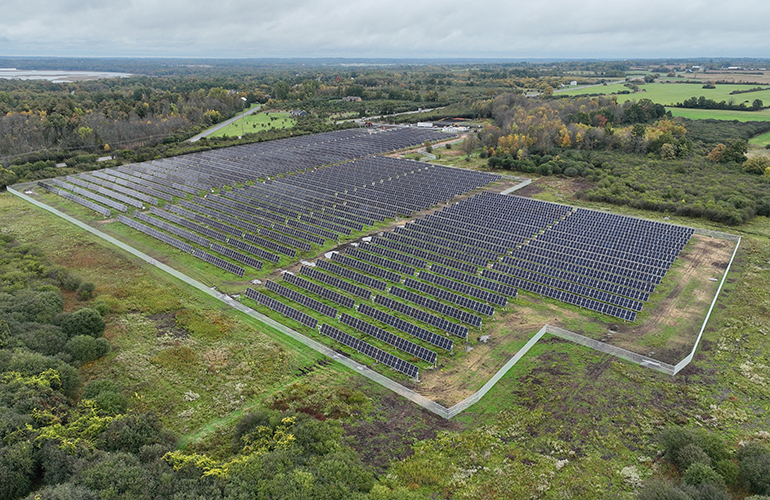
The Sapphire Solar project represents a significant addition to New York State’s growing portfolio of distributed generation solar assets. Situated in Jefferson County, a region known for its varying topography and distinct seasonal weather patterns, the facility boasts a capacity of 3.37 MWDC.
- Project Name: Sapphire Solar
- Location: Jefferson County, New York
- Capacity: 3.37 MWDC
- Developer/EPC Contractor: Distributed Energy Infrastructure (DEI)
- Core Technologies: Utility-scale solar photovoltaic (PV) arrays, integrated electrical equipment pads, and a hybrid underground/above-ground electrical distribution architecture.
- Primary Obstacles: Shallow shale bedrock (16 to 20 inches below grade) and a persistently high water table.
- Engineering Solution: Mid-construction pivot converting a portion of the planned underground direct current (DC) conduit design to an above-ground Cable Assembly Basket (CAB) system, while maintaining selective underground trenching at critical row crossings.
The facility is designed to inject clean, renewable electrons into the local distribution grid, aligning with New York’s ambitious climate mandates under the Climate Leadership and Community Protection Act (CLCPA), which targets 70% renewable electricity by 2030 and a zero-emission electricity sector by 2040.
Chronology of Construction: From Groundbreaking to Obstacle and Adaptation
The lifecycle of the Sapphire Solar project followed a standard trajectory in its initial phases, but quickly transformed into an exercise in rapid problem-solving when subterranean conditions revealed themselves.
Phase 1: Mobilization and Initial Excavation
Site preparation and mobilization began in accordance with standard civil and electrical engineering plans. Preliminary geotechnical assessments had provided baseline expectations for the site; however, utility-scale solar construction frequently exposes localized subterranean anomalies that remain hidden until heavy machinery breaks the earth.
As DEI’s civil crews commenced trenching operations for the underground DC collection system and equipment pad installations, they quickly ran into severe physical constraints. Across significant swaths of the site, shale bedrock was encountered just 16 to 20 inches below the native grade.
Phase 2: The Hydrological Complication
Compounding the challenge of shallow rock, the site featured a markedly high water table. As excavation teams broke through the shallow soil layers to reach the required depths for underground conduit placement, groundwater immediately began seeping into the open trenches.
This dual geological and hydrological constraint created an immediate operational bottleneck. Standard trenching methods—essential for burying the DC electrical runs that connect the photovoltaic strings to the central inverter and equipment pads—became virtually impossible to execute safely and efficiently. Dewatering efforts could only do so much against a continuous influx of groundwater, and hammering through extensive sheets of shallow shale bedrock would have exponentially inflated project costs and extended the construction timeline by months.
Phase 3: The Rapid Engineering Pivot
Recognizing that the original underground DC conduit design was no longer practical, DEI initiated an emergency cross-functional review. Rather than letting the site conditions stall progress, the firm’s engineering, construction, procurement, and field contractor teams mobilized into a unified task force.
Working in real-time, the collaborative unit drafted a comprehensive redesign of the electrical distribution layout. The team engineered a hybrid solution: a portion of the DC underground scope was successfully converted to an above-ground Cable Assembly Basket (CAB) system. Simultaneously, traditional underground trenching was retained strictly where necessary, such as at row-to-row crossings and specific junctures where sub-surface protection was paramount.
Phase 4: Procurement, Implementation, and Commissioning
Remarkably, the entire sequence—spanning the identification of the problem, the full redesign of the electrical architecture, the procurement of new above-ground CAB materials, and the physical implementation in the field—was executed within the exact timeframe originally allocated for the initial underground trenching scope. By avoiding schedule slippage, DEI demonstrated the profound value of integrated EPC delivery, where engineering and construction teams operate under a unified vision and timeline.
Supporting Data: Engineering Insights and Geotechnical Realities
To fully appreciate the magnitude of DEI’s achievement at Sapphire Solar, one must examine the engineering complexities inherent in shallow bedrock and high water table environments.
The Geotechnical Dilemma in Utility-Scale Solar
In utility-scale solar construction, subsurface infrastructure is typically buried beneath the frost line or at standardized depths to protect electrical conductors from environmental wear, mechanical damage, and agricultural or maintenance machinery. Standard DC collection systems rely heavily on underground trenching to route power safely from the solar module strings to combiners and central inverters.
When a project site presents bedrock at depths of less than two feet—such as the 16-to-20-inch shale layer found at Sapphire Solar—contractors face severe choices:
- Rock Blasting or Hammering: Utilizing heavy pneumatic hammers or controlled blasts to carve trenches into the bedrock. This method is notoriously time-consuming, expensive, creates significant noise pollution, and can fracture surrounding rock strata, complicating structural pile driving.
- Shallow Trenching with Specialized Armor: Placing conduits at shallower depths with heavy-duty concrete encasements or steel plating, which introduces high material costs and vulnerability to frost heave.
- Above-Ground Routing: Transitioning to surface-mounted or elevated cable management systems, which bypass the subsurface entirely.
The Role of Cable Assembly Baskets (CAB)
By pivoting to an above-ground Cable Assembly Basket (CAB) system for a substantial portion of the DC scope, DEI effectively neutralized the bedrock problem. CAB systems suspend electrical cables securely above ground on specialized racking or wire management structures attached directly to the solar mounting tables or dedicated posts.
This approach offers multiple engineering advantages in difficult terrains:
- Elimination of Subsurface Hazards: Bypasses the need for deep trenching in rock-heavy soils.
- Mitigation of Groundwater Risks: Keeps sensitive electrical connections away from persistent moisture and standing water, reducing long-term insulation degradation risks.
- Preservation of Long-Term Site Access: Crucially, DEI’s engineering team designed the hybrid layout to ensure that site access lanes and operational clearances were fully preserved, allowing the project owner to conduct routine operations, module washing, and vegetation management without obstruction.
Official Responses: Voices from the Field
The successful delivery of the Sapphire Solar project under such strenuous conditions has drawn praise from project leadership, highlighting the organizational culture and technical agility that enabled the team to succeed.
Rusfid Haroon, Senior Project Manager at Distributed Energy Infrastructure, reflected on the project’s trajectory and the core philosophy that guided the team through its mid-construction crisis:
"When we encounter unexpected challenges, our goal is to address them quickly and adapt our approach to what will work best for the site," Haroon stated.
He added, "Even hitting shallow bedrock and a high water table across the site, we brought together the experience of each team working on the site to re-evaluate, re-design, and implement a solution that kept the project moving while ensuring long-term reliability."
Haroon’s comments underscore a vital truth in modern renewable energy construction: the resilience of a project is directly proportional to the communication and cross-functional synergy between engineering offices and field operations. By breaking down traditional silos between designers and builders, DEI empowered its personnel to devise an innovative, site-specific solution on the fly.
Implications: What Sapphire Solar Means for Future Solar Engineering
The completion of the Sapphire Solar project carries broader implications for the utility-scale solar and battery storage industries, particularly as prime, flat, easily civil-engineered land becomes increasingly scarce.
1. The Rise of Challenging Terrain Development
As the clean energy transition accelerates, developers are increasingly forced to build on marginal lands—sites characterized by steep slopes, rocky outcroppings, high water tables, and contaminated soils. Projects like Sapphire Solar prove that difficult geotechnical conditions do not have to spell financial ruin or prolonged delays. By embracing flexible design paradigms and modern overhead cable management solutions, EPC firms can unlock sites previously deemed economically unviable.
2. The Value of Integrated EPC Models
The Sapphire Solar case study serves as a textbook argument for fully integrated EPC execution. When unexpected site conditions emerge, fragmented contracting models—where the civil engineer, electrical engineer, and construction contractor are separate entities—frequently lead to finger-pointing, costly change orders, and prolonged legal disputes over who bears responsibility for differing site conditions. DEI’s internal collaboration allowed for instantaneous decision-making, absorbing the shock of the geological surprise without impacting the project’s bottom-line delivery schedule.
3. Long-Term Asset Reliability and O&M
Beyond construction speed, the hybrid design engineered by DEI ensures that the Sapphire Solar asset will remain robust and maintainable over its multi-decade operational lifespan. By keeping cables out of continuously saturated, high-water-table trenches and maintaining clear access pathways for operations and maintenance (O&M) personnel, the project owner is positioned to maximize energy yield while minimizing lifecycle maintenance costs.
Looking Ahead
As Distributed Energy Infrastructure continues to expand its footprint in the North American solar and energy storage sectors, the lessons learned in Jefferson County will undoubtedly inform future builds. The Sapphire Solar project stands not only as 3.37 megawatts of clean, renewable generation capacity for the State of New York, but as a benchmark for engineering resilience in the face of nature’s most stubborn obstacles.