By Global Supply Chain Intelligence
Published: October 15, 2026
Main Facts
Consumer electronics retail giant Best Buy has taken a significant step forward in its corporate sustainability journey by deploying battery-powered electric yard switchers at select distribution facilities in California. Unveiled in the company’s recently published FY26 Corporate Responsibility and Sustainability Report, the pilot program introduces zero-emission heavy-duty vehicles designed to maneuver cargo containers and semi-trailers around warehouse yards.
These specialized utility vehicles—often referred to as yard goats, terminal tractors, or hostlers—traditionally rely on heavy diesel combustion engines, making them a significant contributor to localized particulate matter and greenhouse gas emissions within freight hubs. By transitioning to all-electric alternatives, Best Buy is targeting a dual-benefit strategy: eliminating tailpipe emissions in heavily regulated markets and optimizing the total cost of ownership by shedding costly diesel fuel consumption and intensive mechanical maintenance overhead.
The initiative represents just one pillar of an aggressive, multi-faceted environmental overhaul across Best Buy’s broader supply chain network. Alongside the electric yard switcher rollout, the retailer is scaling renewable energy generation, expanding localized recycling programs, and maintaining a strict company-wide zero-waste operational standard. As regulatory compliance frameworks tighten—particularly within environmentally proactive states like California—Best Buy’s latest pilot will serve as a crucial testing ground to evaluate real-world performance, operational reliability, and financial viability before deciding on a nationwide supply chain deployment.
Chronology of Sustainability Milestones
To understand the context of Best Buy’s latest electric yard switcher pilot, it is necessary to examine the systematic progression of the company’s environmental, social, and governance (ESG) roadmap over recent years. The consumer electronics titan has steadily shifted its logistics strategy from reactive compliance to proactive, localized decarbonization.
- 2021 (The Baseline): Best Buy hits a major milestone in its operational sustainability by securing its first-ever zero-waste certification at a supply chain facility. The milestone is achieved at the Chino, California distribution center, setting a operational benchmark for the remaining 28 facilities in the company’s network.
- July 2025: Best Buy publishes its FY25 Corporate Responsibility and Sustainability Report, highlighting ongoing metrics in circular economy initiatives—notably announcing that it successfully recycled 4.2 million pounds of expanded polystyrene (EPS) packaging material through dedicated on-site densifiers.
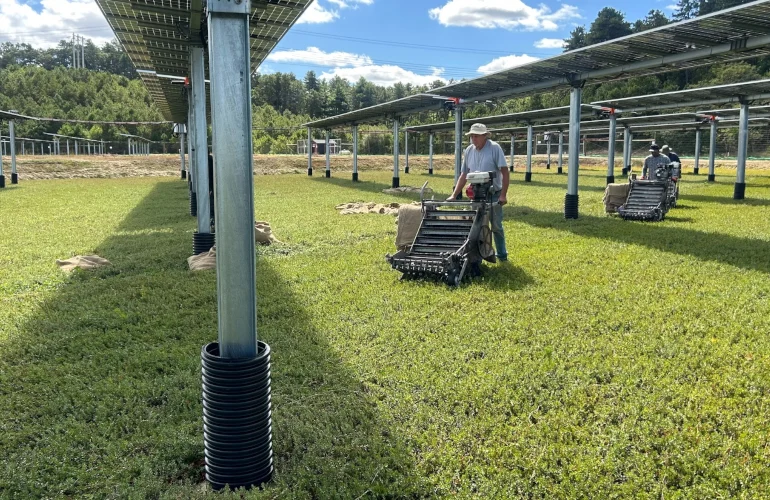
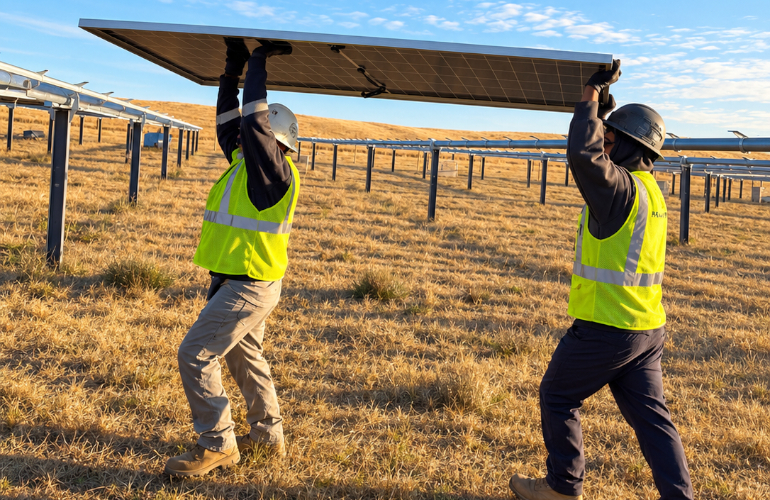
- Early 2026: The retailer completes the construction and activation of a massive, on-site solar field at its distribution warehouse in Dinuba, California, located in the state’s Central Valley. The clean energy project is engineered to generate nearly 6 million kilowatt-hours of annual electricity, directly powering the facility’s day-to-day material handling and administrative demands.
- August 2026: Best Buy officially achieves its overarching corporate goal of attaining zero-waste certification across 100% of its designated supply chain facilities, culminating a multi-year sorting, composting, and diversion strategy.
- October 15, 2026: The release of the FY26 Corporate Responsibility and Sustainability Report brings public attention to the stealth deployment of battery-powered electric yard switchers at undisclosed California distribution centers, marking Best Buy’s formal entry into heavy logistics electrification.
Supporting Data and Operational Metrics
Best Buy’s logistics strategy relies heavily on data-driven benchmarks to justify capital expenditures in green technology. Operating dozens of massive distribution hubs nationwide requires immense energy and resource management. The metrics underpinning the company’s recent operational updates illustrate the scale of these green logistics initiatives:
- Zero-Emission Yard Operations: While the exact number of deployed electric yard switchers has not been publicly disclosed, industry benchmarks suggest that replacing a single diesel terminal tractor with an electric counterpart can eliminate upward of 20 to 30 tons of greenhouse gas emissions annually, depending on shift length and idling time.
- Dinuba Solar Generation: The newly operational solar array at the Dinuba, California distribution center yields a staggering 6 million kilowatt-hours (kWh) of renewable electricity annually. This output not only covers the facility’s baseline electrical load but also provides ample capacity to support future electric vehicle (EV) charging infrastructure for employee vehicles and corporate fleet additions.
- EPS Recycling Volume: In FY26, Best Buy maintained its high-efficiency recycling output by processing 4.2 million pounds of expanded polystyrene (EPS). Through the deployment of specialized EPS densifiers at its distribution centers, the retailer reduces bulky foam waste into dense pellets. These pellets are shipped back to manufacturing partners, where they are transformed into sustainable foam blanks—effectively closing the loop on petroleum-based packaging materials.
- Facility Network Footprint: Best Buy manages a critical infrastructure of 29 supply chain facilities spanning across North America. Achieving 100% zero-waste status across this entire footprint highlights a rigorous waste diversion rate (typically exceeding 90% landfill diversion per facility standards).
Official Responses and Industry Perspectives
Corporate transparency regarding the logistics pilots remains measured. Best Buy’s leadership framed the current electric yard switcher initiative as an exploratory evaluation phase rather than an immediate, enterprise-wide overhaul.
According to the official FY26 Corporate Responsibility and Sustainability Report, the primary catalysts for the project are twofold: mitigating escalating regulatory compliance costs within strict environmental jurisdictions like California, and hedging against the volatility of fossil fuel markets.

"The investments aim to curb emissions compliance costs at California warehouses while cutting diesel fuel reliance and other associated maintenance expenses," noted the corporate report. Furthermore, the company stated that the ongoing pilot is intentionally structured to help leadership "evaluate performance, operational feasibility and total cost of ownership to gauge potential future deployment across the retailer’s supply chain."
Industry analysts note that supply chain decarbonization is rapidly shifting from a voluntary public relations exercise to an essential operational strategy. Heavy material handling equipment, often overlooked in favor of over-the-road Class 8 semi-trucks, represents an ideal use case for early electrification. Because yard switchers operate entirely within the confines of private property or distribution yards, they do not suffer from public range anxiety, and they return to central depots where high-voltage charging infrastructure can be reliably installed.
However, Best Buy has maintained a cautious posture regarding specifics. As of the publication of this report, the retailer has not publicly clarified which specific California distribution centers are hosting the current trial, the exact timeline of the pilot’s launch, or concrete targets for scaling the technology to facilities outside of the Golden State. Requests for additional comment from Best Buy’s corporate communications team went unanswered by press time.
Implications for the Retail Supply Chain
Best Buy’s incremental yet deliberate push toward total warehouse sustainability carries several profound implications for the broader retail and logistics sectors:

1. The Proliferation of Yard Electrification
While long-haul trucking electrification captures the majority of media headlines, intra-facility logistics is quietly emerging as the low-hanging fruit for corporate decarbonization. Yard switchers run continuous, stop-and-start duty cycles that consume vast amounts of diesel fuel per operational hour. By proving that battery-powered alternatives can handle the grueling torque requirements of moving heavy intermodal containers and freight trailers, Best Buy’s pilot paves the way for other major big-box retailers—such as Walmart, Target, and Home Depot—to accelerate their own yard fleet conversions.
2. Navigating Regulatory Pressures in Key Markets
California continues to serve as the regulatory crucible for American supply chain innovation. Through aggressive mandates from agencies like the California Air Resources Board (CARB), logistics operators face mounting financial penalties and operational restrictions for running legacy diesel equipment. By proactively deploying zero-emission yard switchers and on-site solar generation in California, Best Buy is effectively future-proofing its regional supply chain against impending regulatory mandates while simultaneously lowering long-term operating expenditures.
3. The Economics of Total Cost of Ownership (TCO)
Electric commercial vehicles typically command a significantly higher upfront purchase price than their internal combustion engine (ICE) predecessors. However, Best Buy’s focus on evaluating the total cost of ownership underscores a critical shifting perspective in corporate finance. Electric motors feature far fewer moving parts than diesel engines, virtually eliminating costly oil changes, transmission servicing, and exhaust after-treatment maintenance (such as diesel particulate filter upkeep). When paired with localized renewable energy generation—such as the Dinuba solar array—the operational cost per mile or per hour drops precipitously.
4. Closing the Loop on Circular Supply Chains
Beyond mobile logistics, Best Buy’s sustained success in achieving zero-waste status across all 29 of its facilities and recycling millions of pounds of EPS packaging demonstrates that sustainable supply chains require a holistic approach. By transforming problematic waste products into reusable industrial inputs, the retailer is successfully decoupling business growth from environmental degradation.
As Best Buy continues to analyze the performance data flowing from its California electric yard switcher pilots, the retail logistics industry will be watching closely. If the financial and operational metrics prove favorable, the quiet transition of warehouse yards from diesel-choked hubs to silent, zero-emission zones may accelerate far faster than previously anticipated.