




SANTA FE SPRINGS, Calif. — In an era defined by an escalating global race for renewable energy and surging power demands from modern infrastructure, construction timelines have increasingly become a primary bottleneck. Engineering, Procurement, and Construction (EPC) firms find themselves pressed from all sides: local utility grids require rapid decarbonization, burgeoning artificial intelligence data centers demand unprecedented amounts of localized electricity, and an acute labor shortage limits the throughput of traditional construction crews.
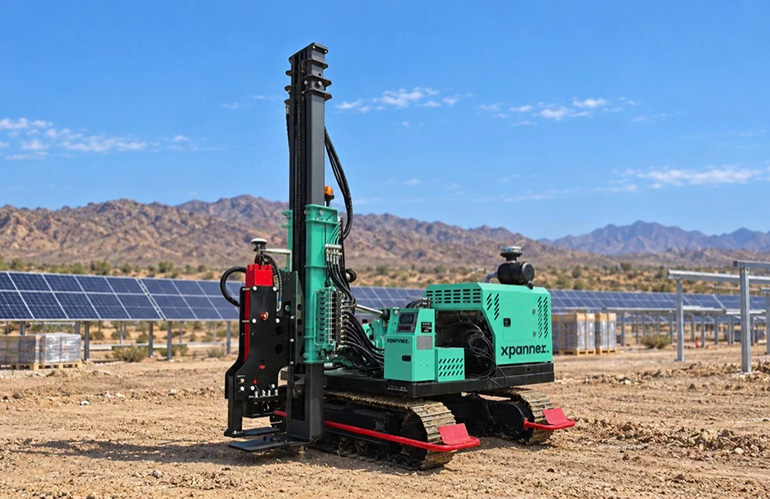
To confront these compounding challenges head-on, Santa Fe Springs-based robotics innovator Xpanner has officially announced the launch of the X1 Piling R6. Designed specifically for utility-scale solar farms and Battery Energy Storage Systems (BESS) installations, this fully automated, heavy-duty pile-driving robot promises to reshape how foundational infrastructure is anchored into the earth. By combining advanced physical AI, high-precision Global Navigation Satellite Systems (GNSS), and a flexible Capital Expenditure/Software-as-a-Service (CapEx/SaaS) business model, Xpanner is positioning its latest machine as an indispensable asset for modern energy developers.
Main Facts: The Anatomy of the X1 Piling R6
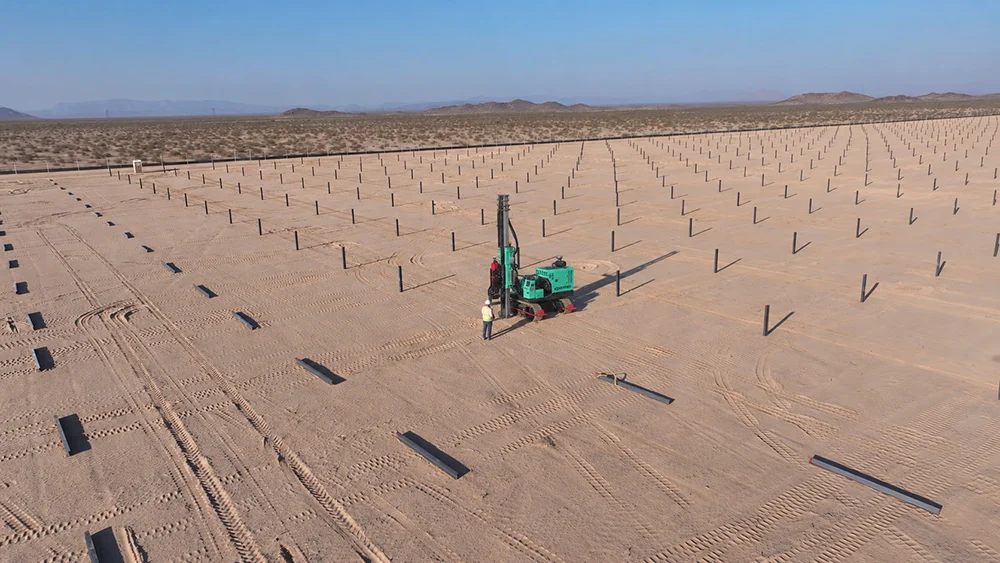
At its physical core, the X1 Piling R6 is built upon Xpanner’s robust Everstar R6 crawler base machine. This heavy-duty platform serves as the foundation for the company’s proprietary automation stack, outfitting the vehicle with a dense array of onboard sensors, environmental controllers, and automated logic units that manage the pile-driving sequence from start to finish.
Unlike conventional pile-driving rigs that require a multi-person crew—often putting workers in close, hazardous proximity to heavy moving masts and hydraulic drivers—the X1 Piling R6 is designed for a single-operator workflow. Using a streamlined remote control interface, an operator guides the machine to a designated row, initiates the automated sequence, and oversees the process from a safe distance.
Key operational parameters and specifications of the X1 Piling R6 ecosystem include:
- High-Precision Navigation: Utilizes advanced GNSS antennas and receivers paired with precision onboard sensors to navigate autonomously between consecutive pile locations with centimeter-level accuracy.
- Plumb Automation: Ensures each vertical post is driven straight and true ("plumb") with minimal human intervention, reducing structural alignment errors that can plague manual installations.
- Real-Time Data Logging: Automatically records the exact geographic position, final drive depth, and plumb status of every single pile, instantly transmitting the telemetry to a cloud-based dashboard.
- Ecosystem Integration: Fully compatible with Xpanner Connect, a web-based project management dashboard, and designed to work downstream with other Xpanner automated machinery, such as the X1 Panel Lift released earlier this year.
Chronology: From Concept to Commercial Rollout
The genesis of the X1 Piling R6 did not happen in a vacuum; it represents the latest milestone in Xpanner’s deliberate, multi-year strategy to automate the most labor-intensive and physically demanding phases of renewable energy construction.
Early Foundations and Field Validation
Xpanner initially gained traction within the renewable energy sector by developing automation software for specialized machinery, notably validating its technology stack through platforms like the PD10. Industry leaders and EPCs gradually grew to trust these foundational automation layers, recognizing that robotic assistance could drastically reduce human error and dramatically speed up initial site preparations.
The Expansion of the X1 Ecosystem
Throughout early 2026, Xpanner broadened its portfolio beyond foundational work by introducing the X1 Panel Lift, a specialized robotic system engineered to automate the delicate and back-breaking task of lifting and mounting solar panels onto installed racking systems. With the panel installation phase successfully addressed, the company turned its focus back to the ground level, recognizing a critical gap in foundational anchoring speed.
The October 2026 Launch
The formal announcement of the X1 Piling R6 in October 2026 bridges the gap between ground-breaking and panel-mounting. By integrating its proven software stack onto the powerful Everstar R6 crawler base, Xpanner has created a high-capacity machine capable of keeping pace with the aggressive deployment schedules demanded by modern utility companies and hyperscale data center operators. Initial pilot testing has yielded promising efficiency metrics, paving the way for commercial deployments across major utility-scale projects in North America and beyond.
Supporting Data and Operational Economics
The viability of heavy robotics in construction is ultimately judged by its impact on the bottom line, safety records, and project schedules. Xpanner’s entry into the market comes backed by compelling operational data regarding site management and cost structures.
Eliminating Analog Inefficiencies
Traditionally, tracking progress on a utility-scale solar site—which can span thousands of acres and encompass hundreds of thousands of driven piles—relies on manual counts, end-of-day paper reports, disjointed spreadsheets, and constant phone calls between field supervisors and project managers.
The X1 Piling R6 systematically eliminates these analog bottlenecks through Xpanner Connect:
- Instant Setup: Project teams can load pile schedules and GPS coordinates directly into the web-based dashboard, configuring a new site in a matter of minutes.
- Live Digital Twins: As the X1 drives each pile, it updates a live project map in real-time. Project managers thousands of miles away can monitor machine states, daily cycle counts, active alerts, and installation progress without ever stepping foot on a muddy job site.
- Audit Readiness: Because every pile’s depth, location, and alignment are digitally logged upon impact, quality assurance (QA) and quality control (QC) reporting is virtually automated, drastically reducing administrative overhead.
A Flexible CapEx/SaaS Business Model
Recognizing that construction firms and EPCs operate under tight financial margins and fluctuating project pipelines, Xpanner has structured its commercial offering around a hybrid CapEx/SaaS subscription model.
Rather than locking companies into rigid, multi-year equipment leases or forcing them to purchase software licenses tied to static geographical locations, Xpanner’s model offers dynamic flexibility:
- Hardware Acquisition: Customers purchase or rent the physical X1 Piling robot directly.
- Usage-Based Software Licensing: The automation software is licensed on a monthly subscription basis, but crucially, the subscription is not tied to a specific project, site, or quota of driven piles.
- Dynamic Deployment: Customers pay for the active technology only while it is in use. Once a specific site’s piling phase is concluded, the equipment and its associated software licenses can be seamlessly transferred to a completely new project and reactivated on demand.
To ensure smooth adoption, Xpanner provides comprehensive end-to-end support. The company handles the initial on-site installation, machine calibration, rigorous operator training, and ongoing technical support, while contractors supply the local equipment operators.
Official Responses and Industry Perspectives
The pressure to accelerate renewable energy deployment has never been higher. Henri Lee, co-founder and CEO of Xpanner, emphasized the socio-economic and technological pressures driving the development of the X1 Piling R6.
"Solar and BESS builders are racing to bring new power online for the grid and for AI data centers, and they can’t find enough skilled crews to keep up," said Henri Lee. "The X1 lets one operator drive every pile plumb with a single touch, keeps people away from the mast, and logs each pile as it goes in. It takes the automation EPCs already trust on the PD10 and puts it on a more powerful, more versatile machine."
Industry analysts have similarly noted that the intersection of physical AI and heavy machinery is no longer a futuristic concept, but an immediate economic necessity. With global power demands accelerating due to the widespread adoption of artificial intelligence, cloud computing, and electric vehicle infrastructure, traditional manual construction methodologies are reaching their absolute physical limits. By shifting human workers from manual labor to supervisory roles, robotics companies are addressing the skilled labor shortage while simultaneously unlocking new tiers of operational velocity.
Implications for the Future of Energy Construction
The introduction of the X1 Piling R6 signals a broader, structural transformation within the engineering, procurement, and construction sectors. Several key implications emerge as this technology gains market adoption:
1. Mitigation of the Skilled Labor Crisis
The construction industry has long suffered from an aging workforce and a persistent deficit of younger workers entering the trades. By transforming a physically grueling, hazardous manual job—operating a heavy pile-driving mast—into a high-tech supervisory role managed via a remote interface, companies can attract a broader demographic of tech-savvy operators while drastically improving on-site safety records.
2. Accelerated Grid Integration for AI and Utilities
Data center operators and major utility providers are locked in a race against time. Power generation projects that once took years to crawl through the construction phase must now be completed in months to satisfy energy quotas. Autonomous machinery like the X1 Piling R6 compresses project timelines significantly, allowing renewable energy developers to bring gigawatts of solar and BESS capacity online faster than ever before.
3. Toward the Fully Autonomous Job Site
The X1 Piling R6 does not operate in isolation; it represents a critical building block in an interconnected ecosystem of construction automation. With Xpanner offering complementary solutions like the X1 Panel Lift, the industry is steadily marching toward a holistic, end-to-end automated workflow. From initial site grading and pile driving to panel mounting and electrical connection, the automated solar farm is rapidly evolving from a vision of tomorrow into the standard operating procedure of today.